The Temple Emptied from Hunger Before the Sword Arrived
The last men inside the sanctuary did not leave because courage failed. They left because famine won. Then Simon stepped forward and carved his name in brass.
Table of Contents
 Click for full size
The Men Who Could Not Stay
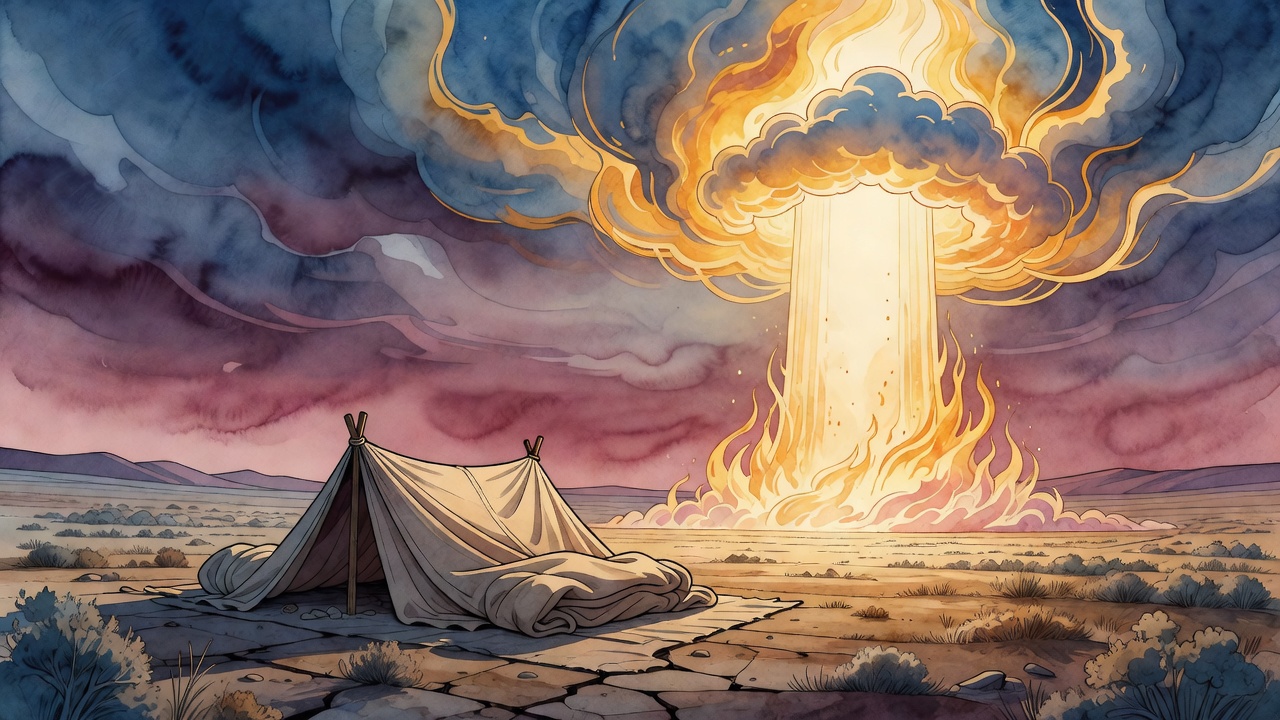
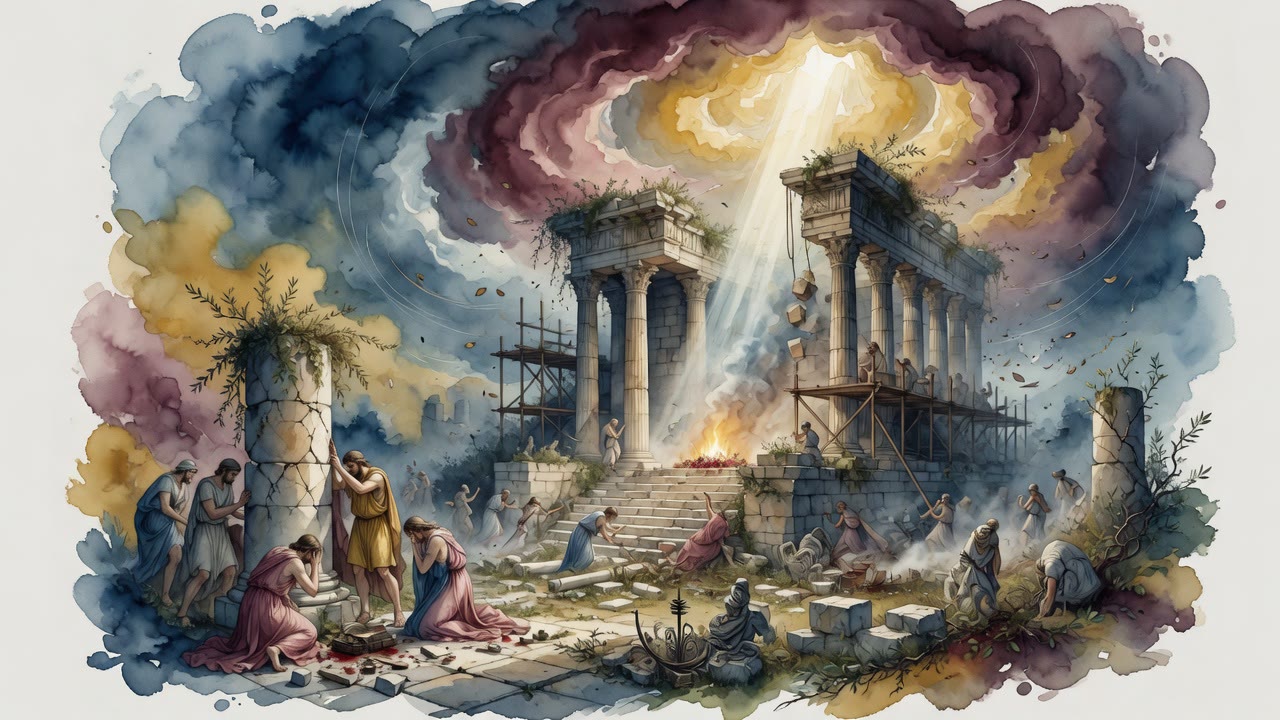
Picture the last defenders inside the sanctuary. Not an army at full strength, not a chorus of heroes with torches and drawn swords. A few gaunt men, hollow-eyed from months of siege, holding the gates of the holy enclosure while their bodies ran out of what bodies need to keep standing.
First Maccabees does not make this a story of cowardice. It makes it a story of hunger. The text says plainly: only a few remained in the sanctuary, because the famine prevailed over them, and each man scattered to his own place. The Temple did not empty because the defenders lost their nerve. It emptied because devotion still needs bread, and the bread was gone.
Philip, one of the Seleucid officials who had been governing Jerusalem, looked at what was left inside the sanctuary and recognized an opportunity. The defenders had thinned to almost nothing. The holy precincts that had held against every direct assault were about to fall to the simplest of besiegers: time without food.
What Judas Maccabeus Came Back To
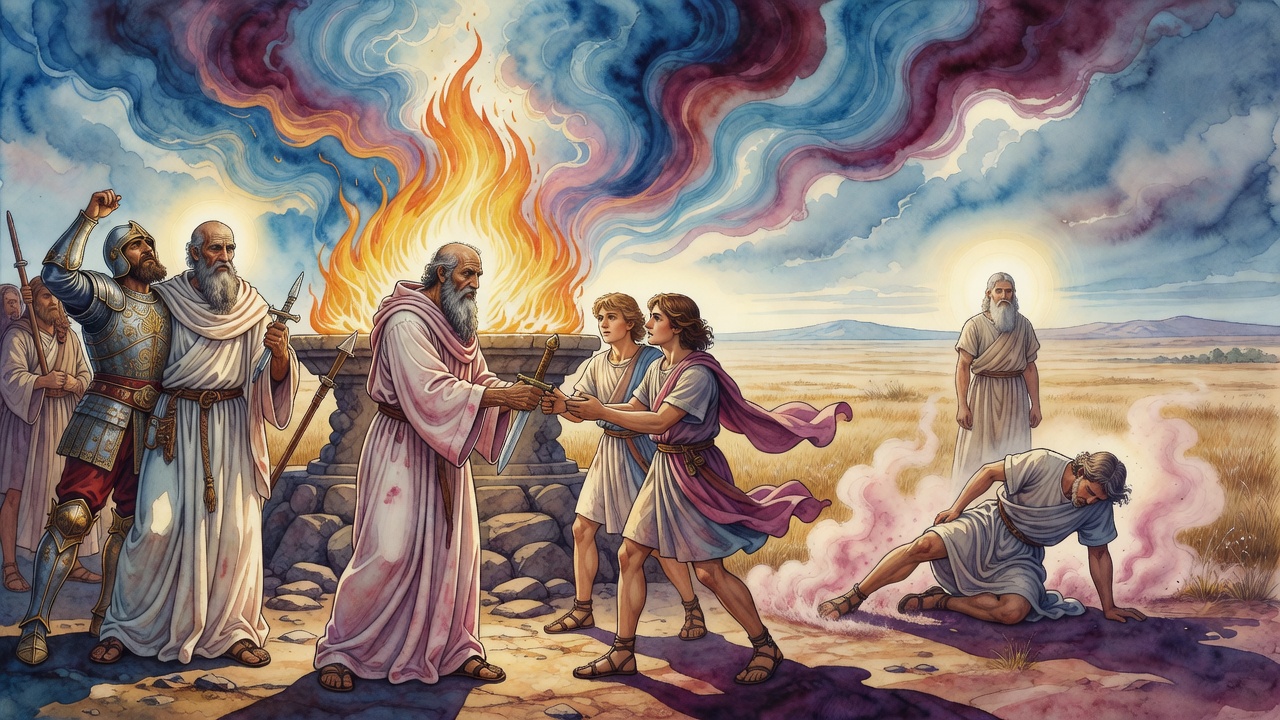
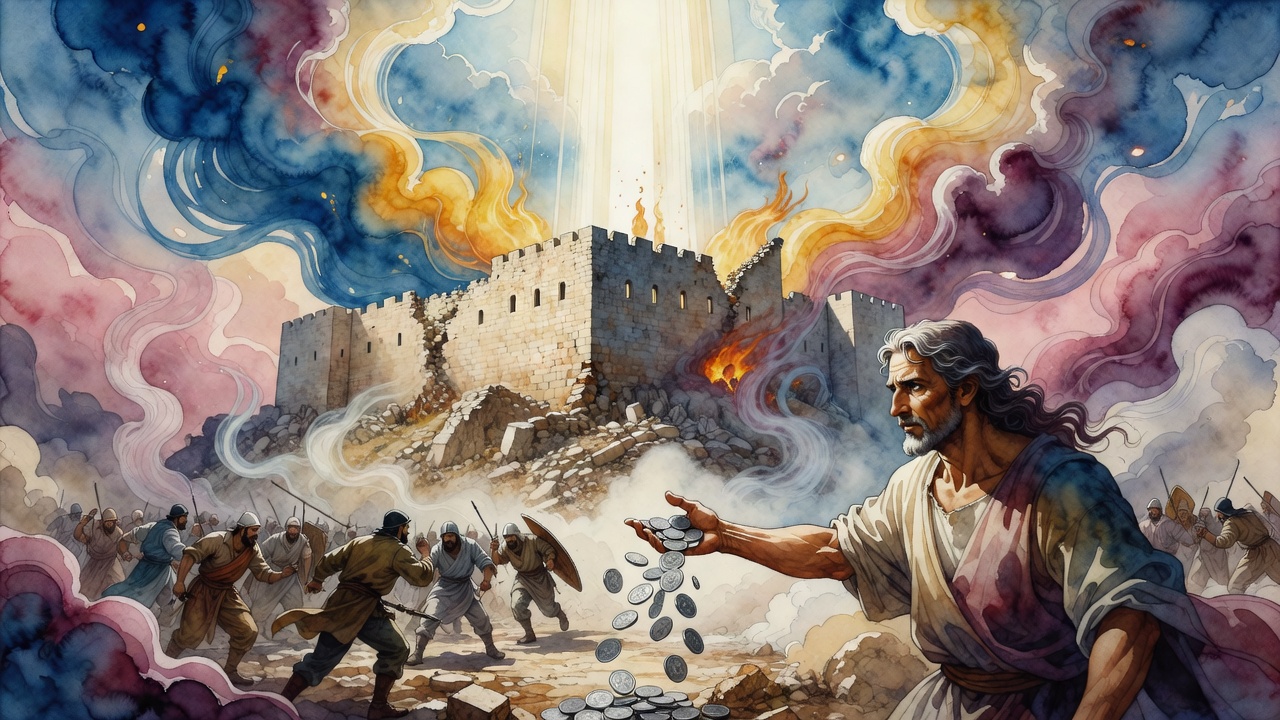
Judas Maccabeus had not been inside Jerusalem when this happened. He was in the south, fighting. The word reached him and he returned with his forces, not to a triumphant capital but to a sanctuary that had been stretched to the edge of abandonment.
First Maccabees records his prayer over the holy place. He stood before it and asked what could be done. He had won battles with men who were outnumbered and under-equipped, who had prayed before every charge and fought as if they expected God to show up with them in the field. Now he stood before a sanctuary that had nearly collapsed not to enemy swords but to the slow arithmetic of insufficient grain.
The prayer was not a victory speech. It was a man standing in front of something precious that had almost slipped away while he was elsewhere, asking how to hold it.
Simon and the Brass Tablet
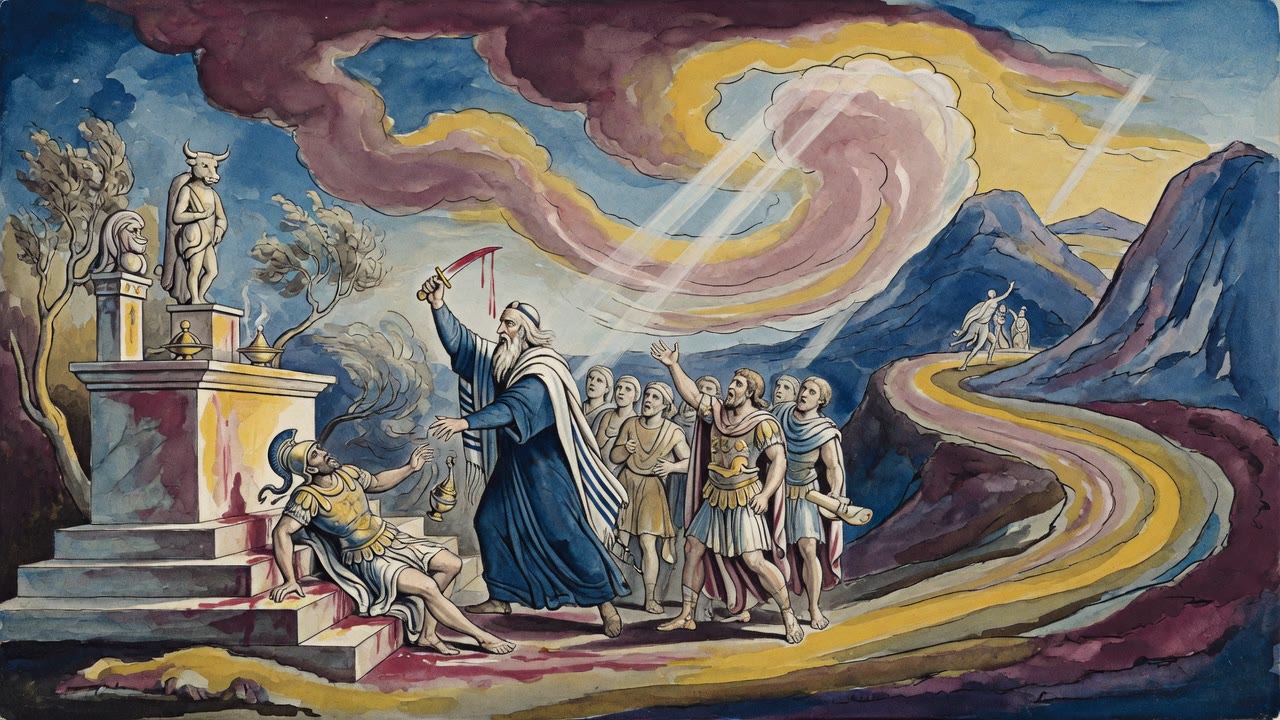
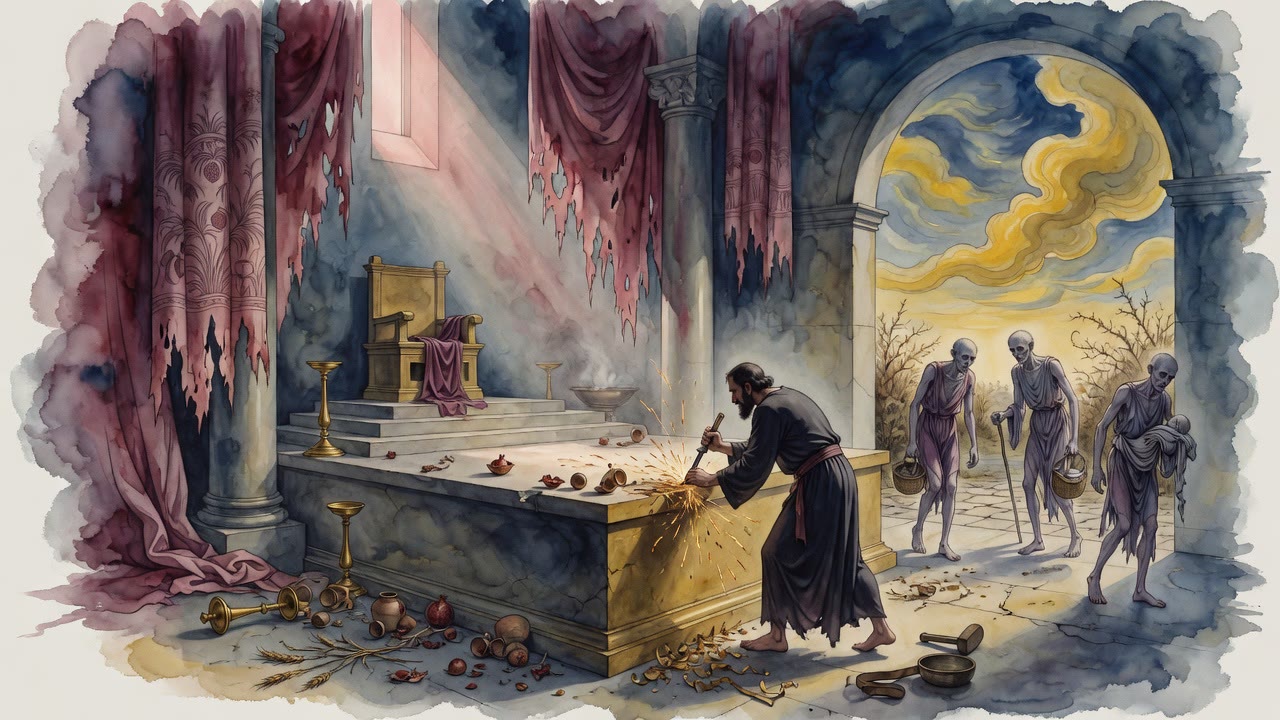
Years later, the sanctuary still standing, a different kind of threat had passed, and Simon, the last surviving son of Mattathias, received what his brothers Judas and Jonathan had never been given: a formal public commission carved into brass and set up on pillars on Mount Zion.
The text of that commission described what Simon had done, what he had built, what he had defended. It recorded the grants given to him: high priest, commander, ethnarch, leader of the Jews and priests. All of this was inscribed in bronze and posted at the sanctuary in a form that anyone who came to pray could read.
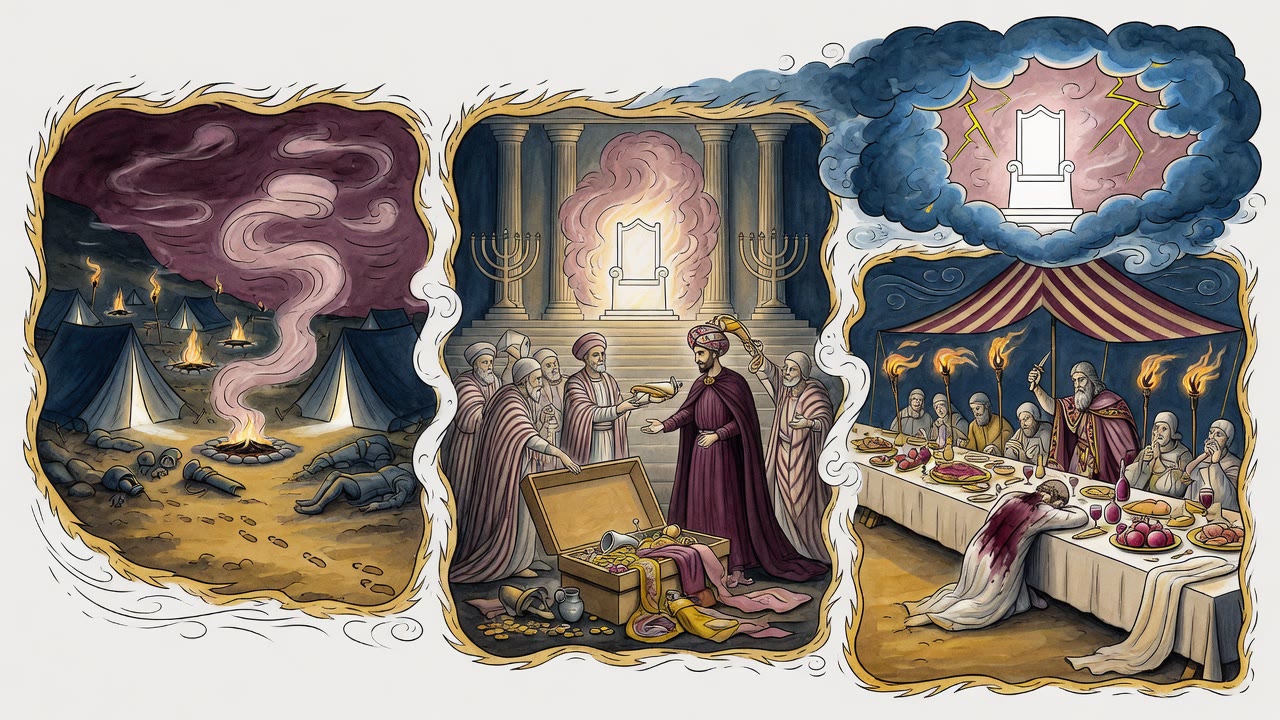
The contrast with the hollow-faced men scattering from the sanctuary during the famine is the Maccabean arc in miniature. From men too hungry to stand at the gate to a people with authority carved in metal and displayed at the entrance to the holy place. From famine to formal commission. From a sanctuary that nearly emptied to a sanctuary with an official constitution posted on its walls.
What the Sanctuary Survived
First Maccabees keeps circling back to the Temple not because it is making a simple argument about military heroism but because the sanctuary is its measure of whether Israel is still itself. When the defenders scatter from hunger, Israel is in danger of ceasing to be Israel, not because of what the enemy has done but because of what ordinary human need can strip away. When Simon's authority is carved in brass and posted at the holy place, the argument is settled for that generation: the sanctuary has a people, and the people have a leader who has earned his standing in plain sight.
The brass tablet was not arrogance. It was a document made to outlast the men who needed it. The families who had scattered from the sanctuary during the famine could come back to Jerusalem and read in permanent metal what their persistence had purchased.
← All myths