The Maccabees Rededicated the Temple and Fixed the Calendar
Judah's men had won in the hills. In the Temple courts they found shrubs and a burned altar. One sealed flask of oil had to last eight nights.
Table of Contents
Shrubs had taken the courts. Not a few weeds at the edges. Thick growth, the kind that needs years of no one sweeping. Judah Maccabee stood in it with men who had just won a war, and the first thing they did was tear their clothes.
 Click for full size
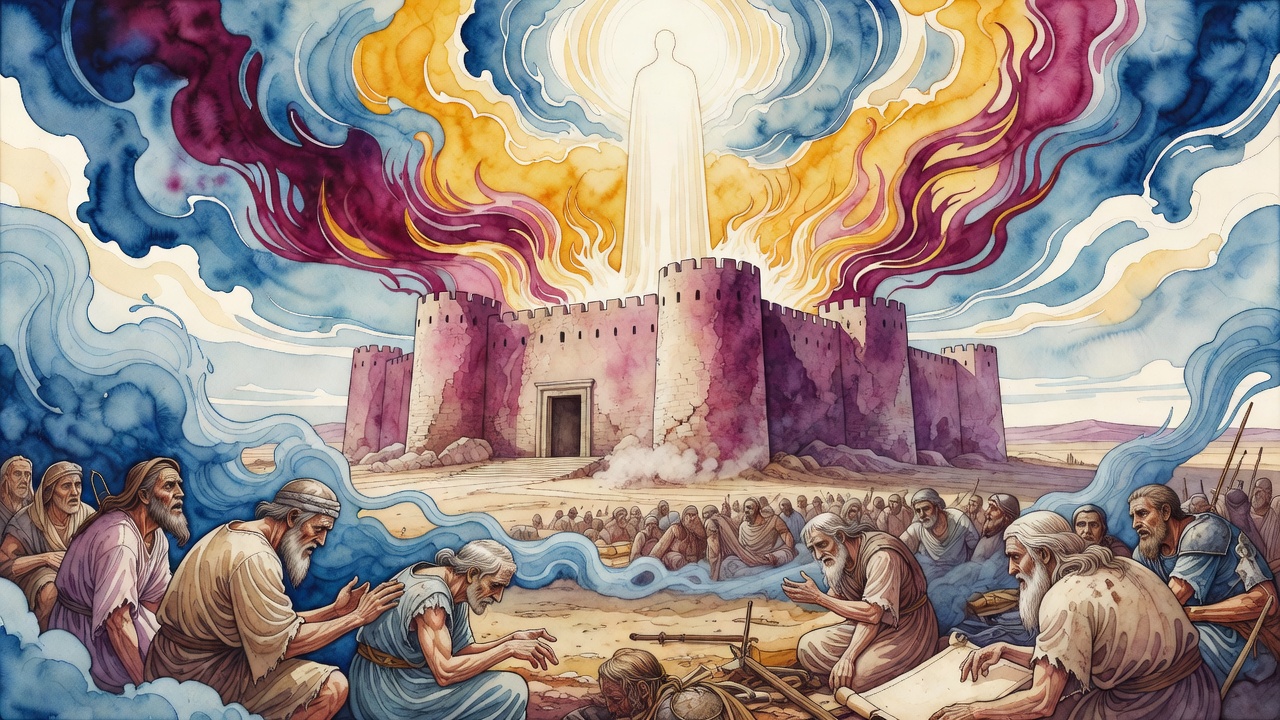
Four years in the hills. Four Seleucid generals turned back. Lysias driven from the field. Farmers and priests from Modin had become something that could hold a pass. They had fought cavalry with farm tools. They had won when they had no right to win. At the end of 164 BCE they came up to the outer gates of the Temple Mount and found a House that still stood, which was worse than rubble, because it meant the unmaking had been done on purpose.
They Wept in the Wild Courts
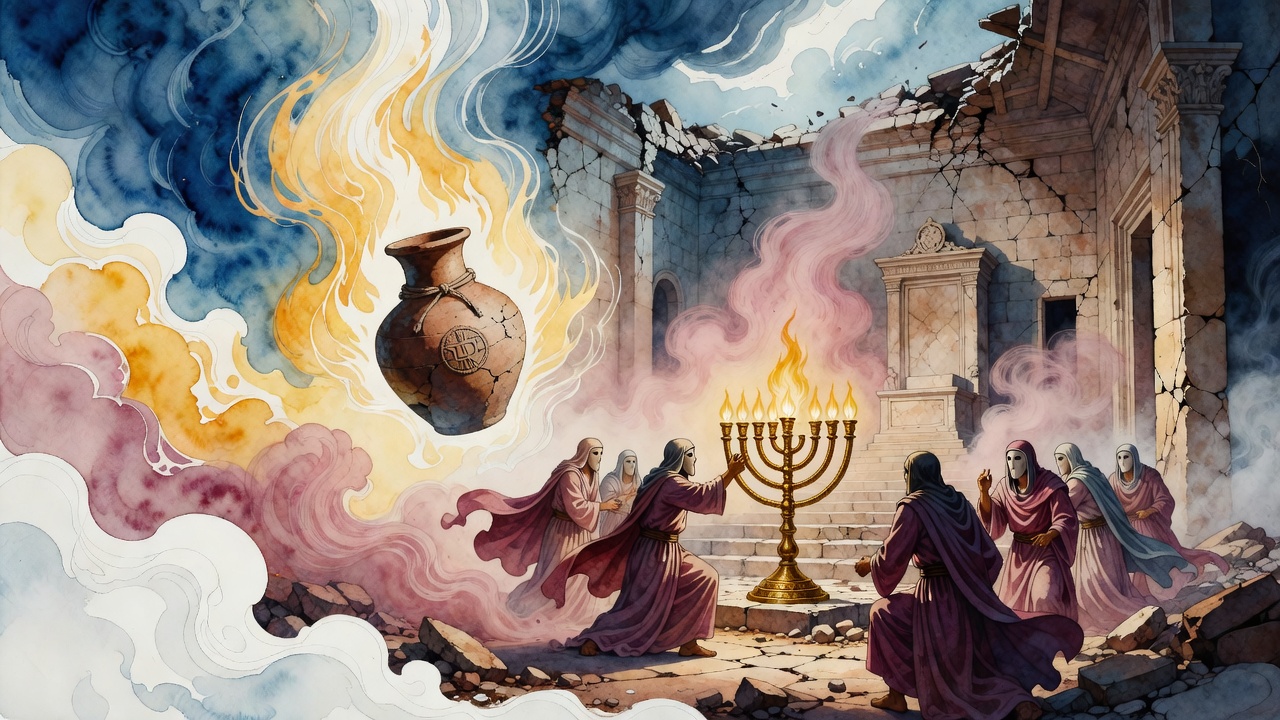
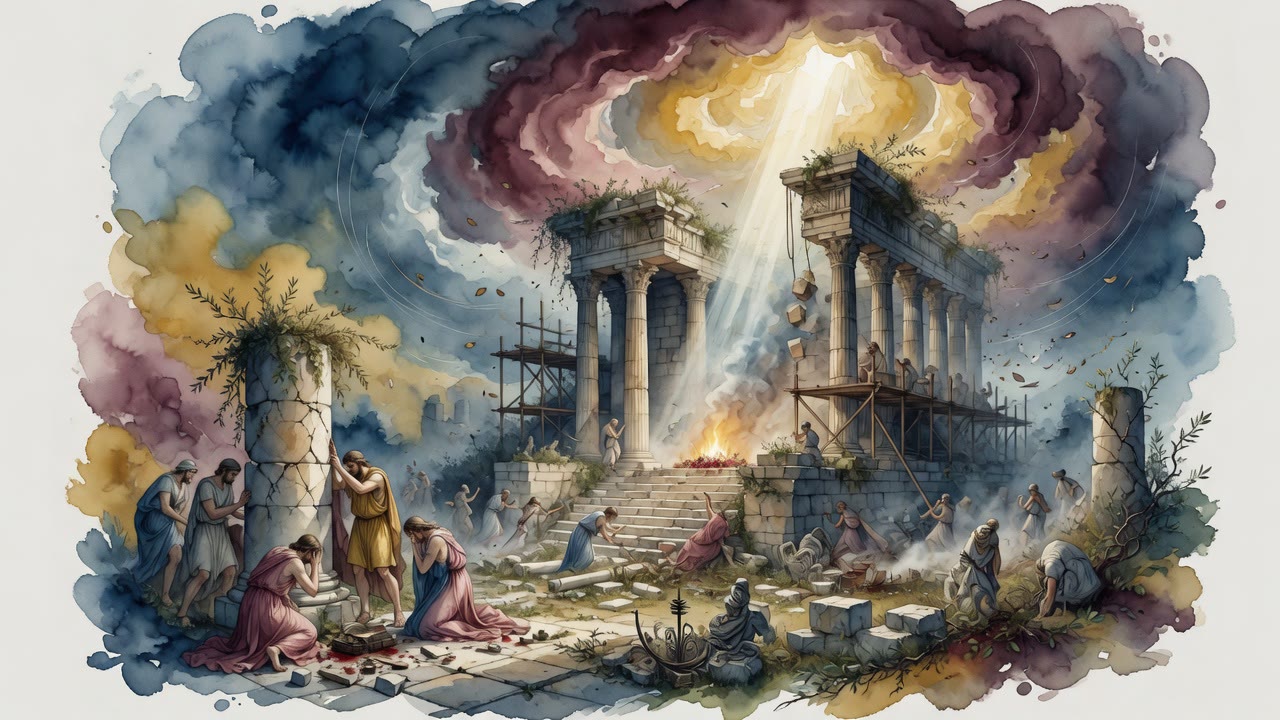
The altar had been used for idol sacrifice. The gates were burned. The priests' chambers were stripped and put to other work. Sacred vessels were gone. Shrubs grew in the courts the way they grow on a mountain, as if no one had been afraid to let a holy floor go wild. This was not a building knocked down in a siege. It was a holy place kept standing and turned inside out.
Judah's soldiers had crossed rivers under fire. They had not been known for weeping. They wept. They put ashes on their heads and fell on their faces and blew the trumpets toward heaven. The sound went up off stone that had learned a foreign service. A fighter can take a wound. A fighter standing in a sanctuary that has been taught to serve idols has no other honest move but to go down on the ground and cry out.
Stones No Prophet Would Claim
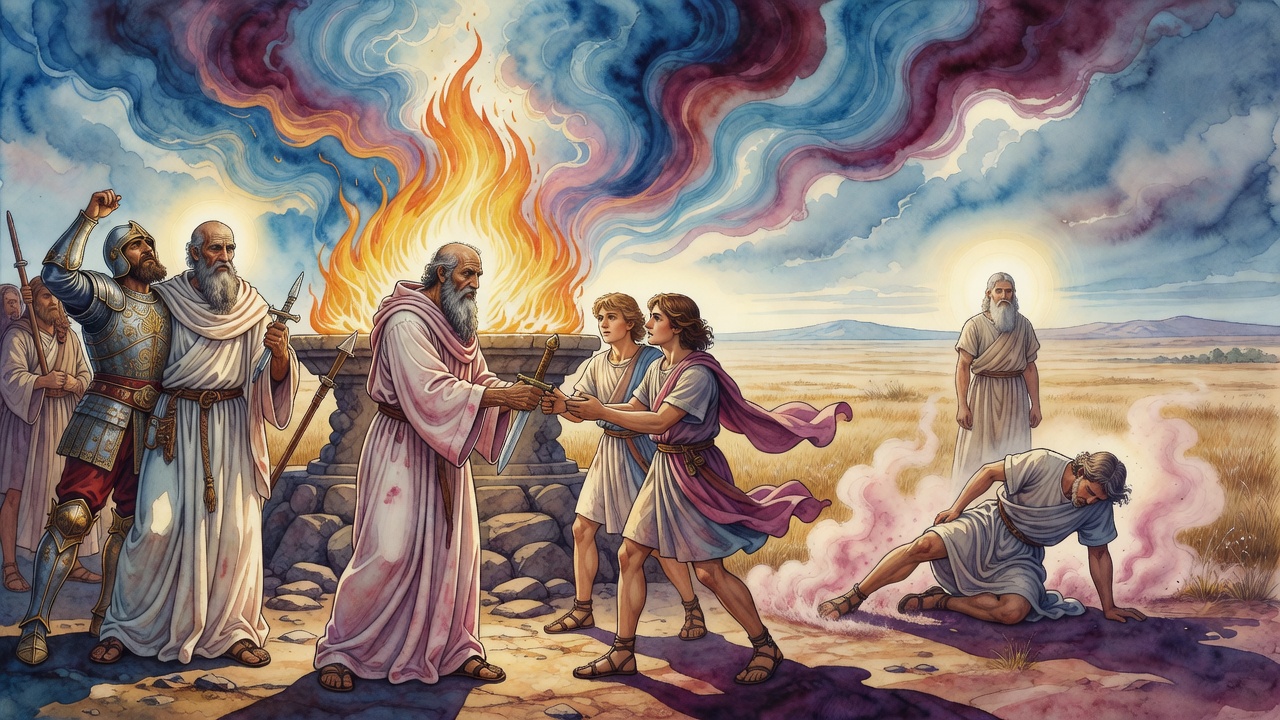
They tore the defiled altar down first. The stones that had taken idol offerings were too stained to put back into service. The priests carried them to a clean place on the Temple Mount and left them there. No verse told them what to do with sanctified rock that had been forced into pagan use. They would wait for a prophet. They would not invent an answer and call it Torah.
New unhewn stones came up the hill, as the law required. They built a fresh altar. They restored the inner sanctuary. They made new vessels. They cleaned the lamps and fitted them. They pulled brush until a person could walk the courts without wading. They worked through Kislev with cracked hands and little talk. On the twenty-fifth day they were ready to light what had to be lit.
One Flask Still Sealed
The sons of the Hasmoneans searched for pure oil for the menorah, the lampstand. Every jar they found had been opened, used, or fouled. The occupying force had been thorough. Then a man lifted a small flask from a place the searchers had already passed twice. The High Priest's seal was still on it. Untouched. They turned it in their hands. The oil inside would last one day.
They lit the menorah anyway.
The wick took. The flame stood up in the cleaned chamber as if the room had been waiting for it. Night came. The oil should have failed in the dark. Morning found it still burning. The second night it burned. The third. They did not have more pure oil. They had this. By the eighth day the flask had given what one day of oil cannot give, and the lamps were still working.
Eight Days on the Twenty-Fifth
Judah and his brothers named the eight days. Rejoicing. Praise. Candles. Thanks to God. They set the start on the twenty-fifth of Kislev because that was the day, three years earlier, when Antiochus had first defiled the altar. The repair would occupy the same date as the wound. A person who had kept Sukkot in the mountains and caves, living like a beast in the open, could now keep eight days inside the House.
The Seleucid officials had tried to break Jewish time. Sabbath forbidden. Festivals forbidden. The year stripped of its holy rhythm. Lighting the menorah on that date did more than clean a room. It put the calendar back in Jewish hands. From then on those eight days would return every year, ordained for children not yet born, a festival of dedication called Hanukkah. Work in the Sanctuary was not forbidden on those days. Mourning was. Fasting was. The lamps were the point.
The old altar stones still sat on the mount, waiting for a prophet. The lamps did not wait. They burned.
← All myths