Mattathias Rose in Modin Against Forced Apostasy
Officers arrived in Modin with an order to sacrifice. One Jew stepped to the altar. The priest's knife did not wait for a speech.
Table of Contents
 Click for full size
Infants Hung at Their Mothers' Necks
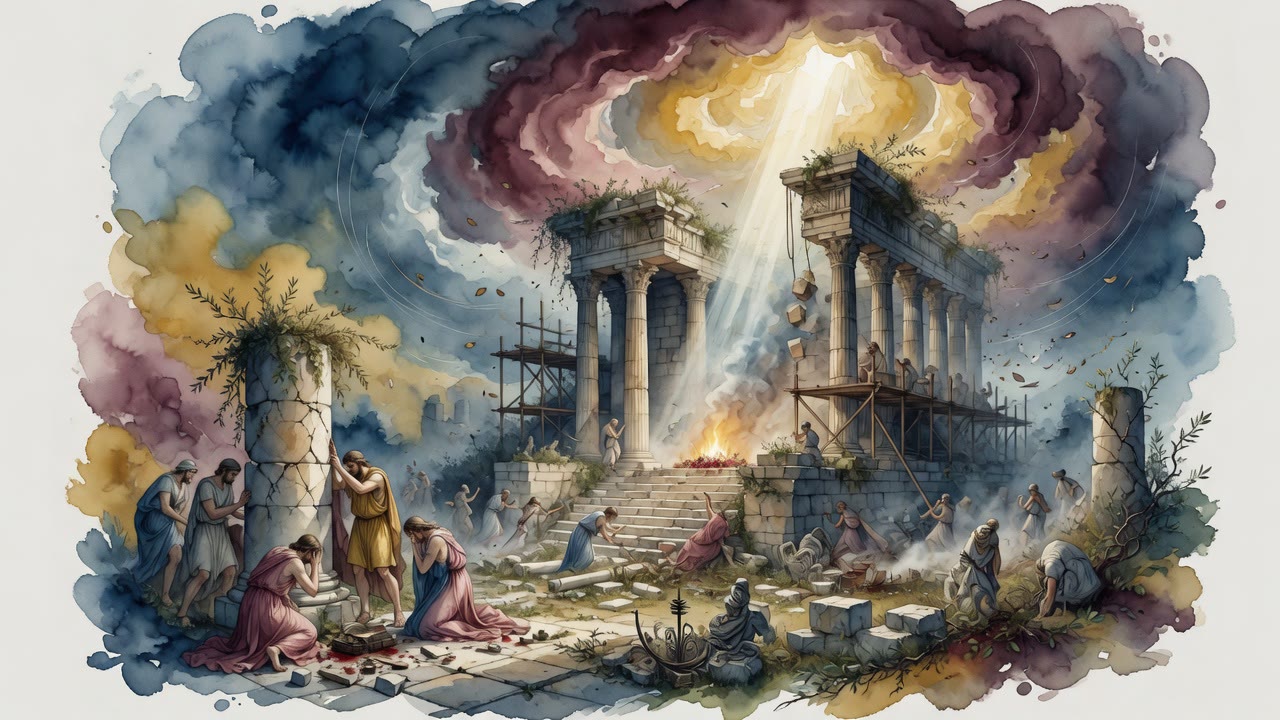
The decree did not begin with a speech. It began with bodies. Women who had their sons circumcised under Abraham's covenant were put to death. The infants were hung around their mothers' necks. Houses were plundered. The hands that had made the brit milah (ברית מילה), the covenant cut, were cut down with them.
God's mark in the flesh had been made a capital crime. Many in Israel would not eat unclean meat even to live. They chose graves rather than a mouthful that would profane the holy covenant. They died with that choice still in their teeth.
Burnt offerings stopped. Drink offerings stopped. The Sabbath was treated as a day that could be rewritten. Swine went up on an altar built for other fire. Children were left uncircumcised so they might forget the Torah and change all the ordinances. Whoever would not do according to the king's commandment was to die.
A Priest Leaves Jerusalem
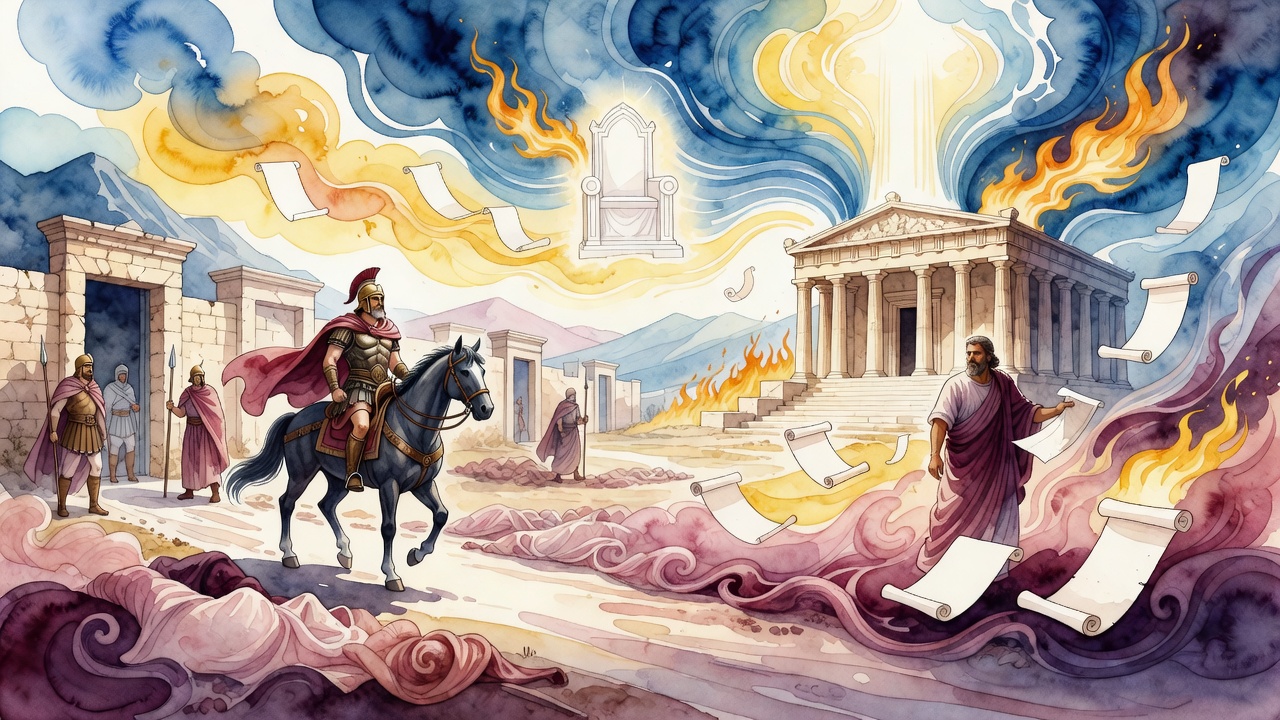
In those days Mattathias son of John, son of Simeon, a priest of the sons of Joarib, left Jerusalem and dwelt in Modin. He had walked out of a city where the sentence already had a body count. The Temple's voice had thinned under foreign noise. Scroll and sacrifice were being edited like local customs.
Modin was smaller. A refusal there would be seen. Mattathias had five sons in the house with him. The oldest still asked, without asking, whether a priest who flees a ruined altar is still a priest. He was. He was a priest with a town for a last sanctuary.
The Square Wants a Show
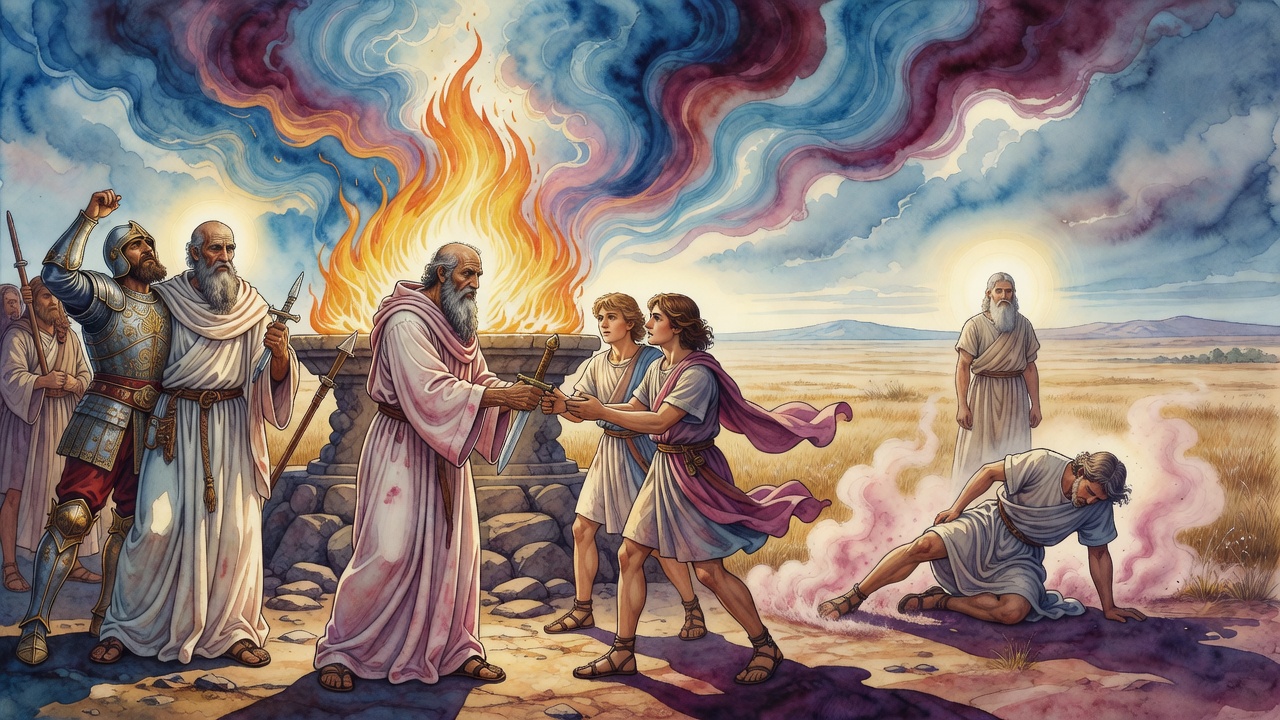
The king's officers arrived to make apostasy look like civic peace. Sacrifice the way the empire sacrifices. Eat the way the empire eats. Leave a son's body unmarked. They wanted a public performance of sameness, and they wanted a priest of Joarib to go first, so the town would follow a respectable mouth.
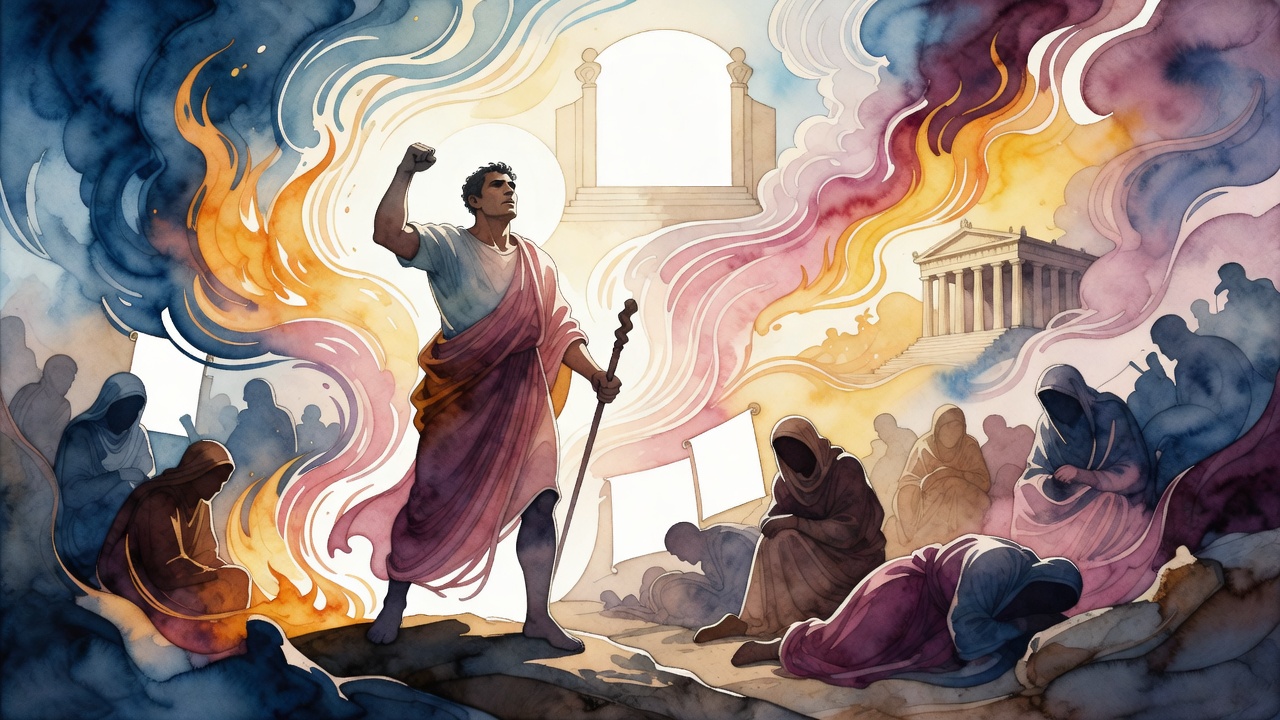
Mattathias answered in a voice the square could not pretend not to hear. If every nation in the king's house obeyed, he and his sons would not. The covenant was not a custom to be trimmed for quiet streets.
Then a Jew stepped forward, in the sight of all, to sacrifice on the altar in Modin according to the commandment. The officers smiled the way men smile when a town breaks itself and saves them the work.
The Altar Comes Down
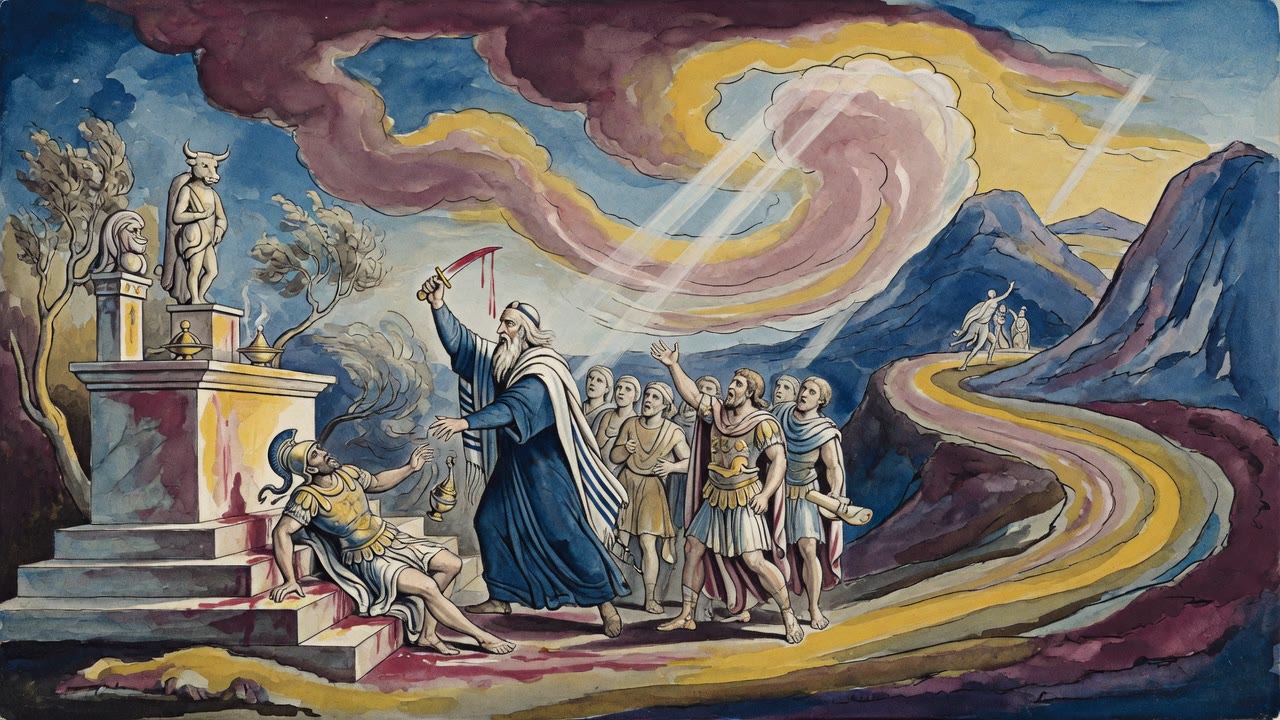
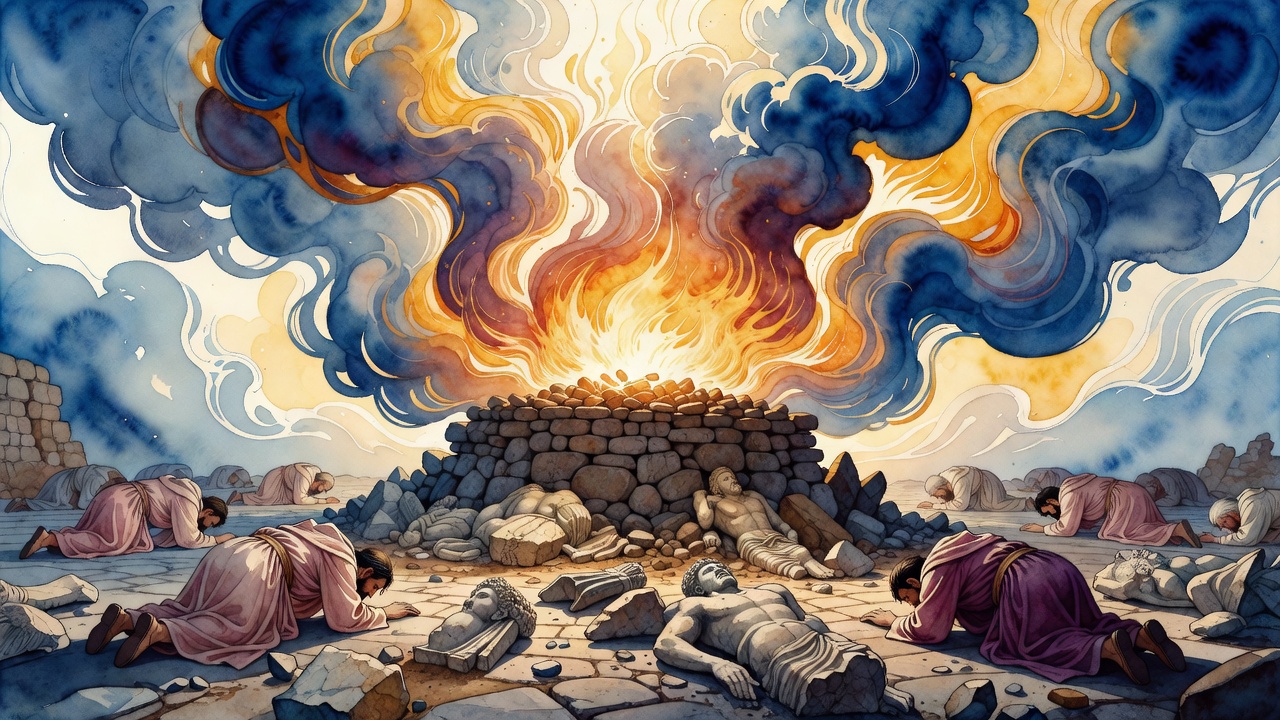
Mattathias rose against that forced apostasy. He ran. He slew the man upon the altar, and he slew the king's officer beside him, and he pulled the altar down. Enough was not a speech. Enough was a stance that left blood on stone the empire had tried to borrow.
He cried out to the town. Whoever is zealous for the law, follow me. He and his sons fled to the hills. Judah would later make a name that stuck in other mouths. The first spark was the old man who would not watch covenant children die as policy.
Those who had already died rather than swallow unclean meat had written the first chapter in their bodies. Mattathias did not invent fidelity. He armed it. His sons learned war as a language of that same refusal.
A Letter He Never Read
Years of blood later, another royal letter took a different tone. Gifts previous kings had given the Temple were confirmed. Permission came to mint coin with the country's own stamp. Jerusalem and the Mikdash (מקדש), the sanctuary, were to be free. Fortresses already built could be kept. Debts owing to the king were wiped from that day forward forever.
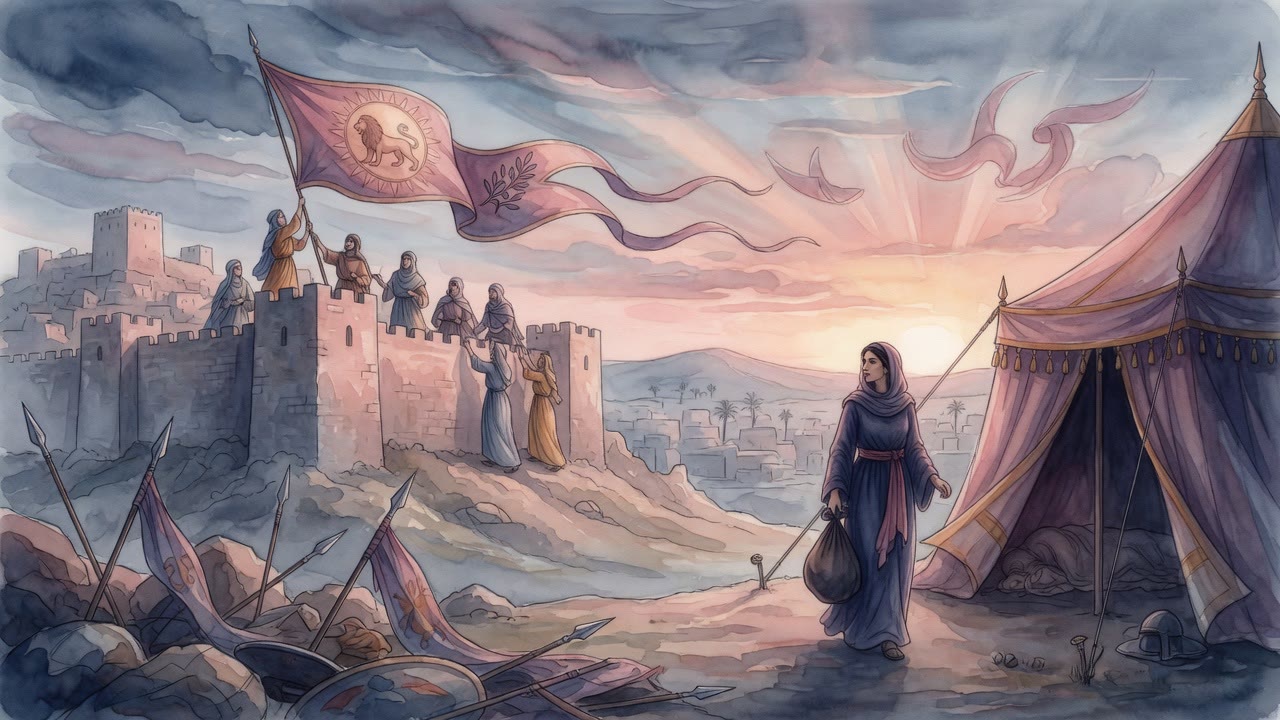
Autonomy arrived on paper after it had been bought in alleys and hills. Mattathias did not live to read every clause. The revolt he lit made such clauses imaginable. Empires write generous letters when the hills have already taught them cost.
Oil would be lit later for festivals. First there was a town called Modin, a priest who said no, and a generation that chose graves over erased names. The infants at their mothers' necks remained the argument no later miracle could replace.
← All myths