Yoḥanan Hid a Dagger and Walked Into Nicanor's Court
The report reached him and the light went out of his face. Alone in his house he forged a blade two spans long, short enough to vanish under a robe.
Table of Contents
 Click for full size
The Light Left His Face
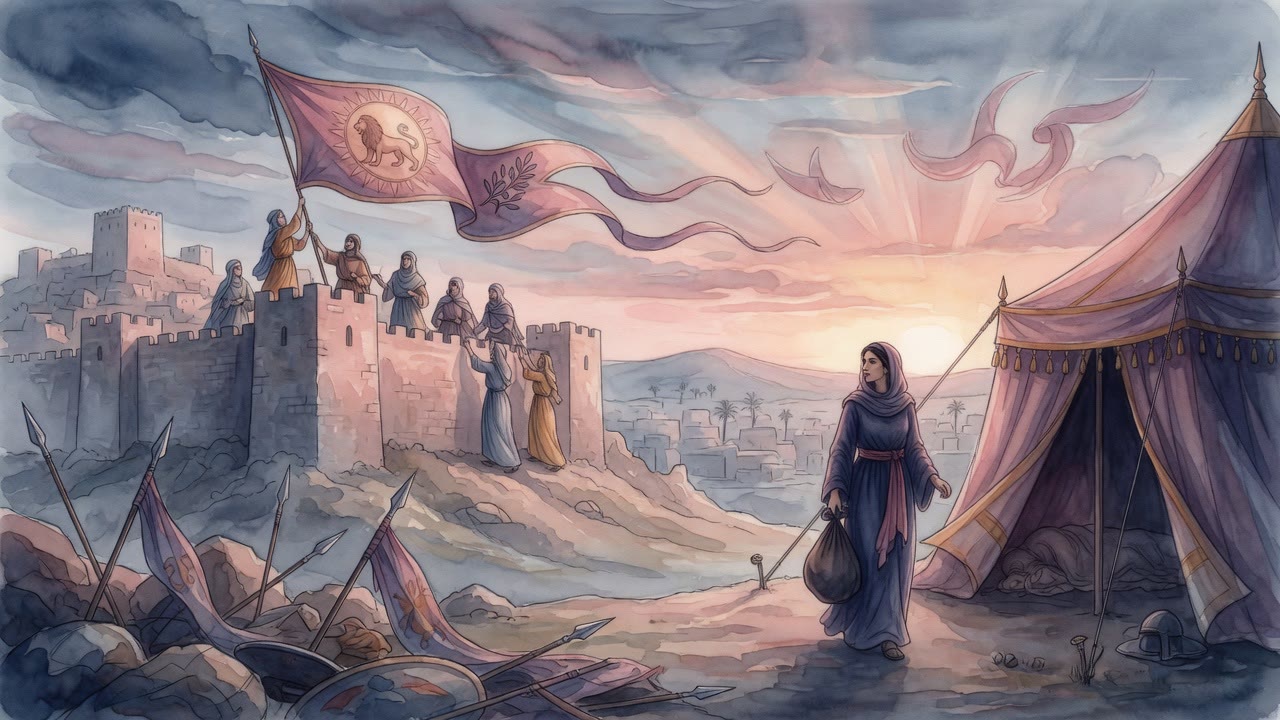
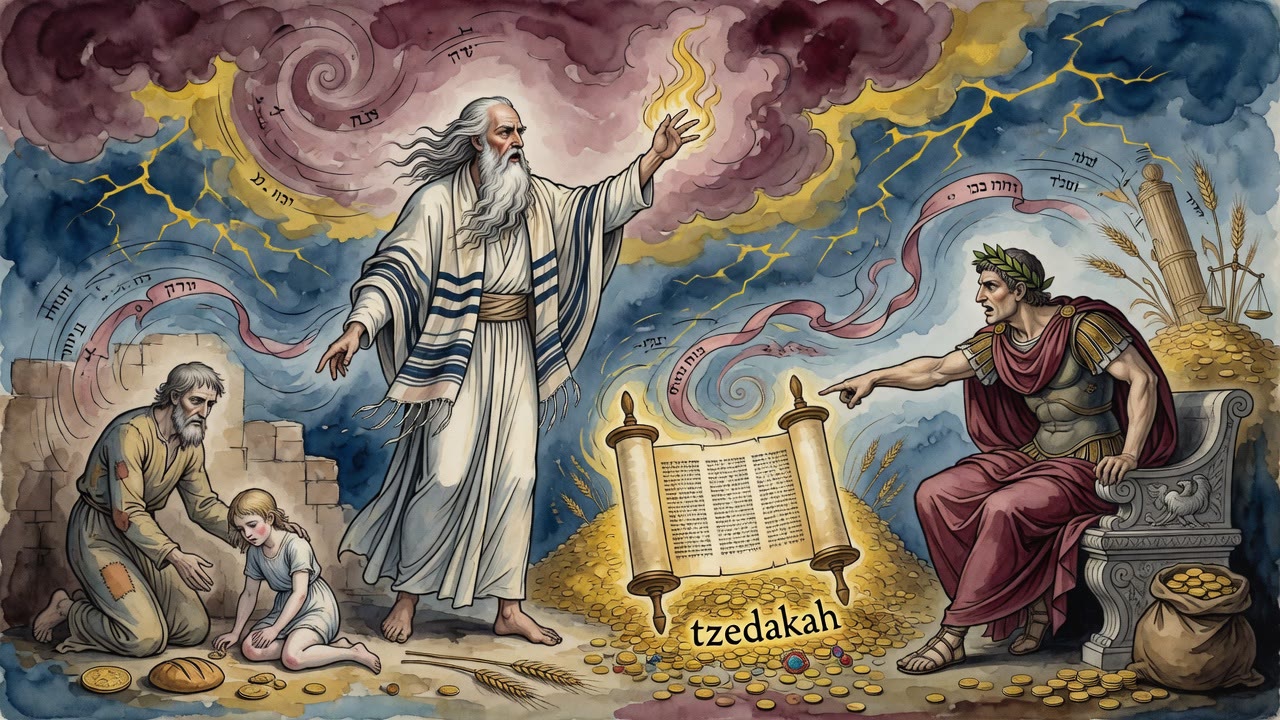
Word came to Yoḥanan, son of Matityahu, of what the Seleucid Greeks had done. The altars defiled. The Sabbath forbidden. The covenant of the flesh outlawed under penalty of death. The Sanctuary in Jerusalem turned over to the worship of foreign gods. As the report reached him, the radiance went out of his face the way a lamp gutters when the oil runs thin. Those near him saw it happen and said nothing, because there was nothing to say.
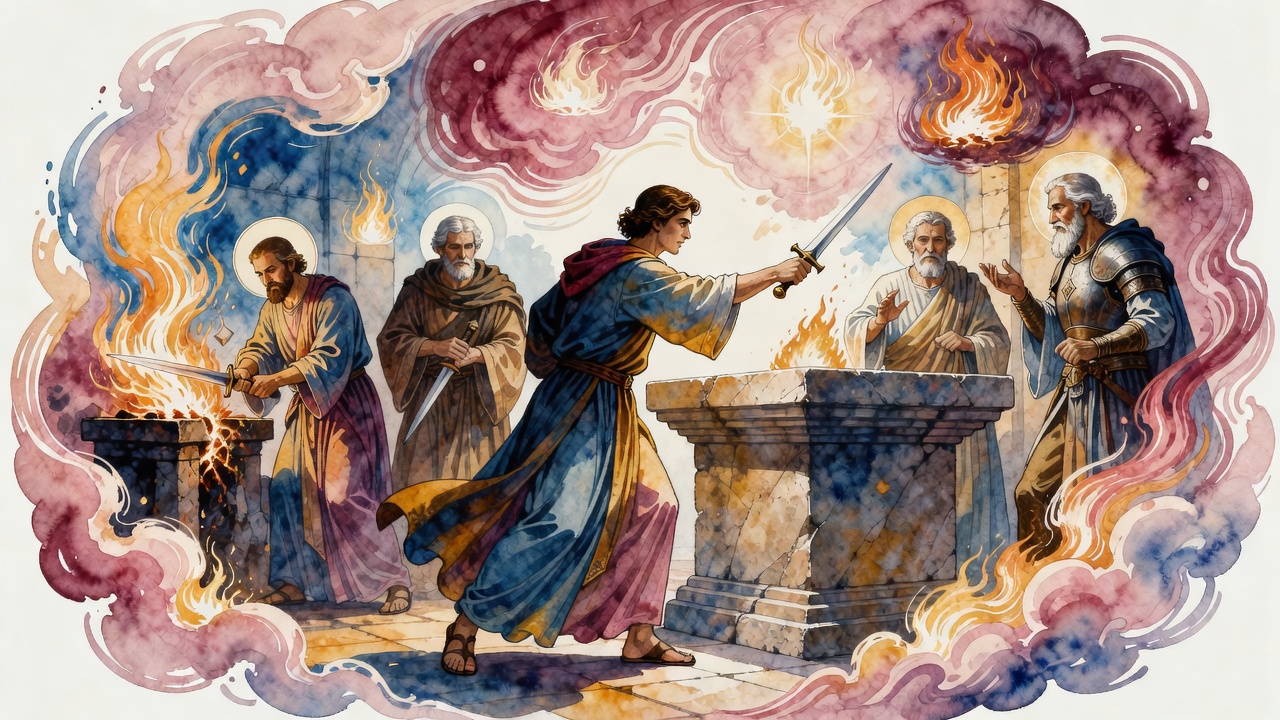
He did not gather an army. He did not send a letter to the elders or wait for the other priests to decide. Alone, in the quiet of his own house, he took a length of iron and made a sword. He measured it carefully, two spans long and one span broad, short enough to vanish against a body, long enough to reach a heart. He bound it beneath his garment so that no fold of cloth betrayed its edge. A single man, a self-made blade, and an empire on the other side of the city wall.
The Lone Figure at the Royal Gate
Yoḥanan walked to Jerusalem and stood at the royal gate, where the occupiers kept their watch. Nicanor, the general the Seleucids had set over the city, was holding court in the Temple precinct, and he had been looking for a way to make a public example of one of the priests' sons. Yoḥanan did not wait to be discovered. He called out to the guards and named himself plainly.
"I am Yoḥanan, the son of Matityahu," he said, "and I am come before Nicanor."
They brought him in. He had placed himself inside the trap with his own feet, the dagger riding cold against his ribs, and the general looked at him the way a man looks at a thing he intends to break in front of a crowd.
Clear the Room
What weighed on Yoḥanan in that hall was not the death Nicanor planned for him. It was his own people. He knew how this would look if it went wrong, how easily a priest's son standing alone in the enemy's court could be taken for a man who had come to bargain, to bend, to betray. The fear that gripped him was the fear of being remembered as a collaborator.
"My lord," he said to Nicanor, "I fear the children of Israel, lest they hear of my deed and stone me with stones." He let the words settle, then offered the general a way to keep their dealings quiet. "Let therefore everyone go from before you, lest they inform them."
Nicanor, hearing a man more afraid of his own nation than of Seleucid power, believed he understood what kind of man stood before him. He cleared the hall. The attendants withdrew, the guards stepped back, and the general was left alone near the altar with the son of Matityahu, certain he had won something.
The Prayer Before the Blow
Alone with his oppressor, Yoḥanan lifted his eyes upward and spoke not to Nicanor but past him, to the One above the Sanctuary they were standing in.
"My God and God of my fathers Avraham, Yitzḥak, and Yaakov," he prayed, "deliver me not into the hands of this heathen, for if he slay me he will repair to the temple of Dagon his god, and say, 'My god has delivered him into my hands.'"
The plea was not for his own breath. He saw the whole shape of the disaster, how his death would become a sermon in the mouth of the enemy, proof carried into Dagon's house that the God of Israel had been beaten on His own ground. To die here was to hand the desecrators a victory louder than the one they had already taken.
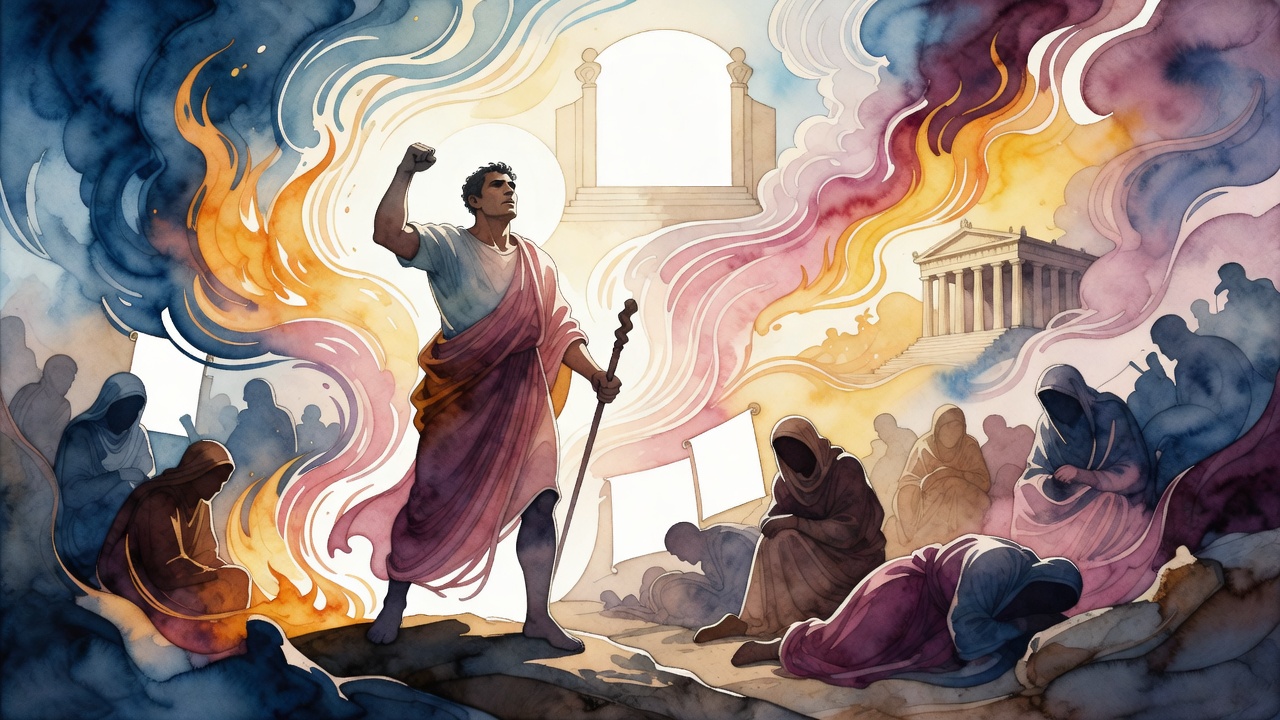
Then he stepped forward. He drew the hidden blade and drove it into Nicanor's heart, and the general went down where he stood. Yoḥanan took the body and cast it into the hall of the Sanctuary, the corpse of the man who had occupied the holy place left lying in the holy place.
Account It Not as Sin
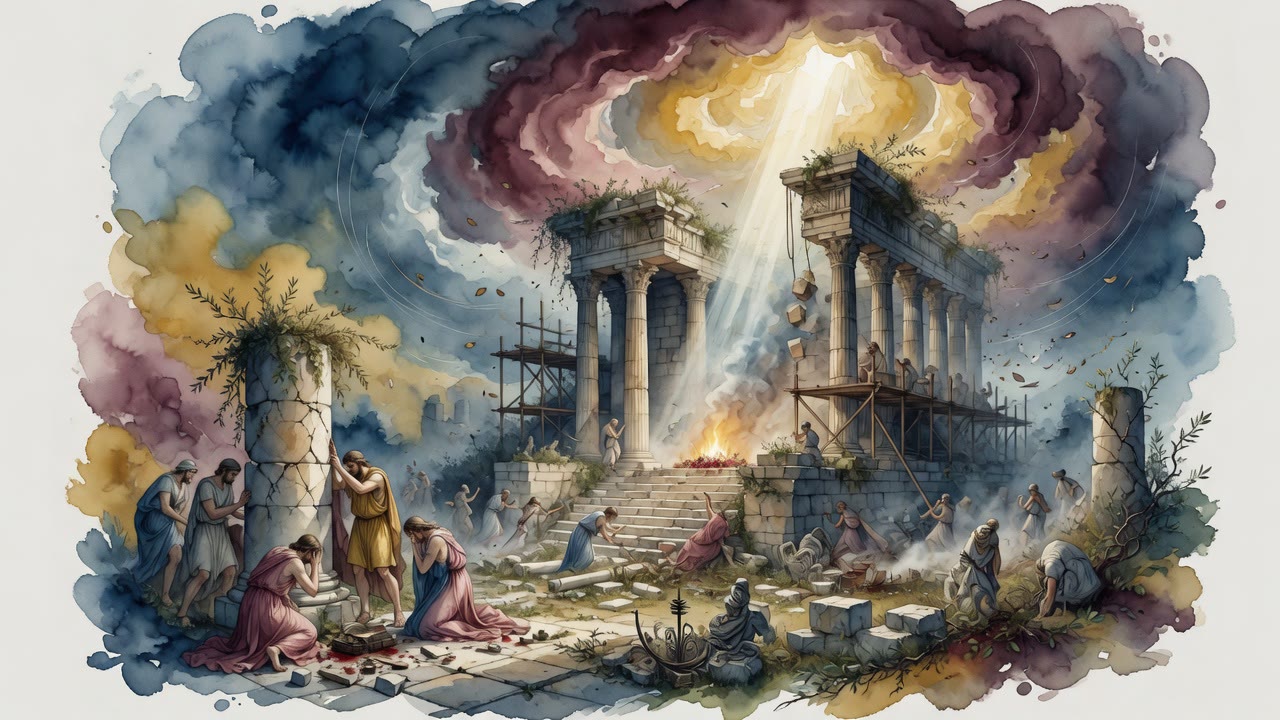
And then a second fear took him, sharper than the first. He had spilled blood inside the Beit HaMikdash. He knew the weight of it, that the holiest ground in the world was not a place for killing, that even a righteous stroke became a stain when it fell between those walls.
He lifted his eyes a second time. "My God," he cried, "account it not as a sin that I killed him in the Sanctuary. Thus may You do to all who came with him to oppress Judea and Jerusalem."
He did not linger to be answered. Yoḥanan the son of Matityahu went out from the Temple that same day and fell upon the enemy and cut them down. The slaughter spread until it turned in on itself, the occupiers striking one another in the confusion of it, and when the day was counted the dead among them numbered seven thousand. One man had walked through the royal gate that morning. By dark the army that held Jerusalem was bleeding from a wound it could not find.
The Pillar That Took His Name
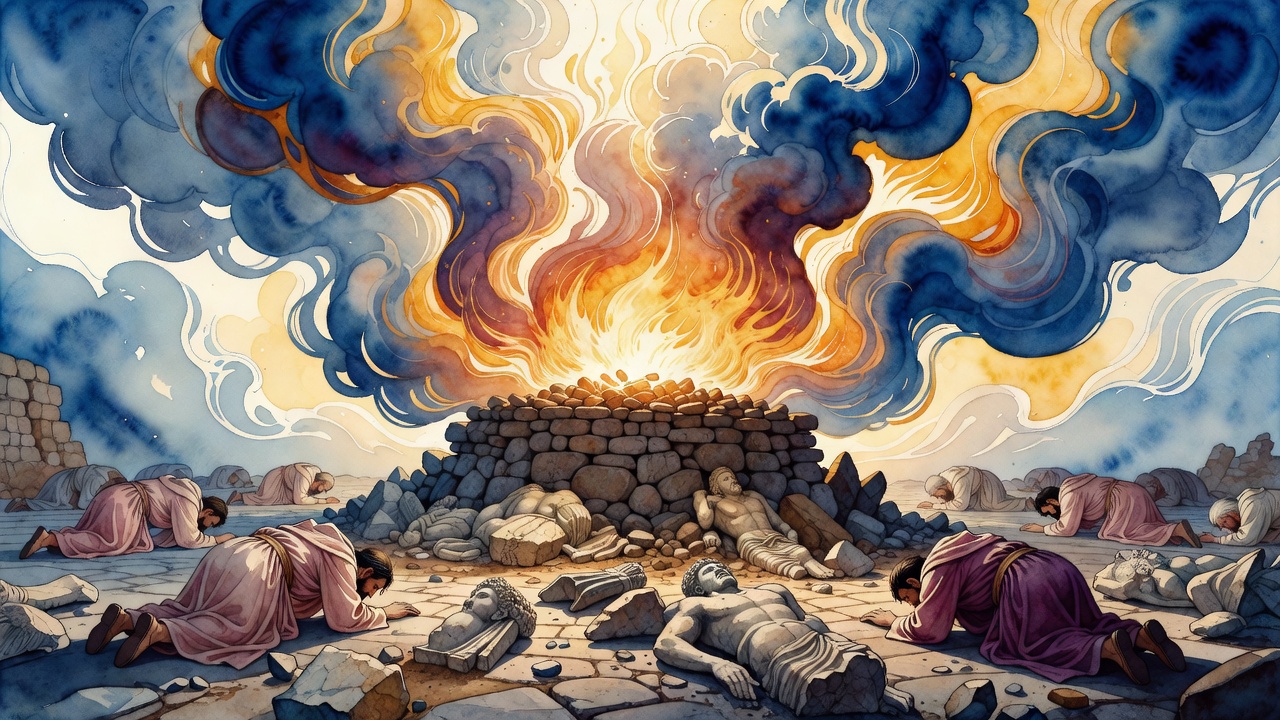
When he returned from the fighting he built a pillar and set his name upon it. He called it Maccabee, the slayer of the mighty. The stone stood in the open where any man could read it, a record cut into rock that the empire which thought itself invincible had been broken open by a single concealed blade and a prayer offered twice over the altar.
The name did not stay on the pillar. It traveled. It settled on his brothers and on the war that grew out of that one stroke, on the long fight that would drive the desecrators from the Sanctuary and rekindle its lamps. It began with a priest's son who measured a sword in private, feared his own people more than his enemy, and asked Heaven for permission a heartbeat before and a heartbeat after he changed everything.
← All myths