God Carried Israel When No Earthly Master Would
Heat pressed the camp flat. Bread still lay on the sand before the sun could burn it. Someone scooped the flakes with both hands.
Table of Contents
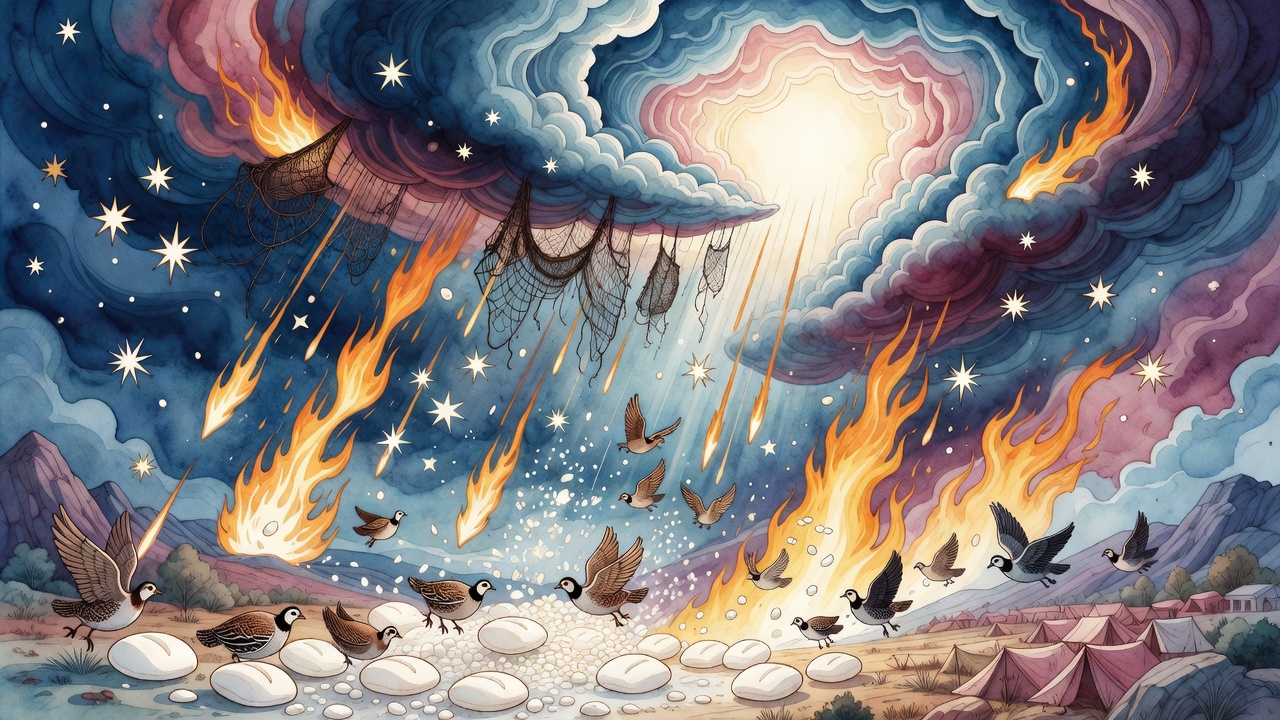
Israel woke to a sky that did not behave. Heat pressed the camp flat, and still a thin frost of bread lay on the sand before the sun could burn it. Someone laughed. Someone cursed. Someone scooped the flakes into a jar with both hands and looked up as if waiting for the next absurdity.
 Click for full size
The Master Who Bore the Servants
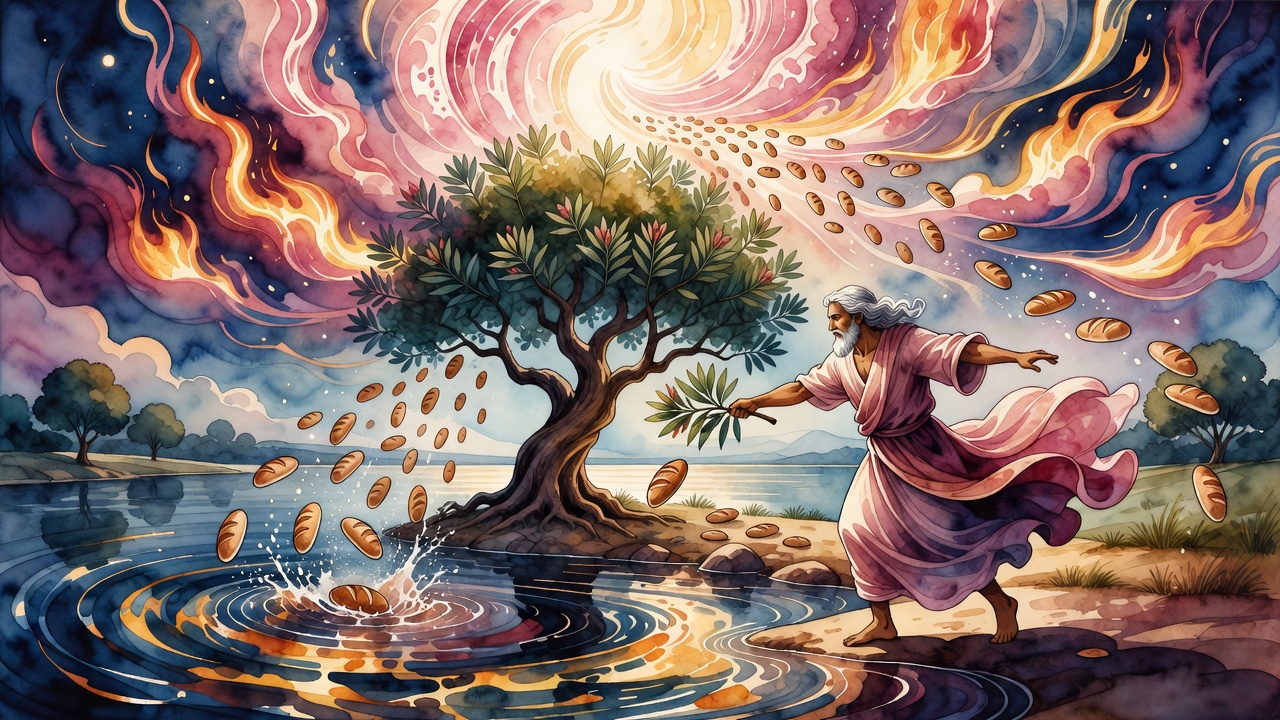
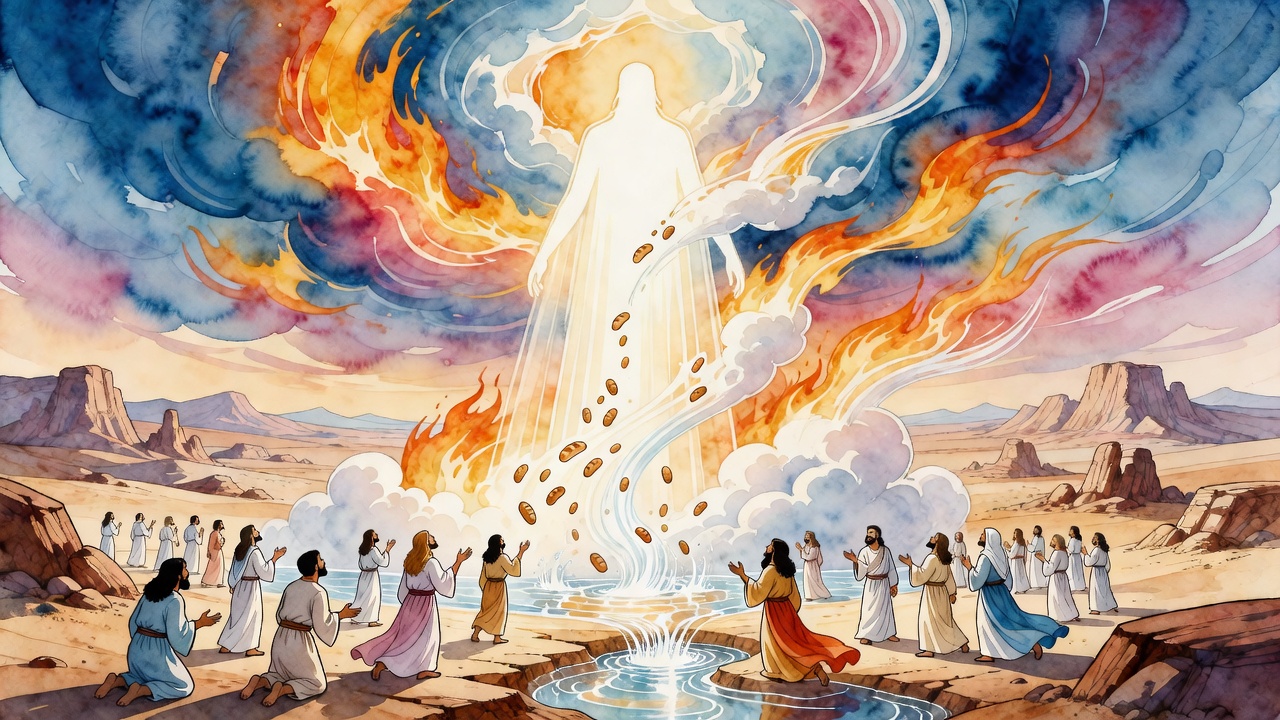
In the ordinary world a servant carries his master. In the wilderness the order inverted. God bore Israel the way a father bears a tired child, lifting them as on eagles' wings while dust rose behind the column (Deuteronomy 1:31; Exodus 19:4). Water did not fall as rain. It rose when they sang to the well. Bread did not come up from plowed ground. It fell, daily, stubborn as mercy.
A student usually walks ahead of his teacher with a lamp. Here the pillar of cloud went first and never quit by day. A student dresses and shoes his master. Here Israel wore embroidered cloth and fine leather that did not wear out under their feet. A student stands guard while the master sleeps. Here the Guardian of Israel neither slumbered nor slept through any watch of the night.
The camp felt the reversal in their bodies. They had left brick and whip, and now the One who had broken Pharaoh walked in the low place, doing the work servants do, because this people was near to His heart.
They Named Egypt's Free Food
Hunger has a long memory. When the manna grew dull on the tongue, the people named Egypt's free food as if free food had not been purchased with bent backs. Fish, they said. Cucumbers. Melons. Leeks. Onions. Garlic (Numbers 11:5).
Rabbi Yossi HaModai heard the list and stopped on the last vegetable. Cucumbers, kishuim, sit hard in the gut. Even in Egypt they were the least of the table, the thing a person ate when nothing better remained. Nostalgia had sweetened the scrap. The people remembered the free plate and forgot the free chains.
Moses heard the murmur and the manna kept falling anyway. The sky did not argue. It only fed.
The Cup That Holds When Full
Later Rabbi Zeira set a cup on the table beside that memory of bread. An empty cup on a human table has room. A full cup spills. Heaven works the other way. The vessel already full of listening is the one that can hold more. The empty ear, the one that stops hearkening, loses even the little it had.
So the doubled phrase, "if hearkening you will hearken" (Exodus 15:26), became a rule of appetite. Use hearing and hearing grows. Neglect it and deafness deepens. Those who gathered manna with gratitude found the next dawn still white with bread. Those who only counted what Egypt had once put on a slave's plate found every miracle thin.
Ranks Turned Upside Down
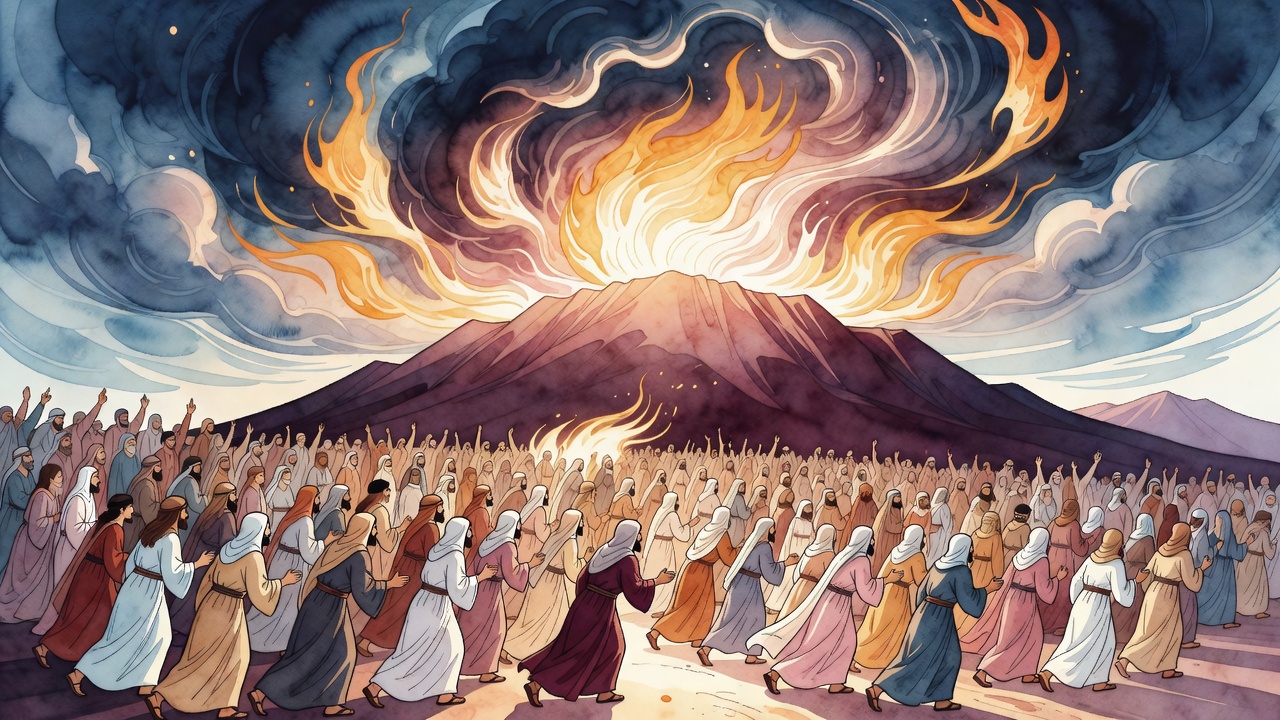
At night the campfires made small circles of faces. Mothers fed children first. Old men argued whether the pillar was thicker on the right side of the camp or the left. Young men measured the distance still left to the mountain they had been told they would serve at.
No king of Egypt had ever carried them. No officer had ever gone sleepless for their sake. The God who inverted every rank did it without speech most nights. The evidence was on the tongue and under the feet and over their heads. Bread from above. Water from below. A cloud that refused to abandon the road.
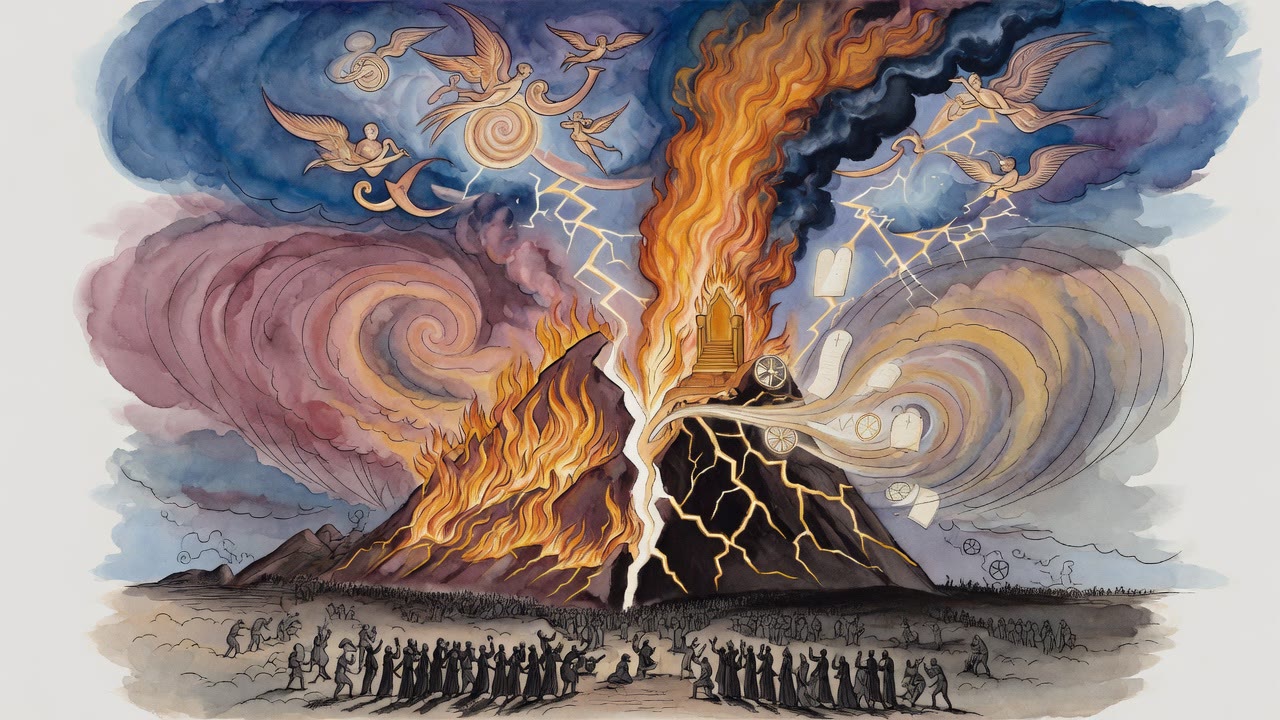
When they finally stood at the mountain, the service they would offer would not be the first service of the road. God had already served them all the way from the sea.
Hands Taught to Gather
Children learned the shape of the day by the manna's schedule. Too early and the frost had not finished its work. Too late and the sun turned generosity into melt. Mothers taught hands to gather only what the household needed, because hoarding spoiled overnight. When someone tried to store more than the portion, the leftover stank by morning.
Elders argued whether the pillar of cloud cast a cooler shade on the side where the sick lay. Young men raced to the edge of camp at dusk to see if the fire pillar thickened when the wind rose. They had feet that did not swell and clothes that did not tear, and that was argument enough for one more day of walking.
Egypt had measured them by bricks. The wilderness measured them by whether they could receive without owning the sky. Some failed the test with open mouths of complaint. Some passed it with quiet jars and a blessing muttered over flakes that still tasted strange. God kept the low place of service either way. The full vessel still had room. Heaven kept pouring.
← All myths