Israel Recoiled Twelve Miles From Each Word
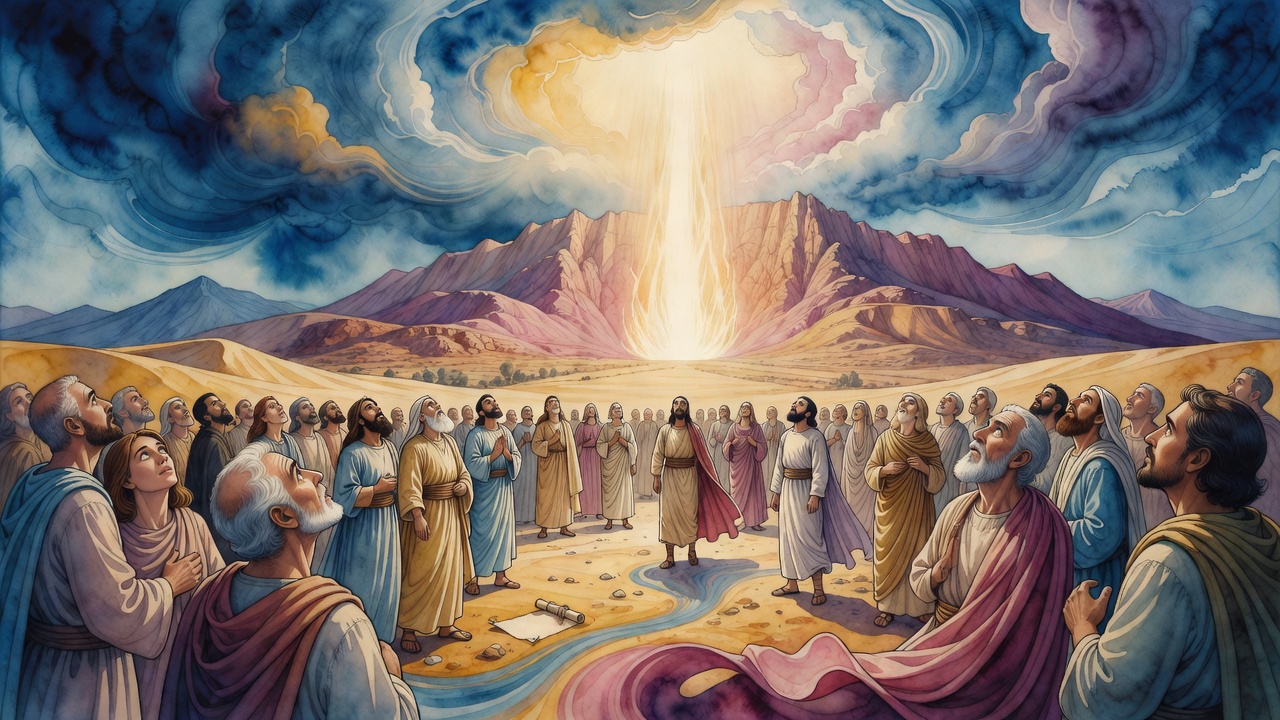
At Sinai each divine utterance drove the camp twelve mil back, then mercy drew the people forward to hear the next command.
Table of Contents
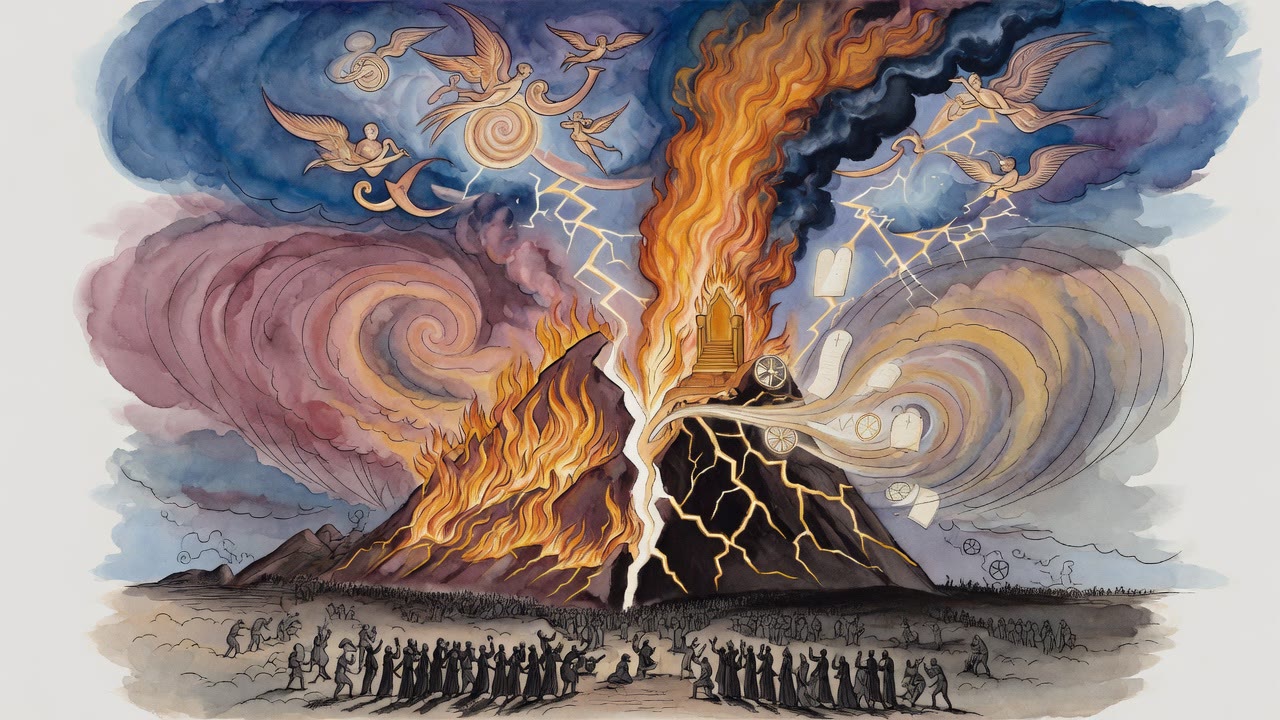
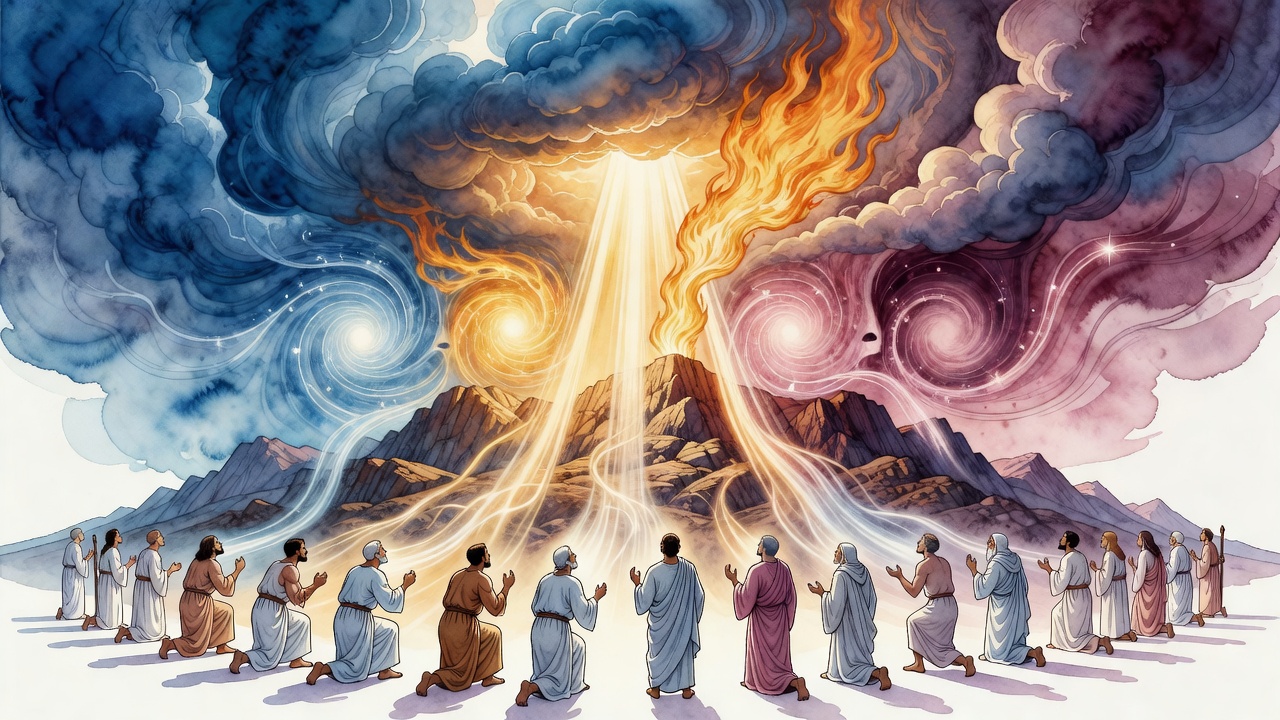
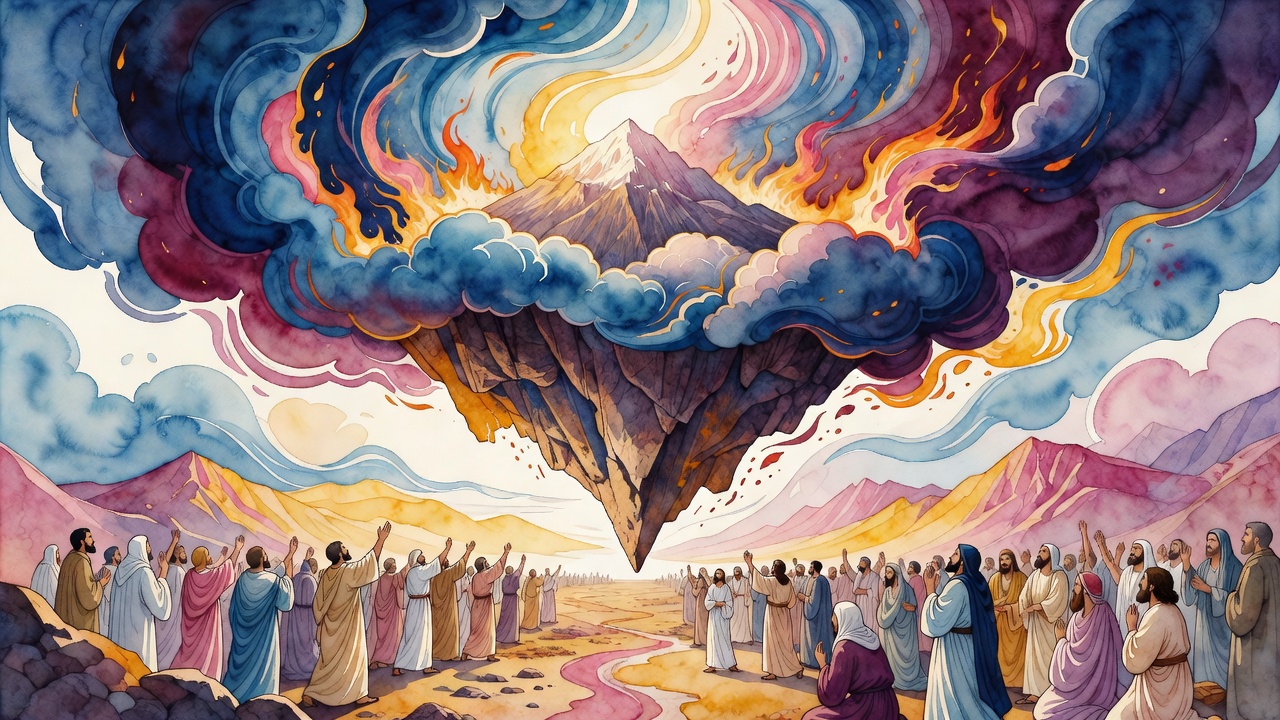
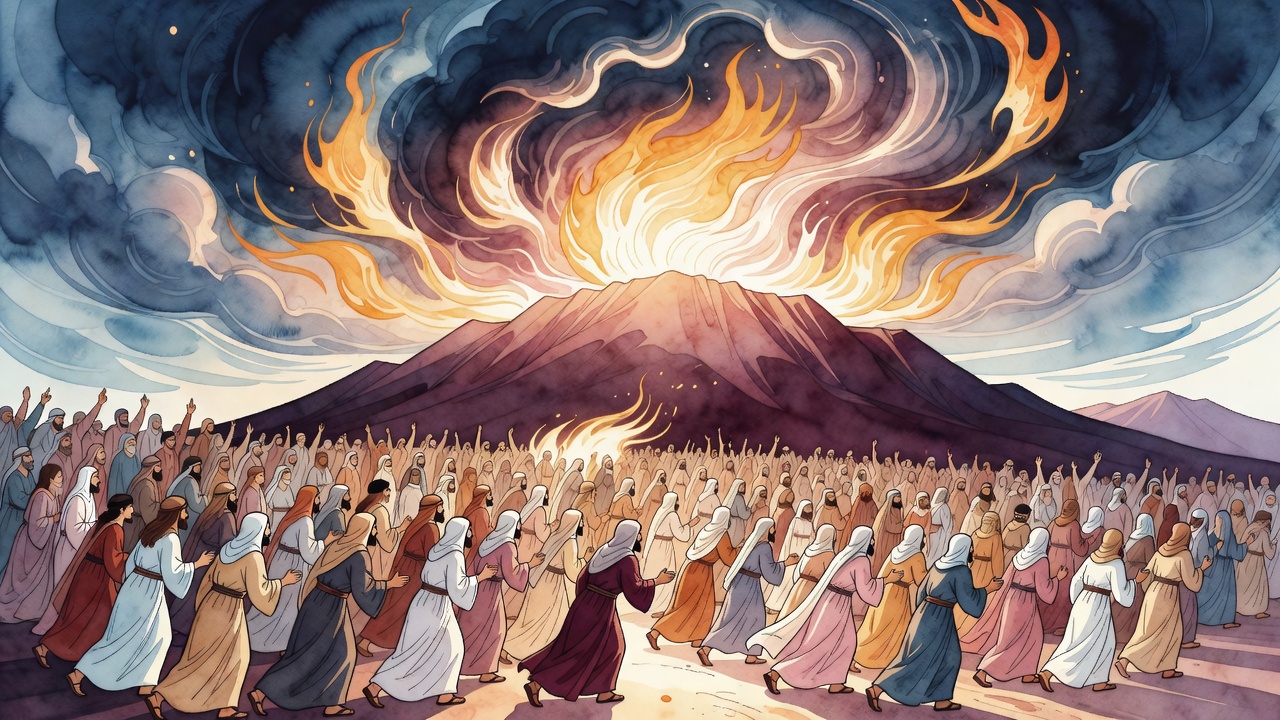
The mountain smoked and the people felt their heels leave the ground. Not in dance. In terror. One utterance from the cloud and the whole camp poured backward, bodies colliding, infants crushed to chests, elders gripping staffs that suddenly seemed thin as reeds. They ran until they stood a full twelve mil from where they had been, the length of their own encampment poured out behind them like a rope snapped free.
 Click for full size
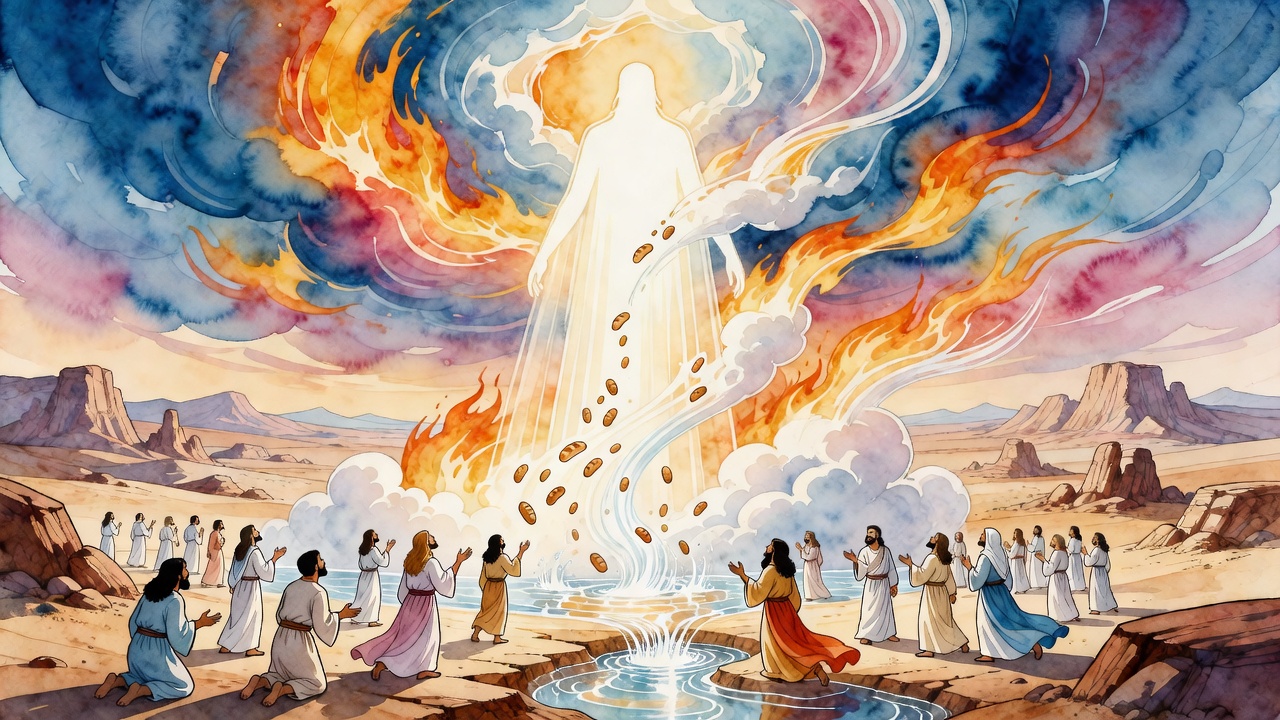
Then the Holy One's pull, or angels sent for the purpose, drew them the twelve mil forward again so they could hear the next word. Backward. Forward. A nation learning Torah with its feet while the ground still shook.
Outside the Length of the Camp
"And they stood from afar." The Mekhilta measures the distance without romance: outside of twelve mil. Each divine pronouncement is not a lecture in a quiet room. It is a wave that moves bodies the way a sea moves boats.
Imagine the dust of that rhythm. Children crying and then hushed by fear larger than tears. The boldest men discovering that boldness has a limit when the speaker is the One who spoke the world into being. Women counting heads between surges. The camp's full length becomes a unit of revelation, a way to say that no one stood casual under that voice.
If the altar stones later forbid a bold stride because even stones should not be treated with swagger, how much more did living people learn not to swagger when the mountain itself seemed to lean toward them. Sinai trained posture before it trained memory.
A Name That Exceeds Its Praise
Elsewhere the sages open Exodus on a list of names and hear, "As is Your name, O God, so is Your praise." A human king is flattered as a mighty warrior when he is weak, as merciful when he is cruel, as humble when he is only careful about his looks. The praise and the fact never match. Court poets earn bread by lying upward.
With the Holy One the fact always exceeds the word. Call Him mighty and He is mightier than the title. Scripture calls Him fearful in praises because He stands above every phrase mouths can invent. The people at Sinai learn that excess not as a clever saying but as knees that will not hold and lungs that forget how to take a full breath.
The list of names that opens the book of going out is therefore not only genealogy. It is a prelude to a Name that will not fit inside flattery. Israel carries human names into an encounter with a Name that cannot be trimmed to suit a king's vanity.
Why They Are Called the Ones Who Come
Israel is named for coming, for approaching, for answering a summons into presence. After every retreat they are still called to come near. The midrash hears in their name a people defined by approach rather than by a single unbroken courage.
They are not praised as a nation that never feared. They are marked as a nation that returned to the foot of the mountain after fear had thrown them the length of their own camp. Coming is a verb that survives panic. Coming is what you do when the angels, or mercy itself, draw you back twelve mil because the next word still needs ears.
A people that only fled would be a people of one motion. A people that flees and returns is a people of covenant. The feet write the commentary before the mouth can.
What the Rhythm Leaves Behind
Twelve mil back. Twelve mil forward. The Torah is given in that pulse. Anyone who later treats revelation as a calm syllabus in a shaded study has not stood in that dust, or has forgotten it on purpose.
The Name is larger than the praise. The camp is smaller than the voice. Between those two truths Israel learns to listen with a body that knows how to run and how to be drawn back. The commandments arrive not as decorations for the already brave but as speech that remakes the brave and the terrified alike.
When the smoke thins and the camp finally holds its place, the distance "from afar" remains in the story as a permanent measure. We stood far. We were brought near. Both sentences are true. Both sentences are needed.
Parents will later tell children about thunder and fire. The midrash adds what parents might forget: the running, the full length of the camp as a unit of fear, the return that made hearing possible again. Without the return there is no covenant speech, only a stampede. Without the Name that exceeds praise, the return would be only curiosity. Together they make a people who can be called the ones who come.
← All myths