The Omer That Leveled Rich and Poor in the Desert
Nachshon sent his whole household out to gather. A poor man went out alone. When they measured, both jars stopped at the same line.
Table of Contents
The camp already knew how the morning would go.
 Click for full size
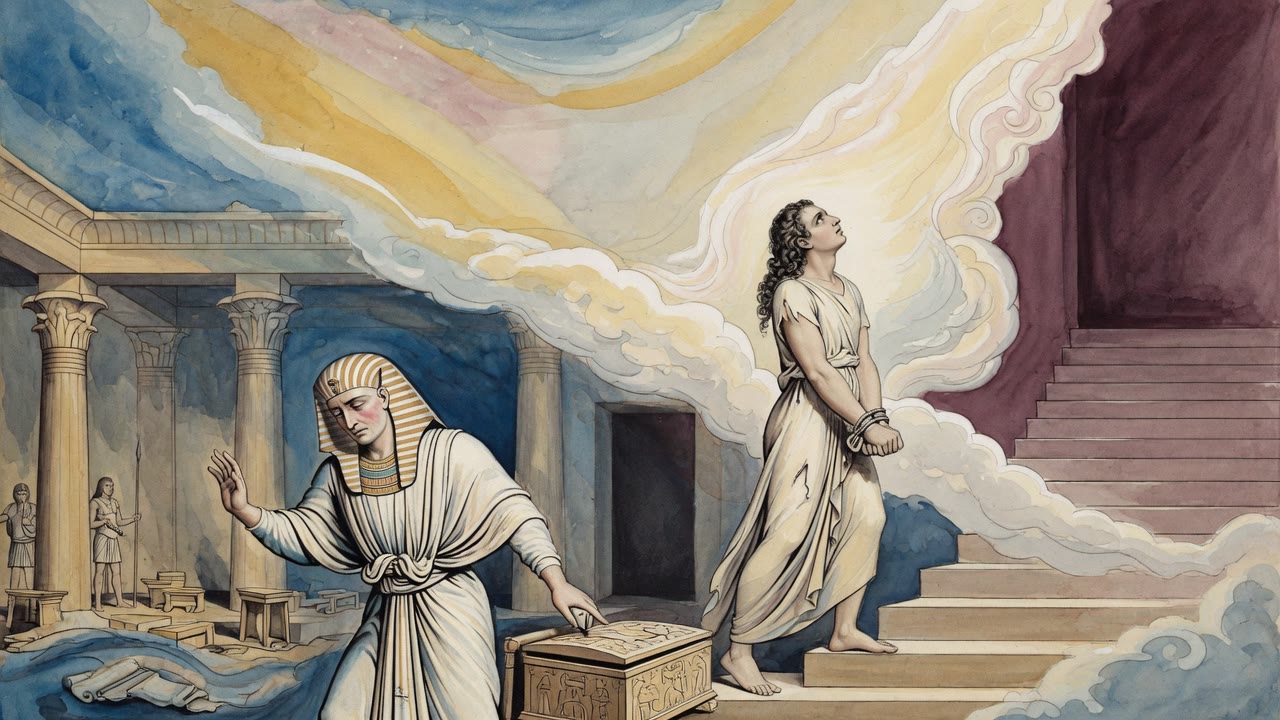
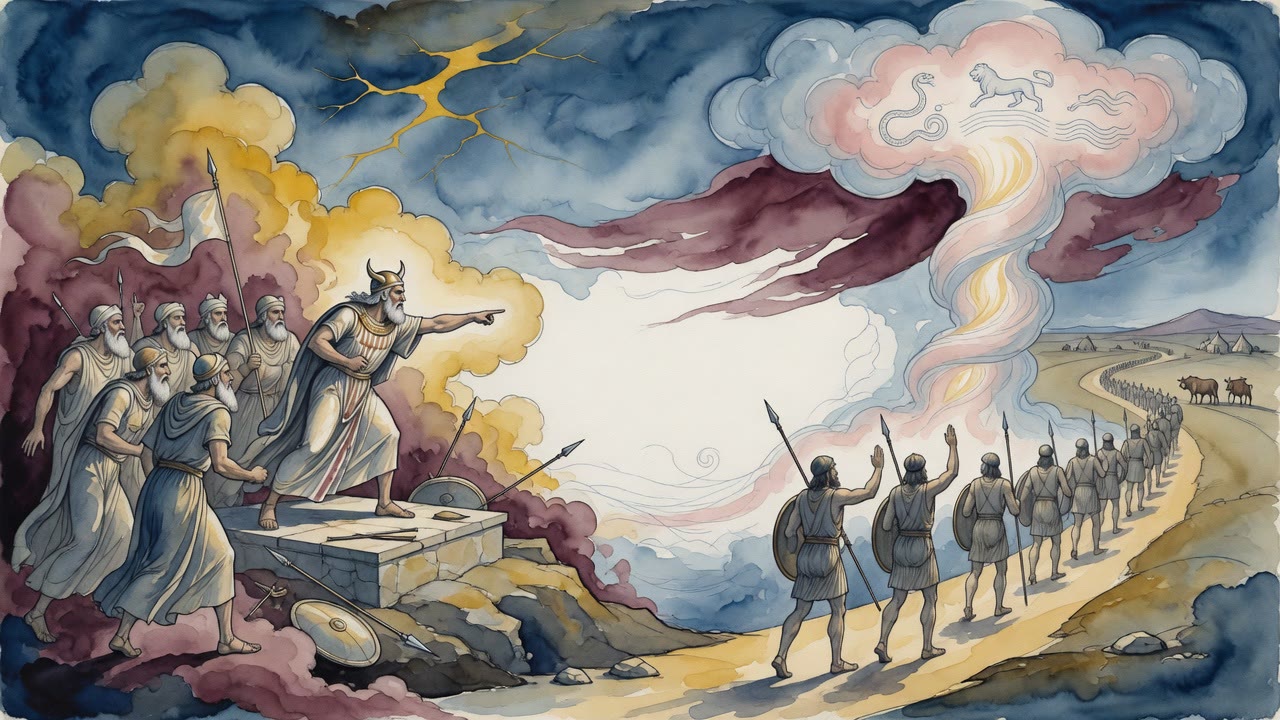
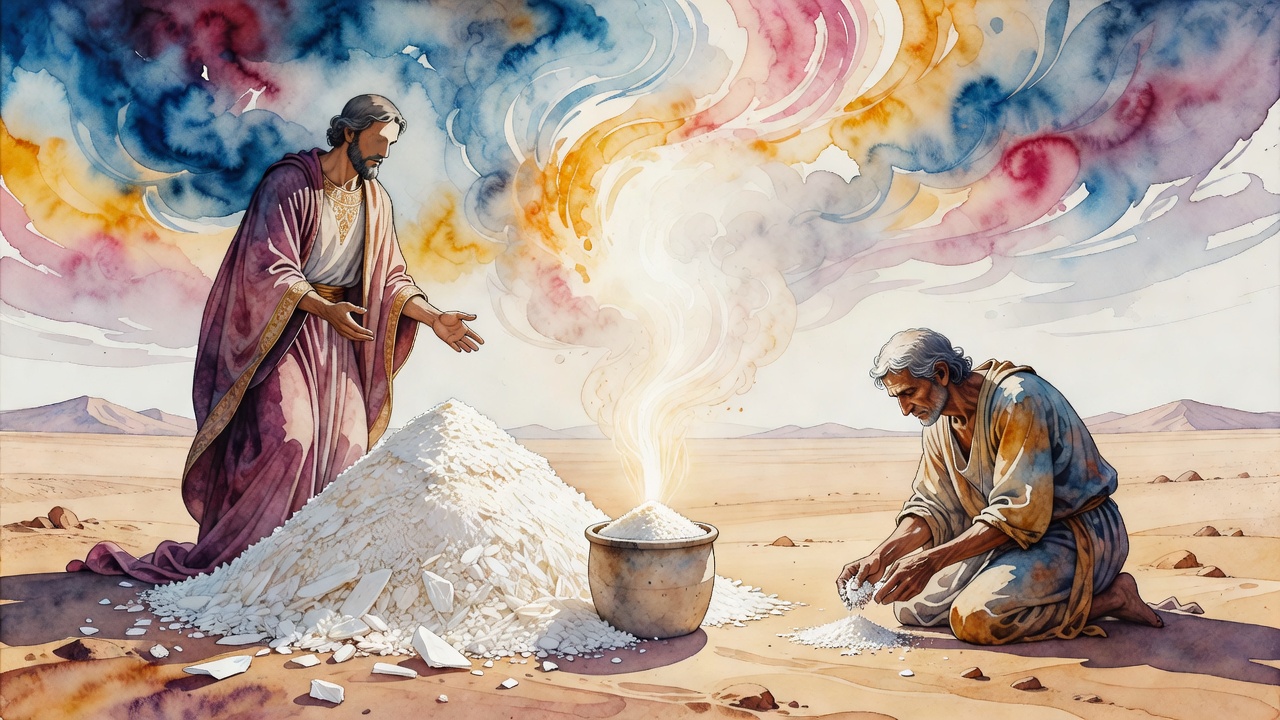
Nachshon ben Amminadav walked out with his whole household behind him. Servants, sons, daughters, anyone who could stoop. They came back with heaps, arms shaking, baskets spilling the white stuff that had come down with the dew. The poorest man in Israel walked out alone. He came back with whatever one pair of hands could scrape off the ground before the sun climbed.
Everybody said so out loud, the way people say a thing that has always been true. In Egypt the rich house ate and the poor house did not. No clay jar had ever changed that.
They had been told to gather an omer (עמר), a dry measure, for every person under their roof. Nobody expected the number to hold.
Both Loads Hit the Same Line
Then they measured.
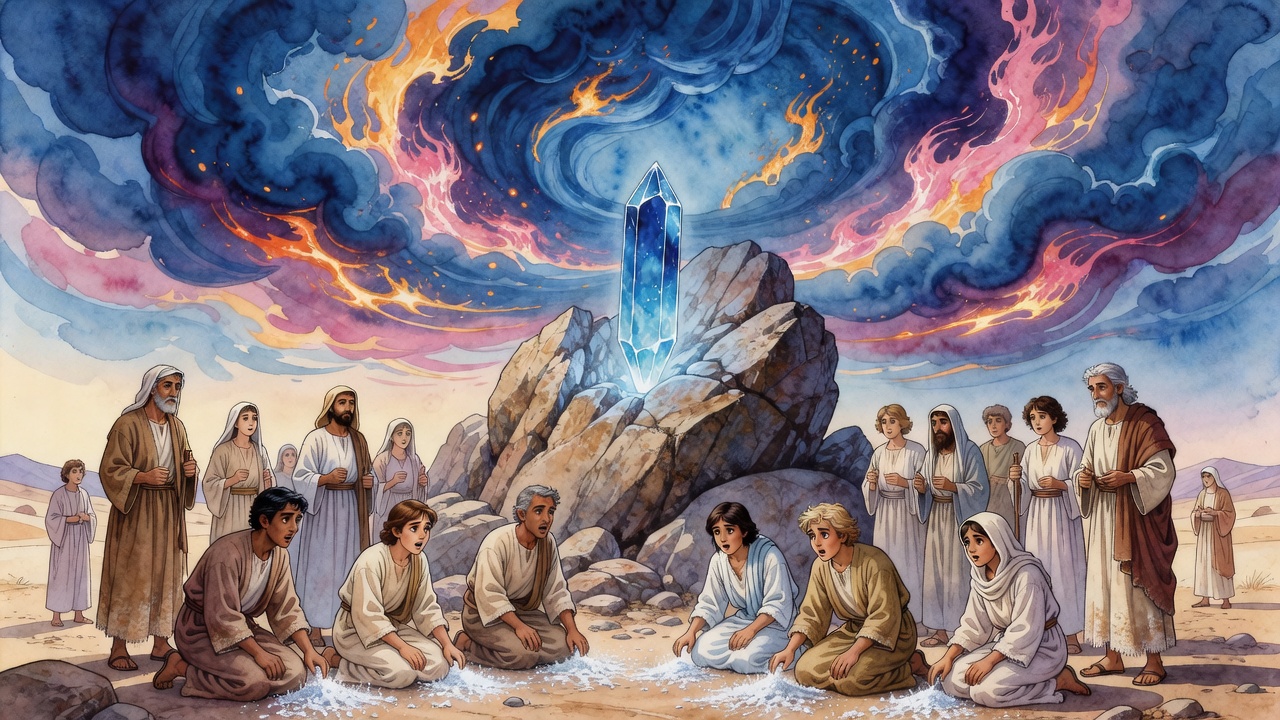
Nachshon's people poured their armloads into the omer jar and counted heads. One omer a head. Not roughly. Exactly. The heap that had looked like a prince's fortune stopped at the rim as if a hand had leveled it from above. Down the row of tents the man with the handful poured his scraping into the same measure. It rose. It kept rising. It came out one omer a head as well, and there was nothing left over in the prince's pile and nothing missing from the poor man's.
The poor man's wife stood in the tent flap and laughed once, short, as if someone had played a trick. His children put their fingers on the jar and felt the clay warm from the morning.
The gap between rich and poor had walked out into the desert that morning. It did not walk back. One measure had leveled it while nobody was looking.
The measure did something inside a body too. A man who ate that amount came away healthy and blessed. A man who ate less went sour in the bowels. A man who ate more was simply a glutton, and no miracle in the world could make him anything else. The omer was not a ration. It was the size of a person.
Israel gathered what they were told to gather and did not step over the line Moses had drawn. That held for about a day.
It Fell Warm, Then It Fell Again
Heaven could have dropped a year of food in one fall and been done with it. The sky opened every single morning instead.
So they could eat it warm.
A year's worth in one delivery would have sat in sacks going cold and stale. Coming down with the dew each dawn, it arrived hot, and a household ate it hot, and then the sky did it again the next day. Children ran out before the adults and scooped it off the crust of the ground, still damp, still smelling like the night. Nobody in that wilderness camp had ever been fed like that. In Egypt you were issued what your labor was worth, and you ate it whenever the overseer let you stop.
A woman in Nachshon's row held a piece on her tongue and closed her eyes. Warm. She had not tasted warm bread of her own in years.
They Hid Bread in the Corner
Moses said it plainly. Nobody leaves any of it until morning.
Some of them did not listen. They waited until the tent flaps were down, wrapped a portion, and pushed it into a corner where it would keep. They were not thieves. They were people who had spent their lives in a country where the man who saves eats and the man who trusts starves, and the habit came out of their hands before they could think about it.
The camp sorted itself that night. The good men left nothing over. The ones who were not good men left something over.
The smell came first. Sometime in the night the hidden portions turned, and by dawn the stink was in the cloth and in the corner and in the whole tent. A child woke and gagged. Then came the worms, working up through the spoiled sweetness of bread that had fallen out of heaven the morning before.
Outside, the fresh fall already lay clean on the ground, white as frost, waiting for anyone who would walk out and trust it.
Moses Stood Over the Ruined Jars
Moses went from tent to tent while the new manna was still lying there, and he lost his temper.
"Why have you done this?"
That was the whole question. Not a lecture. Not a ruling. A man standing over a crawling jar, demanding to know what its owner had been afraid of.
They had no answer that would sound like anything. They had thought the sky might not open twice.
On the sixth day the rule turned inside out. Take double, they were told, and keep half of it overnight for the seventh. The same people wrapped the same bread and set it in the same corner and lay down waiting for the smell. A man in the poor row put his ear to the cloth in the dark, listening for the first wriggle, and heard nothing.
In the morning there was no smell. There were no worms. The manna they had been ordered to keep sat exactly as it had fallen. The manna they had kept on their own initiative had rotted. The difference between the two piles was never about the bread.
← All myths