Parshat Shemini5 min read

Heaven Rejoiced When Israel Raised the Mishkan

On the eighth day the people set the last board. Heaven used creation's own words again, and Moses blessed the work of their hands.

Curated by Arthur · Told by Maggid ·
Table of Contents
  1. The Last Board Settles
  2. Moses Blesses the Workers
  3. Two Names Spoken Together
  4. Presence Looking for a Floor
  5. Establish It, Establish It
Heaven Rejoiced When Israel Raised the Mishkan Click for full size

The Last Board Settles

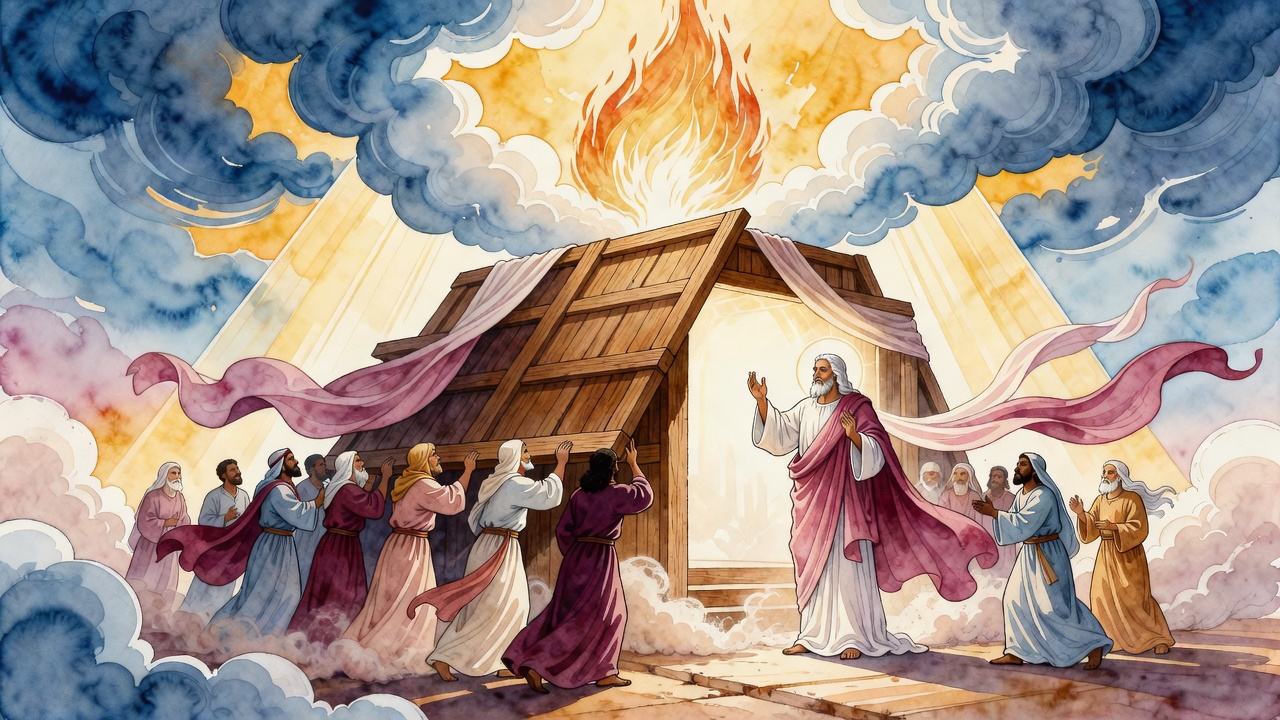
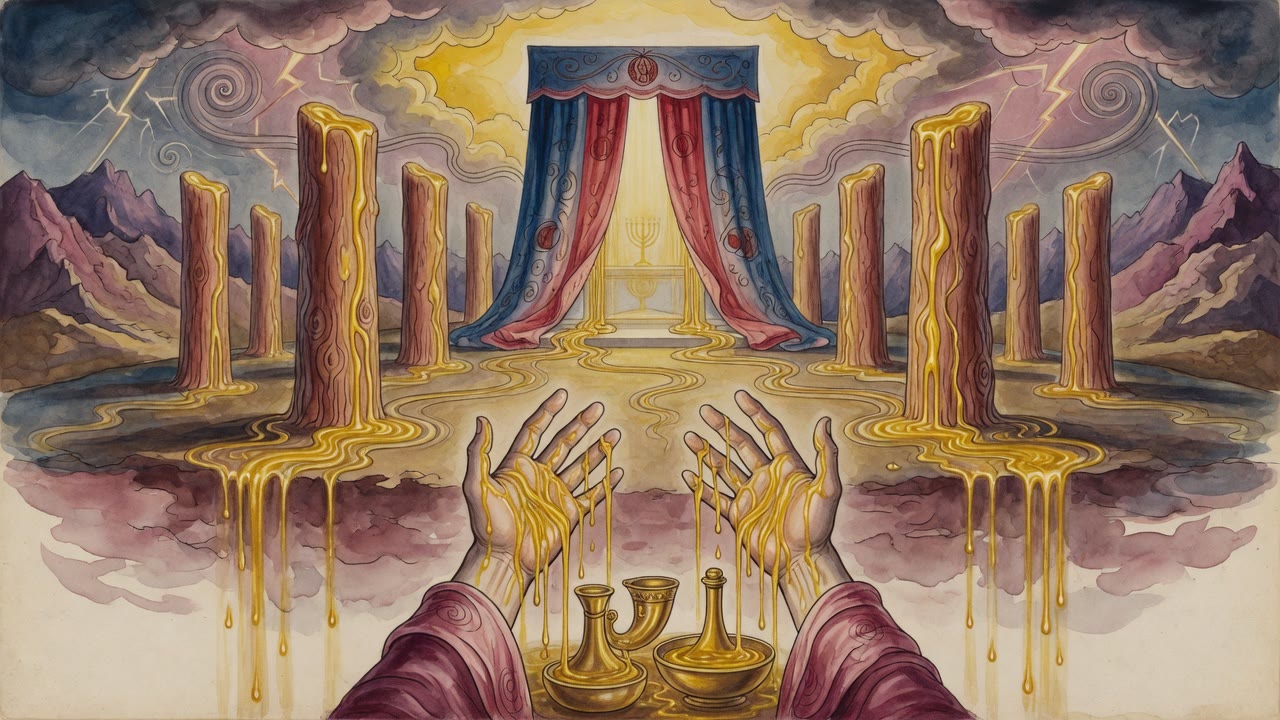
The people set the last board and the sockets took its weight. Gold caught morning. Acacia remembered the tree it had been. Blue and purple and scarlet threads held their dye like vows. For seven days the Mishkan (the portable sanctuary Israel carried through the wilderness) had been raised and taken down in rehearsal under Moses' eye. On the eighth day it stayed.

Scripture opens that morning with small words: "And it was." Heaven had used those words when the world itself was born, evening and morning, the first breath of a cosmos learning sequence. Now the same gladness stirred above a tent made by human hands. The day Israel raised the dwelling was as dear before the Holy One as the day He hung the stars and split the waters.

A second creation, portable, woven, smelling of dye and wood and the sweat of free people who once only made bricks for someone else. Children watched the cloud of glory as if it were a living roof deciding where to land. Elders remembered brick-molds and could not quite believe their hands had made a house for the Holy One instead of store-cities for Pharaoh.

Moses Blesses the Workers

When the tools were laid down, Moses came among them. His blessing was not abstract. "May the Presence come to rest upon the work of your hands." Rabbi Meir taught that he asked for them to be multiplied a thousandfold, labor becoming lineage of craft. The people answered with a psalm already old in their mouths: "Let the sweetness of our God be upon us, and the work of our hands, establish it, establish it."

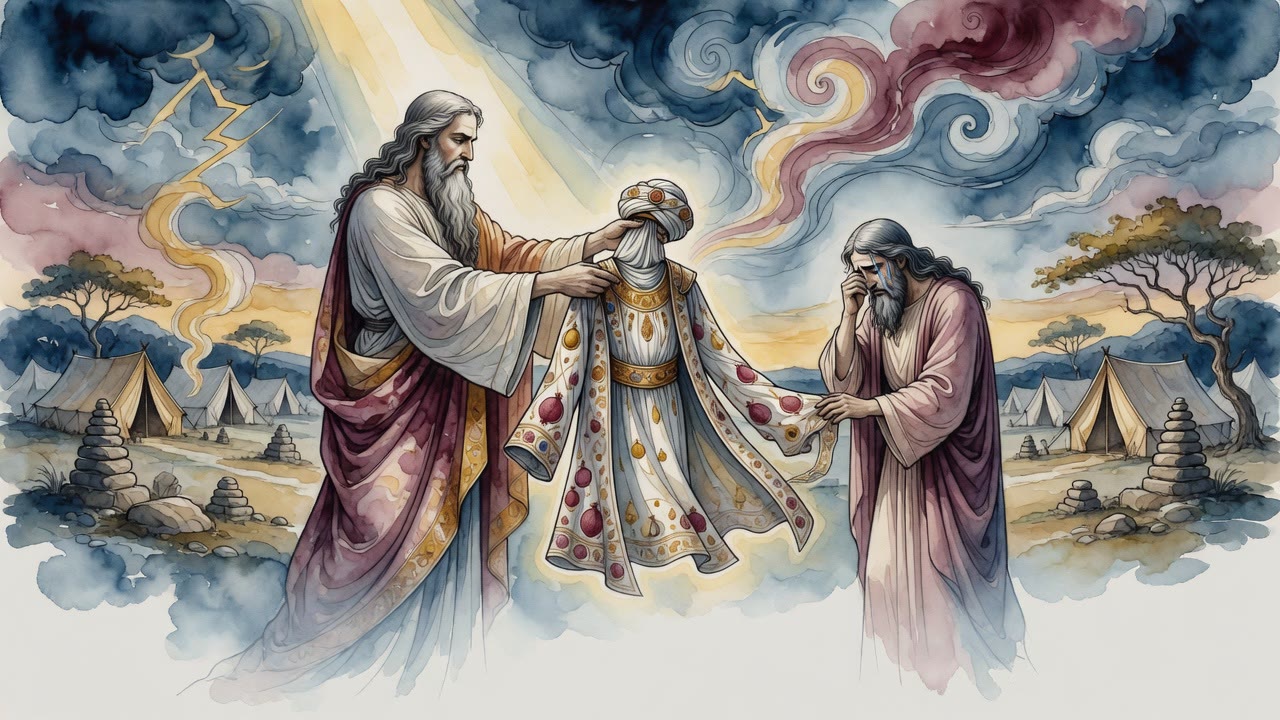
Hands that had spun and hammered and measured now waited empty for the Presence to choose the work. The Song's king of peace is crowned, the sages say, by a mother who is the Tent of Meeting herself, woven in the colors of royalty and priesthood, and by a mother who is Israel, the nation that set a crown on her King by building Him a place to dwell in their middle.

Blessing and answer passed between leader and camp like a final beam locking into place. The eighth day smelled of oil and fresh-cut wood. Joy in heaven was not abstract music. It was recognition: the creatures had finally built a place that matched the world's first morning in willingness, if not in scale.

Two Names Spoken Together

Again and again the Torah pairs Moses and Aaron as equals, eighteen times by the midrash's count, as if already teaching the eighteen blessings that would one day stand at the center of Jewish prayer. Leadership here is not a single throat. It is two brothers under one command, prophet and priest, speech and service, the man of the mountain and the man of the altar.

On the day the Mishkan rose, that pairing mattered. Moses blessed the makers. Aaron and his sons would light and arrange and carry and enter. The camp's vertical life, prayer rising at morning, afternoon, and night, would later be traced to Abraham standing early before the Lord, Isaac pleading in the field at the turn of day, Jacob encountering the place as darkness fell. But the first public sweetness after the building was a blessing on labor just finished, Presence invited onto boards still warm from human touch.

Presence Looking for a Floor

Creation had given God a world wide as light. The Mishkan gave God a floor inside Israel's schedule, an address in the wilderness of their days. Boards and curtains do not trap the Infinite. They train a people to make room, to know when to approach and when to stand back, to treat craft as something Heaven might inhabit.

When the Presence rests on the work of hands, ordinary skill becomes liturgy. The eighth day is not only a date on a wilderness calendar. It is the moment human making and divine joy meet without shame. Heaven does not despise the dye-stained fingers. It answers them with the same formula it used for stars. That answer is the real dedication. Gold is only the witness.

Establish It, Establish It

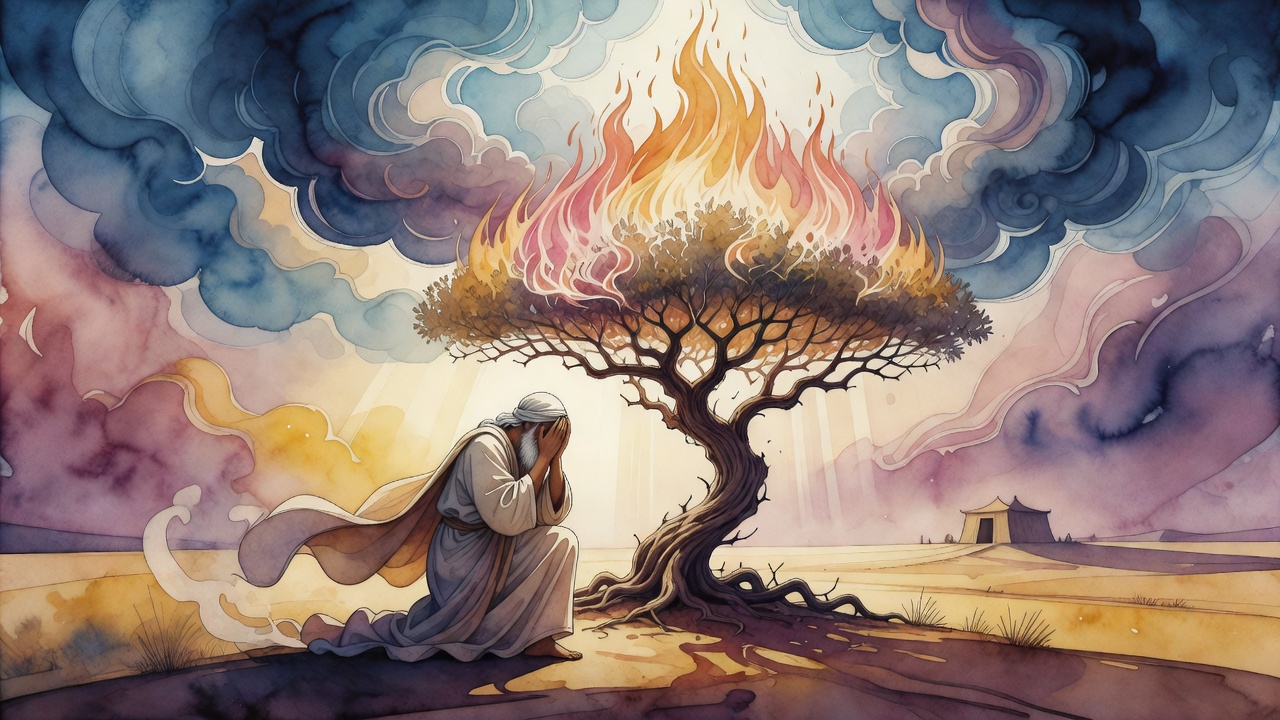
The doubled plea in the psalm is the fear under the celebration. Work can fall. Gold can be melted into a calf on another day. Clouds can lift. The people ask twice for establishment because they already know how quickly glory can be spent and how much of Egypt still lives in their muscles.

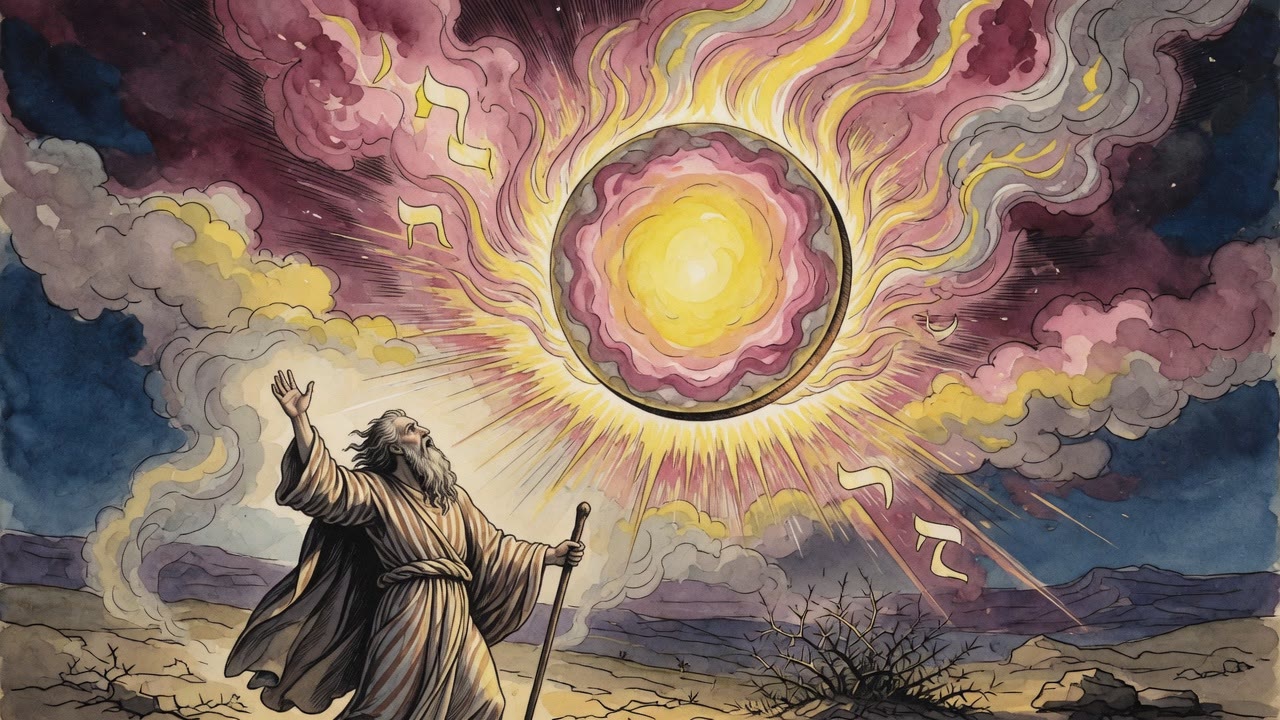
Still, on that morning, before any later failure, the tent stood and Heaven was glad. Moses' blessing hung in the air like a cloud lower than Sinai and nearer than the sky. The King of peace wore a crown his mother made. The tools cooled in the sand. The service began, two names still speaking together, eighteen future blessings already hiding in their paired breath.


← All myths
From the tradition

Sources

2 sources

The texts behind this telling. Some cards carry a translation of the source; others are our own retelling of it, and each card says which. Every card links out to the original.

Sifra, Mekhilta deMiluim II 15Sifra, Mekhilta deMiluim

Translation of the source text.Sifra by Rabbi Shraga Silverstein · CC-BY

15) What is the intent of (Vayikra 9:1) "And it was (on the eighth day")? We are hereby taught that (the day of the erection of the mishkan was as joyous before Him on high as the day of the creation of heaven and earth, of which it is written (Bereshith 1:5): "And it was evening and it was morning." And here it is written "And it was." And when Israel finished the work of the mishkan, Moses came and blessed them, viz. (Shemoth 39:43): "And Moses saw all the work … and Moses blessed them." With what blessing did he bless them? He said to them: "May the shechinah repose on the work of your hands. R. Meir says: He blessed them thus: "May the L–rd, the G d of your fathers, add to you, such as you, a thousand times!" (Devarim 1:11), and they responded: "And may the pleasantness of the L–rd our G d (His shechinah and His consolations) be upon us. And establish the work of our hands (the mishkan) upon us (that the shechinah reside therein), and the work of our hands (in our daily lives) establish it (that blessing repose upon it"). (Tehillim 90:17). And of that time it is written: "Go out and see, O daughters of Zion (children who are distinctive ["metzuyanim" (like "Zion")] with mitzvoth), the king Shelomoh (the King who is the source of peace [shalom] with the crown wherewith his mother crowned him." (Shir Hashirim 3:11). "his mother": This is the tent of meeting, which was distinctive with blue and purple wool, with scarlet and with linen. "his mother": This is none other than Israel, viz. (Isaiah 51:4): "And my nation (leumi), give ear to me." Read it not "leumi" but "leimi" (my mother).

Full source
Bamidbar Rabbah 2:1Bamidbar Rabbah

Retold in our words. Read the original at the link below.The Sefaria Midrash Rabbah, 2022 · CC-BY

One tiny, but fascinating corner of that history, exploring the origins of prayer times and blessings.

Our story begins in the Book of Numbers, in Hebrew, Bamidbar, specifically the second verse of the second chapter. It reads: "The Lord spoke to Moses and to Aaron, saying.” (Numbers 2:1). But in Bamidbar Rabbah 2, the Midrash, that is, the interpretive tradition, finds hidden depths.

The Midrash points out something interesting: the names of Moses and Aaron appear together as equals in eighteen different places in the Torah. Why eighteen? The Rabbis see a connection to the eighteen blessings of the Amidah, the central prayer in Jewish services. It’s a beautiful idea, this mirroring of leadership and devotion. Each time we say these blessings, we’re echoing the unity and strength embodied by Moses and Aaron.

Where did the idea of reciting these prayers come from in the first place? The Midrash goes on to connect the origins of our three daily prayer services to the three patriarchs: Abraham, Isaac, and Jacob. It’s not explicitly stated in the Torah that they established these prayers, but the Rabbis find clues in their actions.

For Abraham, we have the verse: “Abraham arose early in the morning to the place where he had stood before the Lord” (Genesis 19:27). The Midrash argues that "standing" here is synonymous with prayer, citing (Psalms 106:30), "Pinḥas stood and prayed." So, Abraham's early morning standing is interpreted as the origin of Shacharit, the morning prayer.

Then comes Isaac. We read, “Isaac went out to stroll [lasuaḥ]” (Genesis 24:63). The Hebrew word lasuaḥ, "to stroll," isn't taken literally. Instead, the Midrash connects it to the word sicho, meaning "plea," as in the verse: “The prayer of a poor man when he is faint and pours out his plea [sicho] before the Lord” (Psalms 102:1). Therefore, Isaac's stroll becomes associated with Mincha, the afternoon prayer.

And finally, Jacob. The verse says, “He encountered [vayifga] the place…” (Genesis 28:11). Again, the Midrash sees deeper meaning. The word pegia, "encountered," is linked to prayer. (Jeremiah 7:16) says, “And you, do not pray on behalf of this people…and do not plead [tifga] with Me.” Thus, Jacob's encounter becomes the foundation for Maariv, the evening prayer.

So, we have this beautiful chain of connection: Moses and Aaron, linked to the eighteen blessings, and the patriarchs, laying the groundwork for our daily prayer times. And how does it all tie together? The Midrash suggests that just as Moses and Aaron are paired in eighteen places, hinting at the eighteen blessings, these blessings also correspond to the eighteen mentions of God’s name found in the Shema Yisrael and Psalm 29 ("A psalm by David. Give to the Lord, sons of the mighty").

These connections might seem like small details at first glance, but they reveal a profound understanding of tradition and the way our ancestors sought meaning in every aspect of their lives. What seemingly small actions are we taking today that will shape the traditions of tomorrow?

Full source