5 min read

Why Heaven Pours Wisdom Only Into the Wise

Bezalel is called by name before he lifts a tool, and a lady learns why wisdom is lent only to those who already know how to spend it.

Curated by Arthur · Told by Maggid ·
Table of Contents
  1. The Lady and the Loan
  2. Called by Name Before the First Cut
  3. What the Wise Already Do
  4. Hammer, Thread, and Spirit

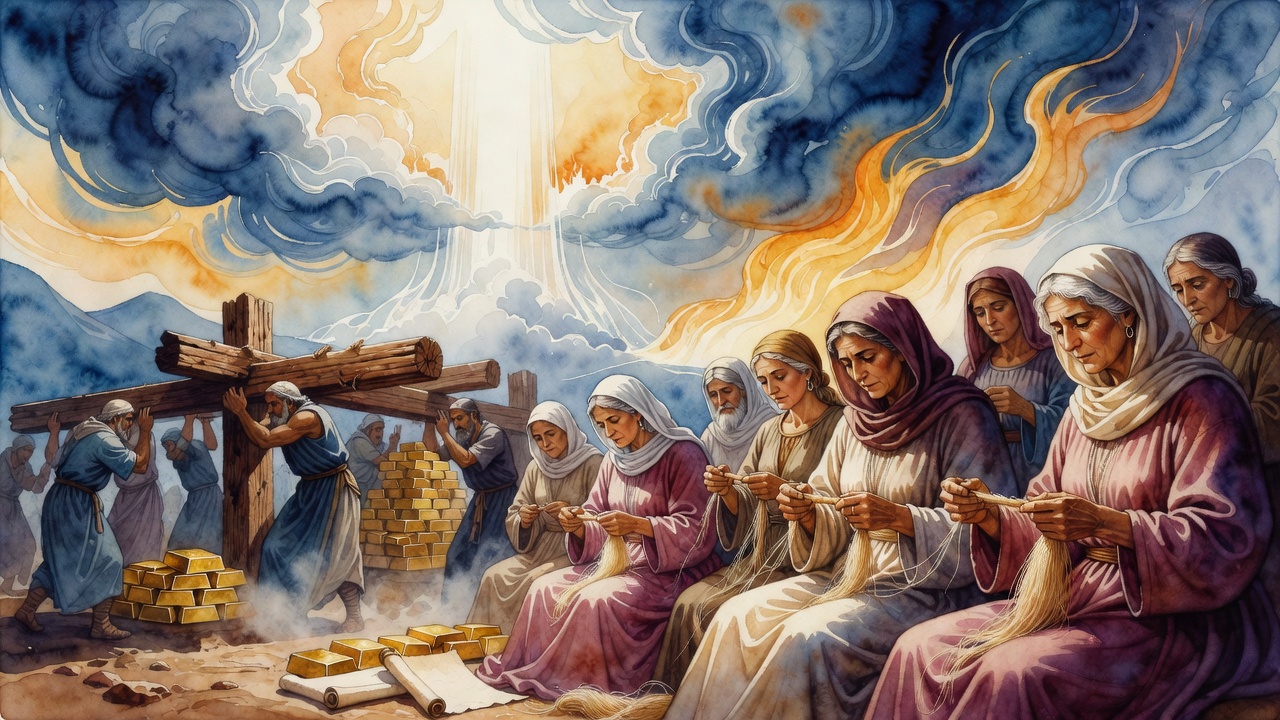
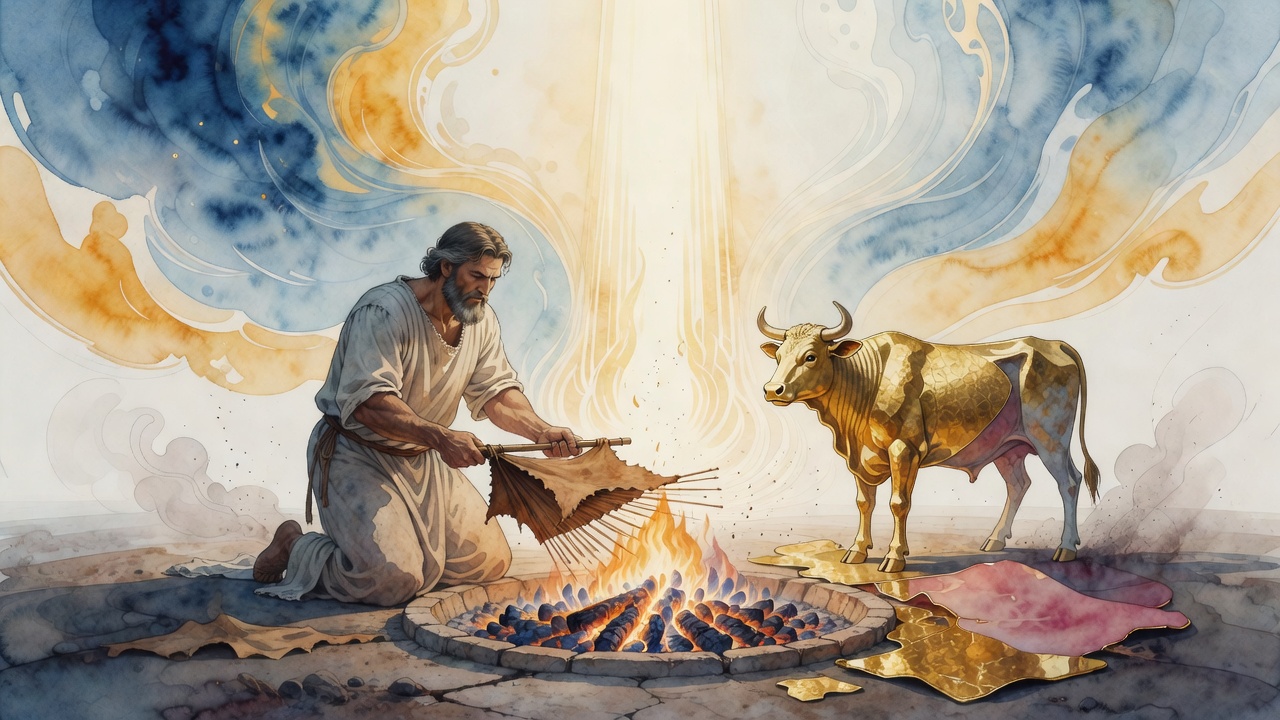
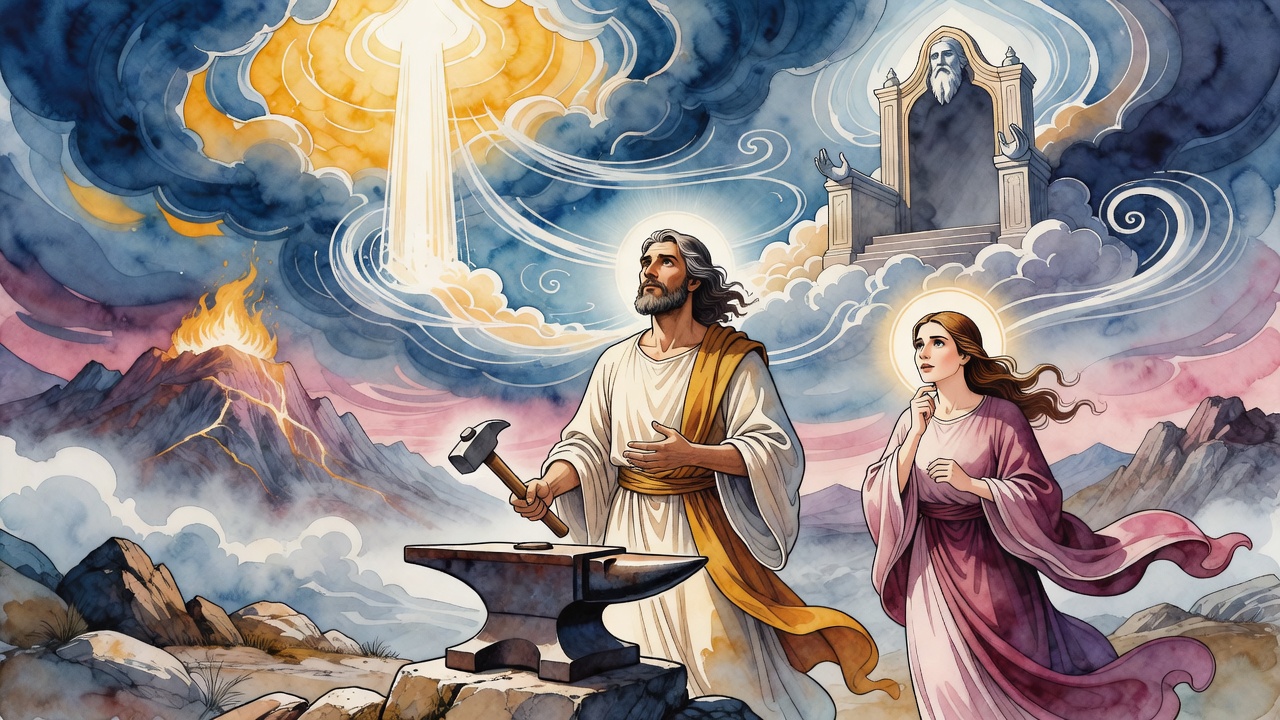
Bezalel stands empty-handed when heaven fills him. "And he hath filled him with the spirit of God, in wisdom, in understanding, and in knowledge" (Exodus 35:31). The midrash notices the insult to fools. Wisdom is mentioned again even though he already had some. God does not dump insight into a void. God pours into a vessel that already holds a little.
Why Heaven Pours Wisdom Only Into the Wise Click for full size

That rule will offend a lady who wants fairness to look like equal rain on every head.

The Lady and the Loan

A lady asks Rabbi Yose son of Halafta what Daniel means: "He giveth wisdom unto the wise" (Daniel 2:21). Should it not say He gives wisdom to the fool, who needs it more?

Rabbi Yose answers with a market question. Two men come to borrow money, one poor, one rich. To whom do you lend? She answers at once: the rich man. If he loses the loan he can still repay. If the poor man loses it, the debt dies with the accident.

He tells her to hear her own mouth. If the Holy One gave wisdom to fools, they would sit in privies, filthy alleys, and bathhouses and never put it to work. So God gives wisdom to the wise, who sit in the chambers of the elders, in synagogues, and in houses of study, and use what they receive. Therefore Scripture says He filled Bezalel with wisdom. The second gift rides on the first.

The lady falls quiet. Fairness has met a lender's logic she cannot easily dismiss, even when her heart still aches for the fool left outside the loan.

Called by Name Before the First Cut

"See, the Lord hath called by name Bezalel" (Exodus 35:30). The call arrives before the chisel. Israel does not vote him into genius. Heaven points.

Isaiah's challenge hangs over the workshop: "To whom then will ye liken Me?" (Isaiah 40:25). A man walking in darkness who is shown a light should thank the one who lit it. Israel sleeps under stars God kindles and still reaches for comparisons. Lift up your eyes. Who created these? The midrash braids cosmic naming with human naming. Stars are called. A craftsman is called. Order above and order below answer the same voice.

When God wishes, all hosts stand under one name. When God wishes, each is summoned alone. Bezalel is the alone that the Sanctuary requires: one mind able to translate heavenly pattern into gold, wood, and weave without losing the pattern in the hammer's noise.

What the Wise Already Do

The spirit of God in Bezalel is not a trance that cancels apprenticeship. Wisdom, understanding, knowledge: the verse stacks skills like tools on a bench. He already sat among those who know how to learn. The filling finds a place to land.

In the study house the same law holds. A student who has never opened a page will not be mocked with a sudden crown of insight he cannot spend. A student who already turns verses at night may wake to a gate that was locked yesterday. Heaven lends to those who keep books.

The lady's fairness still aches on the walk home. Why not lift the fool first? The midrash answers with use. Wisdom that never leaves the alley is not gift but waste. God is not a careless lender. The Sanctuary cannot be built by a sudden flash in a mind that will not show up at dawn with clean hands and a measured line.

Hammer, Thread, and Spirit

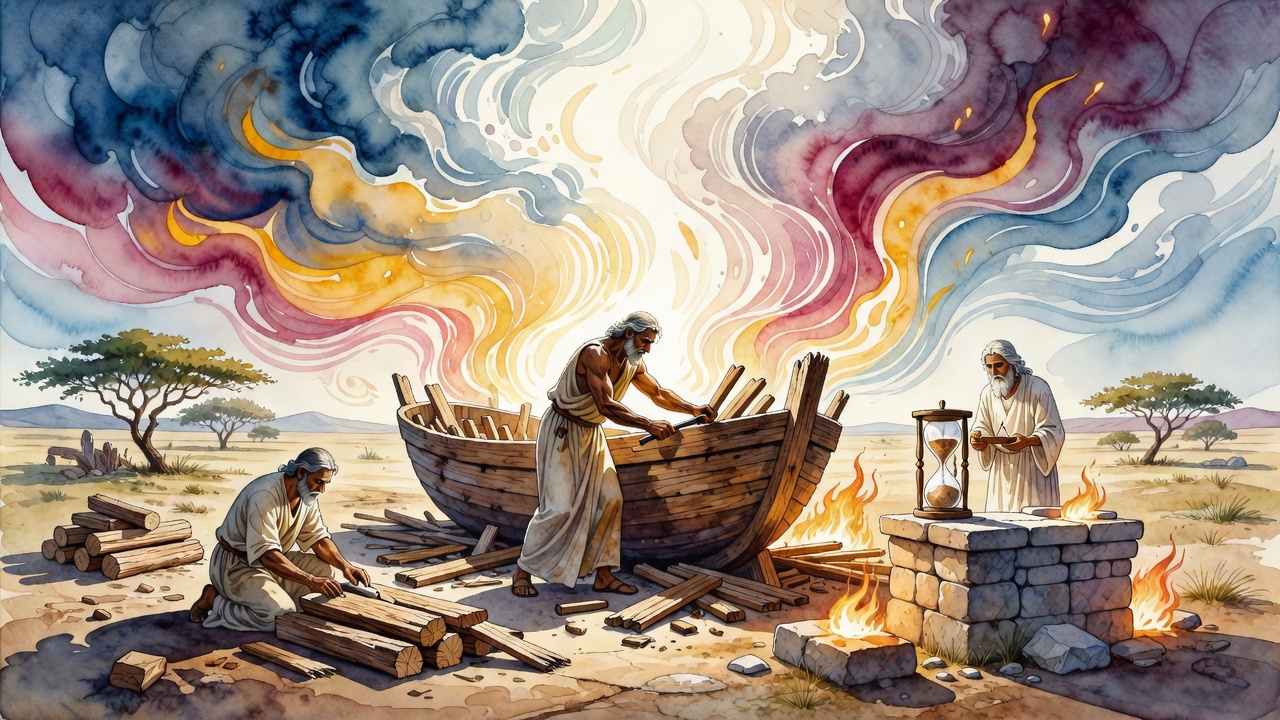
Bezalel touches gold that will hold light, wood that will hold Presence, fabric that will hold borders between holy and holier. Every accurate joint is an argument for Rabbi Yose's loan. The wise man repays wisdom by building what the nation needs.

Around him work men and women filled "with wisdom of heart." The singular call does not make a lonely genius cult. It seeds a crew. Still the midrash keeps the scandal: more is given where some already is. The crew thrives because the named center already knew how to receive.

At dusk the frames stand against a sky the same color as the afternoon the lady asked her question. Her question is not erased. It is answered in timber and blue thread. Wisdom went to the one who would not leave it in a bathhouse joke. The Sanctuary rises because a gift found a borrower who could return it as glory, joint by joint, until even a fool walking past could see that heaven's loan had been spent on a house for God.

Morning finds apprentices copying Bezalel's measures onto fresh wood. One of them once wasted a season in empty talk. He keeps quieter now. The lady's question still walks the roads of Israel, but in this yard the answer is practical: show up able to learn, and heaven may add what pure need alone never earned.

Rabbi Yose walks home past a bathhouse and hears empty laughter spill into the street. He thinks of the lady and of Bezalel and does not regret the hard edge of the teaching. A Sanctuary is not built from equal distribution of unused insight.


← All myths

From the tradition

Sources

2 sources

The texts behind this telling. Some cards carry a translation of the source; others are our own retelling of it, and each card says which. Every card links out to the original.

Midrash Tanchuma, Vayakhel 2Midrash Tanchuma

Retold in our words. Read the original at the link below.Townsend 1989 translation of Midrash Tanhuma, S. Buber Recension · CC-BY

And he hath filled him with the spirit of God, in wisdom, in understanding, and in knowledge (Exod. 35:31). Wisdom is mentioned, despite the fact that he had been endowed previously with wisdom, to teach us that the Holy One, blessed be He, does not grant wisdom to anyone unless he already possesses some wisdom. A lady asked R. Yosé the son of Halafta: “What is meant by He giveth wisdom to the wise (Dan. 2:21)? Should not the verse say ‘He giveth wisdom to the fool’?” He replied: “My daughter, if two men came to you to borrow money, one of them being poor and the other rich, to whom would you lend the money?” She answered: “I would lend the money to the rich man, of course.” “Why?” he asked. And she replied: “If the rich man should suffer a loss, he would still have sufficient money to repay me, but if the poor man lost my money, how could he possibly repay me?” He said to her: “Let your ears hear what your lips have said. If the Holy One, blessed be He, gave wisdom to fools, they would still sit in privies, in filthy alleys, and in bathhouses, and would not put the wisdom to use. Hence the Holy One, blessed be He, gives wisdom to the wise, who sit in the chambers of the elders, in synagogues, and in house of study, and they utilize that wisdom.” Therefore it is written: He hath filled him with wisdom (Exod. 35:35).

He gives wisdom to one who possesses wisdom and understanding and knowledge in all kinds of work. Similarly, you find that this was so in the case of Joshua: Joshua the son of Nun was full of the spirit of wisdom (Deut. 34:9), for he already possessed wisdom. This may be compared to a shopkeeper to whom a man goes to purchase wine, honey, oil, or brine. The shopkeeper smells the odor that comes from the bottle, and if it is of wine he pours wine into it, and he does likewise with honey, oil, or brine. When the Holy One, blessed be He, observes that a man has the spirit of wisdom within him, He fills him with additional wisdom. Hence He hath filled him with the spirit of wisdom, since he already possesses some.

Full source
Midrash Tanchuma, Vayakhel 4Midrash Tanchuma

Retold in our words. Read the original at the link below.Townsend 1989 translation of Midrash Tanhuma, S. Buber Recension · CC-BY

See, the Lord hath called by name Bezalel (Exod. 35:30). Scripture says elsewhere: To whom then will ye liken Me, that I should be equal? saith the Lord. Lift up your eyes on high and see: Who hath created these? (Isa. 40:25–26).

The Holy One, blessed be He, asked: To whom will you liken Me? If a man walking in darkness encounters another who lights the way for him, should he not be grateful for his kindness? Even so, should not you, for whom I cause the light to shine as you sleep at night, be grateful to me for My kindness? Hence, to whom will ye liken Me, that I shall be equal? (ibid.). Lift up your eyes on high and see: Who hath created these? (ibid.). By whose merit did these generations of the heavens (Gen. 2:4) exist? Because of the merit of These are the names (Exod. 1:1)? For whose sake do they all exist? Because of the merit of These are the testimonies, and the statues and the ordinances (Deut. 4:45)? Who created these? He who bringeth out their hosts by number (Isa. 40:26).

One verse tells us; He gave them all their names (Ps. 14:7), while another says: He called them all by their names (Isa. 40:26). How can these verses by reconciled? If He gave them all their names, why does it say: He called them all by their names? If the Holy One, blessed be He, so desires, He calls all of them by one name and they stand before Him as one, but when he so desires, He calls each one by his own name: Gabriel, Michael, and Raphael. Hence, He gave them all their names.

Another comment on He gave them all their names. You might say that this verse alludes to the heavenly hosts, but how do we know that it refers as well to the inhabitants of the earthly sphere? We know it from the words See, the Lord hath called by name Bezalel.

Some are mentioned for praise, and others are referred to in scorn. One person mentioned in praise is found in the verse And with him was Oholiab the son of Ahisamach, of the tribe of Dan (Exod. 38:23). It praises him, his mother, his family, and the tribe of Dan, from which he descended. One referred to in scorn is found in the verse And his mother’s name was Shelomith the daughter of Dibri of the tribe of Dan (Lev. 24:11). He was a disgrace to himself and is a disgrace to his mother, his family, and the tribe from which he descended. An illustration of one who is mentioned for ridicule is in the verse Akhan the son of Carmi, the son of Zabdi, the son of Zerah of the tribe of Judah (Josh. 7:1). This ridicules him, his mother, his family, and the tribe from which he descended.

See, the Lord hath called by name Bezalel the son of Uri the son of Hur (Exod. 35:30). Why was it necessary to mention Hur? Because he (Hur) sacrificed his life for the sake of the Holy One, blessed be He. When the people were eager to make the golden calf, he confronted them and rebuked them. Whereupon they attacked him and killed him. The Holy One, blessed be He, said: Be assured, I will reward you. To what may this be compared? To a king whose legions had rebelled. When the commanding officer arose and fought against them, and said, “You have rebelled against the king,” they killed him. The king came to them and asked: “Where is my commander-in-chief?” They replied: “The legionaries killed him.” The king cried out: “You gave your life for my life. If you had given me money, I could have repaid you, but since you have sacrificed your life for me, I will appoint all your descendants commanders and lieutenants.” Similarly, since Hur sacrificed his life for the sake of the Holy One, blessed be He, at the episode of the calf, the Holy One, blessed be He, said: Because you did this, I will make you known, and those who descend from you shall be known throughout the world, as it is said: See, the Lord hath called by name Bezalel the son of Uri the son of Hur.

And He hath filled him with the spirit of God (Exod. 35:31). You must not believe that He did this only for Bezalel. The Holy One, blessed be He, instilled understanding and knowledge in all who were occupied in the construction of the Sanctuary, as it is said: And every wise-hearted man among them that wrought the work (ibid. 36:8). And you must not think He did so for men alone. The Holy One, blessed be He, instilled wisdom, as it is said: In whom (bahemah) the Lord hath put wisdom and understanding (ibid. 36:1). “In whom,” which may be understood as behemah (“animal”), indicates that the Holy One, blessed be He, gave wisdom to man and beasts but only Bezalel was designated by name.

See, the Lord hath called by name Bezalel. Why did he merit this distinction? Because he descended from the tribe of Judah. But why did he merit all this knowledge and wisdom? Because of the merit of his mother. Scripture says elsewhere: Then did he see it, and declare it; He established it, yea, and searched it out. And unto man He said (Job 28:27–28).

R. Aha and our sages discussed this verse. Our sages said: He repeated this twice to himself and then He told it to Israel, as it is said: Then did He see it and declare it. This refers to the first time, while He established it, yea, and searched it out alludes to the second time. And after that is written: and unto man He said, etc. R. Aha, however, contended that He considered the matter by Himself four times and then told it to Israel, as it is said: Then did he see it and declare it; He established it, yea, and searched it out, and after that is written: And unto man He said. From whom do you learn this? From Jochebed and Miriam, about whom it is written: And the king of Egypt called for the midwives, and said unto them … ye shall look upon the birthstool; if it be a son (Exod. 1:15–16). Why were they commanded to do that? Because the astrologers had told him: “The redeemer of Israel will be born on that day, but we do not know whether he will be born to an Egyptian woman or an Israelite.” At the time he assembled every Egyptian and said to them: “Loan me your sons for a day,” as is said: Every son that is born ye shall cast (ibid., v. 22). It does not say “every child of an Israelite” but rather: Every son that is born, whether Egyptian or Israelite, ye shall cast into the river.

Because the midwives feared God (ibid., v. 21). How did the Holy One, blessed be He, reward them? He gave them houses. What houses did he give them? The house of priesthood and the house of kingship. Jochebed received priesthood and kingship, since Aaron became the high priest and Moses became a king: There was a king in Jerusalem (Deut. 33:5). What reward did Miriam receive for herself? Wisdom, as is said: The fear of the Lord is wisdom (Job 28:28), and it is written about Bezalel: And He hath filled him with the spirit of God, for he descended from her.

Full source