5 min read

Betzalel Fanned Coals to Heal the Golden Calf

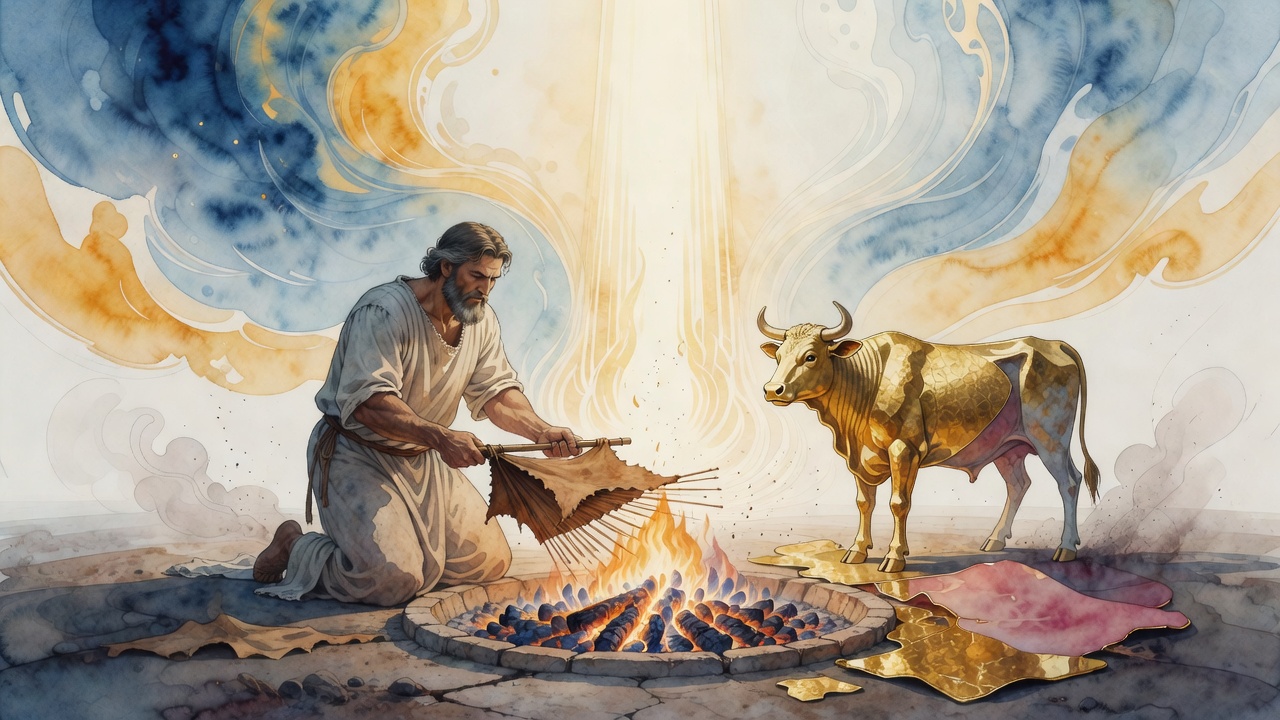
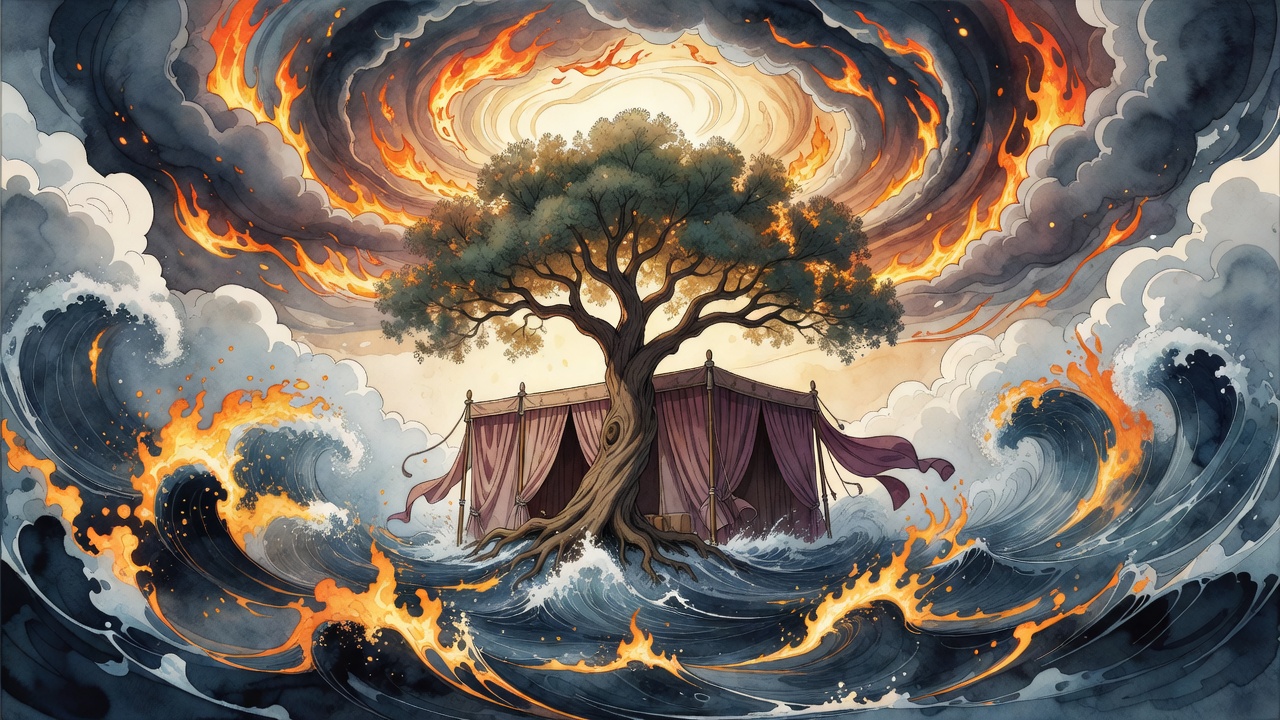
Aaron told Moses that he threw the gold into the fire and a calf came out. The second fire in that camp had a young man from Judah fanning its coals.

Curated by Arthur · Told by Maggid ·
Table of Contents
  1. One Voice at the Foot of the Mountain
  2. Gold Into the First Fire
  3. A Name Called Out in the Camp
  4. Coals Under the Second Fire
  5. More Gold Than the Work Needed
  6. The Hammered Skin of the Innermost Room
Betzalel Fanned Coals to Heal the Golden Calf Click for full size

One Voice at the Foot of the Mountain

Moses came down off the mountain and laid all of it out in front of them, every word and every judgment, while the whole camp stood in the open and listened.

They answered him with one voice. "Everything the Lord has said, we will do."

Thousands of people. Tribes with old grudges, households that did not speak to each other, and not one dissenting shout in the whole crowd. That was the last time it sounded like that.

Gold Into the First Fire

Moses went back up and stayed forty days, and the camp got nervous, and the crowd came around Aaron.

"Get up and make us gods who will go in front of us. This Moses, the man who brought us up out of Egypt, we do not know what has happened to him."

"Take the golden rings out of the ears of your wives and your sons and your daughters," Aaron said, "and bring them to me."

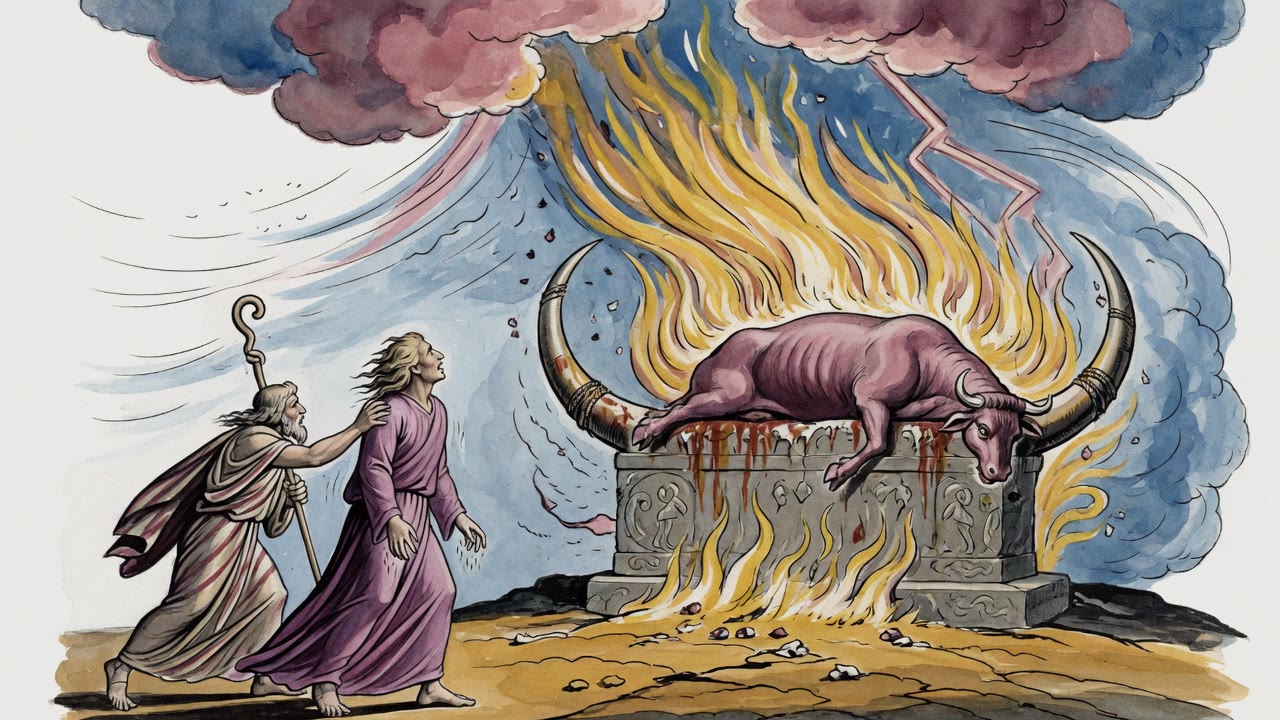
They stripped their families' ears and brought him the gold. He took it, worked it with a tool, and made a calf out of it. They shouted that this was the god that brought them up out of Egypt. Aaron built an altar in front of it and called a feast for the next day, and the next day they ate and drank and got up to play.

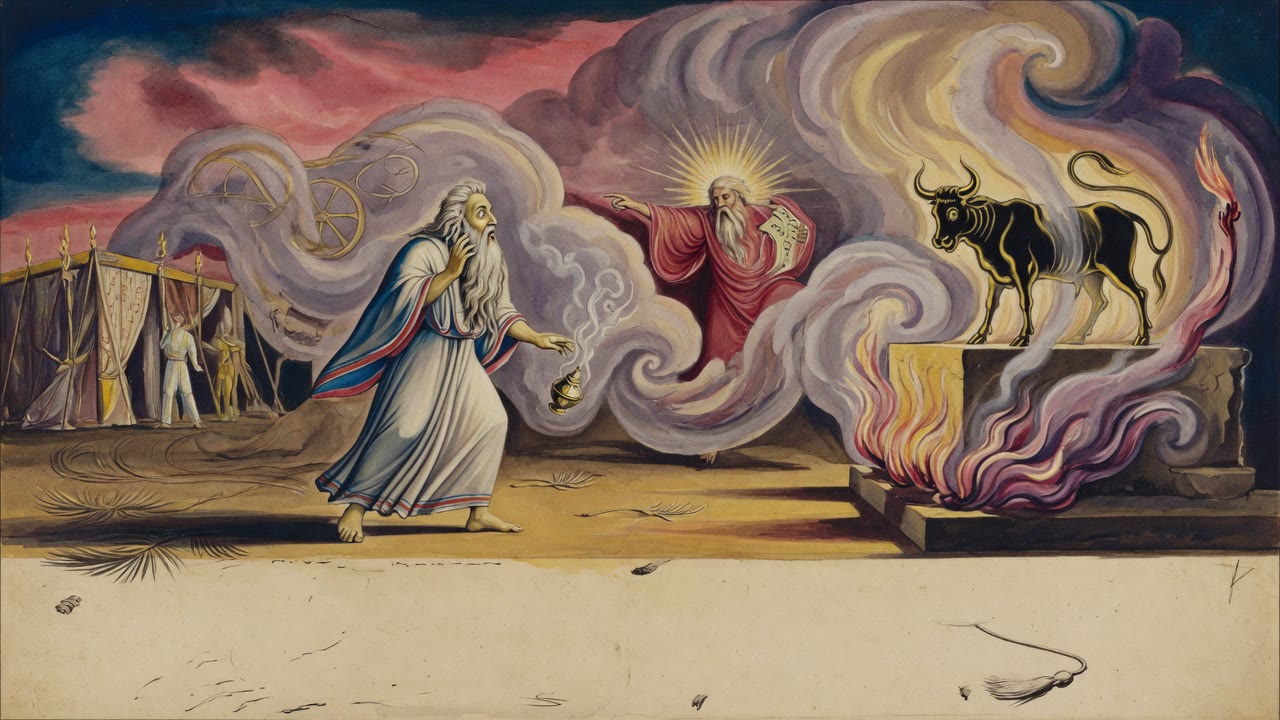
Moses came down with the tablets, saw the calf and the dancing, and threw the tablets at the ground under the mountain until they broke. He burned the calf, ground it to powder, threw the powder on the water and made them drink it.

Then he asked his brother what had happened.

"They gave me the gold," Aaron said. "I threw it into the fire, and out came this calf."

A Name Called Out in the Camp

After the plague, after the pleading, after the second set of tablets, God gave Moses a name to say out loud.

See, the Lord has called by name Betzalel son of Uri son of Hur, of the tribe of Judah. Filled with the spirit of God, with skill and understanding and knowledge, and with every kind of craft. To design work in gold and silver and bronze, to cut stones for setting, to carve wood.

The naming was public, in front of the same crowd that had handed over its earrings. So was the wound it was answering.

Coals Under the Second Fire

Betzalel smelled hot metal before he ever saw the plan.

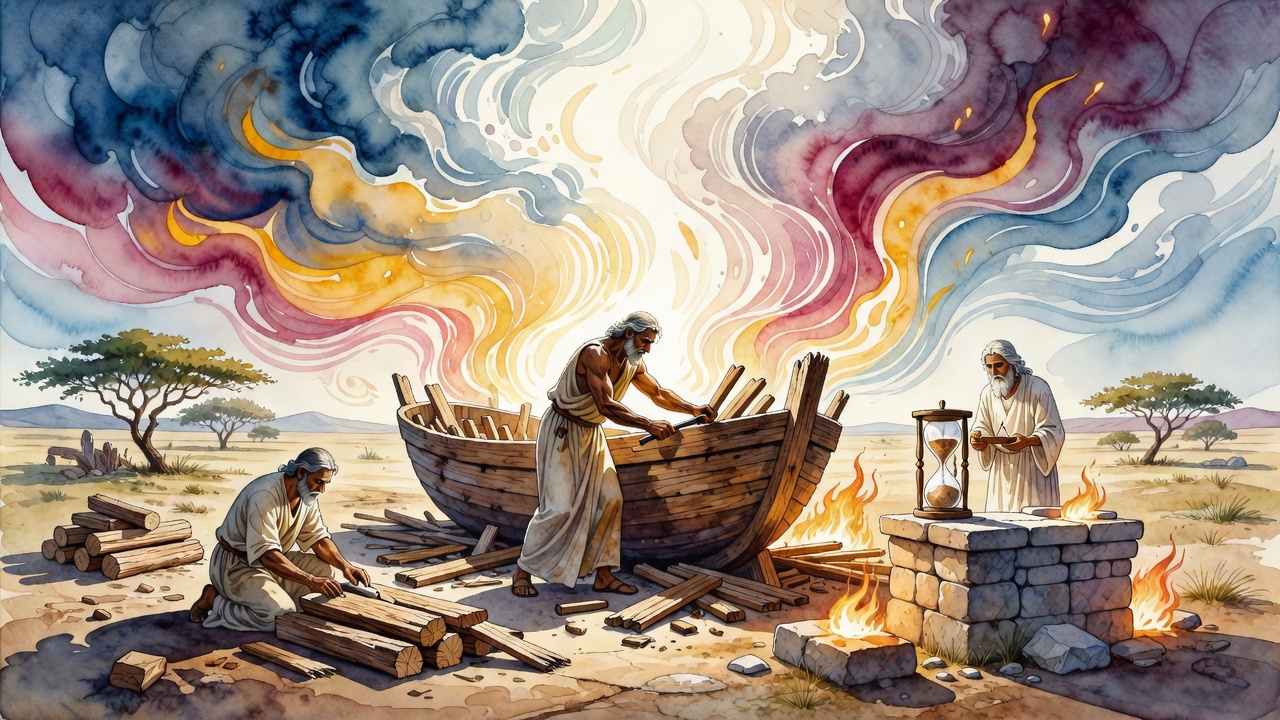
He fanned the coals up and worked in the heat of them, and this time the fire had a pattern over it. Nothing emerged. Everything was measured. Boards of acacia and their silver sockets. An ark overlaid with gold inside and out, and a molding of gold around it. Two cherubim hammered out of a single piece with the cover, wings up, faces turned in toward each other.

He had craftsmen under him and women spinning blue and purple and scarlet by the tent doors, and the whole camp could hear the work going on.

More Gold Than the Work Needed

The offerings kept arriving. Bracelets, nose rings, signet rings, mirrors, wool, skins, acacia planks. They came in freely, morning after morning, until the craftsmen put down their tools and walked over to Moses in a group.

"The people are bringing much more than enough for the work the Lord commanded us to do."

So Moses sent a crier through the camp with an order nobody had expected to hear. Let no man or woman bring one more thing for the sanctuary offering.

And the people were held back from giving. In a camp that had emptied its ears into a furnace a few months earlier, the problem now was getting them to stop.

The Hammered Skin of the Innermost Room

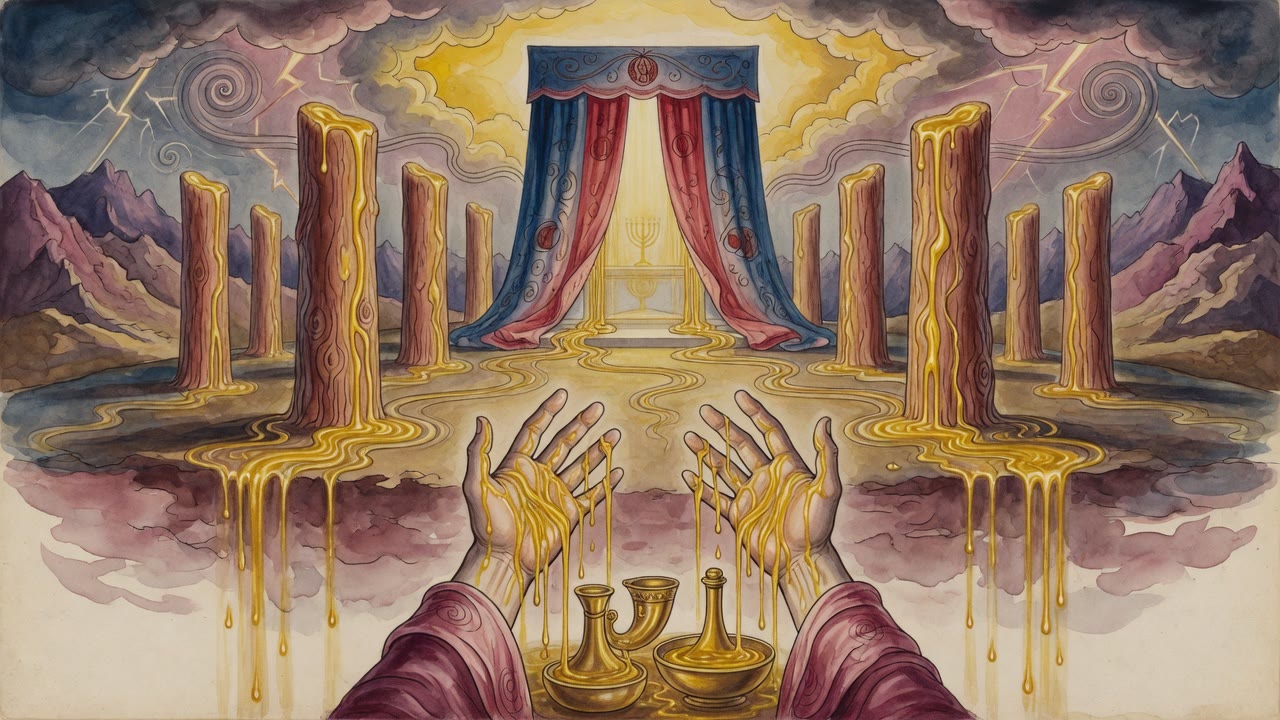
There was still a surplus when the work was finished, and the masters of the tradition say what became of it. They beat it out into the gold that overlaid the Holy of Holies, the innermost room, the one place almost nobody would ever walk into and see it.

Then the cloud came down and covered the tent, and the glory filled it, and Moses could not go in.

The calf stayed in the book. Nobody scratched it out. The gold hammered thin over that inner wall was hanging in a room the calf's dancers had paid to build.


← All myths
From the tradition

Sources

3 sources

The texts behind this telling. Some cards carry a translation of the source; others are our own retelling of it, and each card says which. Every card links out to the original.

Shemot Rabbah 48:5Shemot Rabbah

Retold in our words. Read the original at the link below.The Sefaria Midrash Rabbah, 2022 · CC-BY

Shemot Rabbah turns to Betzalel and the Lawgiver of Behold.

The Midrash (rabbinic interpretive commentary), specifically Shemot Rabbah, offers a fascinating perspective on this question through the story of Betzalel, the artisan chosen to construct the Mishkan (מִשְׁכַּן), the Tabernacle. You know, that portable sanctuary that accompanied the Israelites in the desert.

The verse says, "See, the Lord has called by name" (Exodus 31:2). But Shemot Rabbah takes us deeper, connecting this divine appointment to a verse in Isaiah: "Behold I created the smith who fans the coal flame" (Isaiah 54:16). This, the Midrash suggests, is Betzalel. connection for a moment. It's not just about building something beautiful; it's about healing a wound.

"Who fans the coal flame" – this is linked to the sin of the Golden Calf. Remember that? "I cast it in the fire, and this calf emerged!" (Exodus 32:24). The Israelites' lapse in faith, their worship of a graven image forged in fire. That was a profound betrayal. Betzalel, in a way, is there to make amends, to heal that spiritual wound through his divinely inspired craftsmanship.

It's like a story about a brilliant young doctor's apprentice who manages to heal a particularly nasty wound. Everyone's singing his praises, marveling at his skill. But the mentor steps in and says, "Hold on! Praise me, for I taught him!" The Midrash uses this analogy to make a powerful point: everyone was praising Betzalel for his wisdom and understanding in crafting the Tabernacle.

But the Holy One, blessed be He, says: "It is I who created him and taught him." As it is stated: “Behold I created the smith.” That’s why Moses says: "See, the Lord has called by name.” It's a reminder that true genius isn't solely the product of individual effort. There's a divine spark, a guiding hand, a source of inspiration that transcends our own abilities.

So, the next time you admire a work of art, a groundbreaking invention, or any display of extraordinary talent, remember the story of Betzalel. Remember that there might be a deeper source at play. A collaboration between human skill and divine inspiration. Perhaps the most beautiful creations are the ones where we allow ourselves to be instruments of something greater than ourselves.

Full source
Midrash Tanchuma, Terumah 1Midrash Tanchuma

Retold in our words. Read the original at the link below.Townsend 1989 translation of Midrash Tanhuma, S. Buber Recension · CC-BY

That they take for me an offering (Exod. 25:2). May it please our masters to teach us: What did they do with the surplus offering? Thus did our masters teach us: They fashioned with it the hammered gold overlay for the Holy of Holies. You find that the Holy One, blessed be He, chose two offerings (terumot): the offering (set aside) for the building of the Tabernacle and the priestly offering. The priestly offering (was given to them) in order that they become students of the law. R. Yannai said: Any priest who is not a student of the law, it is permitted to eat the offering on his grave.

R. Isaac said in the name of R. Johanan: Observe what is written in the verse: The priests have done violence to My law, and have profaned My holy things (Ezek. 22:26). How did they do that? They have not distinguished between the holy and the common, neither have they taught differences between the unclean and the clean (ibid.). If the priest is not a student of the Torah, he is unable to distinguish between the holy and the profane, the unclean and the clean. Therefore Scripture says: Thou hast despised My holy things and hast profaned My Sabbaths (ibid., v. 18). Why does he despise the holy things? Because he does not know how to observe the Sabbath. See how beloved is the priestly offering in that it was given to the priests who were students of the law. But the Holy One, blessed be He, decreed the Temple offering for His own sake, as it is said: That they take for me an offering.

Full source
Targum Pseudo-Jonathan on Exodus 24:3Targum Pseudo-Jonathan on Exodus

Retold in our words. Read the original at the link below.The Targum of Jonathan ben Uzziel, trans. J. W. Etheridge, London, 1862 · Public Domain

Targum Pseudo-Jonathan on Exodus (Exodus 24:3) describes the extraordinary moment before the covenant is sealed: Mosheh came and set before the people all the words of the Lord, and all the judgments. And all the people answered with one voice, and said, All that the Lord hath spoken we will do.

Why the Targum Emphasizes “One Voice”

The plain Hebrew says the people answered b'kol echad, with one voice. The Targum preserves this stunning phrase. A nation of thousands. Tribes, clans, rival households. All speaking in a single voice, without a single dissenter, without a single hesitation.

The rabbis treated this moment as miraculous. At every other moment in Israel's history, there are factions, complaints, doubts. But at the foot of Sinai, just before the covenant was ratified, something happened that has not happened since: the entire people spoke as one.

Two Words That Change History

Then the response itself. All that the Lord hath spoken we will do. In Hebrew: na'aseh, we will do. In the next verses the promise expands: na'aseh v'nishmah, we will do and we will hear. We will commit ourselves before we understand. We will act first and seek understanding second.

This inversion of the normal order, commitment before comprehension, became the defining posture of Jewish loyalty to Torah. The commitment is the ground on which understanding grows, not the fruit that grows after understanding is complete.

The Takeaway

The moment Israel became a covenantal people was the moment they agreed before they analyzed. The Torah preserves that moment as a template, faithfulness first, and wisdom will follow.

Full source