The Tachash Lived One Hour for the Sanctuary
God asked for tachash skins in the wilderness. One sage said a desert beast. Another said a miracle creature created for an hour, then hidden forever.
Table of Contents
 Click for full size
A Hide No Desert Should Have Held
The Holy One called for an offering to raise Him a Sanctuary, and among the gold and acacia and blue wool He named a strange gift: skins of tachash. Israel stood in a wilderness that gave neither bread nor water without a miracle and heard the list read out. Somewhere in that emptiness they were expected to find a beast whose hide could roof the Dwelling of God.
Two Sages Argue Over One Beast
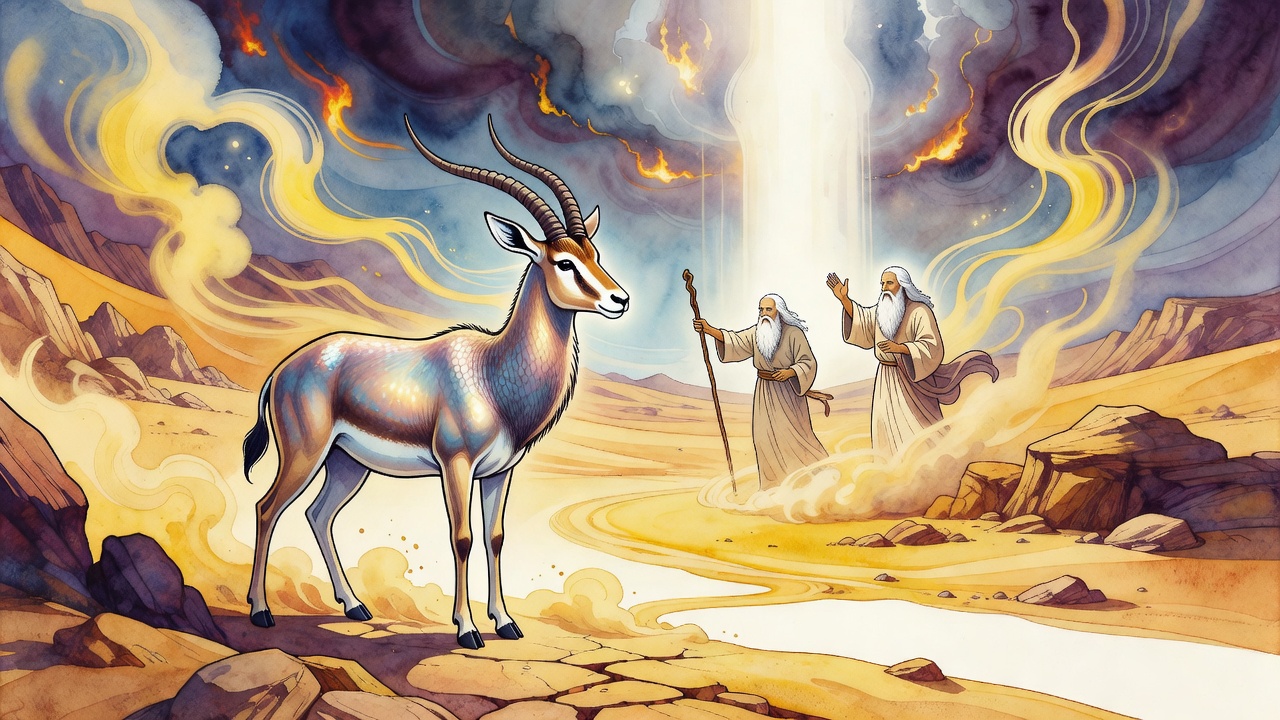
Rabbi Judah kept both feet on the ground. A great animal roamed the desert, he taught, real and living and huge, and Israel laid hold of it. From its hide they cut the wide curtains that covered the Mishkan (the portable sanctuary Israel carried through the wilderness). The wilderness, stingy in every other way, yielded up this one creature so that holiness might be clothed.
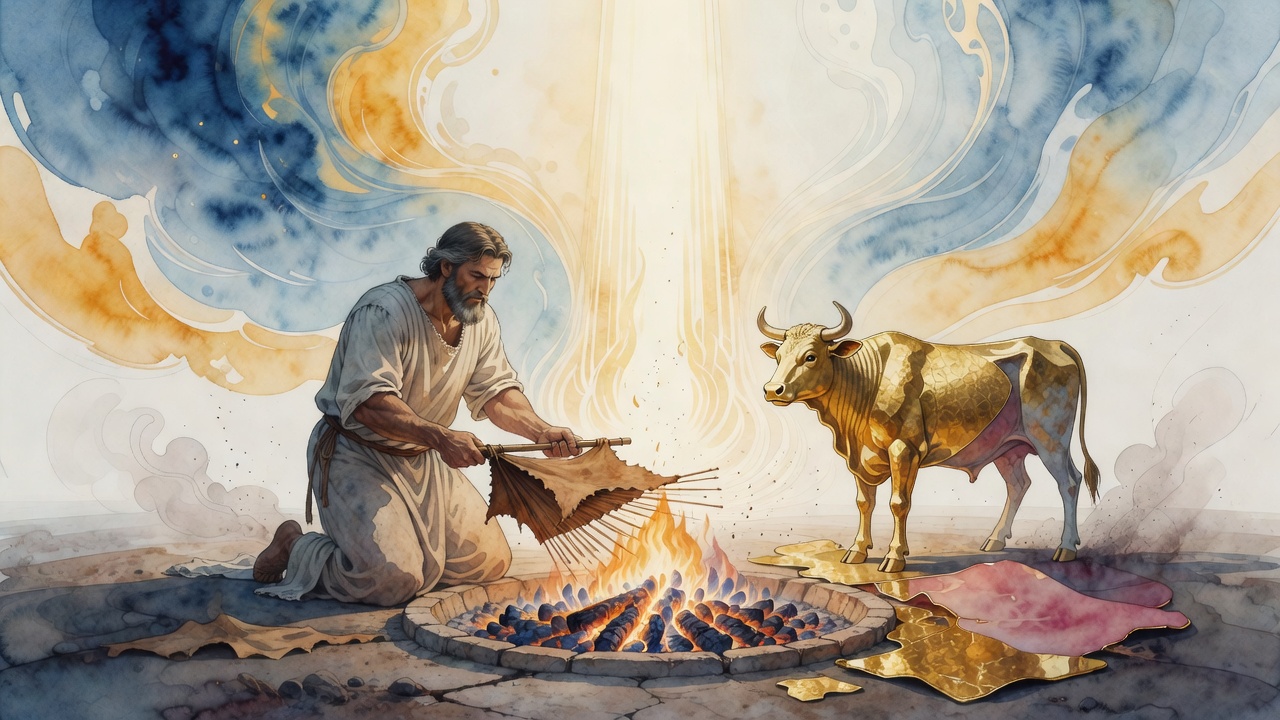
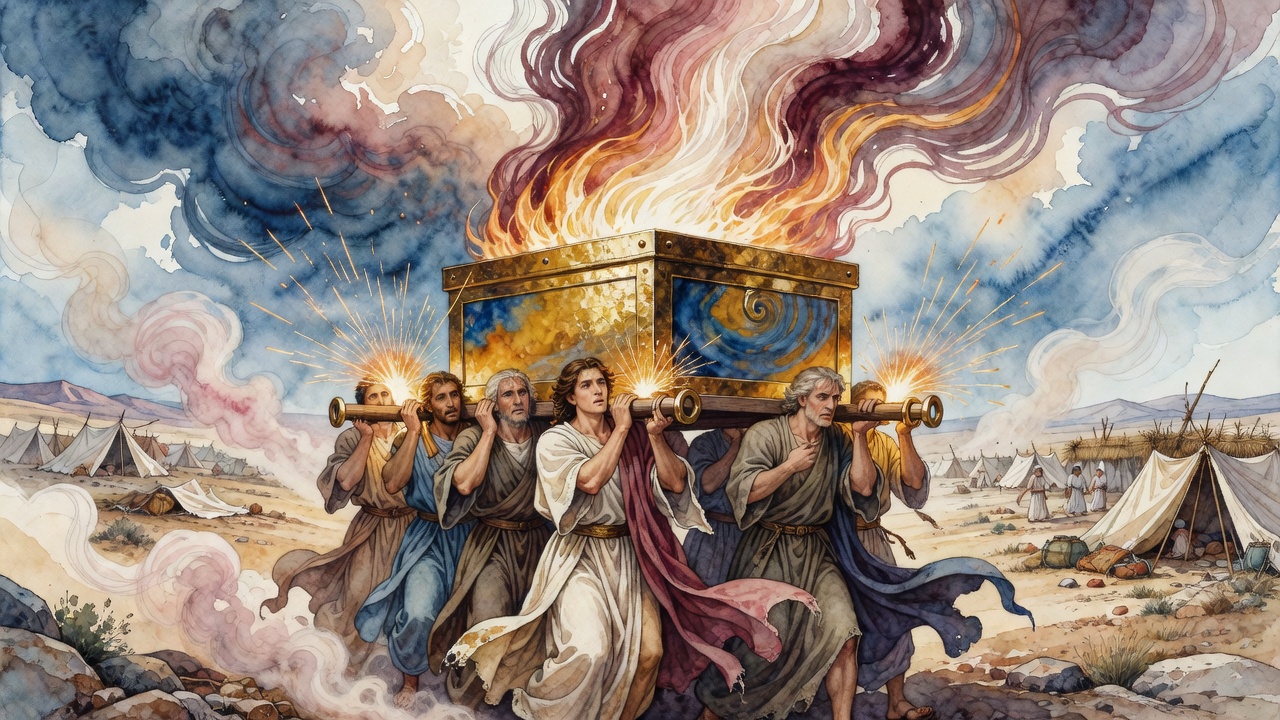
Rabbi Nehemiah would not have it so ordinary. The tachash, he insisted, belonged to no natural order. It was a work of miracles, summoned into being for a single purpose. In the very hour it was created, in that same hour it was hidden away again, never seen before and never seen since. It lived exactly long enough to serve the Sanctuary, then slipped out of the world.
Red Dye That Counts as Labor
Beside the vanished wonder, the inventory lists a plainer material: rams' skins dyed red. The sages would not let the phrase pass quietly. If Scripture names the reddening of a hide among the labors of holy building, then reddening is real work, and whoever dyes a hide red on the Sabbath bears the weight of that act. The roof of God's house was built from labors heavy enough to be forbidden on the day God rested.
For Me Means Forever
When the command came down at Sinai, God did not say, Let the children of Israel take a contribution. He said, Let them take for Me a contribution. For Me, li. On that one small word the sages hung worlds. Wherever Scripture stamps a thing with li, it is bound to the Holy One not for an hour, not for an age, but forever, in this world and in the World to Come. The Land shall not be sold in perpetuity, for the Land is Mine. Every firstborn is Mine. The Levites shall be Mine. Each sealed with the same claim.
So the terumah Israel lifted for the Tabernacle was never merely gold and wool and wood passing from hand to hand. Stamped for Me, the gift was claimed in this world and the next. What is given for His sake does not perish with the giving. Even a skin from a beast that lived one hour can be claimed forever, if the hour was for Him.
The Names Beside the Curtains
Skins do not raise a sanctuary. Hands do, and the Torah signs the hands in full. With him was Oholiab son of Ahisamach, of the tribe of Dan: praise for the man, praise for his father, praise for his household, praise for the whole tribe that produced such a craftsman. But the same tribe's page turns dark. The blasphemer led out to die is named through his mother, Shelomith daughter of Dibri of Dan, and that full naming is disgrace for son, mother, family, and tribe.
Judah holds the same two-sided ledger. Achan son of Carmi reached for Jericho's forbidden spoil and branded his line with defeat. Against him stands Bezalel son of Uri son of Hur, master of the holy work, crowning his line. One tribe, two sons. The deed decides whether a lineage is honored or shamed. The beast's hour ended when the curtains were cut; the hours of the named builders and spoilers had only begun.
When the Altar Is Gone
Rabbi Yose raised the stakes over all of it. Without the daily watches of the Temple service, he taught, heaven and earth themselves could not stand. He hung the claim on Abraham's anxious question at the covenant. Master of the universe, Abraham asked, what happens if my children sin? Will You wipe them out like the generation of the flood? God pointed to the covenant offerings, the heifer and the goat and the ram. Abraham saw the flaw at once. Sacrifices work while a Temple stands. His children would one day face its ruins.
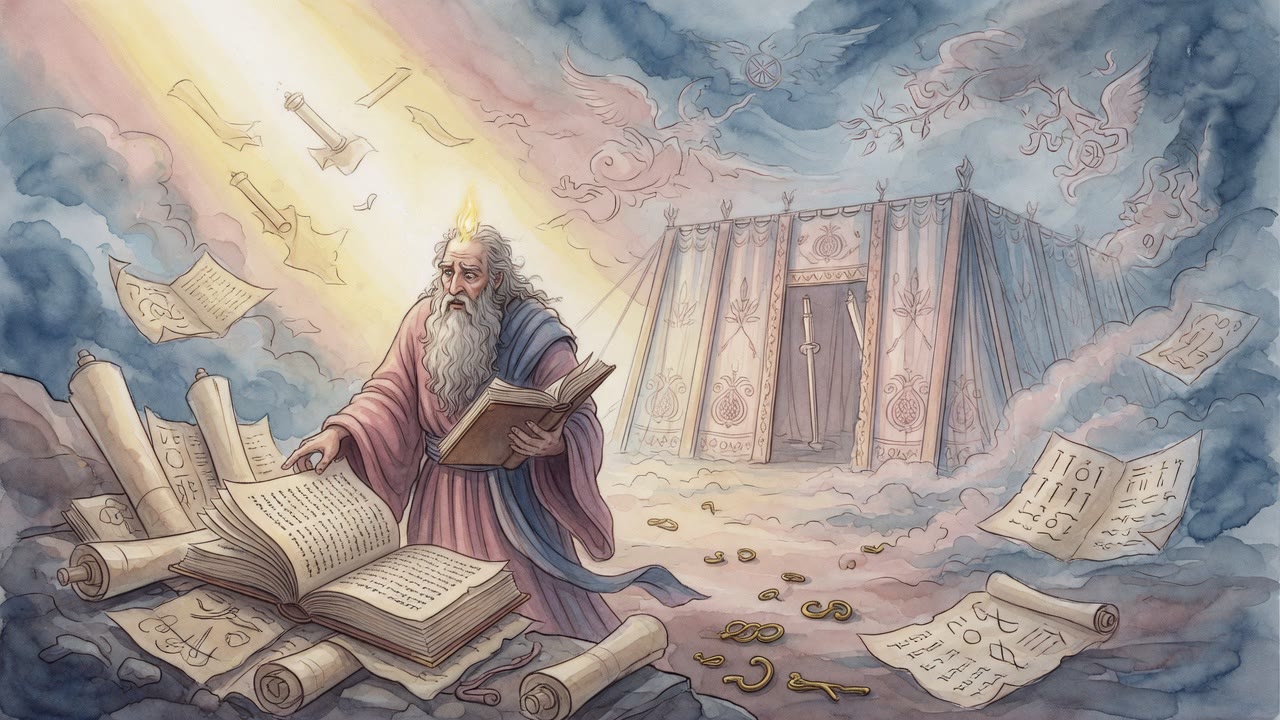
The consolation was already prepared. Whenever Israel reads the order of the sacrifices aloud, God counts the reading as though the offering itself had been brought, and He forgives. The ruined altar is replaced by the open book, and the words on the page become the offering on the fire.
So the covering of the Holy Place came either from a beast the desert had hidden or from a wonder that flashed into being and was gone, its hide alone left behind to shade the Presence. Israel's hands sewed while manna still fell. Centuries ahead, a people without an altar would open a scroll and read, trusting that the God who once accepted a one-hour hide would accept a paragraph spoken with a full heart. The tachash never came back. Its hour is still holding up the roof.
← All myths