5 min read

The Tabernacle's Materials Stood for the Four Empires That Ruled Israel

Gold, silver, brass, and red skins in the sanctuary map Babylon, Persia, Greece, and Rome, while oil for the lamp still promises a future light.

Curated by Arthur · Told by Maggid ·
Table of Contents
  1. Gold That Remembers Exile
  2. Silver and the Near-Destruction
  3. Brass Under Greek Rule
  4. Red Skins and Rome
  5. Oil for the Light Still Promised
The Tabernacle's Materials Stood for the Four Empires That Ruled Israel Click for full size

Gold That Remembers Exile

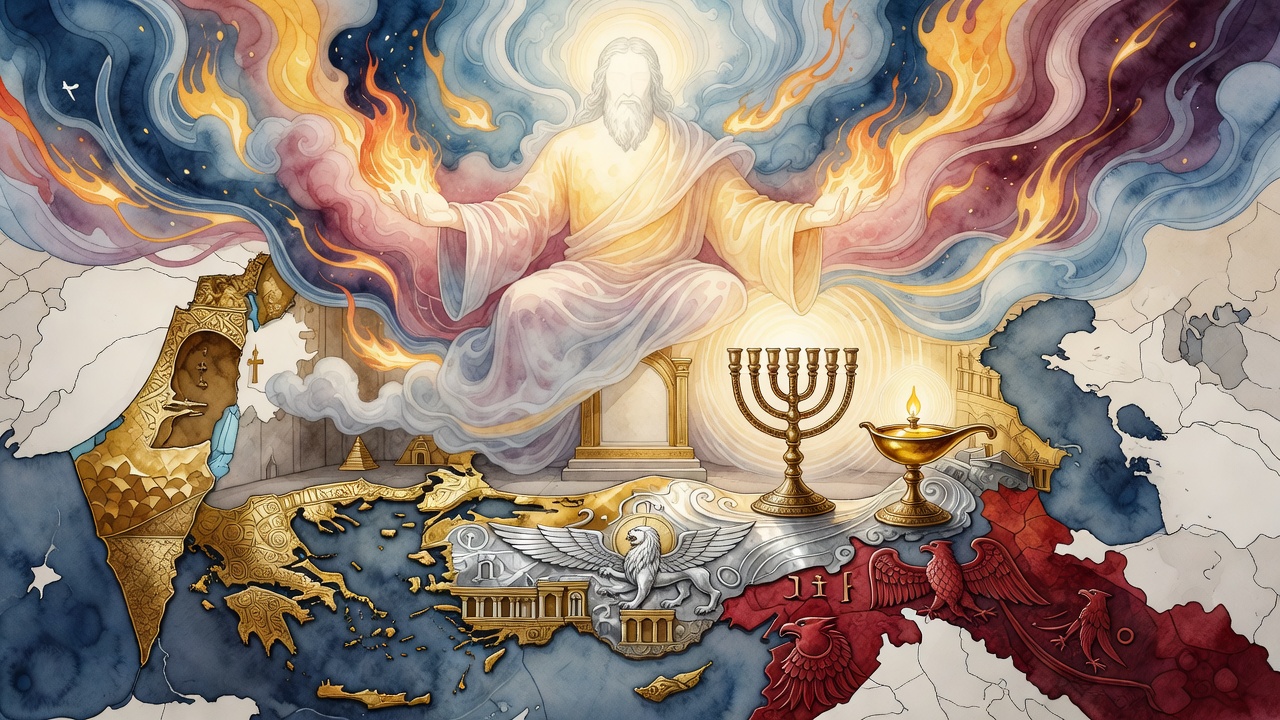
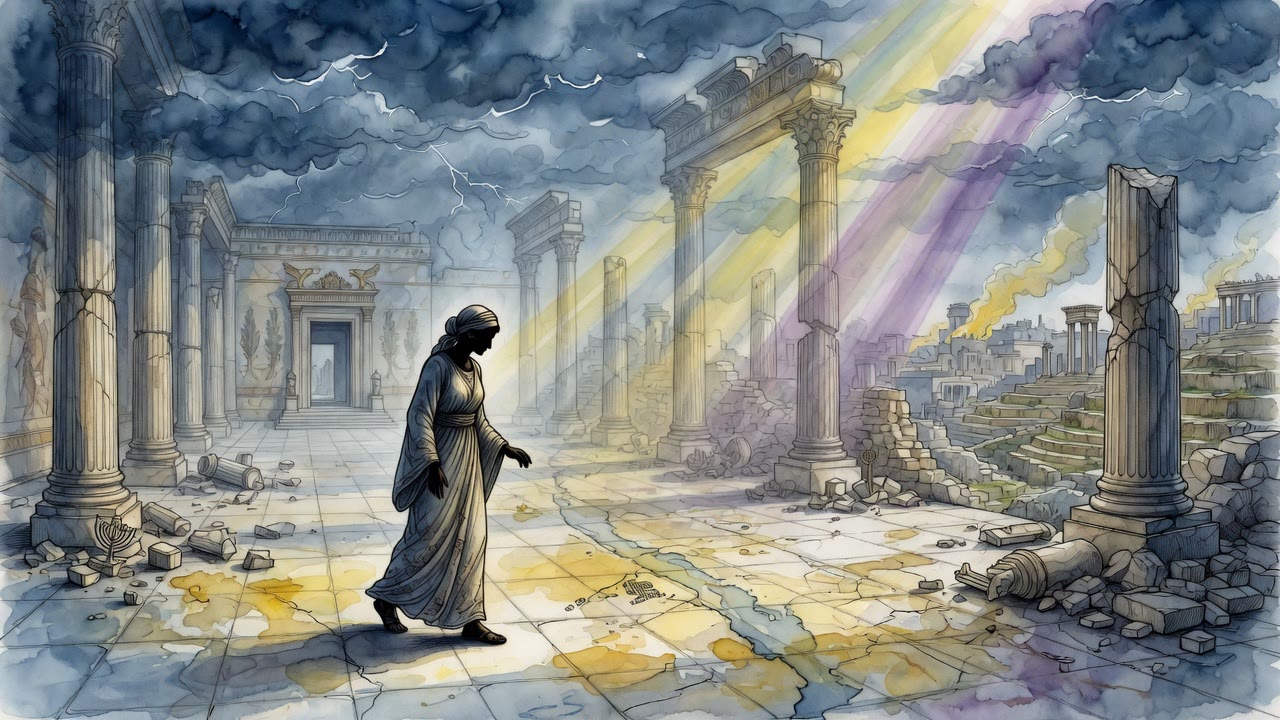
When Israel dedicated the sanctuary in the wilderness, the materials did more than shine under desert sun. Gold spoke first to those who knew how to listen past beauty. It carried the weight of Babylon, of Nebuchadnezzar, of a temple that would burn in a later century while captives walked east with dust in their teeth. Even the memory of a calf cast in gold sat near the warning like a shadow attached to every bright plate.

Worshipers brought gifts with willing hands. History hid inside the inventory. Children who watched the dedication saw only beauty: boards sheathed, sockets gleaming, coverings layered against sand. Their parents could hear, in the same flash, a timeline leaning forward.

Silver and the Near-Destruction

Silver pointed toward Persia and Media, empires of coin, decree, and long corridors of power. In the days of Esther and Haman, silver would be counted as the price of a people, ten thousand talents offered for their erasure as if a nation were a line item. The empire of coin almost closed the book. A sleepless king and a queen who risked the throne kept the line open when the silver had already been weighed in hatred's favor.

In the Tabernacle the silver sockets held boards upright so the house of God would not lean. In the empire the same metal tried to buy a grave for an entire people. The sanctuary remembered both uses without confusing holiness with the market that mimics its shine.

Brass Under Greek Rule

Brass, lesser in the ranking of metals, stood for Greece. The rule was sharp, cultured, athletic, and, in this telling, less able to unseat the core of Jewish identity than the gold and silver powers before it. Still it pressed hard enough to write the story of oil that lasted beyond nature and an altar reclaimed from defilement while young men chose covenant over fashion.

Inferior metal does not mean a soft yoke. It means a different quality of grip. Greece polished the world and still could not fully polish Israel out of itself, though it tried with gymnasiums, decrees, and the temptation to look modern at the cost of the Name.

Red Skins and Rome

Ram skins dyed red named Rome, called Edom in the coded speech of later teachers who spoke under watchful governors. Red for power, for blood, for the long road that would end the Second Temple in fire and scatter a people under standards that claimed the horizon. The covering of the wilderness sanctuary already wore the color of the empire that would one day strip another sanctuary bare.

Four materials. Four dominions. A portable house of God became a map of the ages that would lean on Israel in turn, from Babylon's gold through Rome's red, with no stage left off the inventory.

To build a house for God is also to admit that history will lean on that house. The metals told the leaning in advance so hope would not be naive and despair would not be total.

Oil for the Light Still Promised

God did not show the sequence only to frighten a camp that had just learned to assemble a holy place. Help would come out of the bondage: oil for the light, the Messiah who enlightens the eyes of Israel, spices for anointing so that a high priest might stand again and the people be accepted with sweet savor after long silence. The Targum on the curses of Leviticus names the same arc in a different key: Babel, Media, Greece, Edom, and then the days when the covenant is not abolished even under the last pressure and the Word still refuses to abhor them.

In the finished Tabernacle the lamp still needed oil poured by human hands each evening. Empires could name themselves in gold and red. They could not own the last light. When later generations sat by rivers of Babylon or under Greek edicts or Roman standards, the old inventory could be recited like a map already drawn. Gold then silver then brass then red. After red, oil. The sequence did not make the suffering light. It made the suffering non-final.

Israel walked through four shadows with a flask that outlasted each metal in turn, and the wilderness dedication kept whispering that the house of God knows the names of its future oppressors and still lights the lamps.

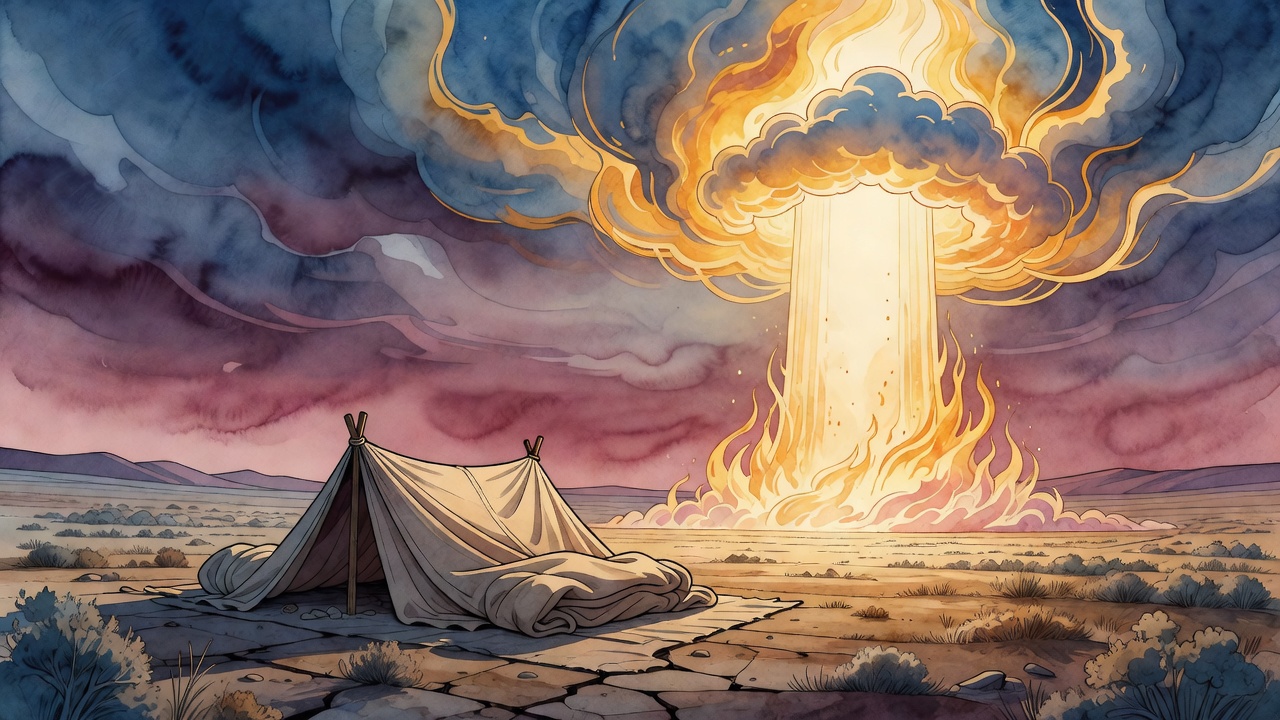
Moses did not pause the building for a history lecture. The people spun, wove, hammered, and gave until the craftsmen said it was enough. Only later readers, sitting under later yokes, would open the inventory and hear empire names in the clink of gold and the smell of dyed skins. That delay is part of the kindness. A camp learning to host the Presence needs lamps lit today more than it needs a full map of Rome. The map waits inside the materials until exile makes the code necessary.


← All myths
From the tradition

Sources

2 sources

The texts behind this telling. Some cards carry a translation of the source; others are our own retelling of it, and each card says which. Every card links out to the original.

Legends of the Jews 3:3Legends of the Jews

Retold in our words. Read the original at the link below.The Legends of the Jews by Louis Ginzberg (1909) · Public Domain

That the very things used to worship God could also tell the story of our destiny.

The Ginzberg’s says retelling in Legends of the Jews, each material used in the Tabernacle dedication pointed to a different empire that would, in turn, hold sway over Israel.

First, the gold. This, Remember Nebuchadnezzar and the exile? The golden calf, perhaps, a foreshadowing?

Next, silver. This pointed to the sovereignty of Persia and Media. Intriguingly, we learn that silver was used by them as a tool for destruction against Israel. Think of the story of Esther, and how close the Jewish people came to annihilation, thwarted only by her courage and the grace of God.

Then comes brass. Brass stood for the Greek Empire. Now, the text makes an interesting distinction here. It says that brass is of inferior quality, and that the Greek rule was "less significant" than that of its predecessors. Less significant, perhaps, in its impact on the core of Jewish identity, even amidst the Hellenistic influences and the story of Hanukkah.

Finally, we arrive at the ram's skins, dyed red. These, we are told, indicate the sovereignty of "red Rome." Rome, with its vast empire and its eventual role in the destruction of the Second Temple. The color red, a symbol of power, of blood, and of the long, complex relationship between Rome and the Jewish people.

But here's where the story takes a turn towards hope. Even as God shows Israel the succession of empires that will dominate them, He offers a promise of redemption. "Although you now behold the four nations that will hold sway over you, still shall I send you help out of your bondage…"

And what form will this help take? "Oil for the light," the text continues, "the Mashiach," the Messiah, "who will enlighten the eyes of Israel." And "spices for anointing-oil," because the Messiah will anoint the high priest, so that once again, God may "accept you with your sweet savour."

Even amidst the darkness of oppression, there's a flickering light, a promise of ultimate redemption. The objects of the Tabernacle, then, become more than just building materials. They become evidence of the enduring faith of the Jewish people, and to God’s unwavering promise of a brighter future.

Remember the empires, the struggles, and the enduring hope. Because sometimes, the most profound messages are hidden in the simplest of things.

Full source
Targum Jonathan on Leviticus 26Targum Jonathan

Retold in our words. Read the original at the link below.The Targum of Jonathan ben Uzziel, trans. J. W. Etheridge, London, 1862 · Public Domain

Leviticus 26 contains the blessings and curses, God's promise of abundance for obedience and a cascading nightmare for rebellion. The Targum Jonathan adds a breathtaking historical prophecy that maps Israel's suffering onto four world empires.

The blessings come first: rain in its season, harvests so large "the threshing shall reach to the vintage," and peace so deep that "the unsheather of the sword shall not pass through your land." The Targum adds that God will "set the Shekinah (the Divine Presence) of My Glory among you", a phrase absent from the Hebrew that makes God's presence physical, tangible, dwelling in the camp.

Then the curses. Seven plagues for seven transgressions, the Targum counts them explicitly each time. Famine will come so severe "ten women may bake your bread in one oven." Parents will eat their children's flesh, and the Targum inserts a voice: "Moses the prophet hath said, How heavy will have been the guilt, and how bitter those sins, that caused our fathers to eat the flesh of their sons."

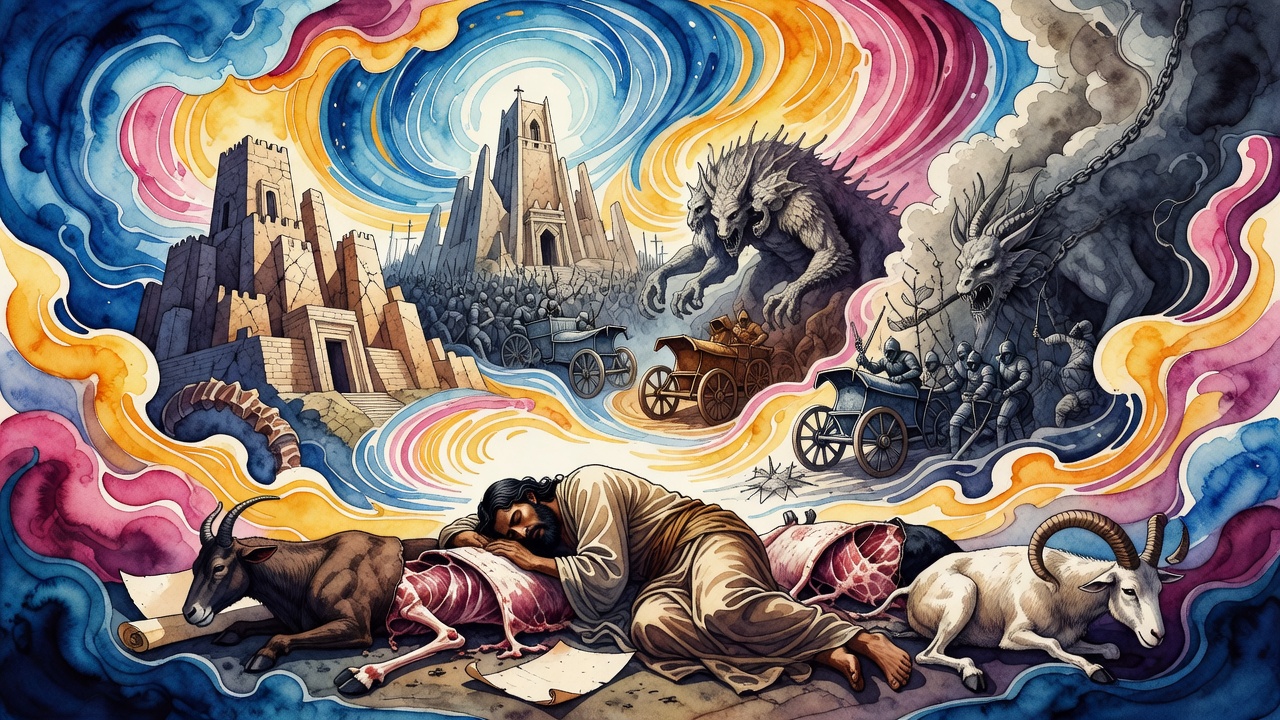
The most stunning addition comes near the end. The Hebrew Bible says God will not destroy Israel completely. The Targum names the empires: "I will not spurn them away in the kingdom of Babel; nor shall My Word abhor them in the kingdom of Media, to destroy them in the kingdom of Greece, or to abolish My covenant with them in the kingdom of Edom; for I am the Lord in the days of Gog."

Babylon, Media, Greece, Rome (called "Edom" in rabbinic code). And finally the messianic era of Gog. The Targum reads the entire sweep of Jewish exile into a single verse, from the destruction of the First Temple through the Roman exile and into the future redemption. This is prophecy embedded in translation.

The chapter concludes with God remembering the covenants with Jacob at Bethel, Isaac at Mount Moriah, and Abraham "between the divided portions", each covenant linked to a specific sacred site.

Full source