5 min read

Daniel Watches Empires Fight Behind the Sky

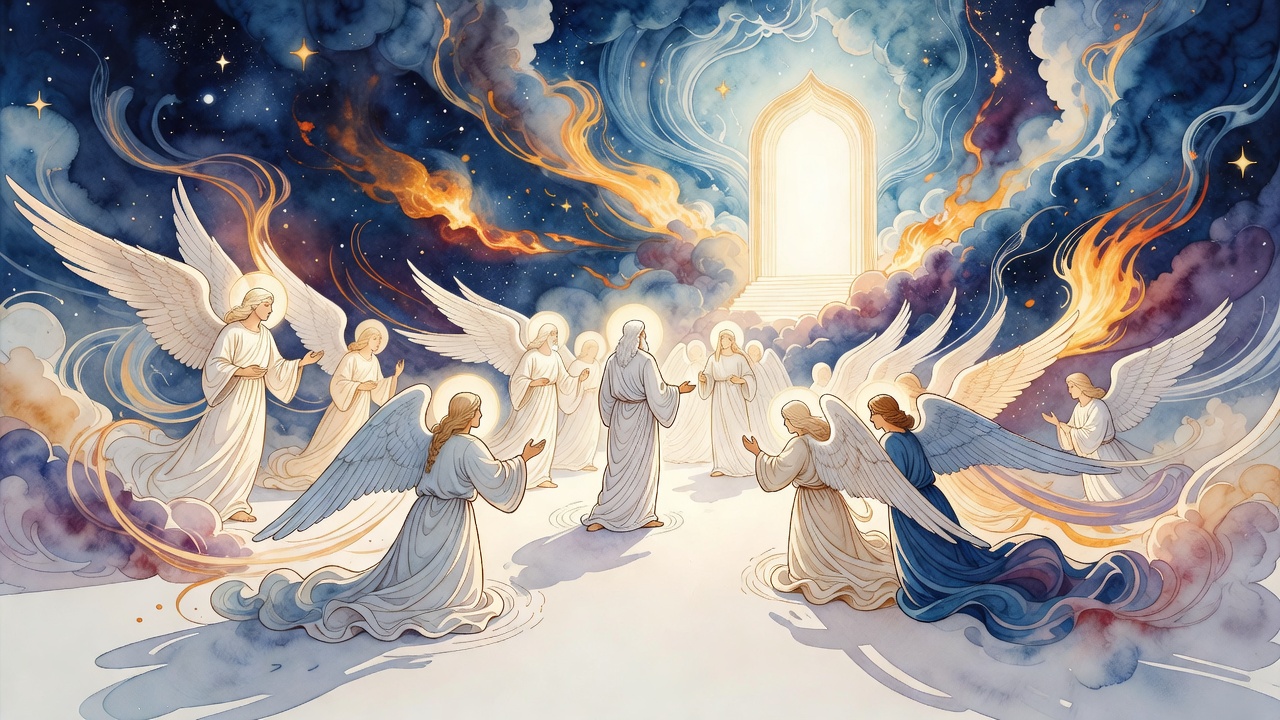
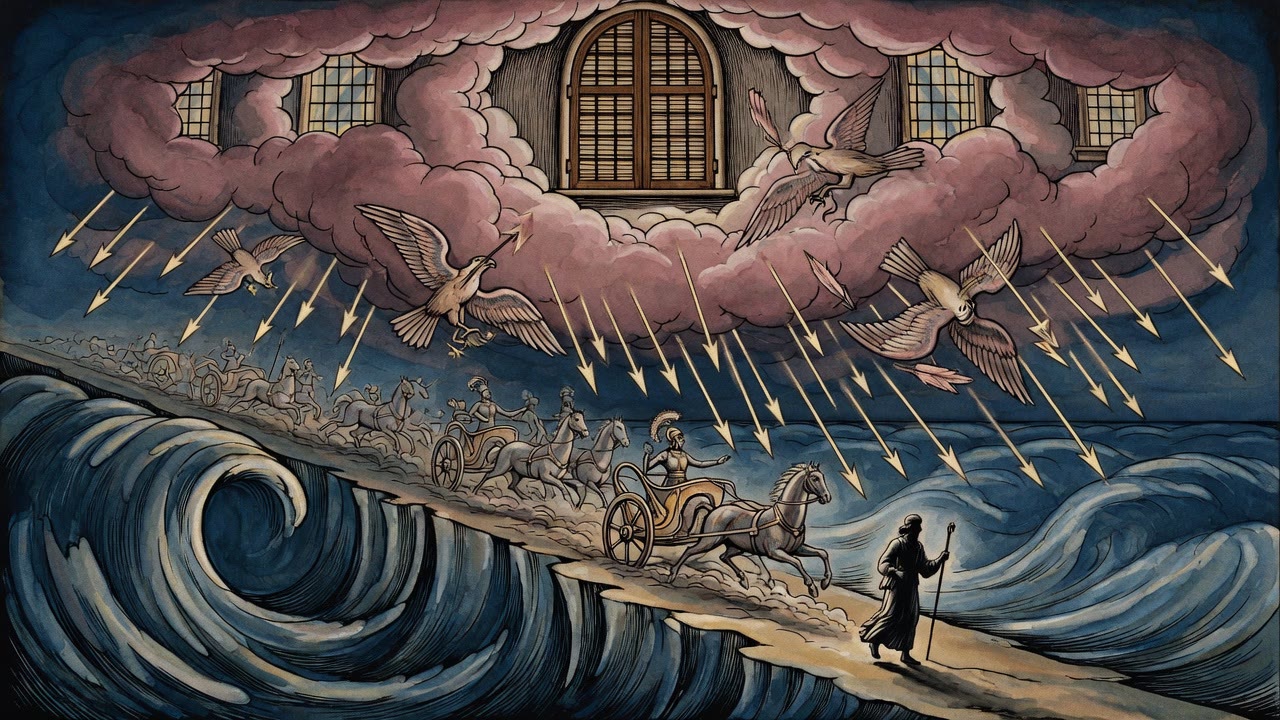
An angel told Daniel that the angel of Persia had blocked his way, and that the angel of Greece was coming next. Empires have officers in heaven.

Curated by Arthur · Told by Maggid ·
Table of Contents
  1. The Angel Who Could Not Pass
  2. No Nation Finally Masters Israel
  3. Portions From East to West
  4. Branches Torn From the Root
  5. The Inheritance Under the Fight
Daniel Watches Empires Fight Behind the Sky Click for full size

The Angel Who Could Not Pass

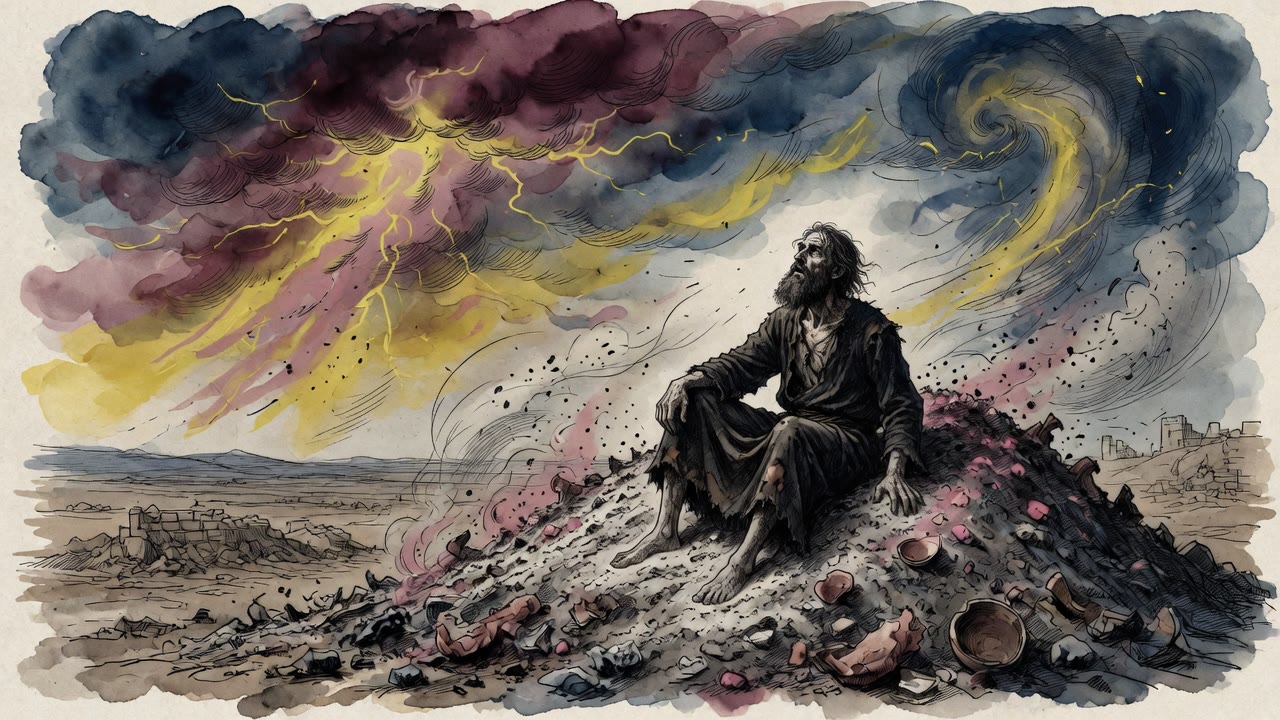
Daniel stood in the aftershock of prayer with his knees still marked by the floor. An angel spoke of struggle that no sentry on a city wall could see. "The power of Persia stood opposed to me," the messenger said, and Daniel understood that empires keep officers in heaven as well as on earth. Then the warning turned. "The power of Greece approaches." One tutelary force stepping aside only made room for the next.

Daniel's mouth went dry. History was not only kings and taxes. It was a contest of appointed powers, each pressing for influence while Israel lived under their shadows.

No Nation Finally Masters Israel

The teachers hearing Deuteronomy later drew a hard line through that vision. Foreign powers rise and fall. None is granted final mastery over Israel, because the Lord alone leads His people. The claim is bold enough to sound reckless in a century of empires. It is the claim Daniel's scene forces: behind the banners, a different sovereignty holds the last word.

Daniel did not stop fearing Persia or Greece. He stopped mistaking them for the Author.

Portions From East to West

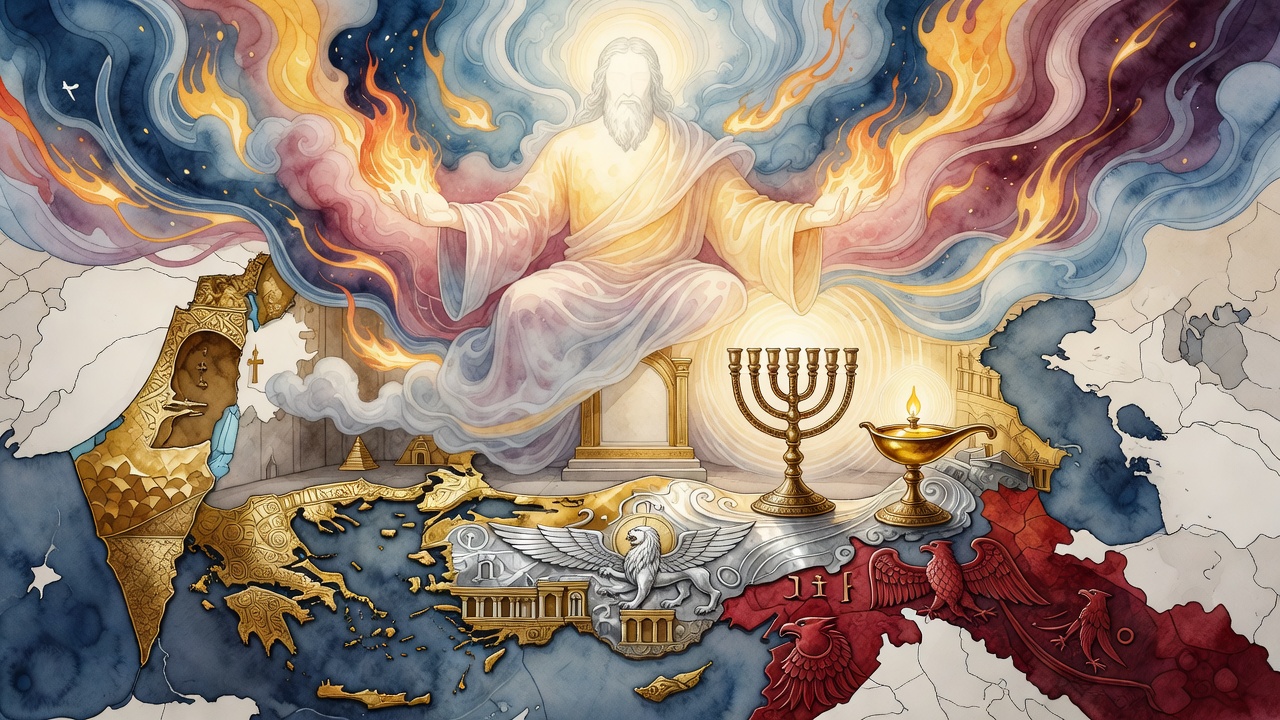
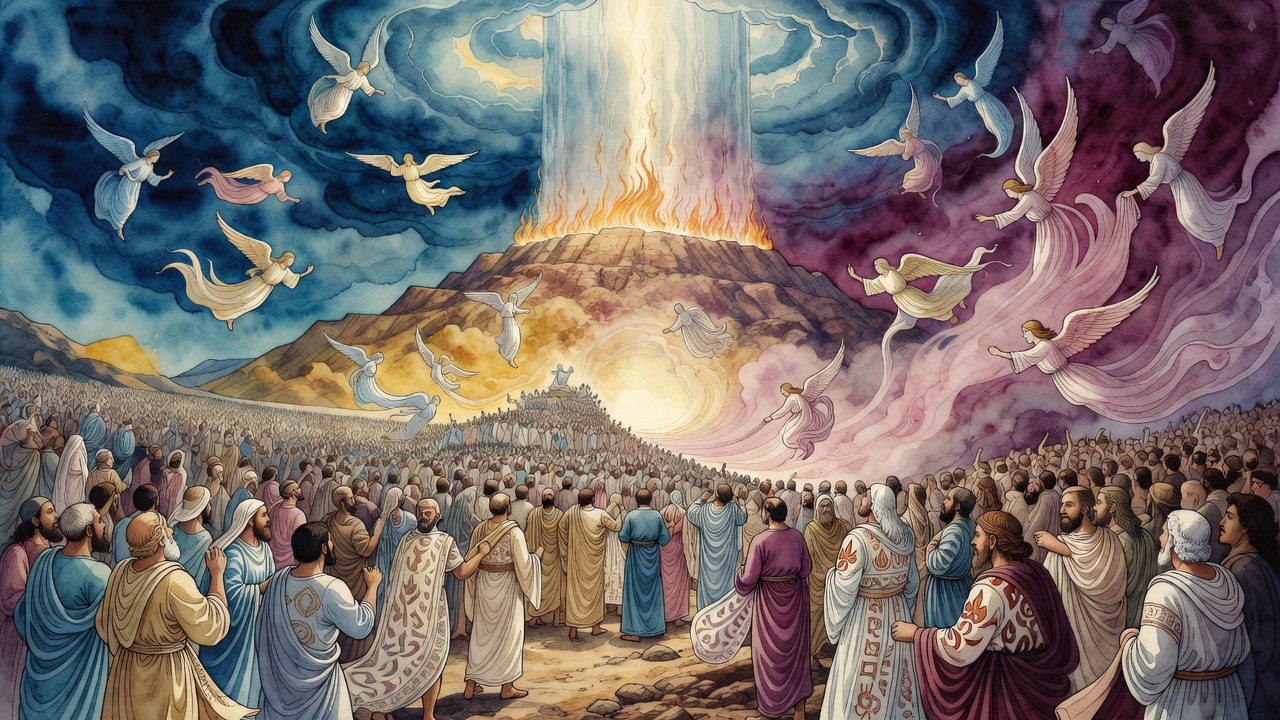
Ezekiel's map of tribal portions unrolls east to west, Dan beside Asher, Naftali, Judah, each strip named as if a surveyor walked with a measuring rod. Twenty-five thousand kanim, the midrash reckons, about seventy-five mil of promised width. Inheritance stretches until it can be spoken of from one end of the world toward the other under the hand that leads alone.

Daniel's war of powers and Ezekiel's quiet cadastral vision meet. One shows the struggle. The other shows what the struggle cannot cancel.

Branches Torn From the Root

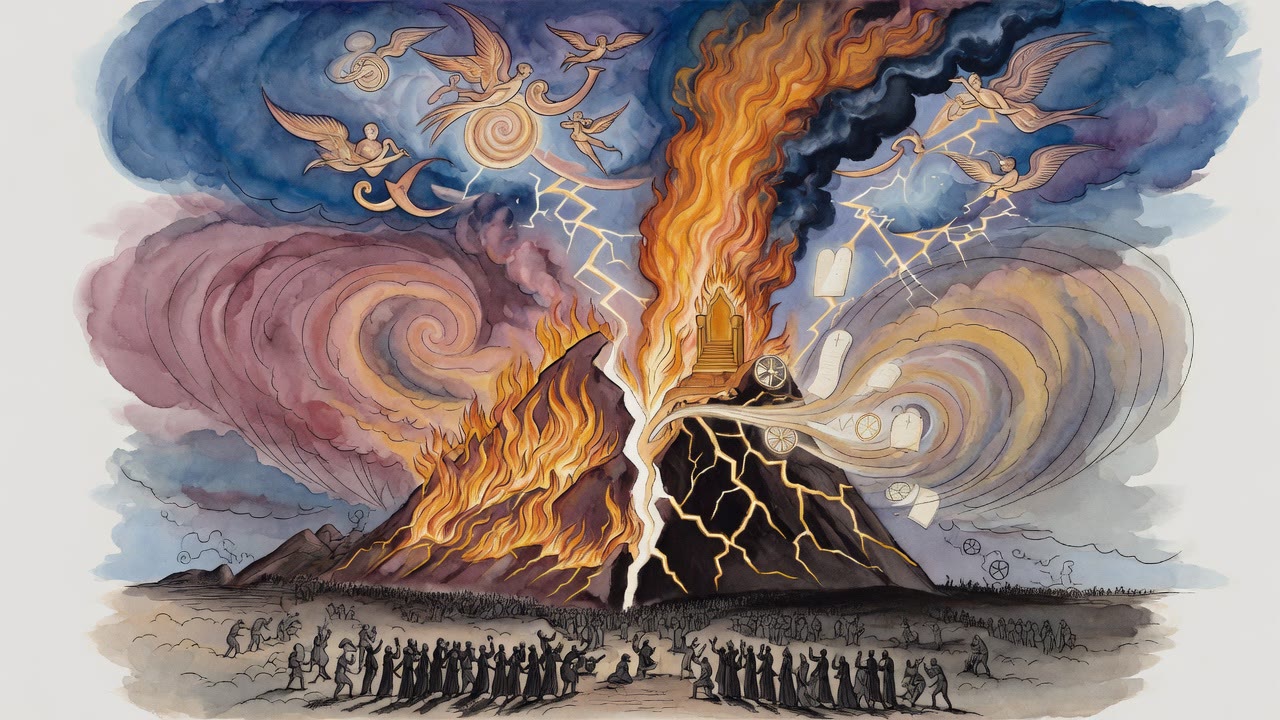
In a later kabbalistic telling the damage has another name. Evil separates. Branches fall from their root. The lower worlds mix good and ruin until repair must pull the Other Side off the lines and rejoin what was torn. The chariot lights of Ezekiel's older vision become the blueprint for how worlds can be arranged again without permanent fracture.

Daniel had seen the powers clash. The repair tradition insists those clashes are not the last structure of reality. Tikkun gathers what empire-scatter leaves behind.

The Inheritance Under the Fight

Night closed over Daniel. The angel's departure left a silence thicker than court intrigue. Somewhere Persia still pressed. Somewhere Greece gathered strength. Israel would walk through both. The measuring rods of the future land still waited in Heaven's hand.

Daniel breathed once, steady. He had seen the fight behind the sky, and he had been told, through the long chain of teachers after him, that the fight does not get to keep the deed to the people or the soil.

In the court above the court, Daniel had learned to read human faces for danger. This was different. The angel's fatigue was not theater. A messenger who can cross worlds had been delayed by a national power with a portfolio and a will. Persia's officer in heaven had stood in the path the way a customs agent stands in a gate, except the goods being delayed were consolation and truth.

Daniel asked what a man is supposed to do when the real war is staffed by beings he cannot petition with silver. The angel did not offer a technique. The angel offered sequence. Persia now. Greece next. Then further unfoldings Daniel's lifetime would not finish. The comfort, if it was comfort, was that none of those powers received a deed of ownership over Jacob's people.

He remembered nights when imperial decrees made Jewish prayer look like a crime. He had opened windows anyway. Now he understood the window faced more than human spies. It faced a layered administration of force. Opening it was still required.

Ezekiel's measured strips of land returned to him as an antidote to panic. East to west, portion beside portion, rods and mils and the stubborn particularity of inheritance. Empires blur maps with conquest. Heaven redraws them with patience. Twenty-five thousand kanim is not a metaphor for "someday maybe." It is a surveyor's faith.

In the repair language of later mystics, the same struggle appears as branches torn from root and lights of the chariot teaching reattachment. Daniel would not have used those nouns. He would have recognized the verb. Separate. Oppose. Delay. Then, somehow, reconnect under a sovereignty that does not panic when Greece replaces Persia on the schedule.

He wrote what he could. He sealed what he must. When he slept, he dreamed of measuring rods laid across a land still disputed by armies, and of an angel finally passing a gate that had been locked by a power with a temporary badge. Morning found him at prayer again, knees down, eyes open to a sky that looked empty and was not.


← All myths

From the tradition

Sources

2 sources

The texts behind this telling. Some cards carry a translation of the source; others are our own retelling of it, and each card says which. Every card links out to the original.

Sifrei Devarim 315:3Sifrei Devarim

Retold in our words. Read the original at the link below.Sifrei by Rabbi Shraga Silverstein · CC-BY

It suggests a powerful truth: that no other nation will be allowed to dominate Israel. But why?

The text directs us to the Book of Daniel, specifically chapter 10. Daniel has this intense vision, a spiritual battle unfolding behind the scenes of earthly empires. He says, "Then I will depart. And, behold, the (tutelary) power of Greece approaches." Then, just before that, "But the power of Persia stood opposed to me." Daniel seems to be describing celestial representatives, almost like angelic forces, assigned to different nations.

In this interpretation, these "powers" are in constant flux, vying for influence. But the core idea in Sifrei Devarim is that no foreign power can ultimately overcome Israel. Why? Because of the unique relationship between Israel and the Divine.

There's another way to read this passage, focusing on the phrase, "The L-rd alone will lead him." This interpretation speaks to something even grander: Israel's ultimate inheritance, stretching "from one end of the world to the other." It's a future where the Divine hand guides Israel to inherit the promised land.

To illustrate this, the text points us to (Ezekiel 48:2-4). We see descriptions of tribal portions: "Next to Dan's border, from the eastern side to the western side. Asher, one portion. Next to Asher's border, from the eastern side to the western side. Naftali, one (portion)." And so on.

But what's the point of listing these tribal lands? What does "Yehudah, one (portion)," "Asher, one (portion)," "Dan, one (portion)" really signify? The Sifrei Devarim explains that it illustrates how Israel is destined to expand, taking territory from east to west, until it reaches a length of twenty-five thousand kanim. Now, a kaneh (singular of kanim) is a measuring rod, and this translates to seventy-five mil. A mil is a unit of distance, roughly equivalent to a mile. So, we're talking about a huge expanse.

What's truly remarkable is the shift in perspective. We move from geopolitical struggles between nations, as depicted in Daniel, to a vision of divinely ordained inheritance, as shown in Ezekiel. It’s evidence of the enduring promise of a land for the Jewish people, guided and protected by something far greater than earthly powers.

So, what do we take away from this? Maybe it's a reminder that behind the headlines and history books, there are deeper forces at play. Maybe it's a source of hope, a promise that even in the face of seemingly insurmountable odds, there's a guiding hand at work. Or maybe, just maybe, it’s an invitation to look beyond the surface and consider the unseen dimensions of our world.

Full source
Kalach Pitchei Chokhmah 138:7Kalach Pitchei Chokhmah

Retold in our words. Read the original at the link below.138 Openings of Wisdom, trans. Rabbi Avraham Greenbaum, Azamra Institute (2005) · CC-BY

Jewish mysticism offers a powerful framework for understanding and mending those disconnections, not just within ourselves, but within the very fabric of reality. It's a process of repair, a concept the Kabbalists called tikkun (spiritual repair).

How do we begin to mend what's broken? That's the question the ancient text Kalach Pitchei Chokhmah ("138 Openings of Wisdom") explores. It teaches us that everything needs proper repair, especially the "branches" that need re-attachment to their "root." What does this mean in practical terms?

The text outlines two crucial steps. First, the removal of the Other Side. Ominous. What is this "Other Side"? It's often referred to as the Sitra Achra (the Other Side, the realm of impurity) in Aramaic, and represents the realm of negativity, chaos, and separation from the Divine source. This "removal" isn't about banishing evil in some simplistic way, but rather recognizing and neutralizing its disruptive influence.

The second step involves the repair of the worlds through their good arrangements. This is where things get really interesting. The Kabbalists speak of four primary worlds: Atzilut (Emanation), Beriya (Creation), Yetzirah (Formation), and Asiyah (Action). In Atzilut, everything is divine, pure Godliness, untouched by evil. But the lower worlds, Beriya, Yetzirah, and Asiyah, are a mixed bag. They contain both good and evil because they contain separate creations, each with its own inherent potential for both.

And here's the kicker: it's this very evil, this separation in the lower worlds, that disconnects the branches from their root. Evil, the Kalach Pitchei Chokhmah tells us, has the power to cause separation. It creates a sense of fragmentation.

So, how do we fix it? How do we reconnect? The text suggests that the higher levels of Beriya, Yetzirah, and Asiyah must be merged and included in one another. Imagine these worlds as nested spheres, each influencing the other. The key lies in recognizing the inherent goodness within each, even amidst the imperfections, and allowing them to harmonize.

This merging happens through the arrangements that exist in the "lights of the Chariot" – a reference to the mystical vision of Ezekiel's Chariot (Merkabah in Hebrew), representing divine presence and the structure of the cosmos. These lights, these divine emanations, provide the blueprint for how the worlds can interact and support one another. It's about finding the connections, the pathways for divine energy to flow, and mending the fractures that keep us apart.

Think of it like this: each of us is a world unto ourselves, containing both light and shadow. To truly connect with our source, with our "root," we need to acknowledge and integrate all aspects of ourselves, striving to bring the higher, more refined parts into harmony with the lower, more chaotic ones.

This process of tikkun olam, repairing the world, starts within each of us. It's about actively choosing connection over separation, recognizing the divine spark in ourselves and others, and striving to create a world where all branches are firmly rooted in the source of all being. It's a tall order, no doubt. But what other task is more worthy of our attention?

Full source