Translation of the source text.Midrash Tanchuma -- Torat Emet · Public Domain
"And you shall make curtains of goats' hair" (Exodus 26:7). And this is what Scripture says: "I have loved you, says the LORD, yet you say, In what have You loved us?" (Malachi 1:2). This verse Malachi said when he was reproving Israel. He said to them: "Will a man rob God? Yet you rob Me" (Malachi 3:8). And they answer and say to him: "In what have we robbed You?" (Malachi 3:8). They said, of blessed memory: It was the uncle of Malachi who was reproving them, and they answer him, What is the meaning of "robbed You"?
Rabbi Levi said: It is an Arabic expression. When an Arab is conversing with his fellow and says to him, Why do you rob me (gozleni)?, he says to him, Why do you kova'eni? This is to say, "In what have we robbed (keva'anukha) You?" He said to them: In the tithe and the heave-offering, for you do not bring out your tithes and your heave-offerings as is fitting. He returned and said to them: "I have loved you." They said to him: "In what have You loved us?" He said to them: "Was not Esau Jacob's brother? Yet I loved Jacob" (Malachi 1:2-3).
It is the way of the world: a man who has two sons, one a firstborn and one ordinary -- who takes two portions? The firstborn. And Esau came out first, as it is said: "And the first came out ruddy" (Genesis 25:25). He was fit to take two portions, yet I did not do so; rather Jacob took two portions and Esau one portion, for Jacob eats in this world and inherits the world to come. And so Esau said to Jacob: "Let us take our journey, and let us go, and I will go alongside you" (Genesis 33:12). Esau said to him: Let the two of us go together. Jacob said to him: Take your world and pass on, as it is said: "Let my lord, I pray, pass on before his servant, until I come to my lord to Seir" (Genesis 33:14).
Rabbi Yaakov bar Rabbi said: I searched through all of Scripture and did not find that Jacob went to Seir. And when does he go? In the world to come, as it is said: "And saviors shall come up on Mount Zion," and so forth (Obadiah 1:21). Therefore, "and I loved Jacob," who is a partner with Esau and eats in this world. But in the world to come: "He bore him on His pinions, the LORD alone did lead him," and so forth (Deuteronomy 32:11-12). And so Solomon said: "Let them be only your own, and not for strangers with you" (Proverbs 5:17).
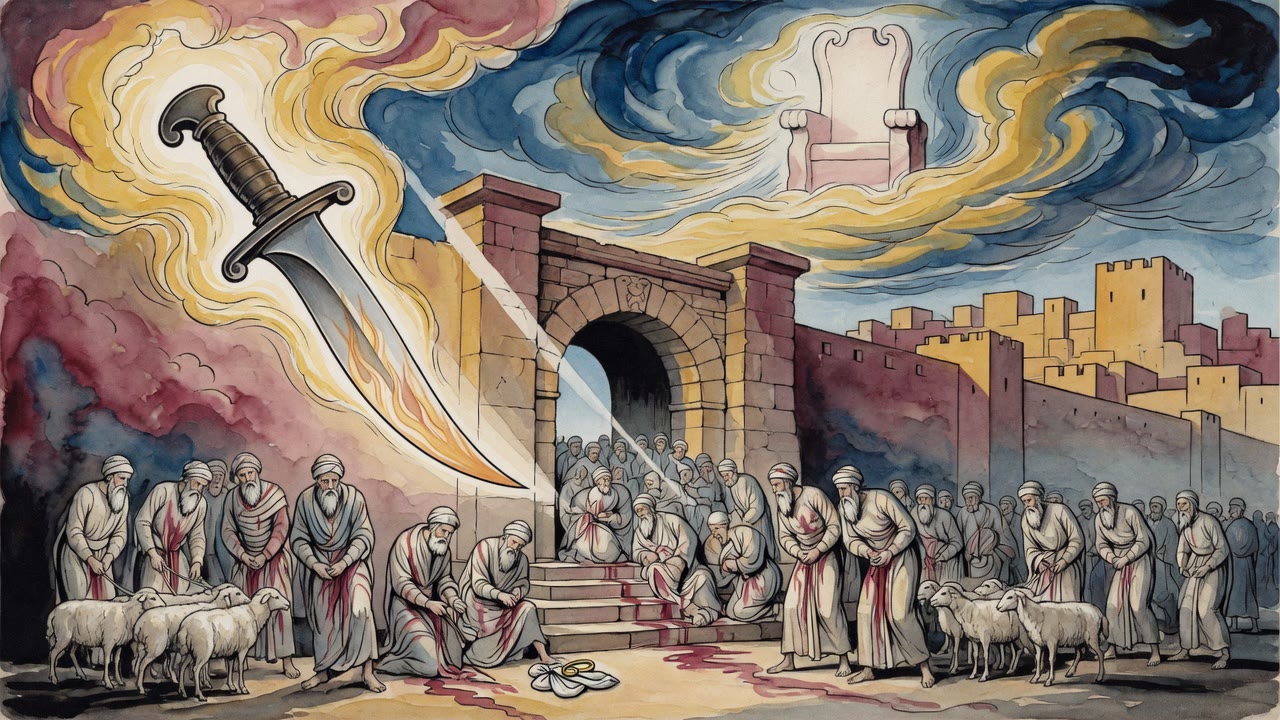
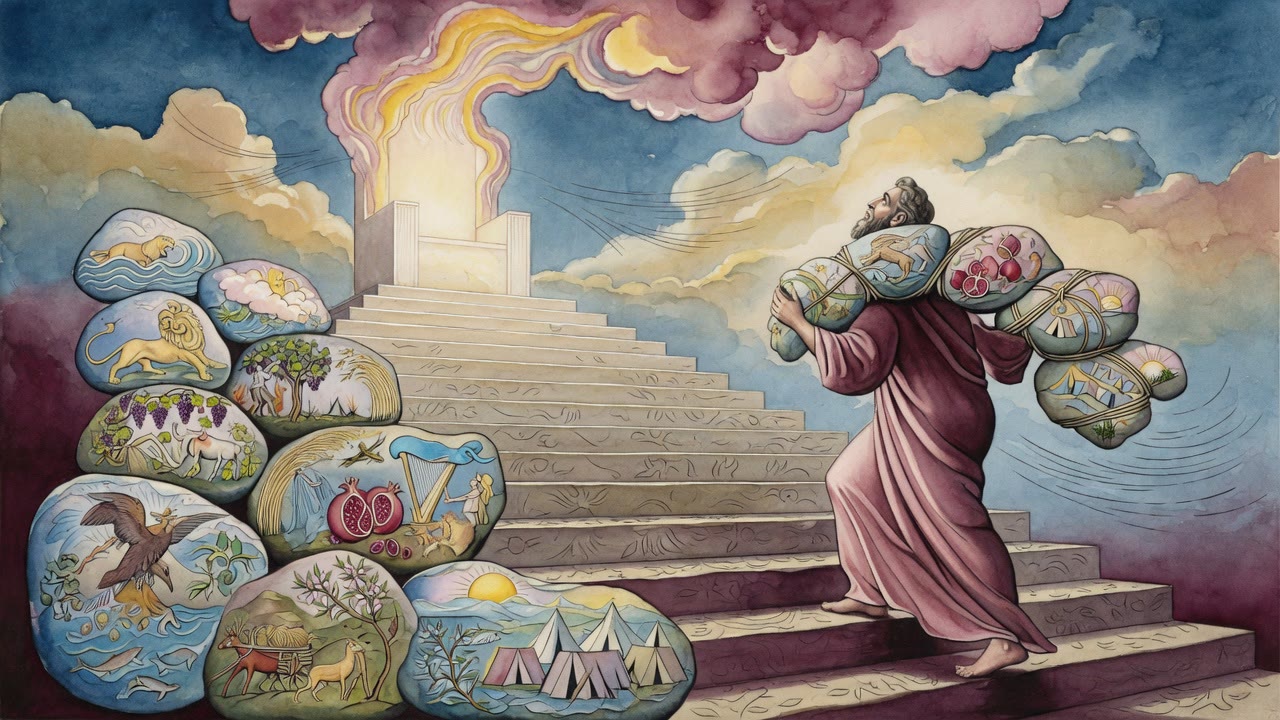
"I have loved you." The Holy One, blessed be He, said: See how much I have cherished you. From the earth to the firmament is a journey of five hundred years, and from the first firmament to the second is a journey of five hundred years, and the thickness of each and every firmament is a journey of five hundred years. They all amount to a journey of seven thousand years. And the hooves of the living creatures are a journey of five hundred and fifteen years. There is no need to measure what is above the hooves of the living creatures. And the Throne is above them all.
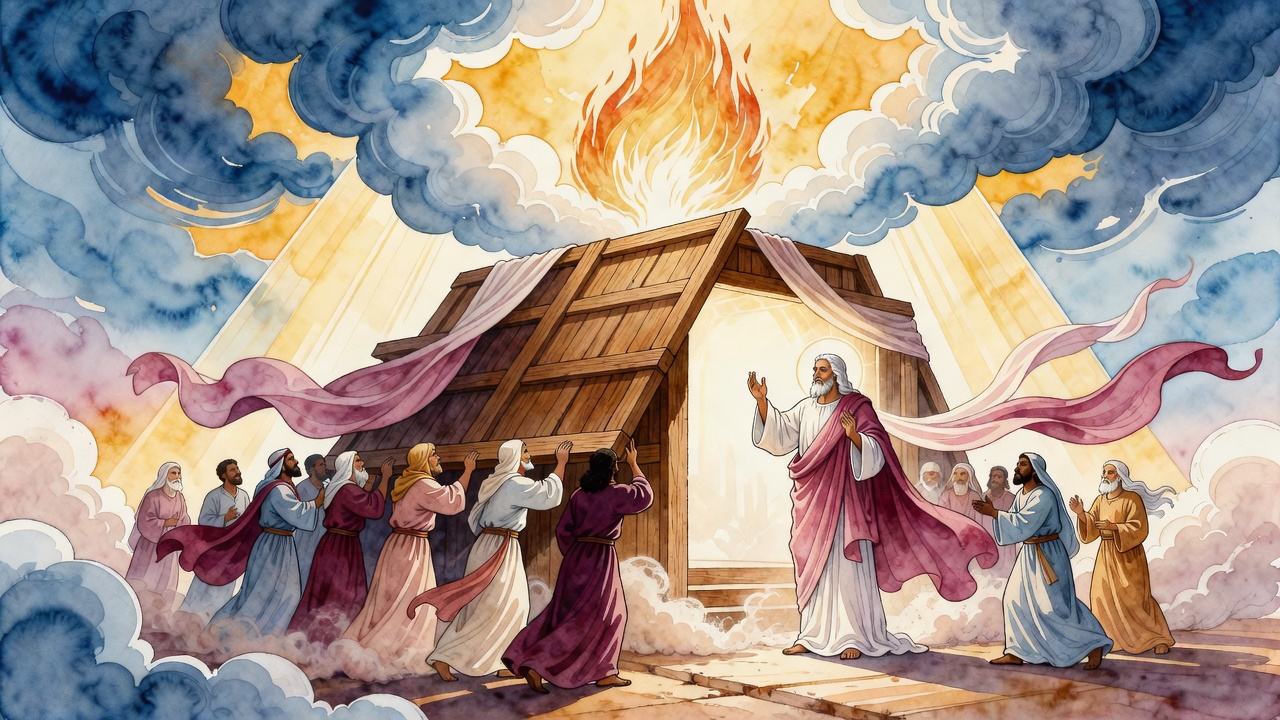
And see how much I have cherished you, that I set aside everything and said to you, "And you shall make curtains of goats' hair" -- make for Me curtains of goats' hair, and I will come to dwell beside you.
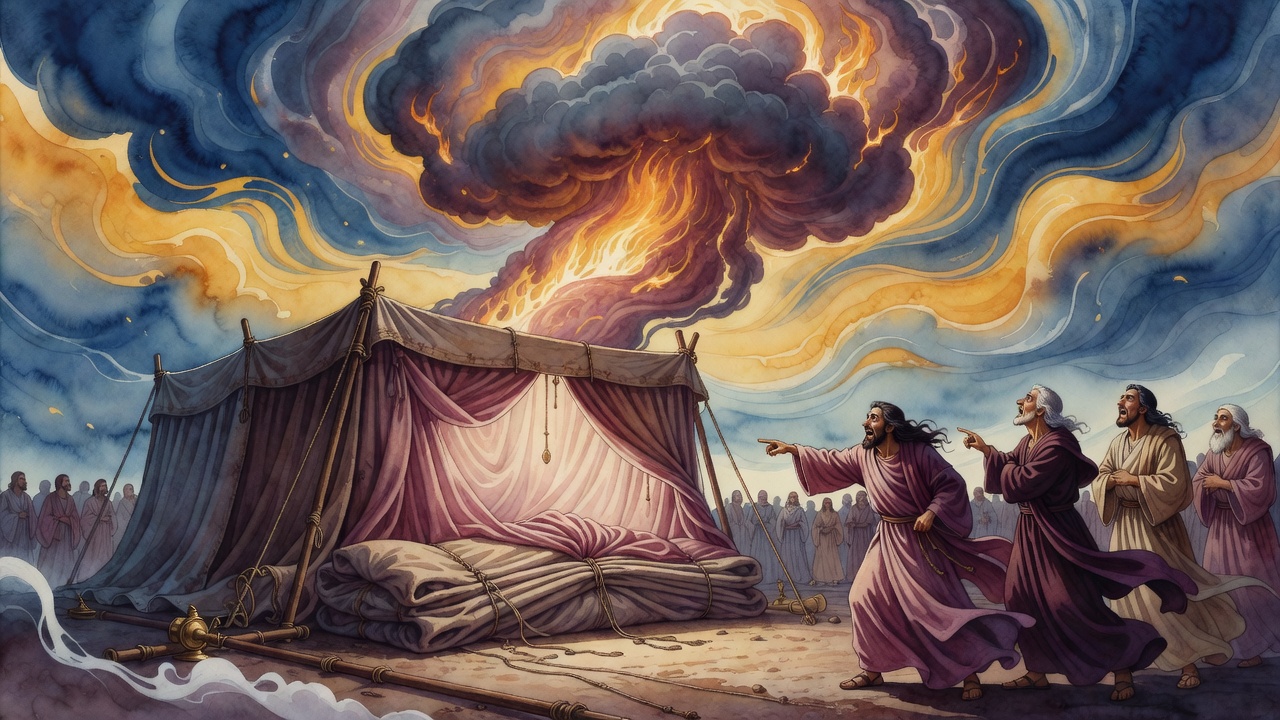
"For a tent" (Exodus 26:7) -- I made clouds for you that shield you like a tent, as it is written: "He spread a cloud for a covering" (Psalms 105:39); so you too, make a covering for the door of the tent.
Rabbi Yehoshua ben Levi said: If the nations had known how beneficial the Tabernacle and the Temple were for them, they would have surrounded them with tents and encampments to guard them. Why? Because before the Tabernacle was set up, the Speech would go out and enter the houses of the nations of the world, and they would be loosened in their bowels. From where? For thus it is written: "For who is there of all flesh that has heard the voice of the living God speaking out of the midst of the fire, as we have, and lived?" (Deuteronomy 5:23). You would hear His voice and live, but the nations hear and are loosened in their bowels within their tents and die.
And do not say it was only the Tabernacle; rather the Temple too was beneficial for them. From where? For thus Solomon would arrange in his prayer and say: "Moreover concerning the stranger, who is not of Your people Israel, but comes from a far country for Your name's sake -- for they shall hear of Your great name and Your strong hand and Your outstretched arm -- when he comes and prays toward this house, may You hear in the heavens, Your dwelling place, and do according to all that the stranger calls to You for, so that all the peoples of the earth may know Your name, to fear You as does Your people Israel, and to know that Your name is called upon this house which I have built" (First Kings 8:41-43). But of Israel, when one prays before You in this house: "and render to each man according to all his ways, whose heart You know -- for You, You alone, know the hearts of all the children of men" (First Kings 8:39). If he asks for children, and You know that they will provoke You, do not give him. And likewise if he asks for wealth and You know that he is destined to spurn it, do not give him. But of the stranger: "and do according to all that the stranger calls to You for, so that they may know," and so forth. But Israel recognize Your name and Your glory, and You foresee from the beginning what will be in the end, "for You, O LORD, have done as You pleased" (Jonah 1:14).
And do not say the Temple alone was beneficial for them; rather even Israel themselves -- were it not for them, no rain would come down to the world and the sun would not shine, for by their merit the Holy One, blessed be He, makes light shine in this world. And in the time to come the nations of the world will see how the Holy One, blessed be He, cleaves to Israel, and they will come to cleave to them, as it is said: "We will go with you, for we have heard that God is with you" (Zechariah 8:23).
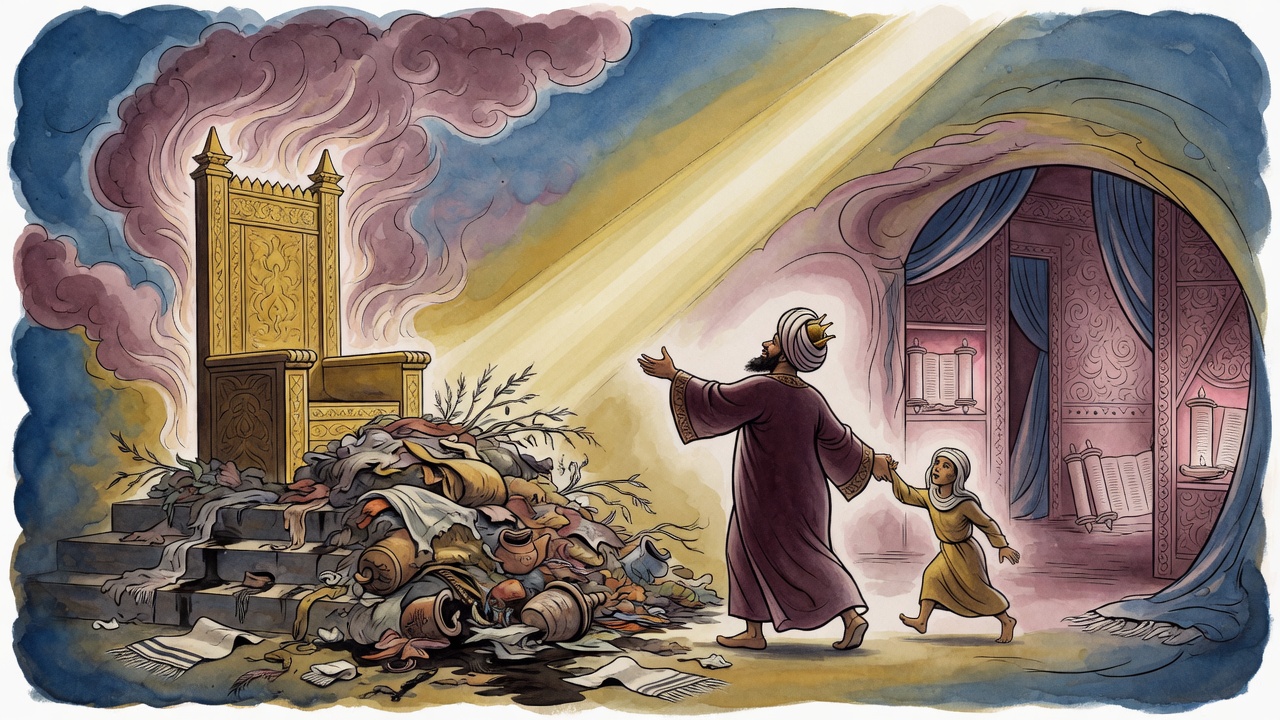
Rabbi Shmuel bar Nachman said: Before the Temple was built, the world stood upon a throne of two legs. Once it was built, the world was made firm and stood settled. From where? For thus the Holy One, blessed be He, says to Gad the prophet, that he should say to David: "Go and say to My servant, to David, Thus says the LORD: Will you build Me a house for Me to dwell in?" (Second Samuel 7:5). And another verse says: "You shall not build the house, but your son who shall come forth from your loins, he shall build the house for My name" (First Kings 8:19). Yet you do build, as it is said: "And I will appoint a place for My people Israel, and will plant him, and he shall dwell beneath it" (Second Samuel 7:10). It is not written here "and I will plant them," but "and I will plant him" forever, meaning that the world will be made firm.
Before the Temple was made, the world stood upon a throne of two legs; once the Temple was built, the world was made firm. And do not say that the world was made firm by the Temple alone; rather the Tabernacle too was beneficial for the nations of the world. Why? Because before the Tabernacle was set up, the nations of the world would hear the voice of the Speech and be loosened in their bowels within their tents. Therefore the Holy One, blessed be He, said to Moses: Make Me a Tabernacle, that I may speak with you within it; and not only that, but that I yearn to dwell beside My children. When the ministering angels heard this, they began to say: Master of the universe, why do You leave the upper beings and descend to the lower beings? "O LORD our Lord, how majestic is Your name in all the earth, who have set Your glory above the heavens" (Psalms 8:2) -- this is Your praise, that You should be in the heavens. The Holy One, blessed be He, said to them: By your lives, I will do as you have told Me. Habakkuk said: "God comes from Teman, and the Holy One from Mount Paran, Selah; His glory covered the heavens, and the earth was full of His praise" (Habakkuk 3:3).
At first "His glory covered the heavens," and afterward "the earth was full of His praise." David said to them: He laughs at you, He sets His glory upon the earth, as it is said: "Let them praise the name of the LORD, for His name alone is exalted; His glory is above the earth" (Psalms 148:13), and afterward above the heavens. The Holy One, blessed be He, said to them: And why are you amazed at this? See how I cherish the lower beings, that I descend and dwell within curtains of goats' hair, as it is said: "And you shall make curtains of goats' hair."
Rabbi Yehudah and Rabbi Nechemiah. Rabbi Yehudah says: There was a great clean animal in the wilderness, and from it they made the curtains. And Rabbi Nechemiah said: It was a work of miracles, and it was created for the moment and then hidden away. Know this, for it is written: "And you shall make curtains of goats' hair... the length of one curtain shall be thirty" (Exodus 26:7-8) -- from where do you bring curtains of thirty cubits? From here you learn according to the words of Rabbi Nechemiah. And do not say it was only with the curtains; rather even with the boards there was a work of miracles. And from where were the boards? Our father Jacob planted them at the time he went down to Egypt. He said to his sons: My sons, you are destined to be redeemed. From here, the Holy One, blessed be He, is destined to say to you, once you are redeemed, that you should make for Him the Tabernacle; so arise and plant cedars now, so that when He tells you to make Him the Tabernacle, the cedars will be ready for you. Immediately they arose and planted, and did so.
Our Rabbis, of blessed memory, said: "And the middle bar in the midst of the boards" (Exodus 26:28) came down in the hand of our father Jacob to Egypt -- for it was difficult, since it had to reach from one end to the other. And not only that, but those cedars would sing song before the Holy One, blessed be He. How did they sing song? As it is said: "Then the trees of the forest shall sing for joy before the LORD" (First Chronicles 16:33). And "then" (az) means nothing other than song, as it is said: "Then (az) Moses sang" (Exodus 15:1). And when? When the Tabernacle was made from them. When the Holy One, blessed be He, spoke to Moses concerning the Tabernacle, He said to him: "And you shall make the boards for the Tabernacle of acacia wood, standing up" (Exodus 26:15). It does not say "and you shall make boards," but "and you shall make the boards" -- those that Jacob their father had prepared. "Standing up" -- those that had been set up beforehand.
Rabbi Shmuel bar Nachman said: There were twenty-four kinds of cedars, and of them all only seven were chosen, as it is said: "I will set in the wilderness the cedar, the acacia, and the myrtle, and the oil tree; I will set in the desert the cypress, the plane, and the box tree together" (Isaiah 41:19). "Cypress" -- elatin. "Plane" -- ispu neramuz. "Box tree" (te'ashshur) -- peksinon. And it is called te'ashshur because it is the most prized (me'ushar) of all kinds of cedars. And of them all only the acacia (shittah) was chosen, as it is said: "acacia wood." Why does He call it "acacia wood"? In order to heal what they were destined to do at Shittim, as it is said: "And Israel dwelt at Shittim" (Numbers 25:1). And do not say only of the ark that Moses made, but even every ark that Israel make, they must put cedar of acacia into it.
Another interpretation: They sinned at Shittim, and they were stricken at Shittim, and they are healed by the acacia (shittim). They sinned at Shittim, as it is said: "And Israel dwelt at Shittim." They were stricken at Shittim, as it is said: "And those who died in the plague were" (Numbers 25:9). And they are healed by the acacia, as it is said: "acacia wood." You find that they did not move from there until Phinehas arose and turned back the wrath, as it is said: "Phinehas the son of Eleazar the son of Aaron the priest," and so forth (Numbers 25:11). The Holy One, blessed be He, said: In the world to come I will heal Shittim, as it is said: "And it shall come to pass in that day that the mountains shall drip new wine, and the hills shall flow with milk, and all the streams of Judah shall flow with water, and a fountain shall come forth from the house of the LORD and shall water the valley of Shittim" (Joel 4:18).

 Click for full size