Moses Pitched His Tent Two Thousand Cubits Away
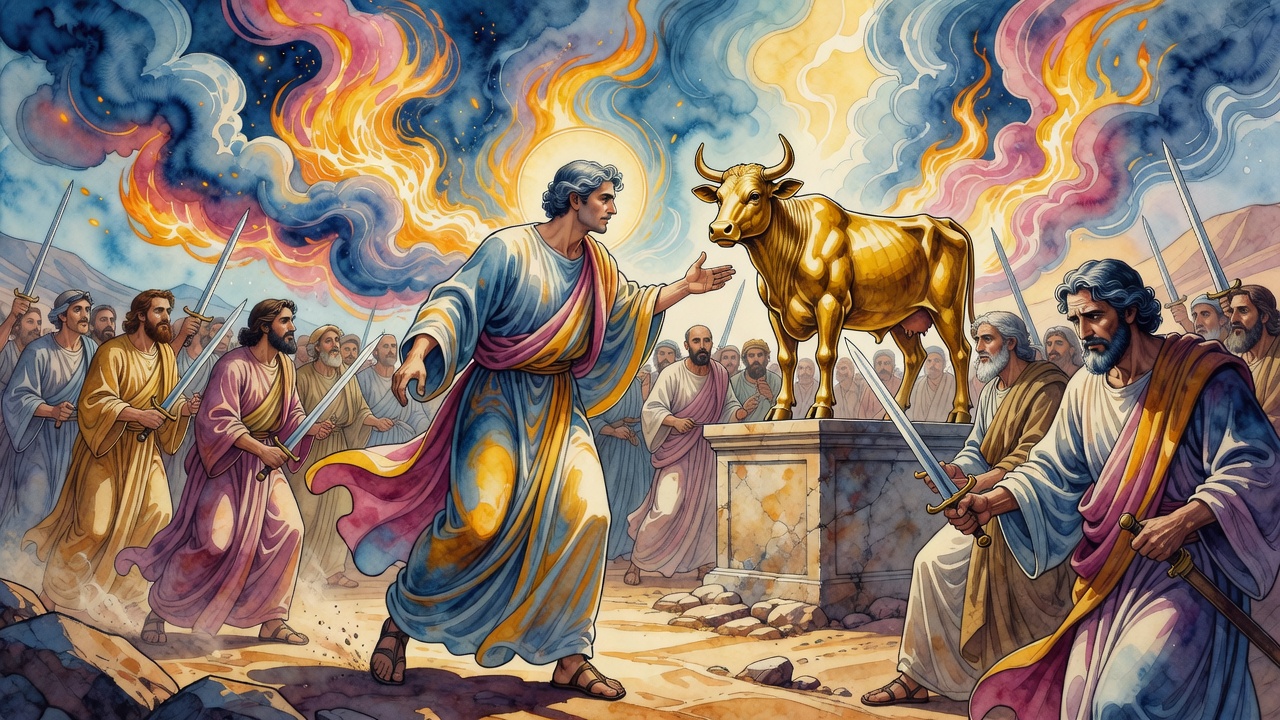
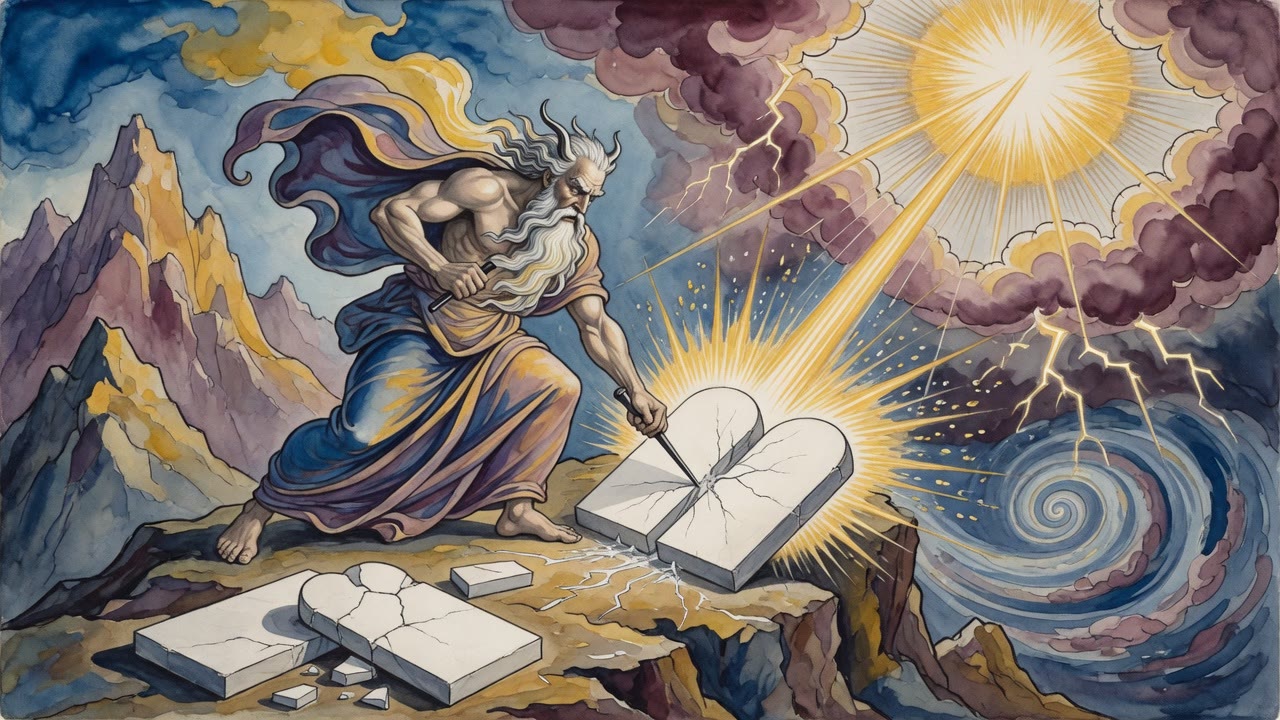
The gold of the calf still stank in the dust. Moses dragged his tent past the last row of Israel and did not look back.
Table of Contents
Moses hauled the tent poles past the last row of Israel and did not look back.
 Click for full size
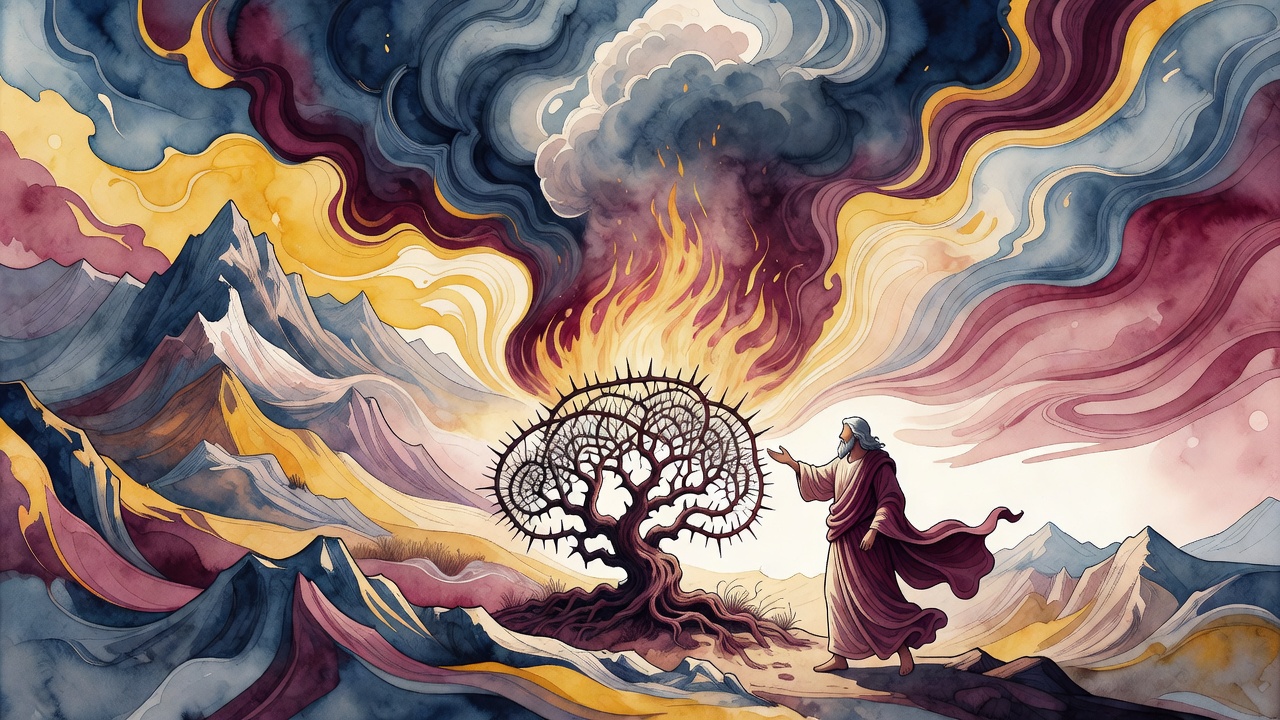
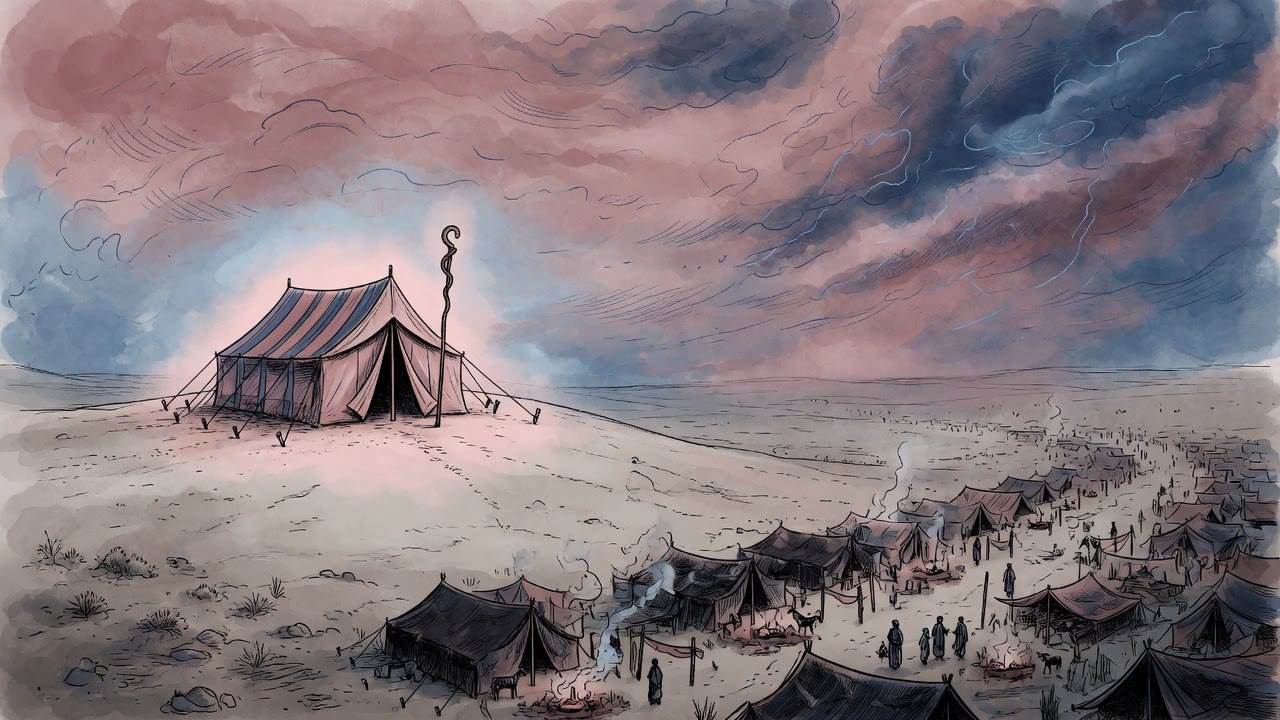
The gold of the calf still stank in the dust. Levites had swept the camp, but the air held the memory of dancing. Moses measured two thousand cubits from the edge of the people, the exact distance a Jew may walk outside a settled place on the Sabbath, and drove his stakes into empty ground. He called the place Mashkan Beit Ulpana (משכן בית אולפנא), the Tabernacle of the House of Instruction. Then he waited to see who would walk after him.
Not everyone rose in love.
The Walk That Cost Breath
Forgiveness, in that camp, required legs. Whoever still felt the mark of the calf on his hands had to leave the comfort of his tent door, cross the open sand, and come to the outer tent to confess and pray. The walk was not decoration. Two thousand cubits is far enough that the body notices. Heat climbs the neck. Sand finds the sandals. A man who only felt sorry without standing up never reached the flap.
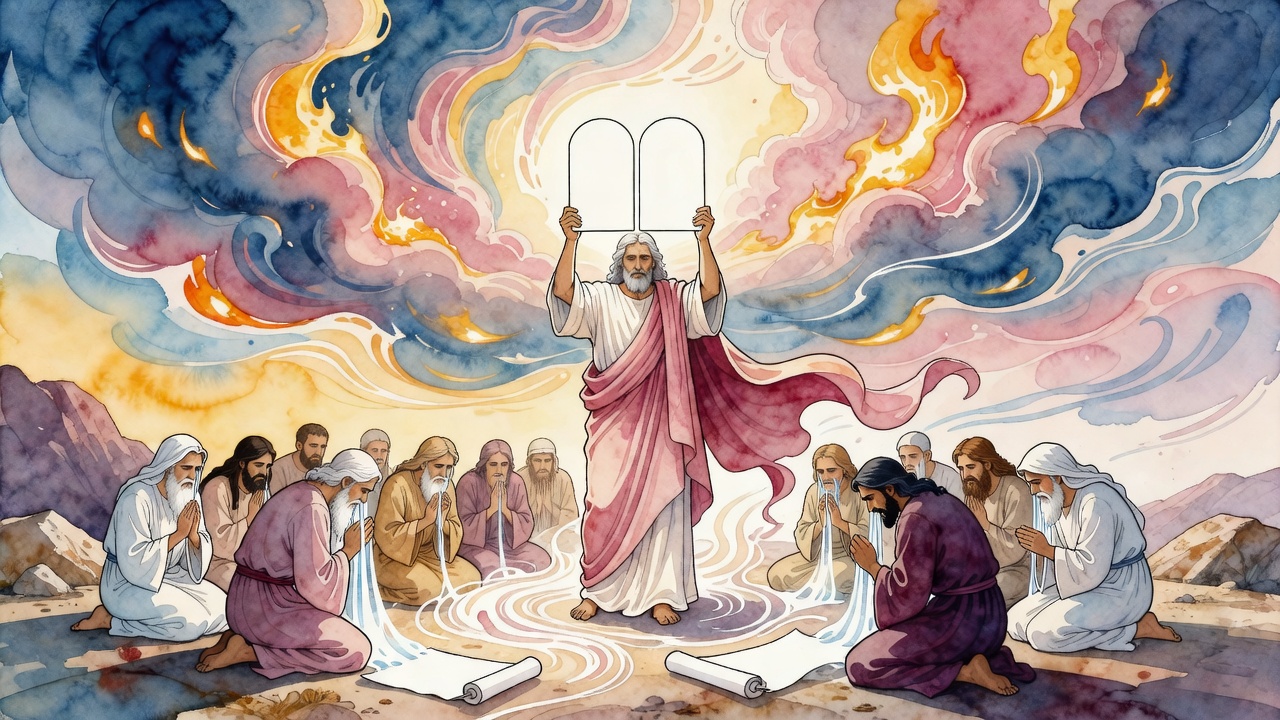
Inside the tent Moses taught. Outside it, the air cooled. Men who had shouted for a calf now whispered names of their sins into the dust, and praying there they were forgiven. The tent was both study house and house of return. Instruction and teshuvah (תשובה), return, shared one roof, because a people that will not learn will not return, and a people that will not return cannot learn.
Some came at dawn, before the camp fully woke, so fewer eyes would count their steps. Some came at noon when the heat made shame feel smaller than thirst. A few came at evening with children in tow, as if to say the next generation would know the path even if the parents still limped. Moses did not grade their motives at the door. He opened the teaching and let the walk do the first work.
Two Crowds at the Doorways
When Moses left the camp each day to go out to that tent, the people stood. Every man stood at the door of his own tent. The righteous rose in respect. The wicked rose in resentment. The wicked looked after Moses with the eina bisha (עינא בישא), the evil eye, the jealous stare that later generations treated as a force with teeth.
Their grievance was not the calf alone. The calf was already dead metal. Their grievance was the walk. Moses kept walking toward God when they had stopped walking. Every step he took toward the House of Instruction was an indictment of the steps they refused to take. Admiration and the evil eye watched the same back. Both were watching a man who would not stay soft in the middle of a ruined camp.
A woman filling a jar near her tent rope saw both kinds of standing in a single glance. On her left, a neighbor bowed his head as Moses passed. On her right, another neighbor's mouth twisted as if the prophet's distance were a personal insult. Same dust. Same hour. Two kinds of eyes.
The Distance Before the Law
Two thousand cubits is not a random number. It is the techum Shabbat, the Sabbath limit. Moses planted the place of instruction at the edge of permitted travel, near enough to reach and far enough to cost something. No one stumbled into forgiveness. The distance had to be walked.
He did not build a wall against the people. He built a path. The path was open. The path was long. The wicked stood at their doors and tried to burn him with their eyes. He kept walking. On the return trip the same eyes waited, hoping fatigue would show, hoping the prophet would limp, hoping the distance would finally own him. He returned with teaching still warm on his tongue and the sand of the outer court still on his hem.
Children began to mark the route with small stones so their fathers could find it after dark. The stones were not commanded. They were the invention of people who had decided the walk mattered more than the stare.
Who Crossed the Sand
A man who had danced around the calf until his throat went raw stood in his doorway at dawn. He looked at his neighbors still planted there. He looked at the thin shape of the outer tent. He started walking. Halfway there his pride tried to turn him around. The sand under his feet did not argue. It only recorded steps. At the flap he found not a throne but a teacher, and a silence large enough to hold a confession.
Moses went in. The cloud of meeting waited. Outside, the wicked kept their watch, and the righteous kept theirs, and the distance between the camp and the tent remained exactly two thousand cubits, no shorter for love, no longer for spite. When night fell, the evil eye had nowhere to land except memory, and memory is a poor weapon against a man who will walk the same road at first light.
The House of Instruction stayed pitched. The path stayed open.
← All myths