Pharaoh Tried to Heal Himself With Hebrew Blood
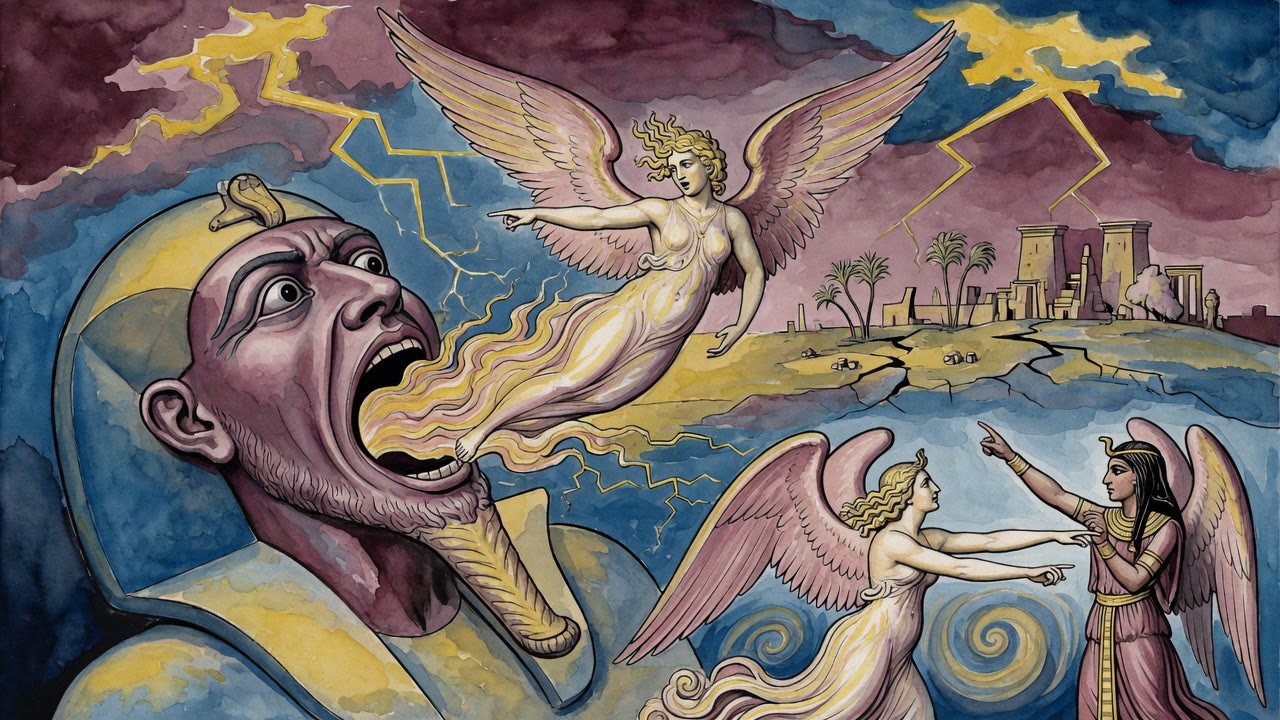
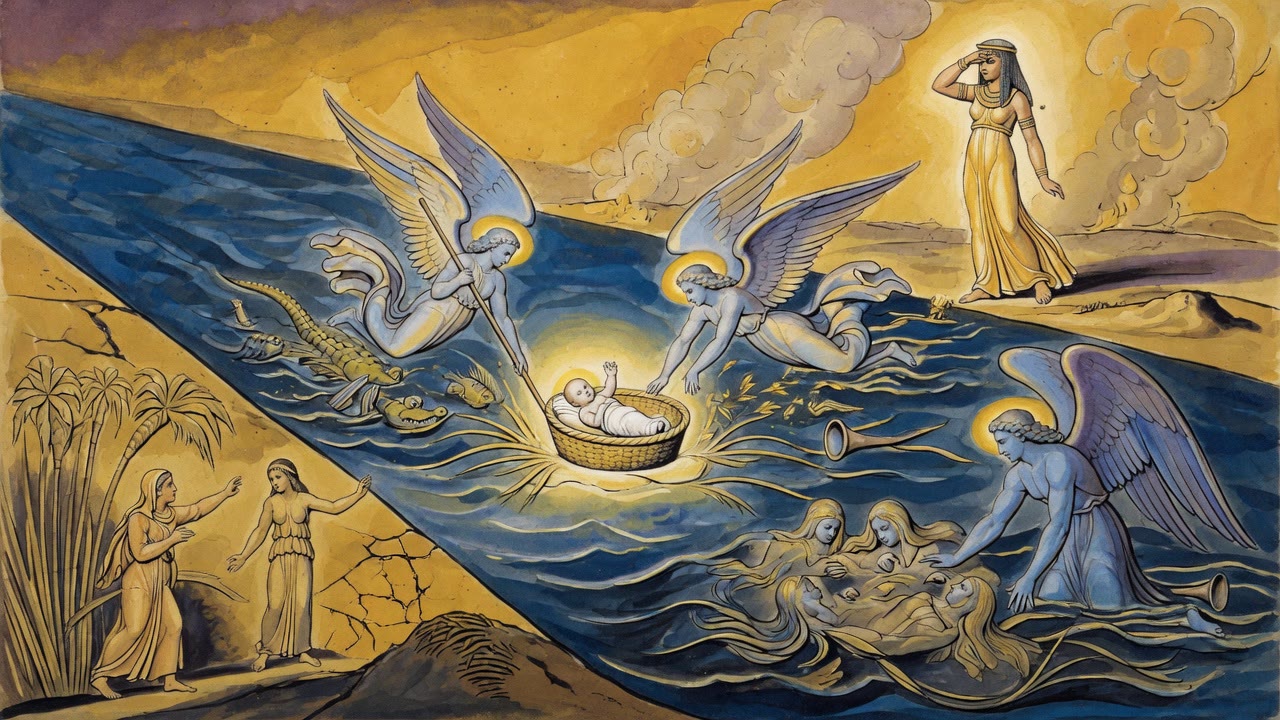
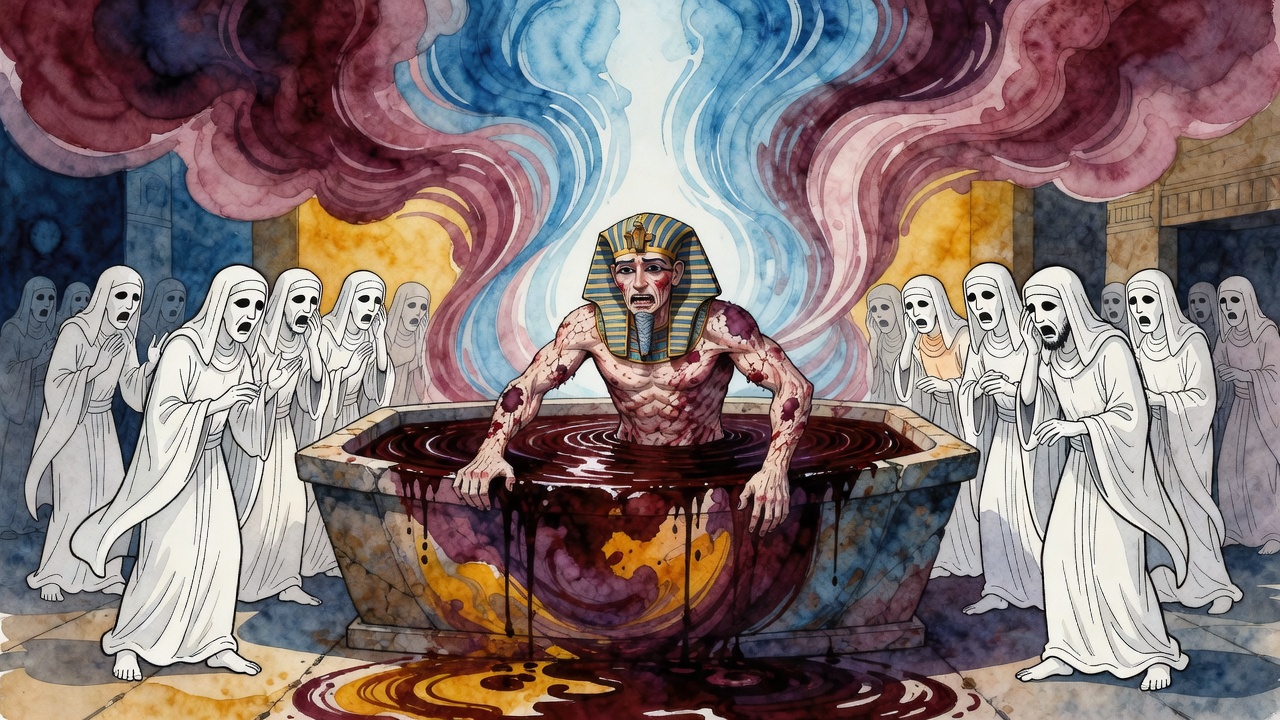
Pharaoh broke out in sores, and his doctors told him to bathe in the blood of Hebrew children. He signed the order for three hundred a day.
Table of Contents
Pharaoh was covered in disease, and his physicians told him the only cure was Hebrew blood.
 Click for full size
That is the moment Egypt's cruelty stops looking like policy and becomes something else. A king who made a whole people his tools now wanted to turn their children's bodies into medicine.
The Sick King's Decree
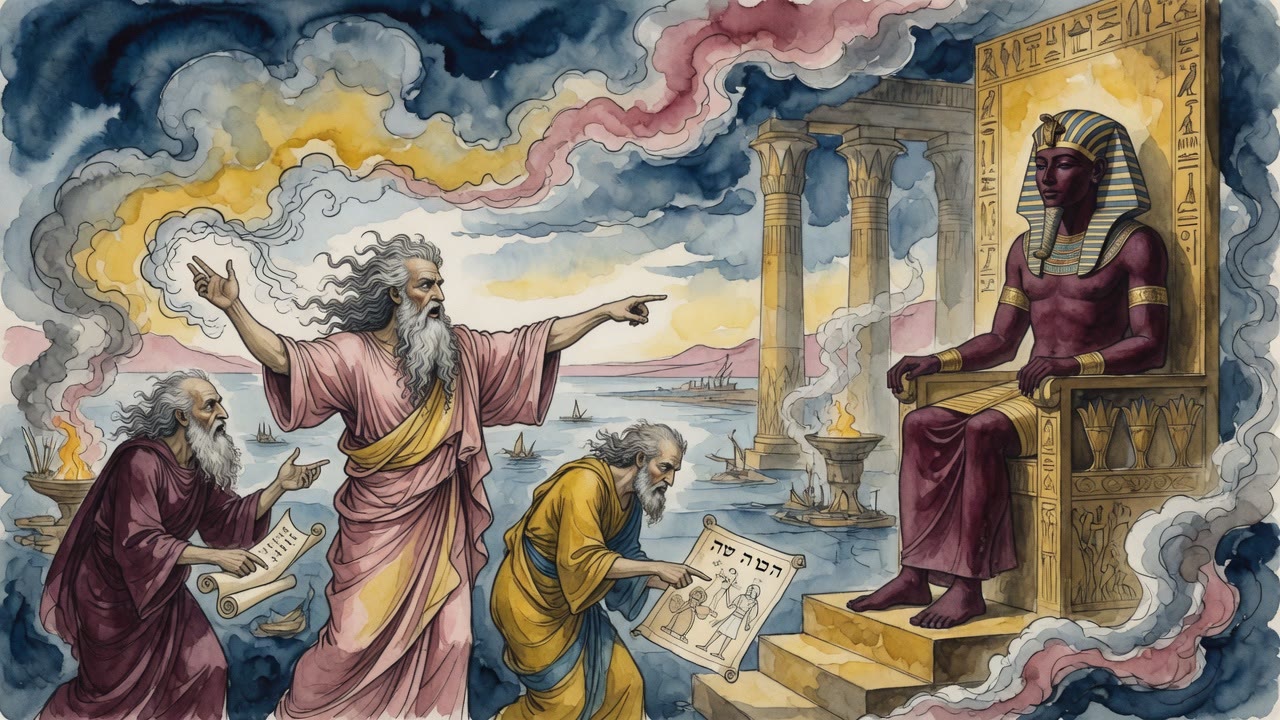
Targum Pseudo-Jonathan on Exodus 2:23 reads the cry of the Israelites through a new lens. The Torah says the king of Egypt died, and the Israelites groaned from the bondage and their cry rose to God. The Targum says the king did not die. He was struck with disease and he commanded that Israelite firstborn be killed so he could bathe in their blood.
The cry that reached heaven was not only the cry of enslaved labor. It was the cry of parents whose children had just been ordered to become a cure for the man who enslaved them.
The Targum is explaining why the cry is so sharp, why the verse says it pierced heaven, why this particular moment triggered a divine response when years of bondage before it had not. The decree to kill firstborns for medical bathing is the final form of a despotism that has consumed everything around it and begun consuming children for its own maintenance.
Ginzberg Names the Remedy
Legends of the Jews, compiled by Louis Ginzberg between 1909 and 1938, gives the tradition fuller shape. Pharaoh's disease covered his entire body. His court physicians, who in rabbinic memory included Balaam and Job among his advisors, could offer no ordinary remedy. Balaam made the recommendation: Hebrew blood. Bathe in the blood of three hundred children, morning and evening, and the flesh will heal.
The decree went out. Three hundred children a day, the tradition says in its most extreme form. The mothers fled to the hills with their newborns. The fathers worked their quotas under threat while hiding where their children were. The slave quarters became a place where people organized in secret to protect the most vulnerable members of their families from a medical project they had never agreed to serve.
The king who wanted healing showed no sign of receiving it.
What Pharaoh's Disease Was For
The story has a theological argument built into it. Pharaoh does not ask what his disease means. He does not consult a prophet. He does not consider whether the condition of the people he rules has anything to do with the condition of his own body. He asks whose body can be spent to make him comfortable again.
The disease is not merely physical misfortune. It is a mirror. The kingdom built on the consumption of Hebrew bodies is now generating a king whose body consumes Hebrew children. The logic of the empire has become the logic of the cure.
That is why the cry rises at this moment and not before. The Targum is making an argument about how heaven counts: there is a line, and when it is crossed, the cry reaches. The blood bath crossed it.
The Suffering Increased Further
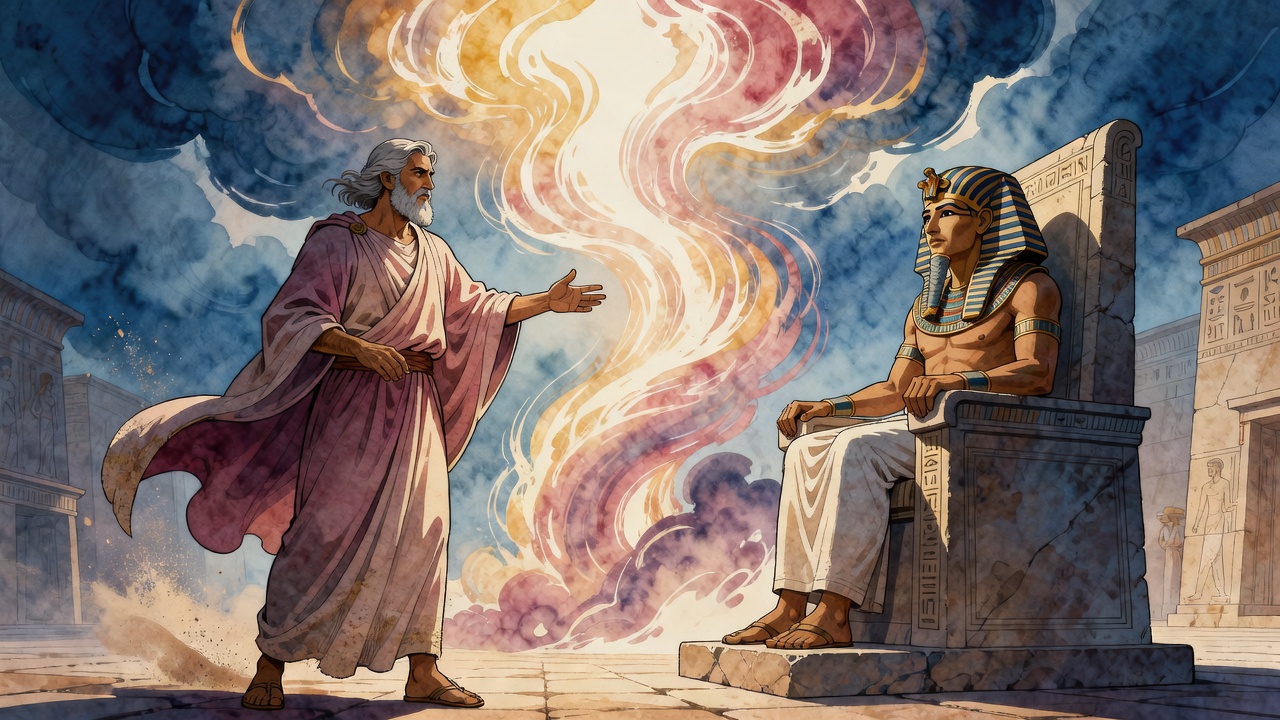
Ginzberg also records that when Moses and Aaron first appeared before Pharaoh, the king's response was to increase the burden. He had already been denying them straw for their bricks. Now he forbade them from resting on the Sabbath, because he knew they used that time to read the scrolls that spoke of their redemption. He understood what the scrolls did. He knew hope was a fuel. He tried to cut the fuel line.
Moses and Aaron had brought him news that their God had seen the affliction. The king responded by making the affliction worse. He was not ignorant of what he was doing. He was racing the rescue. He knew that a people who still had enough hope to observe the Sabbath had not yet broken, and he wanted them broken before the rescue arrived.
The plagues began before he finished trying.
← All myths