Moses Faced the Sea, the Rock, and Midian
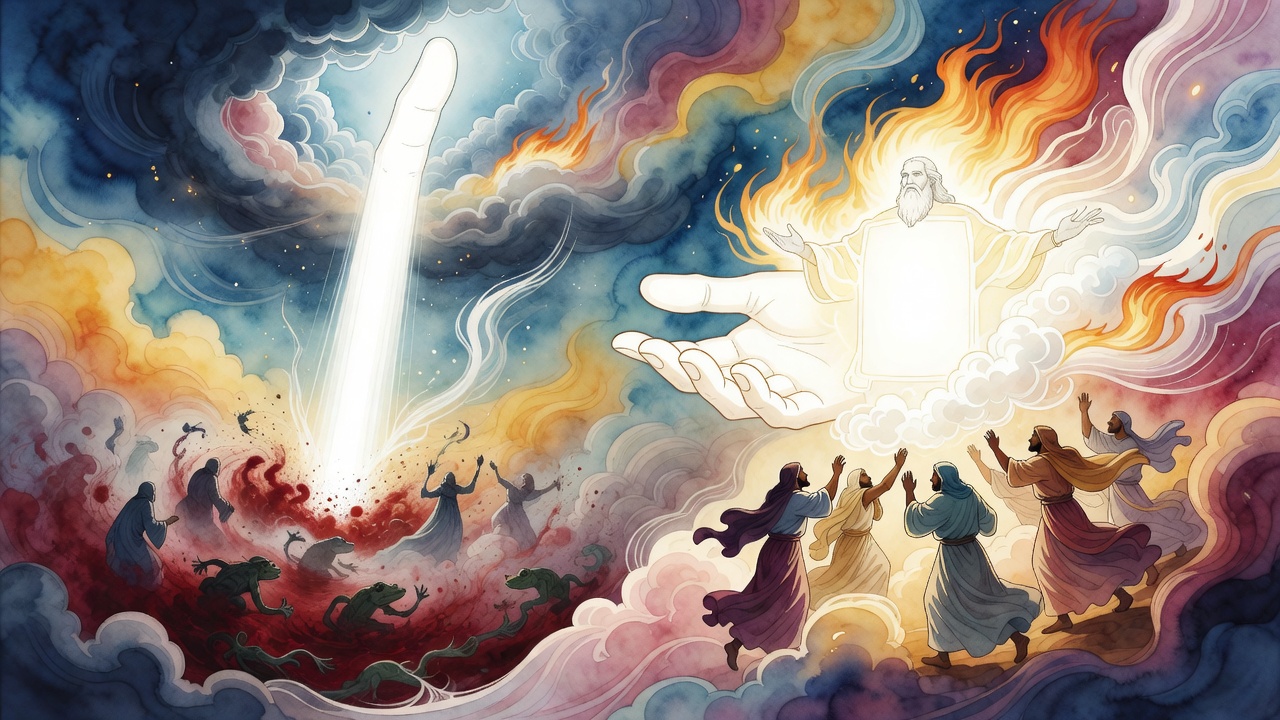
Egypt drowned Hebrew boys because God had sworn never to flood the world again. They thought the oath protected them. The same water came back over them.
Table of Contents
Moses learned that every border has memory.
 Click for full size
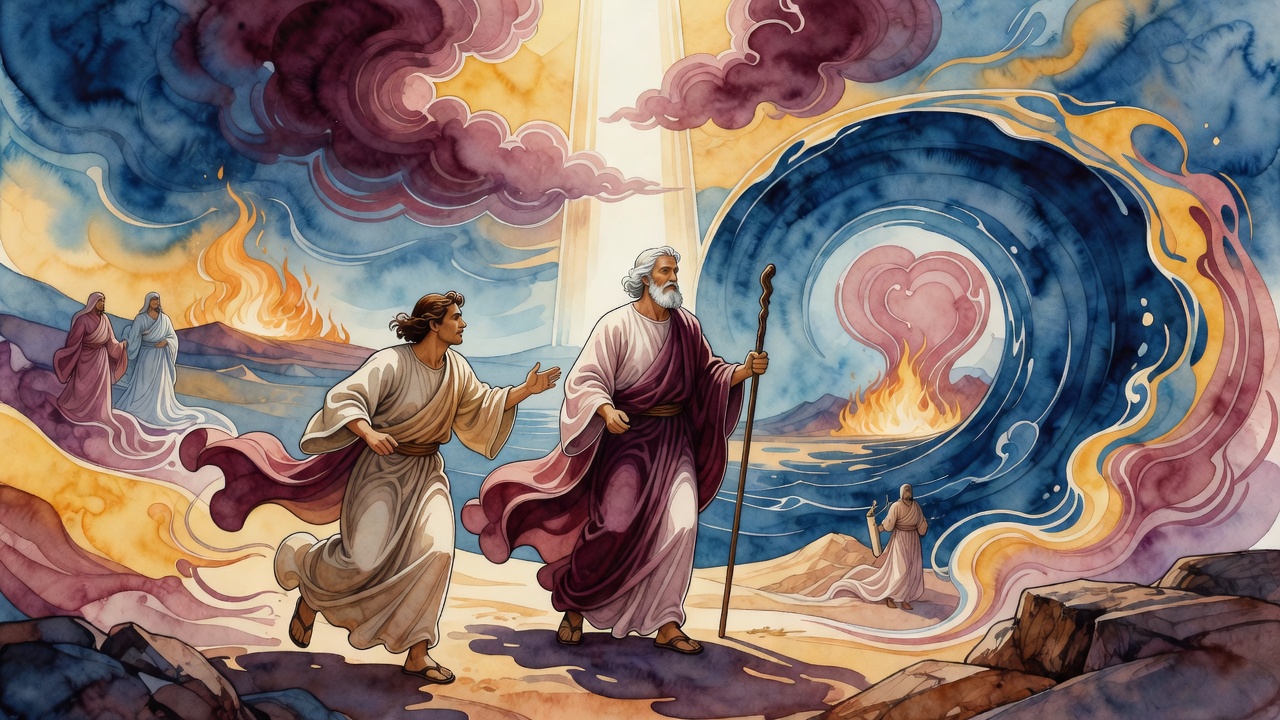
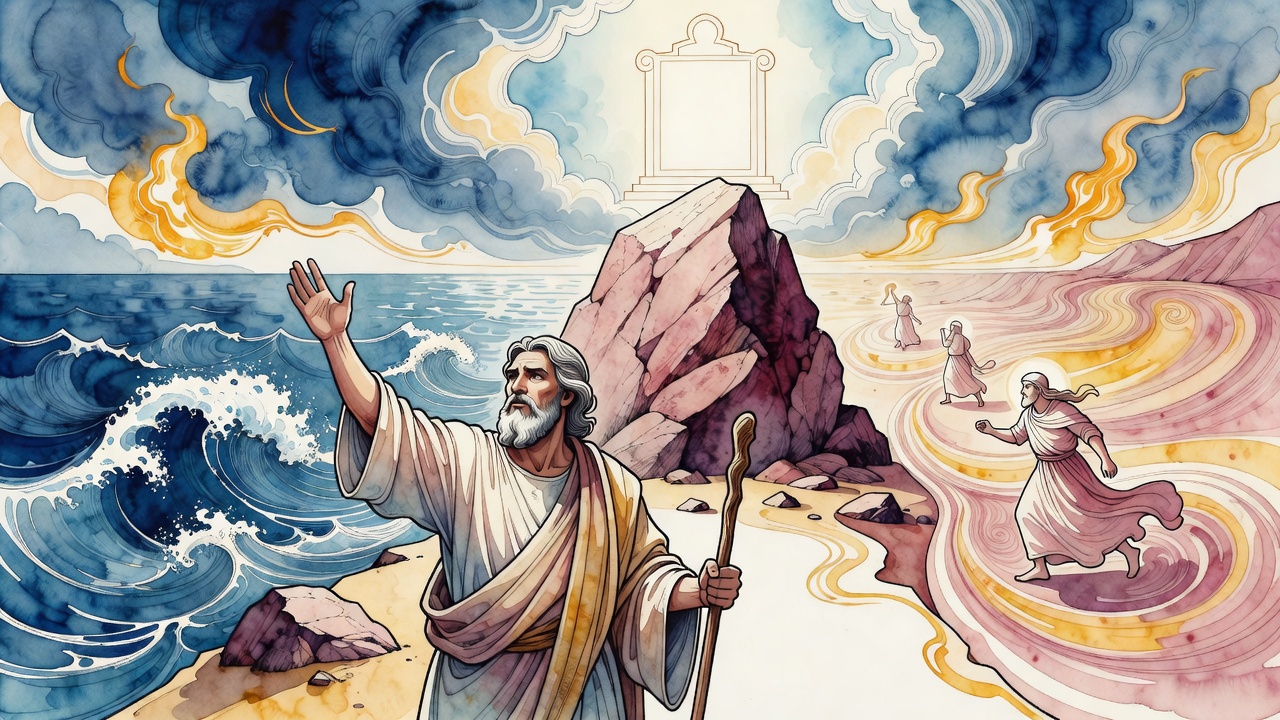
The sea remembered the bodies Egypt had thrown into water. The rock remembered the command Moses failed to keep. Midian remembered the wells and refuge of his youth. At each border, Moses had to decide how a servant of God moves when power is placed in his hand.
Sometimes he obeyed. Once, he broke.
The same staff that could signal deliverance could also expose impatience. Moses carried authority, but authority did not make every use of his hand safe.
The Sea Answered Egypt's Cunning
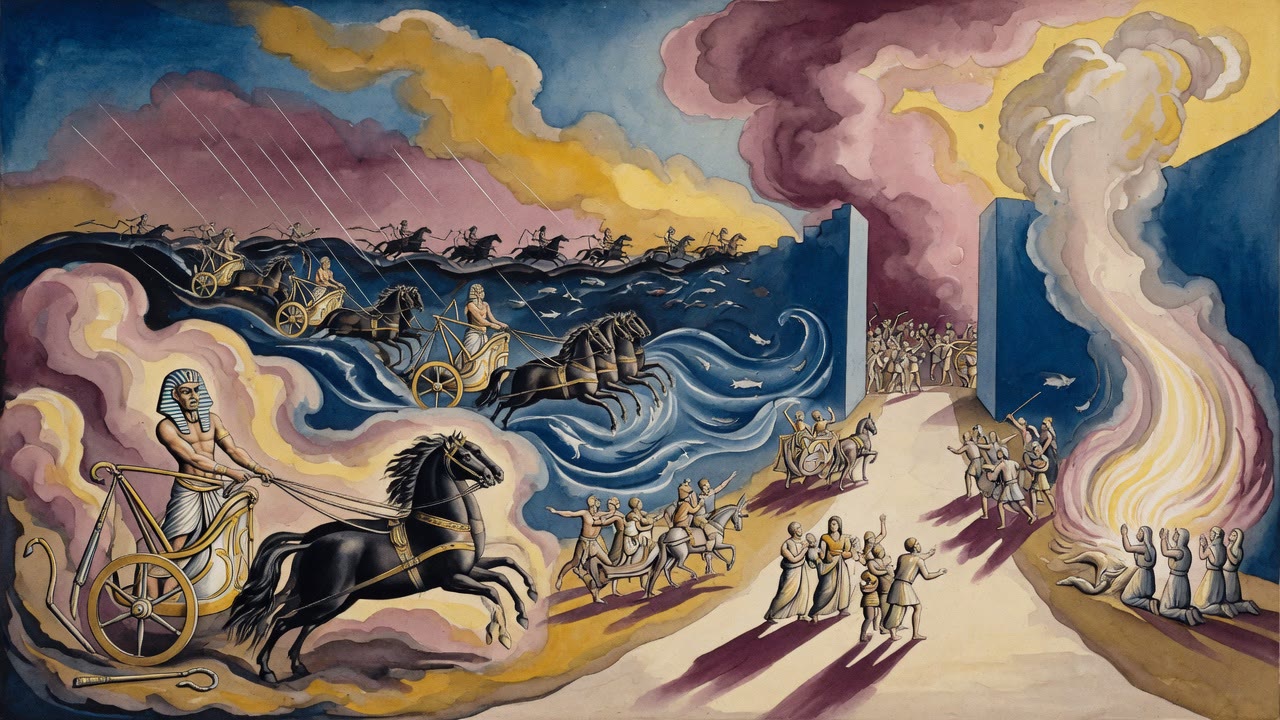
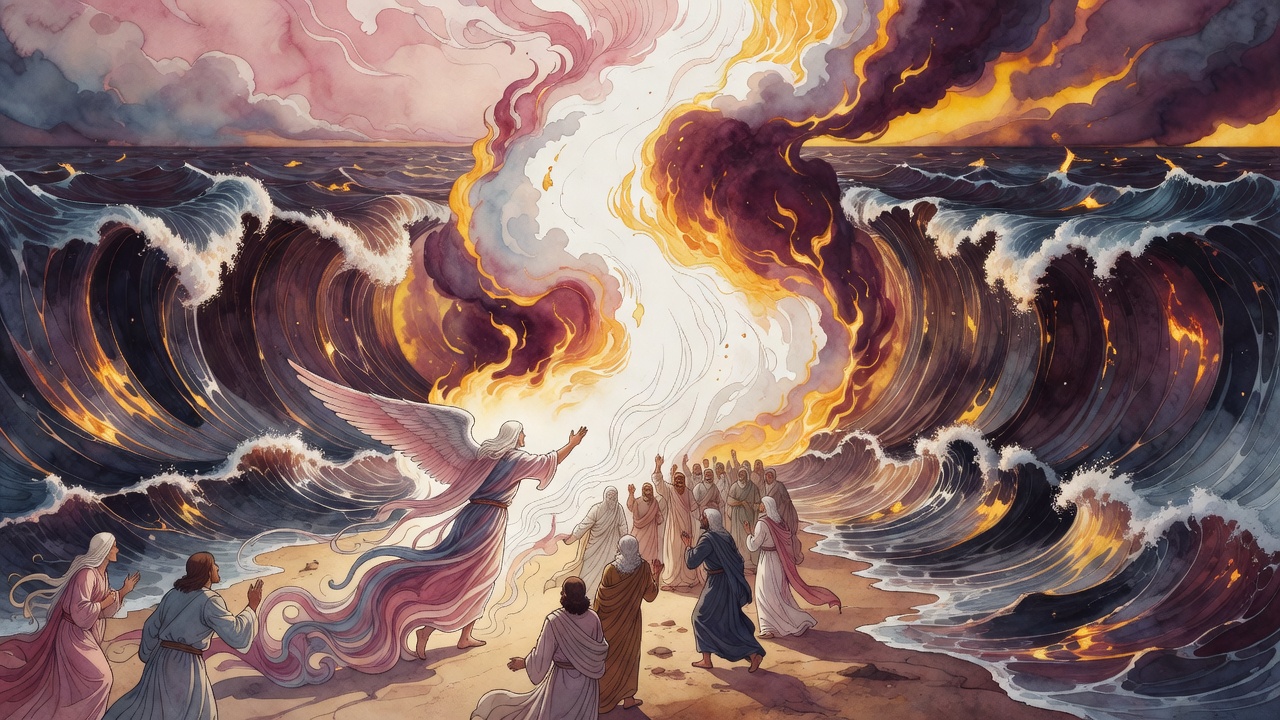
At the sea, God told Moses to stretch out his hand and let the waters return upon Egypt.
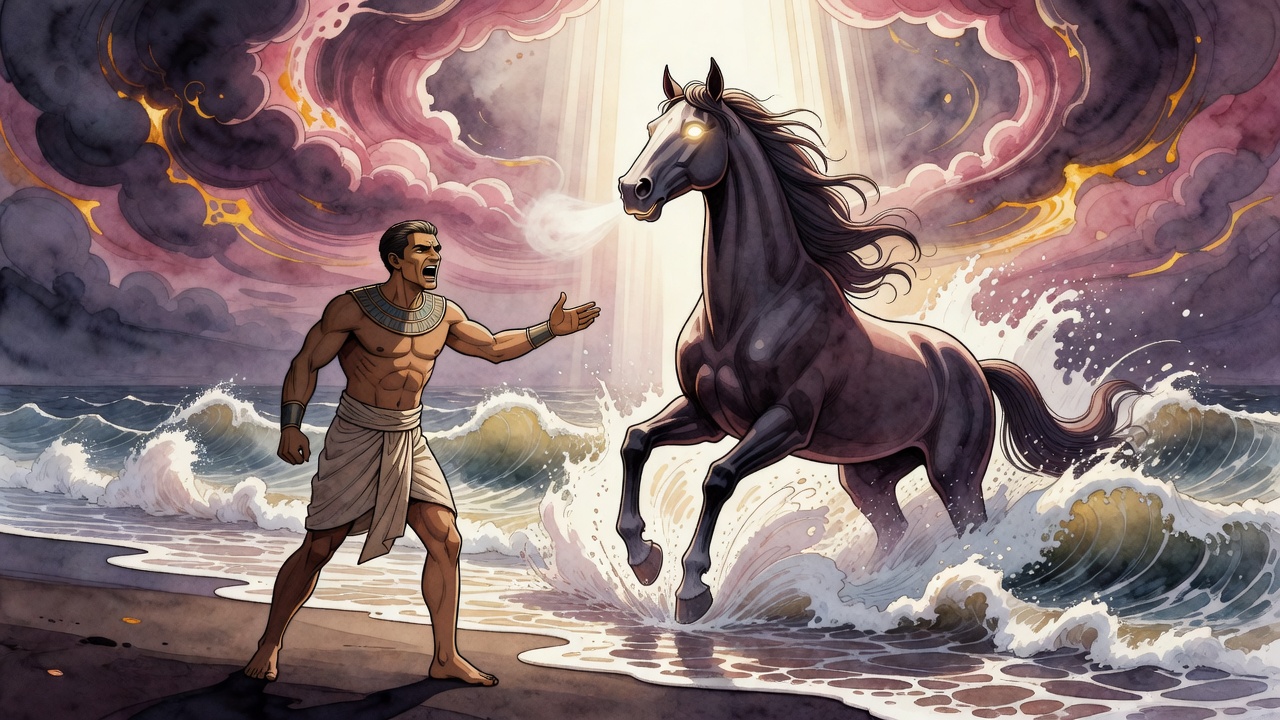
Shemot Rabbah hears more than military collapse in that command. Egypt had been cunning. If they killed Israel by sword, sword might return on them. If by fire, fire might return. But God had sworn not to flood the world again, so they chose water for Hebrew boys and thought the oath had trapped heaven.
They misunderstood the oath.
God would not bring a flood upon the whole world. God could bring Egypt to its own flood. The sea became measure for measure. The water they trusted as loophole turned into their judgment, and Moses' raised hand became the border between Israel walking out and Egypt being dragged into the trap it had designed.
The Rock Refused to Stay Simple
Years later, another command came through Moses' hand.
Take the staff. Speak to the rock. Give water to the congregation and their animals. Bamidbar Rabbah lingers over the animals because even Israel's property mattered before God. The miracle was supposed to arrive with care, not spectacle.
The people crowded around the rock and made the moment uglier. They suspected Moses knew which rocks gave water. They wanted him to draw water from a rock of their choosing. The pressure tightened. Moses called them defiant and struck.
Water came. More than water. The midrash remembers the surrounding rocks producing too. The people drank, the animals drank, and the miracle still carried a wound.
Moses had delivered water but failed to sanctify God as commanded.
Aaron Stayed Silent Under the Sentence
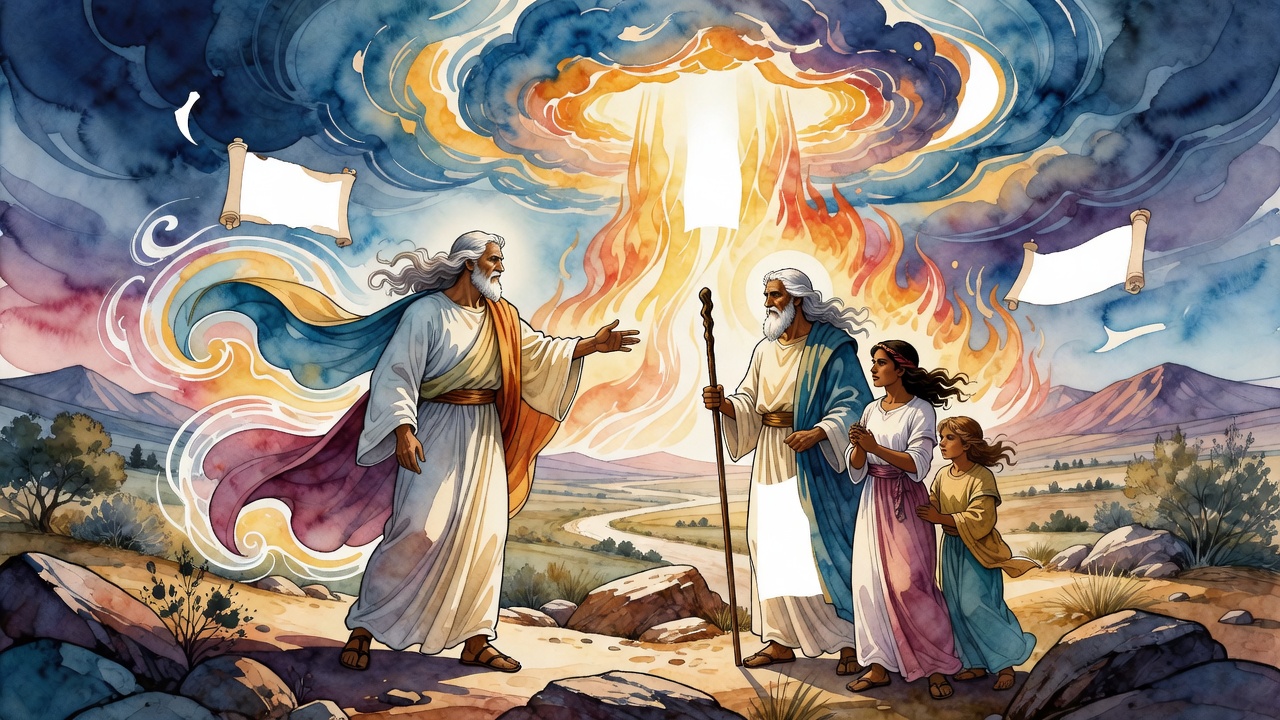
The sentence fell on Moses and Aaron together.
They would not bring the assembly into the land. Moses argued over Aaron's share in the punishment. What had Aaron done? Bamidbar Rabbah gives a harsh image: a creditor seizing a debtor's granary can take the neighbor's granary too. Aaron was bound into the public cost.
Aaron did not complain.
Deuteronomy would still call him God's virtuous one, tested at Massah and Meribah. The silence matters because the rock had already been too noisy: people accusing, Moses striking, water bursting from stone. Aaron receives the decree without adding another sound to the fracture.
Moses Would Not Strike the Well He Had Drunk From
When the time came for vengeance against Midian, Moses did not lead the campaign himself.
Bamidbar Rabbah gives the reason as gratitude. Moses had lived in Midian. He had found refuge there, married there, and drunk from its wells. A proverb governed him: do not throw a stone into a well from which you have drunk.
So he sent Pinchas.
The one who had begun the commandment against Midianite seduction would complete it. Pinchas went with holy vessels, interpreted by some as the Ark and by Rabbi Yochanan as the priestly vestments with the Urim and Tumim. War did not erase memory. Even commanded vengeance had to pass through gratitude, priesthood, and holy implements.
He Called Heaven and Earth to Witness
At the end, Moses spoke to heaven and earth.
Sifrei Devarim hears him calling creation as witnesses because creation obeys its borders. The sun rises and sets. The earth grows what is planted. The sea rages but does not cross the sand God set before it.
Human beings have more freedom than sun, earth, and sea. That makes their obedience more fragile and more precious.
Moses knew the argument from inside his own life. He had watched Egypt cross a moral border and drown. He had crossed the command at the rock and lost the land. He had refused to cross the border of gratitude toward Midian and sent another in his place. His final witnesses were not abstractions. They were the world he had spent forty years learning to obey.
← All myths