Moses Refused to Lead the Midian War Out of Gratitude
Moses had come to Midian as a fugitive. Jethro took him in, Zipporah married him, his sons were born there. He would not throw a stone into that well.
Table of Contents
 Click for full size
The Command and the Refusal
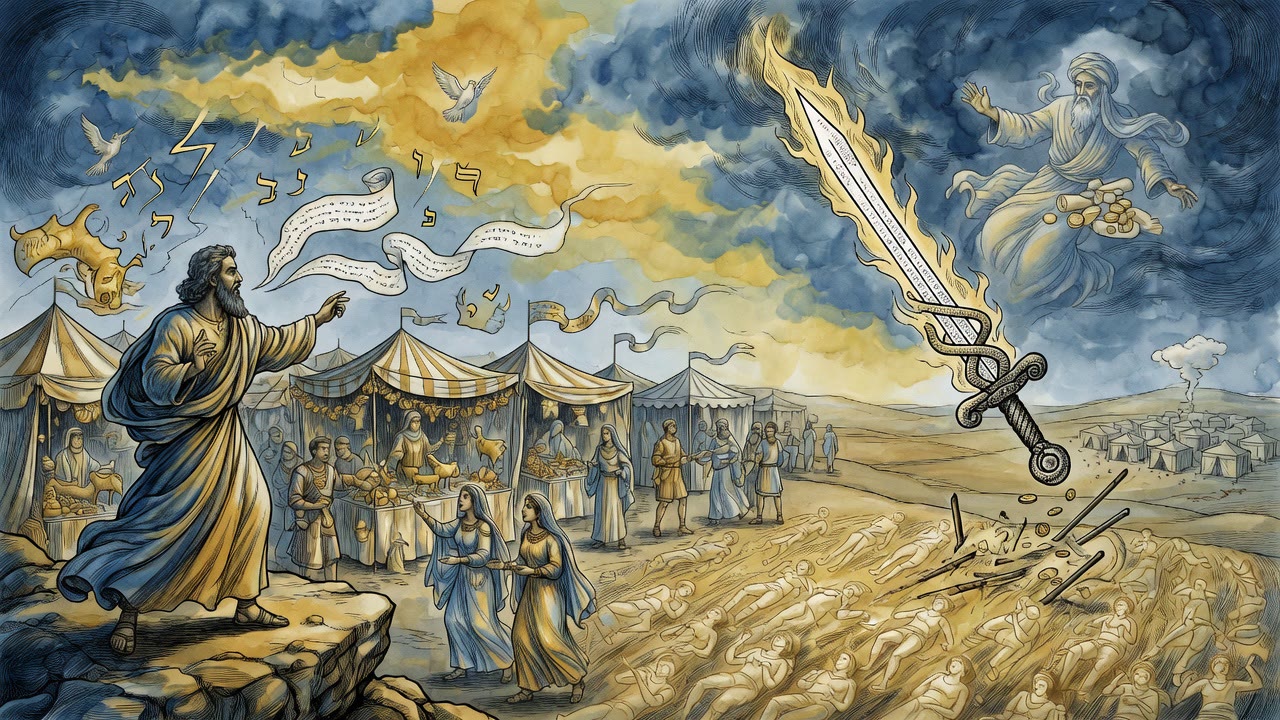
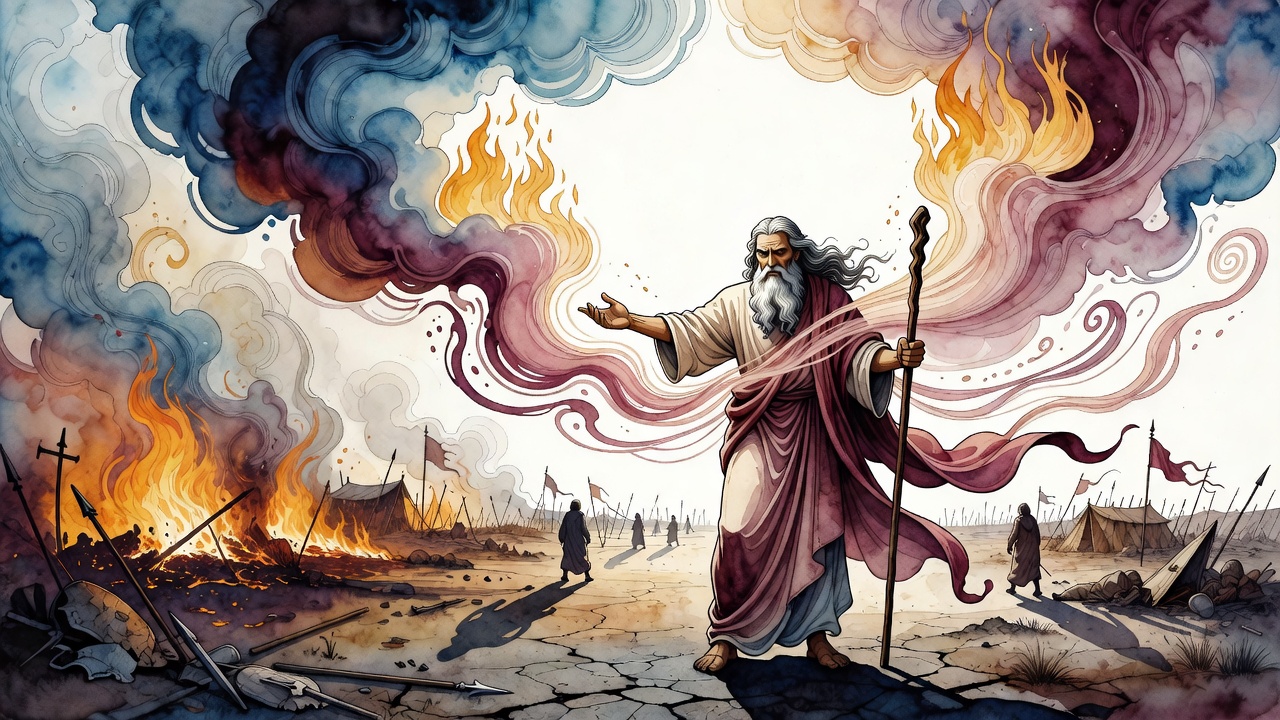
God commanded war against Midian in Numbers 31:2. The command was unambiguous. It was not a suggestion or a conditional instruction. The Midianites had deliberately seduced Israel into the sin of Peor, had sent Cozbi daughter of Zur into the camp of Israel at the peak of the crisis, had been active advisors to the operation that had killed twenty-four thousand Israelites. The war was warranted. The command was direct. Moses did not lead it.
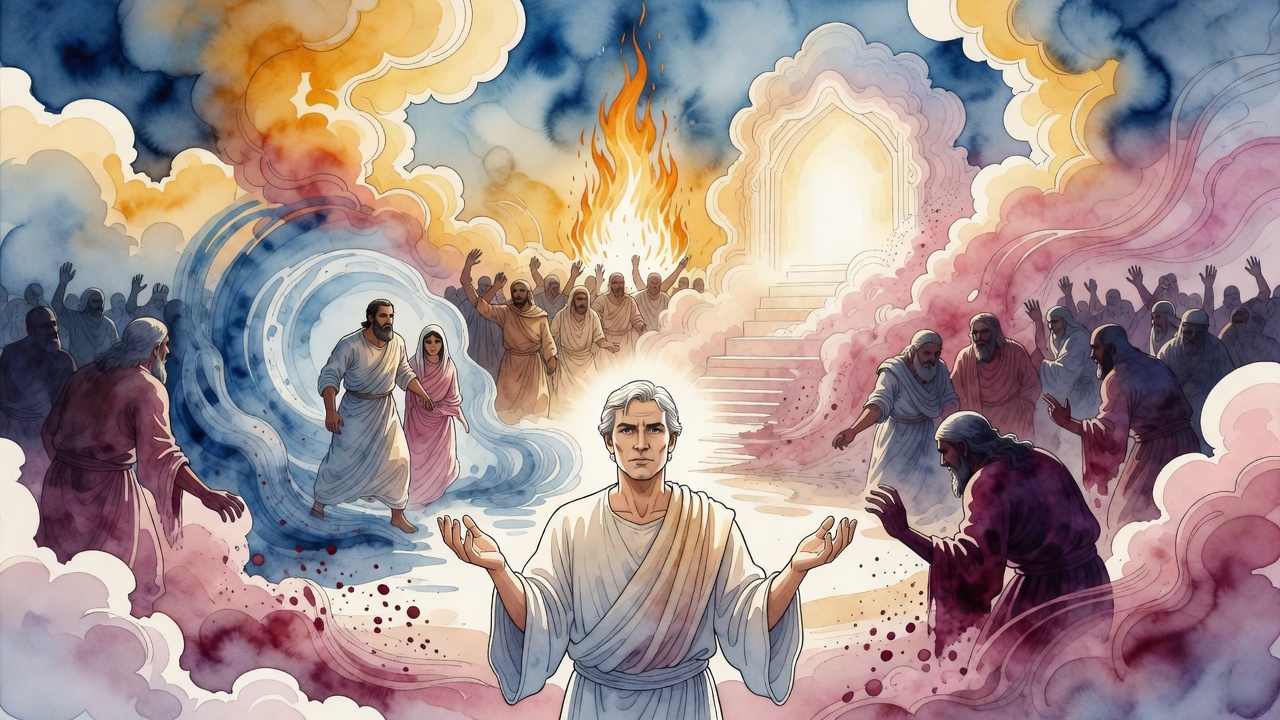
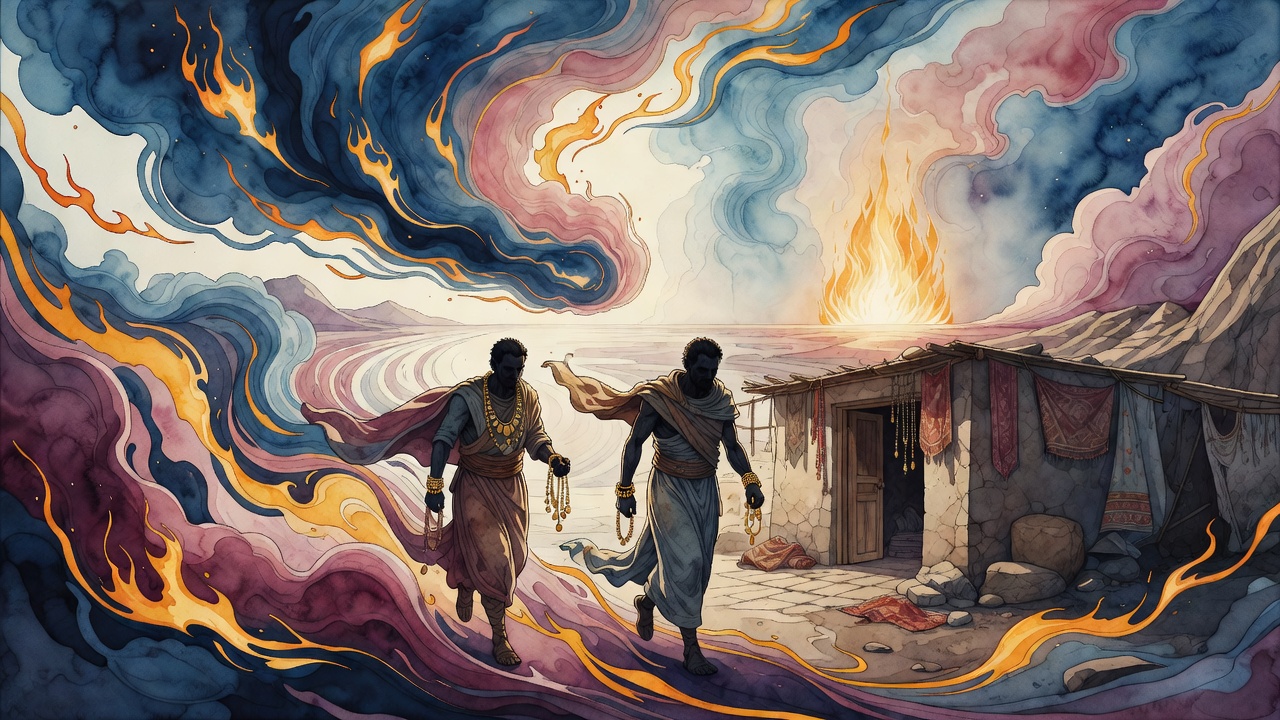
He gave his reason in a phrase that the Talmud Bavli, tractate Bava Kamma (compiled in 6th-century Babylon), would formalize into a principle of ethics that has been quoted in Jewish moral reasoning ever since: cast no stone into the well from which you have drawn water. When Moses fled Egypt after killing the Egyptian overseer who was beating a Hebrew slave, he ran to Midian. Jethro took him in. Zipporah became his wife. His sons Gershom and Eliezer were born there. The burning bush, his first prophetic revelation, appeared to him in the wilderness near Horeb while he was tending Jethro's flocks. The country he had been commanded to destroy was the country that had made his life as a free man possible.
Why Gratitude Does Not Expire
The Legends of the Jews, Louis Ginzberg's compilation published between 1909 and 1938, drawing from the Talmud and from the Sifre on Numbers, a tannaitic midrash compiled in the 3rd century CE, presents Moses's refusal not as sentimentality or strategic weakness but as moral reasoning at its most precise. Gratitude is owed to the place that sheltered you. The obligation does not expire when the relationship becomes inconvenient. It does not dissolve when the people who sheltered you have since become your enemy. It does not yield to military necessity, not because military necessity is unimportant, but because the principle at stake is more fundamental than military expedience.
A lesser man might have reasoned that the Midianites had forfeited their claim on Moses's gratitude by participating in the seduction at Shittim. Moses did not reason this way. He had drawn water from that well. You do not throw a stone into a well you drank from. The transgression of those who had once helped you does not retroactively cancel the debt you owe for the help.
God Accepted the Substitution
God did not override Moses's refusal. This is the detail the tradition treats as theologically significant: God accepted that Moses would not lead this war, and arranged for Phinehas to lead it instead. There was no divine correction, no instruction to Moses that gratitude must yield to command. God accommodated the principle Moses had cited.
The logic of why Phinehas specifically was the right substitution runs through the same moral structure. The tradition, drawing on the Sifre's reading of the episode, applies the principle that the one who begins a good deed should complete it: Phinehas had begun the work of defending Israel against the sin of Peor when he drove his lance through Zimri and Cozbi and stopped the plague. The war against Midian was the completion of that work, the removal of the source of the seduction operation that had killed twenty-four thousand Israelites. It was Phinehas's deed to finish.
Israel Did Not Want to March Either
There was another complication. Israel itself was reluctant to march. The Legends of the Jews records the tradition: the Israelites had heard that Moses would die at the end of the Midian campaign, that God had told him this war was the last act before his death. The soldiers who were supposed to fight preferred to forego the victory rather than lose Moses. Each man hid, hoping the lottery would not land on him.
God instructed Moses to use lots. Those chosen by lot could not refuse, the selection carried the weight of divine decision. But the reluctance itself is telling: it was the mirror image of Moses's refusal to lead, the same principle of personal loyalty overriding strategic calculation, running through the entire episode like a thread. Moses would not lead because of loyalty to Midian. The soldiers would not go because of loyalty to Moses. In both cases, the attachment to a person, to a place that sheltered, to a leader who led, was strong enough to resist the immediate command. In both cases, God worked around the attachment rather than eliminating it.
Phinehas at the Head of the Army
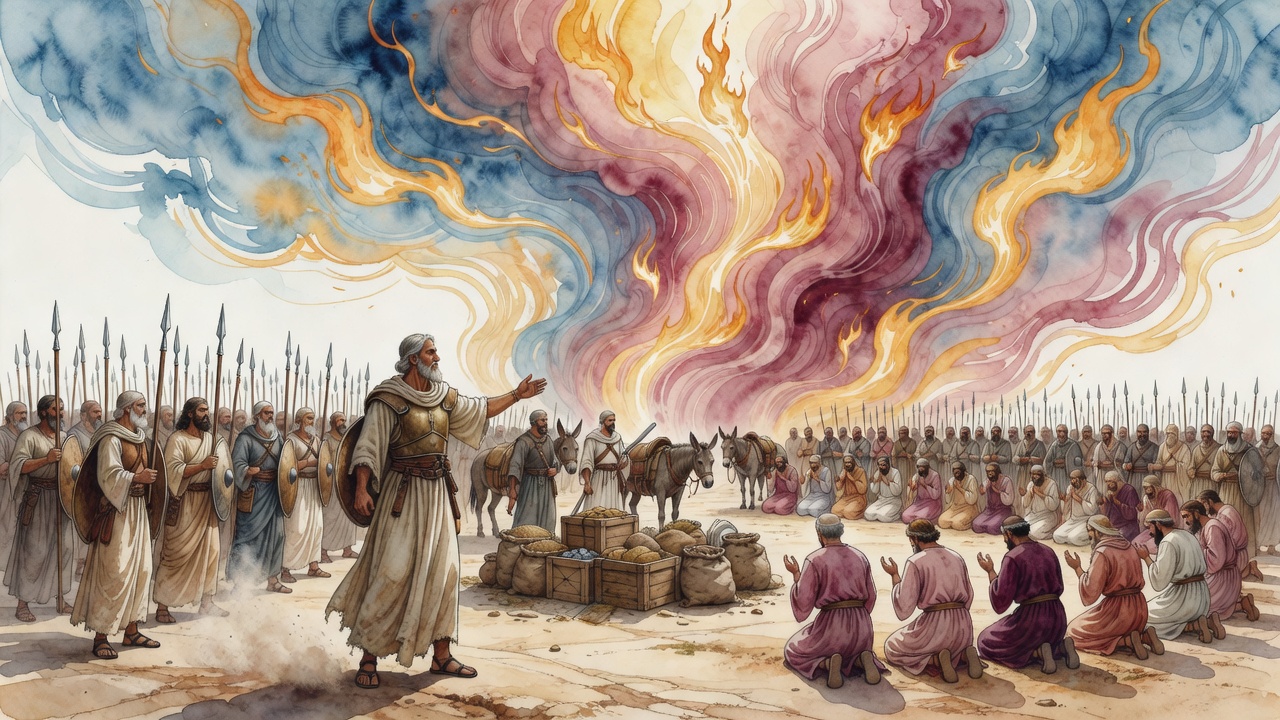
Phinehas went. He went with twelve thousand soldiers, one thousand from each tribe, selected by lot, carrying the sacred vessels and the trumpets for sounding the alarm. He went with the principle that had governed Moses's entire career: when God's command requires a human agent, the human agent's particular integrity matters. Moses could not lead this war because the integrity of the man who had drawn from Midian's wells could not be used to destroy Midian. Phinehas could lead it because the integrity of the man who had stopped the plague at Shittim was precisely the integrity the war required.
← All myths