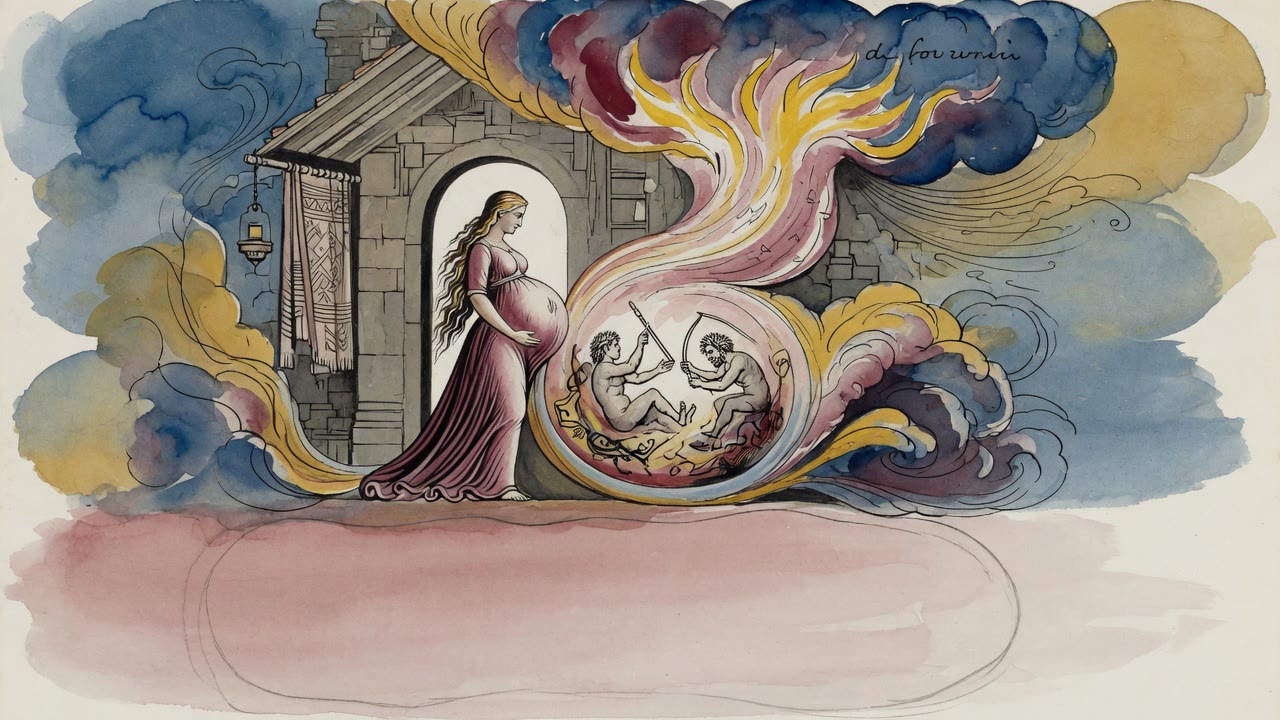
Esau Kept a Murder Plot in His Heart and God Spoke It Aloud
Esau never moved his lips. The murder plot stayed sealed in his heart, three deaths in careful order, until God spoke every word of it aloud.
Table of Contents
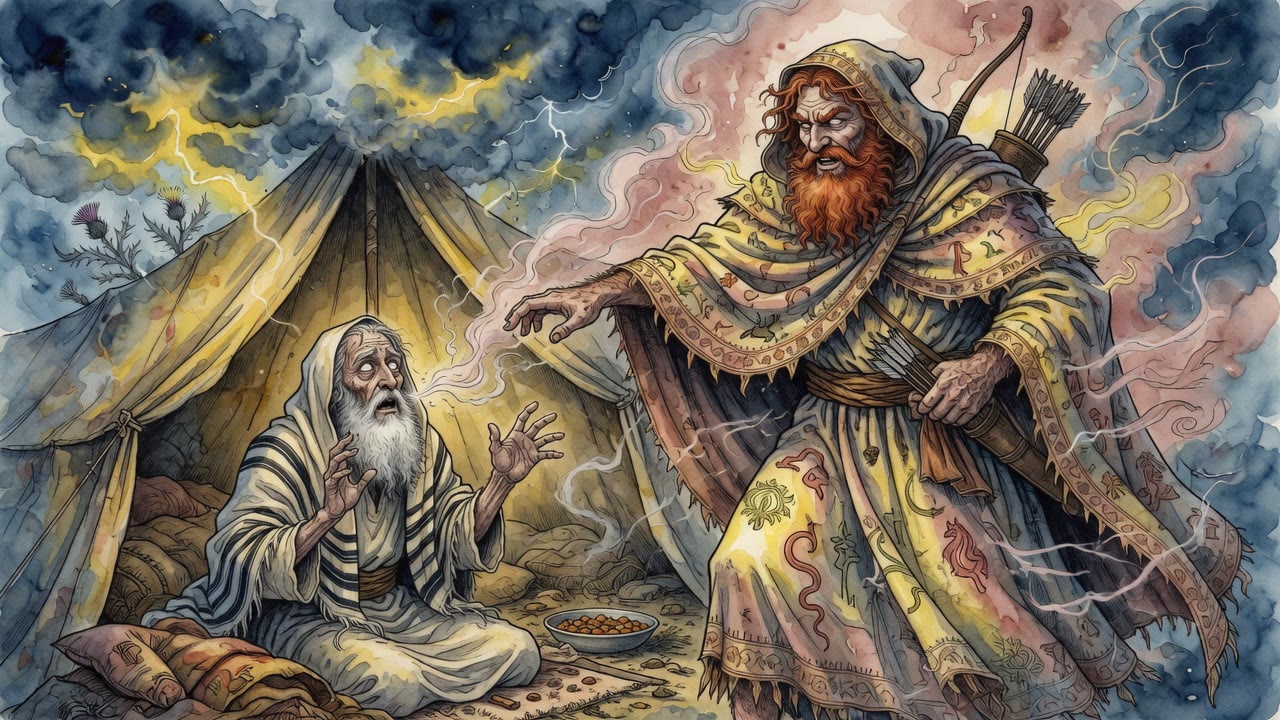
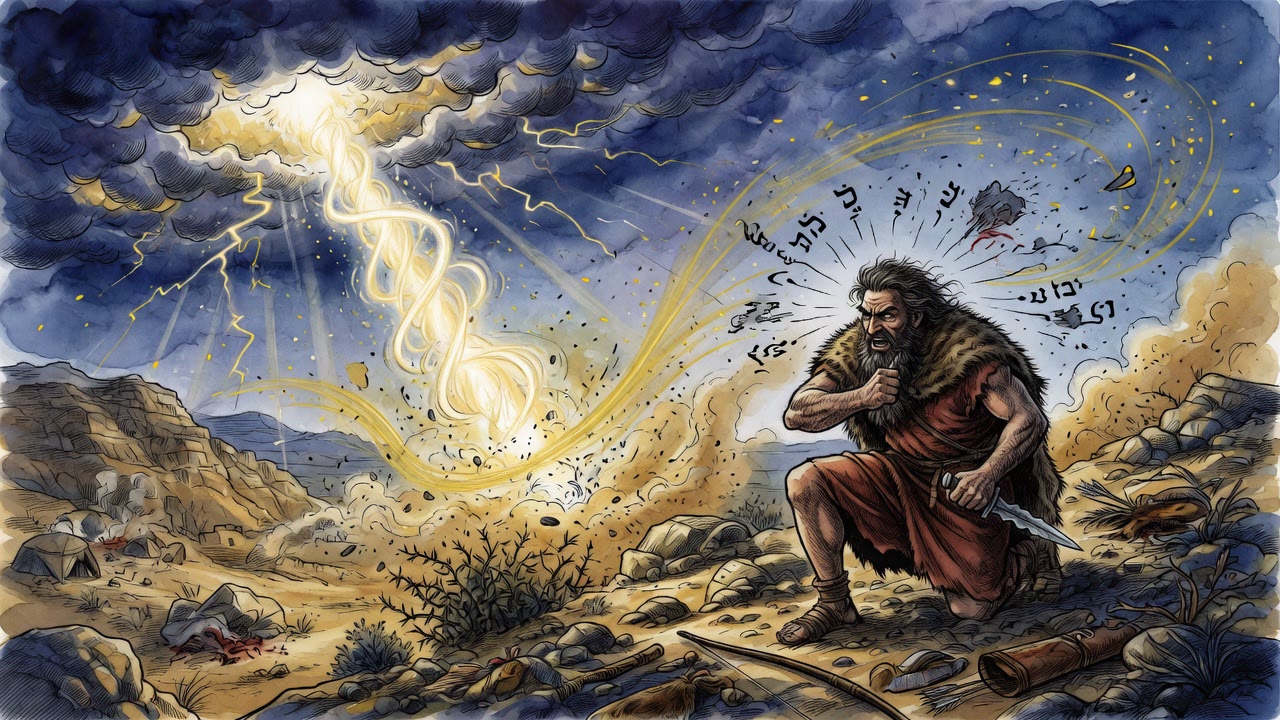
Esau stood outside his father's tent with the smell of the field still on his clothes, and he did not shout. That was the strange thing. A man cheated of his blessing should bellow. He had already wept once, loudly, begging Isaac for some scrap of benediction, and the weeping had bought him almost nothing. So now his mouth closed. His jaw set. The rage went down into him like water into sand, and on the surface nothing showed at all.
 Click for full size
Scripture marks the exact location of what happened next. Esau spoke, but not to anyone. "And Esau said in his heart, let the days of mourning for my father draw near, and I will slay my brother Jacob" (Genesis 27:41). In his heart, b'libo. Not in the camp, not to his wives, not to the men who hunted with him. He chose the one room in the world he believed had no windows.
Three Deaths Arranged in a Single Heart
Inside that sealed room, the plan grew. It was not the hot, simple plan of an angry brother. It had stages, and it had patience, and it was worse than anything Esau's family imagined when they looked at his calm face across the fire.
First, his father. Esau would not raise his own hand against Isaac. He would arrange for his uncle Ishmael to do the killing. Then, with Isaac dead by Ishmael's hand, Esau would step forward wearing the cleanest mask a murderer ever wore, the mask of the go'el, the kinsman redeemer, the avenger of blood. He would kill Ishmael to avenge his father, and the world would call it justice. And then, with father and uncle both in the ground, only one obstacle would remain. He would kill Jacob last, and everything, the herds of Isaac and the holdings of Ishmael, the whole double inheritance, would pour into his hands alone.
Three deaths in careful order. Two of them by his own hand, one of them dressed up as righteousness. And not one syllable of it ever crossed his lips.
The Fool Who Speaks Where No One Listens
There is a kind of man who believes that a thought no one hears is a thought that does not exist. The Psalms know him well. "The fool says in his heart, there is no God" (Psalm 14:1). Notice where the fool does his talking. Not in the gate, not in the marketplace. In his heart. He is not an honest unbeliever arguing in the open. He is a man conducting business in the dark and calling the darkness privacy.
Esau became the great case study of that verse. He keeps strange company there, men who sinned first in the secret chamber before they ever sinned in public. Haman, turning over the destruction of a whole people behind a courtier's bow. Jeroboam, weighing a divided kingdom. The king of Babylon, pacing his palace roof, crediting his own arm for what heaven had built. Each of them rehearsed the crime inwardly first, certain the rehearsal hall was empty.
It was not empty. It has never been empty.
God Reads the Plot Back Word for Word
The terrible discovery comes through the prophets, generations later, when God finally speaks about Esau and his descendants. He does not speak in generalities. He does not condemn Edom for vague wickedness. He quotes.
"I have exposed Esau, I have uncovered his hiding places" (Jeremiah 49:10). Hiding places. Not caves in the crags of Seir, or not only those. The hiding place was the heart itself, the room with no windows, pried open and held up to the light.
And then comes the line that must have landed like a hand on the shoulder in an empty house. "Because you said, these two nations and these two countries shall be mine" (Ezekiel 35:10). Because you said. But Esau never said it. No servant overheard it, no wife repeated it, no record of the scheme existed anywhere on earth. Two nations, two inheritances, the estate of the father and the estate of the uncle, the exact arithmetic of the plot, recited back with the precision of a scribe reading from a ledger. God had been in the room the whole time, taking down every word.
Four Thousand Men March on the Tower
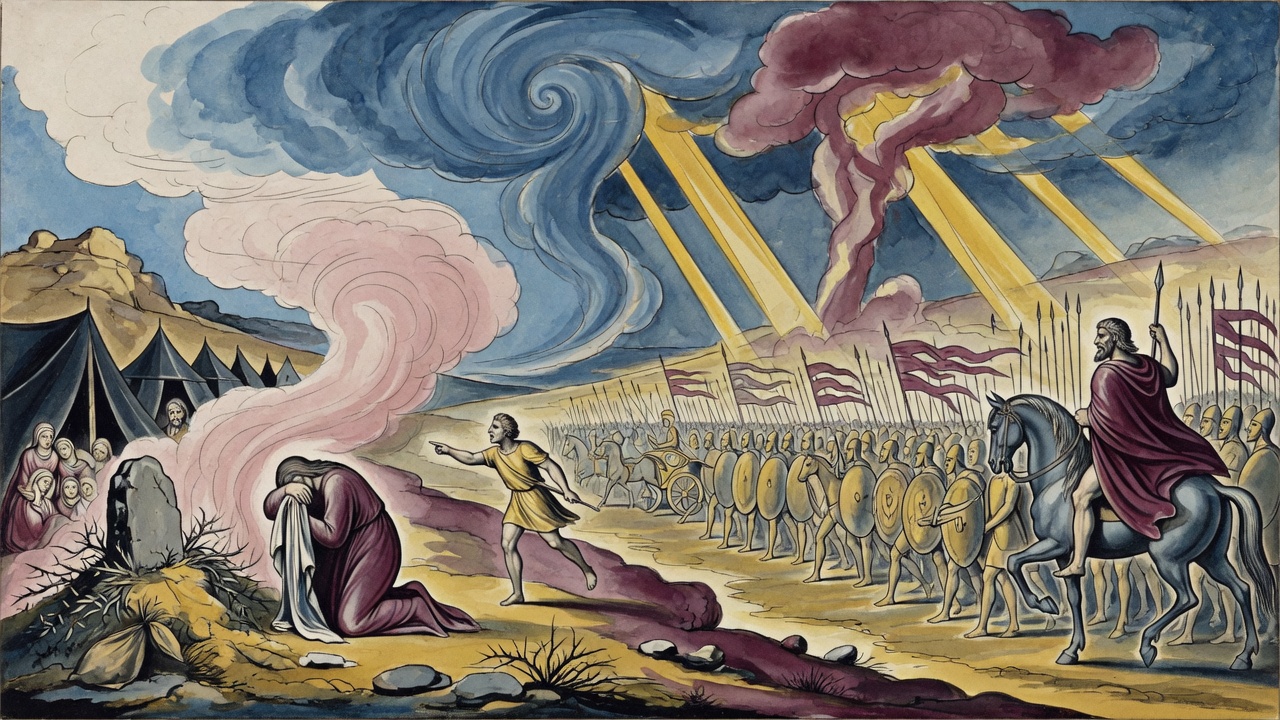
What festers in silence does not stay silent forever. Years on, the plot that lived in Esau's heart finally put on armor and walked out into the daylight. Jacob was living quietly in his tower then, an old man grieving his wife, when messengers came running up from the men of Hebron with their breath ragged. "Your brother is coming," they said. "He is coming to fight you, and he has four thousand armed men at his back."
The men of the country had already chosen sides. Jacob was the generous one, the compassionate one, and their warning was its own verdict on the two brothers. But Jacob, careful as ever, did not bolt at the first rumor. He waited at the wall, watching the road, until the dust of the approaching army was close enough to be unmistakable. Then he moved fast, and the gates of the tower slammed shut.
The siege that followed was only the last act of a drama that had opened decades earlier in total silence, outside a tent, in the heart of a man who believed no one was listening. Four thousand soldiers were simply the thought made visible. The plot had not changed. It had only grown loud enough for human ears to catch what heaven had heard from the first.
The Room With No Windows
Esau's mistake was never the rage. Rage is human, and his grievance was real enough to him. His mistake was the geography. He believed the heart was a private country with sealed borders, that a murder planned there was a murder that had not yet begun. The prophets answer him across the centuries with his own words in their mouths. The hiding places are uncovered. Because you said. The heart turns out to be the most public room in the world, and everything whispered there is already standing in the open.
← All myths