7 min read

The Old King of Appetite and the Poor Wise Child

An old king of appetite seizes the body in the cradle, and a poor wise child arrives at thirteen to a throne already lost.

Curated by Arthur · Told by Maggid ·
Table of Contents
  1. The Latecomer at the Palace Gate
  2. Four Doors Down Into the Dark
  3. The Voices That Beg at Every Threshold
  4. The Coup the Child Almost Never Wins
  5. The Door That Heaven Refuses to Lock

The king had ruled the body since before the body could speak. He took the throne in the cradle, in the first wail and the first grasping fist, and no one had crowned him. He simply sat down and stayed. Old now, white-bearded, swollen with appetite, he governed the hands and the mouth and the long hungers of the night, and he had governed so long that he no longer recognized any voice but his own.
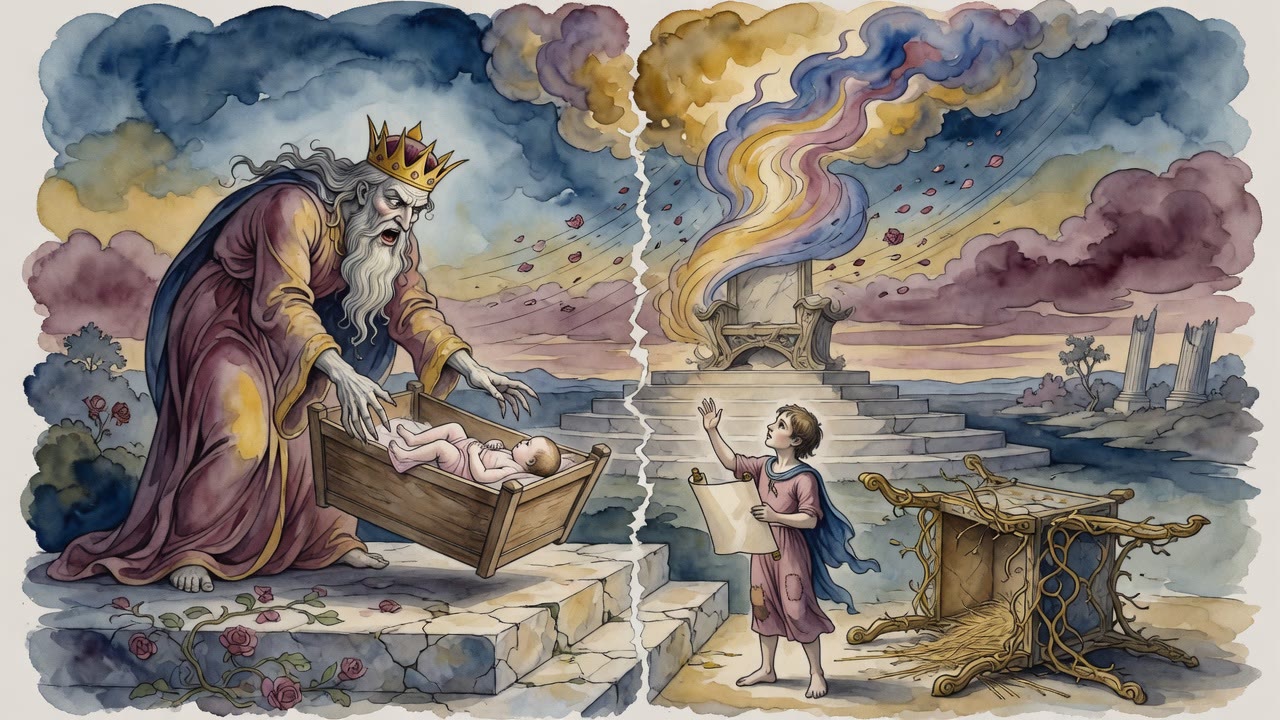
For years the throne room had no rival in it. The king ate what he wanted. He spoke when he wanted. He turned the body wherever desire pointed, and the body, having known no other ruler, obeyed.

The Latecomer at the Palace Gate

Then, in the thirteenth year, a child arrived.

He came poor and on foot, with nothing in his hands, and he was wise the way the very young are sometimes wise, before the world has talked them out of it. He had no soldiers. He had no gold to buy the guards. He stood at the gate of the palace that the old king had held for thirteen years and asked to be let in.

This is the picture Kohelet Rabbah draws from a single bitter line of Ecclesiastes, that better is a poor and wise child than an old and foolish king who no longer knows how to take warning. The sages read the king as the yetzer hara (יֵצֶר הָרַע), the inclination toward ruin, and the child as the yetzer hatov (יֵצֶר הַטּוֹב), the inclination toward good. The king is called old because he enters at birth and rules unopposed for years. The child is called poor because almost no one listens to him.

The old king looked down from his appetite at the small wise thing at his gate and was not afraid. He had thirteen years of habit standing behind him like a wall. What could a barefoot child do against a wall?

Four Doors Down Into the Dark

So the king did what kings do when challenged. He proposed a journey away from the gate, away from the child, deeper into his own country. He pointed the body toward a corridor with four doors in it, and at the first door he leaned close and whispered that nothing waited beyond it but pleasure.

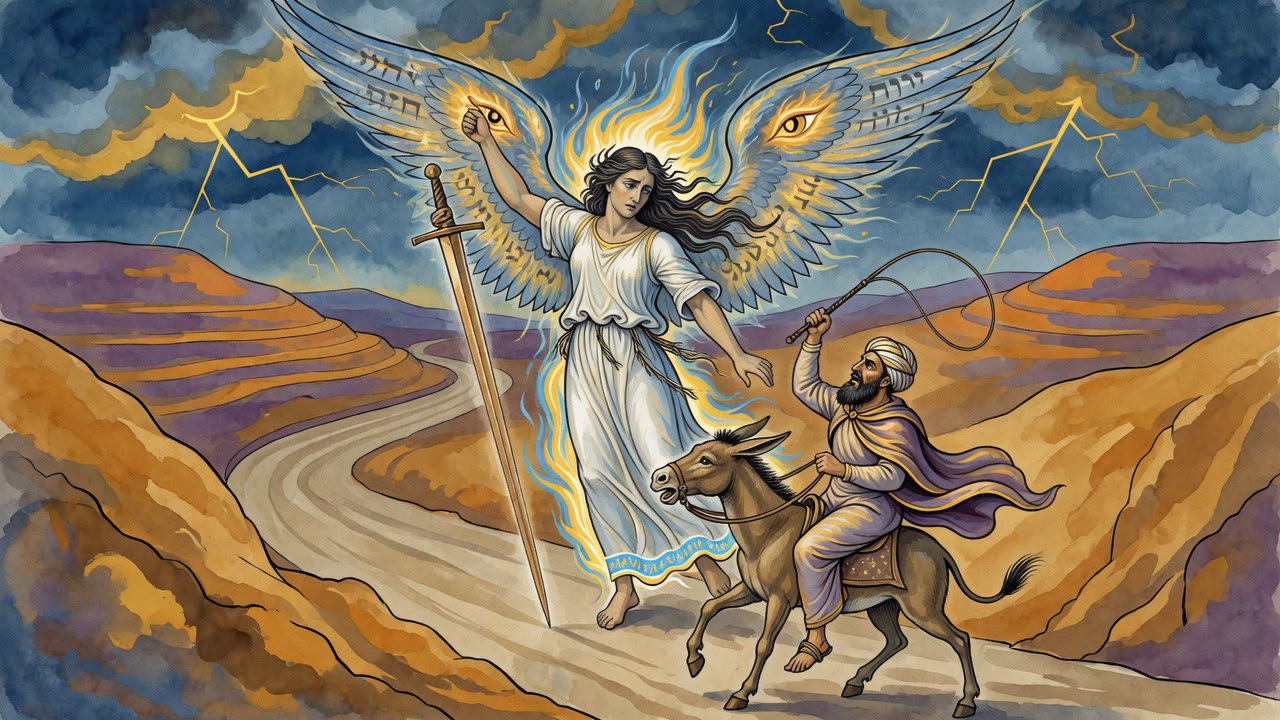
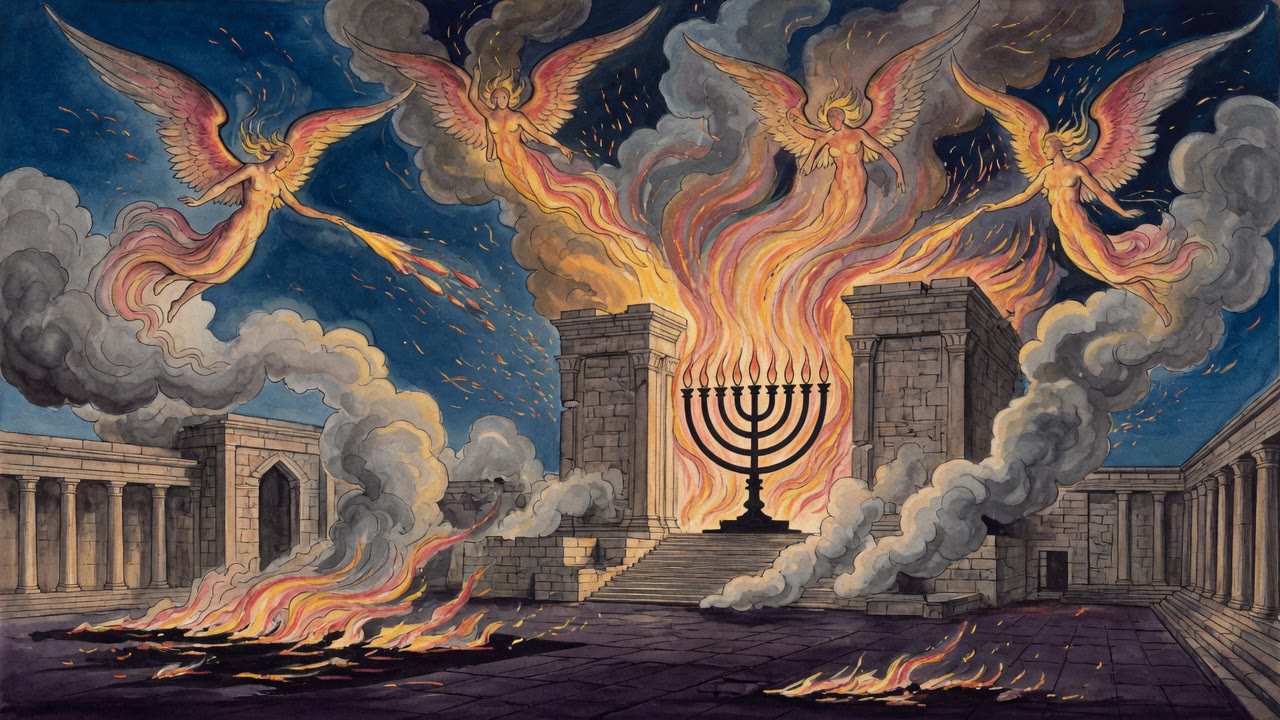
Here the picture shifts to Pirkei DeRabbi Eliezer, which knows that corridor well. Outside each of the four doors stand four angels of mercy. Inside each door wait three angels of cruelty. As the body approached the first door, the merciful angels rushed out and blocked the way. "What are you doing?" they cried. "Why do you walk toward this fire, toward these glowing coals? Turn back. Repent." They were not threatening. They were pleading, the way you plead with someone you love who is walking onto thin ice.

The old king had a single answer ready, and he taught it to the mouth like a password. "With them," the body said, "let my life be." With them, with the appetites, with the coals. And the angels lowered their arms and said quietly, "You have entered the first door. Do not enter the second."

The Voices That Beg at Every Threshold

At the second door the merciful angels were waiting again, and their plea had changed. "What good is it," they asked, "to be erased from the Torah, blotted out of God's own teaching, when you could be written into it instead?" Belonging, they offered. A name kept in the book. The old king only smiled and repeated the password through the body's mouth. "With them, let my life be." And the angels stepped aside. "You have entered the second door. Do not enter the third."

The third door, and the angels cried out about names again, but a different kind. "What good is it if the holy ones look at you and call you Unclean, when they could just as easily call you Pure?" The whole question now was what the body would be called by the beings who saw it most clearly. And still the old king governed the answer. "With them, let my life be." The angels, grieving, said, "You have entered the third door. Do not enter the fourth."

The fourth door is the quiet one. The merciful angels made their last appeal, and it was barely a plea at all. "You have come through these doors. You did not listen. You did not turn." There was no scolding in it. Only the sound of a chance growing thin.

The Coup the Child Almost Never Wins

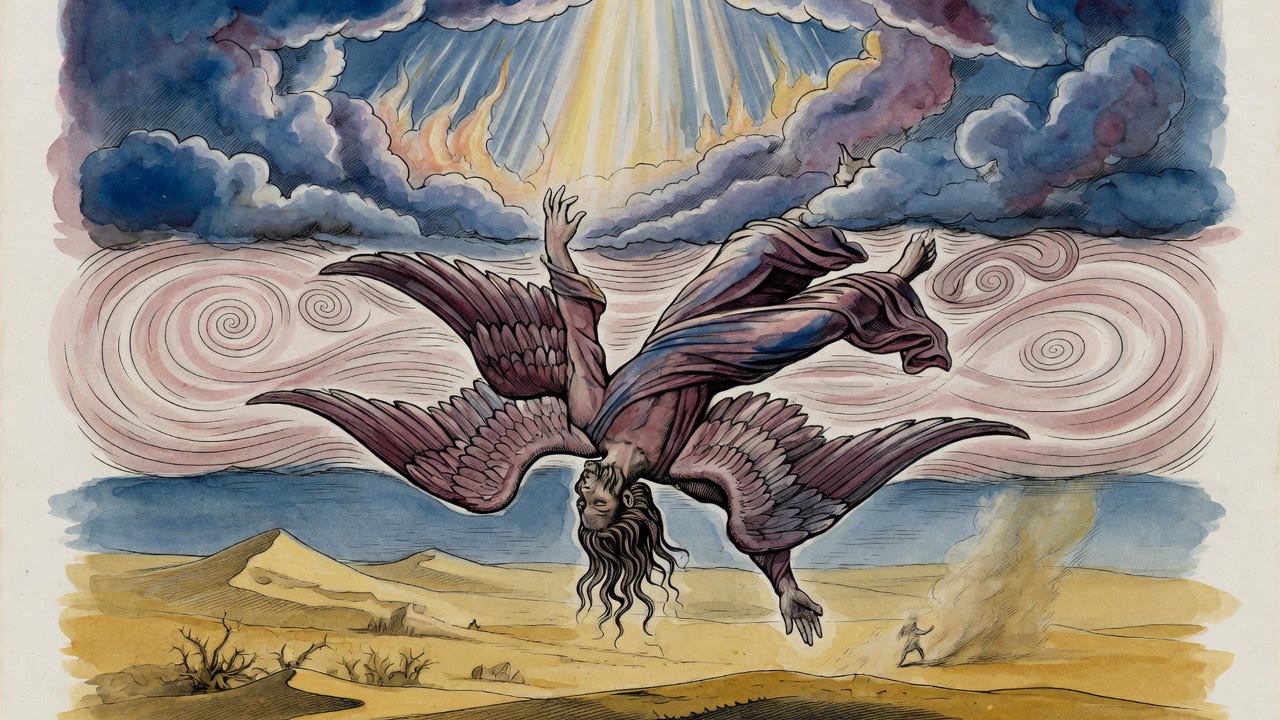
The terrible thing, the thing both pictures circle, is that the old king does not win by being strong. He wins by being early. He is foolish, Ecclesiastes says so plainly, and his pleasures end in ruin he cannot see coming, because the one who obeys him long enough goes blind to the wreckage left behind. The king no longer knows how to take warning. He has heard warnings at four doors and learned to answer every one of them with the same five words.

And the child? The wise child stands where he has stood since the thirteenth year, outside the gate, poor, patient, unarmed. He cannot break the wall of habit by force. He has no force. He can only keep asking to be let in, one warning at a time, hoping the body will turn its head before the corridor runs out of doors.

The Door That Heaven Refuses to Lock

Here Pirkei DeRabbi Eliezer does something the old king never expects. Even at the fourth door, even after three refusals, the gate behind the traveler does not slam. "Thus far the Holy One receives the penitent," the sages say. "Thus far He pardons and forgives." The corridor that the old king built to swallow the body has a way back out of it that he did not design and cannot close.

There is a line in Psalms the sages hang on this exact moment, "You turn man back to contrition." Not the angels turning him. Not the wise child. God Himself, reaching down the dark corridor past the old foolish king on his throne, and turning a head that the king had spent a lifetime aiming at the coals. The coup inside the body is never finished. The old king holds the throne. The poor child waits at the gate. And the door behind them both stays open.


← All myths
From the tradition

Sources

4 sources

The texts this telling draws on, in full. Open a card to read inline, or expand it for a wider, quieter read.

Kohelet Rabbah 13:1Kohelet Rabbah

Like there's a little angel on one shoulder and... well, something else on the other? Jewish tradition recognizes this internal struggle, personifying it in a fascinating way. to a passage from Kohelet Rabbah, a Midrashic (rabbinic interpretive commentary) commentary on the book of Ecclesiastes, which uses a powerful metaphor to illustrate this very human dilemma.

The verse in question, from (Ecclesiastes 4:13), states: "Better is a poor and wise child than an old and foolish king who no longer knows to receive admonition." Simple enough The first reading. But the Rabbis, in their infinite wisdom, saw something deeper.

In Kohelet Rabbah, "a poor and wise child" isn't just some precocious kid who gives good advice. It represents the yetzer hatov (יֵצֶר הַטּוֹב), the good inclination. It's that inner voice urging you towards kindness, compassion, and righteousness. But why a child? The Midrash tells us it's because this inclination really only starts to exert its influence around the age of thirteen – the age of Bar/Bat Mitzvah, when a young person becomes more accountable for their actions under Jewish law.

Why "poor?" Because, sadly, not everyone listens to it. How often do we ignore that nagging feeling that we should do the right thing, choosing the easier, perhaps more selfish, path instead? It's a daily struggle, isn't it? But it's called "wise" because when we DO listen, it guides us to the straight and righteous path.

Now, let's turn to the "old and foolish king." This, according to Kohelet Rabbah, is the yetzer hara (יֵצֶר הַרַע), the evil inclination. That inner voice whispering temptations, justifying our bad behavior, and leading us astray. Why is it a "king?" Because, unfortunately, everyone does listen to it, at least sometimes. It's powerful, seductive, and often seems to offer immediate gratification.

The Midrash continues, explaining that it's called "old" because this inclination has been with us from our youth, shaping our habits and influencing our choices throughout our entire lives. It's a constant companion, a lifelong battle. And "foolish?" Because, despite its promises, it ultimately leads us down a path of destruction.

The final phrase, "who no longer knows to receive admonition," is particularly chilling. It suggests that the person who consistently gives in to the yetzer hara becomes so hardened, so entrenched in their ways, that they lose the ability to recognize the pain and suffering they are causing themselves and others. They become blind to the consequences of their actions.

So, what's the takeaway? It’s a reminder to cultivate awareness. To recognize those internal voices and understand their true nature. To nurture the "poor and wise child" within us, even when it's difficult. To question the siren song of the "old and foolish king," and to remember that true wisdom lies in choosing the path of righteousness, even when it's less travelled. Are we listening? Are we truly paying attention to the internal dialogues that shape our lives and our world? Perhaps that's the most important question of all.

Full source
Pirkei DeRabbi Eliezer 15:3Pirkei DeRabbi Eliezer

Jewish tradition understands that struggle, that pull between good and… well, not-so-good. And it offers a surprisingly vivid image of the forces at play.

Pirkei DeRabbi Eliezer, a fascinating and somewhat enigmatic work of Jewish literature, paints a picture of the path to evil as one marked by four distinct doorways. Imagine each doorway guarded by angels. Not just any angels, but a complex system: four angels stand outside each door, representing mercy, while three more, embodying cruelty, lurk within.

What's going on here? As someone approaches the first door, the merciful angels rush forward. They plead: "What are you doing? Why do you want to approach this metaphorical fire, these glowing coals of temptation? Listen to us! Repent!" They're offering a lifeline, a chance to turn back. And if the person listens, if they genuinely repent, then all is well. They’ve dodged a bullet, so to speak.

What if they don't listen? What if they stubbornly declare, "No, I want to be with them," choosing the allure of the darkness? Then the angels sadly concede, "You have entered the first door. Please, don't enter the second."

The scenario repeats itself at the second door. Again, the merciful angels appear, their voices filled with urgency: "What good will it do you to be erased from the Torah, from God's teachings? Wouldn't it be better to be inscribed within it, to be connected to something holy and enduring?" They offer a choice: oblivion or belonging. Repentance leads to belonging, but again, the person might refuse. "With them, let my life be," they insist. And the angels lament, "You have entered the second door. Do not enter the third!"

At the third door, the stakes rise. The angels cry out, "What good is it to you if the good angels flee from you, calling you 'Unclean'? Wouldn't it be better for them to call you 'Pure'?" The choice here is about identity, about how we are perceived and how we perceive ourselves. Do we want to be surrounded by goodness, or alienated from it? Again, the person might reject the plea: "With them, let my life be." And the angels warn, "You have entered the third door; do not enter the fourth door!"

Finally, the fourth door. Here, the merciful angels make one last desperate plea. "You have entered these doors, and you have not listened, nor have you returned." There's a sense of finality here. A sense that the opportunity for easy repentance is dwindling.

And yet... even here, there's a glimmer of hope. Pirkei DeRabbi Eliezer reminds us that "Thus far the Holy One, blessed be He, receives the penitent; thus far the Holy One, blessed be He, pardons and forgives." Even after passing through three doors, the possibility of return remains. There's a beautiful verse from Psalms (90:3) that echoes this sentiment: "Thou turnest man to contrition." God is always calling us back, always offering a path to redemption.

So, what does this all mean for us? Maybe it's a reminder that the choices we make matter. That the path away from goodness is not a sudden plunge, but a series of steps, each with its own warning signs. And perhaps most importantly, it's a message of hope: that even when we stray, even when we feel lost, the possibility of return is always there. We just have to be willing to listen to the angels at the door.

Full source
Kohelet Rabbah 15:6Kohelet Rabbah

It's part of the human condition. But have you ever considered that this struggle might be… a cosmic drama playing out on a miniature scale, right inside of you?

That’s the kind of mind-bending idea we find in Kohelet Rabbah, a collection of rabbinic interpretations on the book of Ecclesiastes. It uses a parable, a story within a story, to unpack something profound.

The parable goes like this: "A small city, and few men in it; and a great king came against it, and surrounded it, and built great bulwarks against it" (Ecclesiastes 9:14). Sounds like a classic underdog story, doesn't it? But what does it mean?

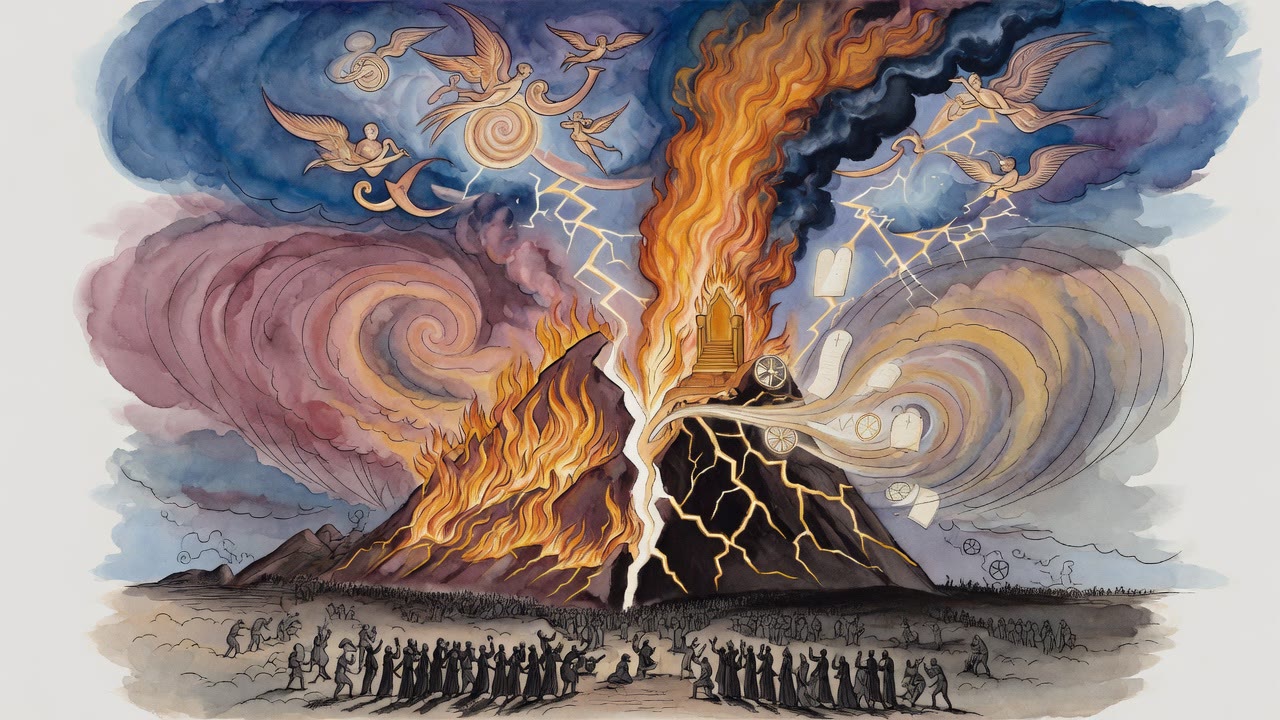
The rabbis in Kohelet Rabbah unpack it with layers of meaning. “A small city” – that’s Sinai. Yes, the very mountain where the Torah was given! And "few men in it"? Those are the Israelites, newly freed from Egypt, standing at the foot of the mountain.

Now, who's this "great king" laying siege? Here's where it gets interesting: it's the yetzer hara (יֵצֶר הָרַע), the evil inclination. That inner voice, that nagging urge that pulls us away from what’s right. It's a constant force, always trying to undermine our best intentions. And the "great bulwarks" it builds? Well, according to this interpretation, that's the Golden Calf. "This is your god, Israel!" (Exodus 32:4). A potent image of temptation and idolatry. So, the Israelites, fresh from liberation, are immediately under attack from within. The yetzer hara is whispering doubts, desires, and distractions. It’s building a case for instant gratification, for abandoning the covenant they just entered into.

But there's hope! "He found in it a poor wise man, and he by his wisdom delivered the city" (Ecclesiastes 9:15). Who's the poor wise man? Moses, of course! Humble, yet powerful in his connection to the Divine. The text references (Exodus 32:11), where Moses pleads with God, "Lord, why shall Your wrath be enflamed against Your people?" He stands as the intercessor, the defender of the people, using his wisdom to avert disaster.

Here's the kicker, though: "Yet no one remembered that same poor man." (Ecclesiastes 9:15). Ouch. It's a painful reflection on human nature, isn't it? We often forget the ones who save us, the ones who stand in the gap.

But the story doesn't end there. Kohelet Rabbah adds a crucial detail: "The Holy One blessed be He said: You did not remember him; I remember him." God remembers Moses, even when the people don't. As it says in (Psalm 106:23), "Therefore He said He would destroy them, had not Moses His chosen stood before Him in the breach."

So what does it all mean? Perhaps it's a reminder that we are all "small cities," constantly under siege by our own internal struggles. The yetzer hara is real, the temptations are powerful. But we also have the potential for wisdom, for choosing the higher path. And even when we forget those who guide us, those who stand up for us, there's a force greater than ourselves that remembers.

It’s a powerful image, isn’t it? This constant struggle, this internal battle. But also, the constant presence of hope, of wisdom, and of remembrance. It's a reminder that even in our smallest, most vulnerable moments, we are part of a much larger story. And that story, ultimately, is one of redemption.

Full source
Midrash Tanchuma Buber, Vayigash 1:1Midrash Tanchuma Buber, Vayigash

"And Judah drew near unto him..." (Genesis 44:18). This is what Scripture says: "There was a little city, and few men within it..." (Ecclesiastes 9:14). "And there was found in it a poor (and wise) [wise] man..." (Ecclesiastes 9:15). What is the meaning? This verse is stated concerning all the generations. "A little city", this is the body. "And few men within it", these are the two hundred and forty-eight limbs [that are in a person]. "And there came against it a great king" (Ecclesiastes 9:14), this is the evil inclination, which is greater than the good inclination by thirteen years and one day. And the evil inclination says: Let us eat and drink, and fulfill all our desires; but the good inclination says: Let us not eat and not drink, but rather let us occupy ourselves with Torah. And they listen to the evil inclination, why? Because it is greater than them all. "And built against it great siege-works" (Ecclesiastes 9:14), these are iniquities and sins. "And there was found in it a poor and wise man", this is the good inclination, "and he by his wisdom delivered the city; yet no one remembered that poor man" (Ecclesiastes 9:15), for they do not listen to the good inclination, because it is small. And whoever listens to the good inclination, happy is he, as it is said: "Happy is the one who considers the poor..." (Psalms 41:2).

Full source