The Angel of Death Hid Inside the Human Heart From the Beginning
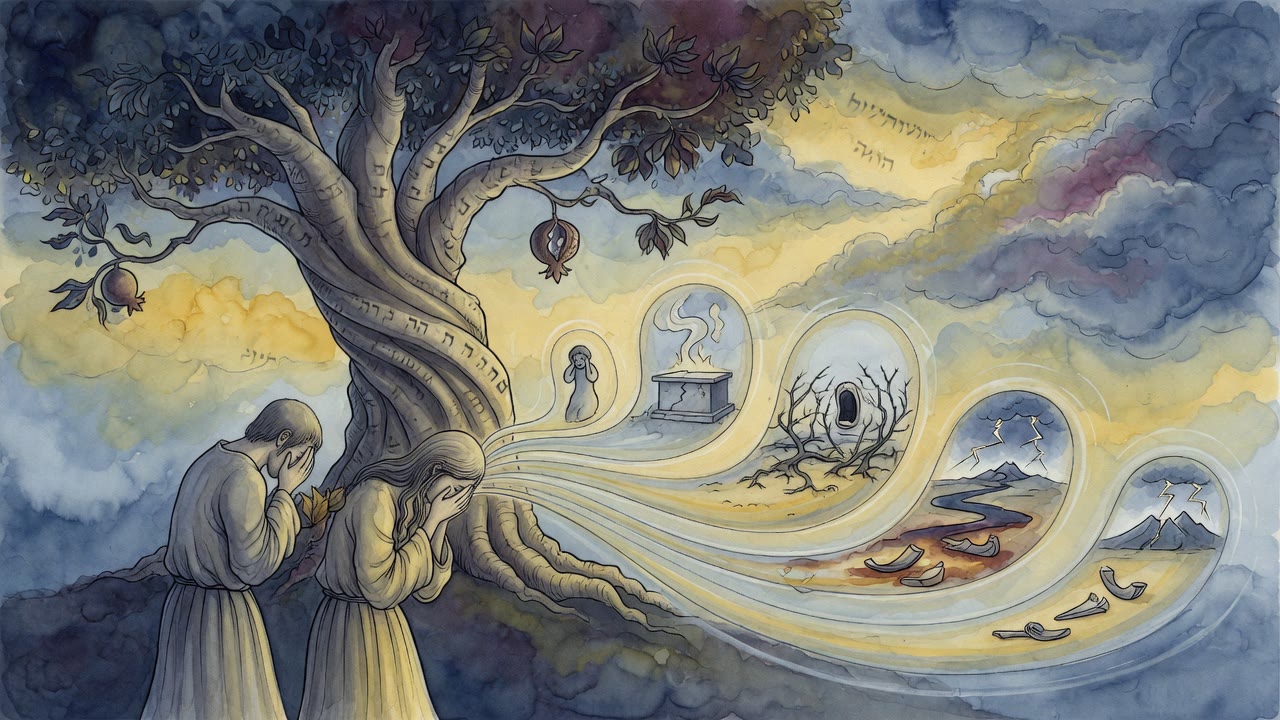
Samael did not tempt from outside the Garden. He entered. A folktale explains how the yetzer hara, the evil inclination, found its home in the human heart.
Table of Contents
 Click for full size
The Entry Point
The evil inclination does not come from outside. It lives inside. In Jewish tradition, this is not a metaphor. It is a cosmological fact with a specific origin, a specific moment, and a specific location within the human body. The story of how it got there is one of the strangest and most honest narratives in the whole library of Jewish myth.
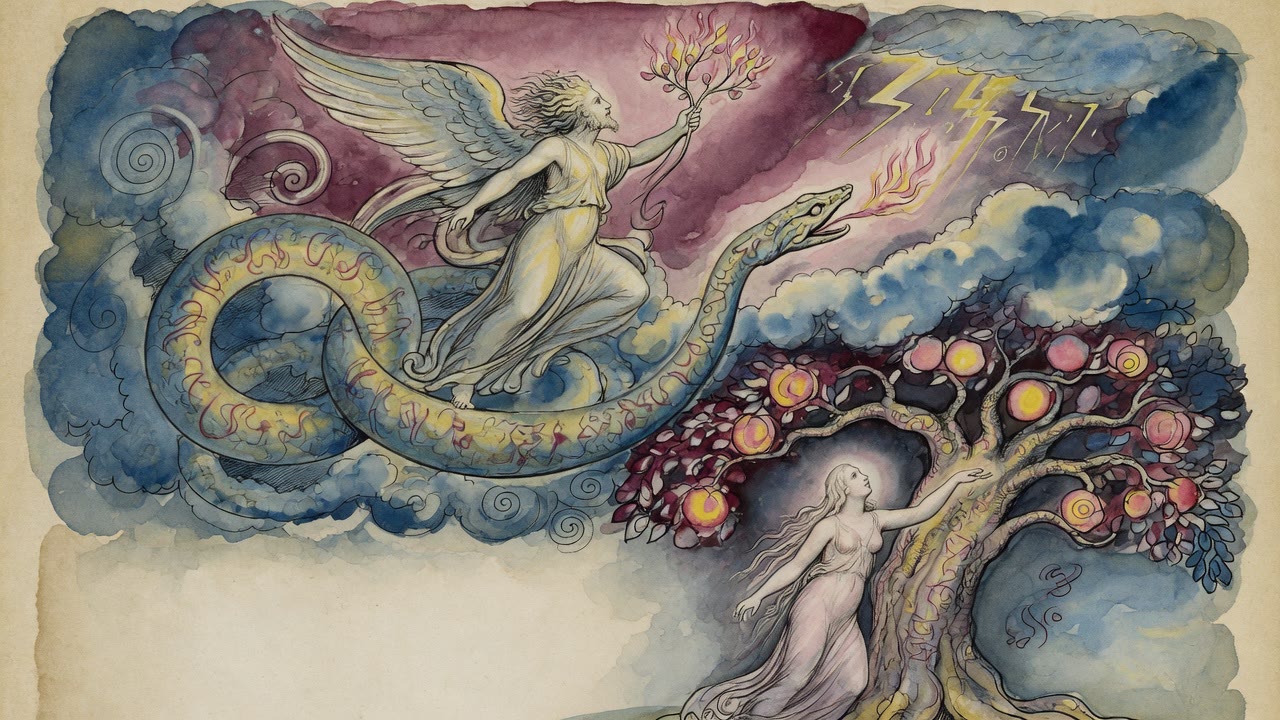
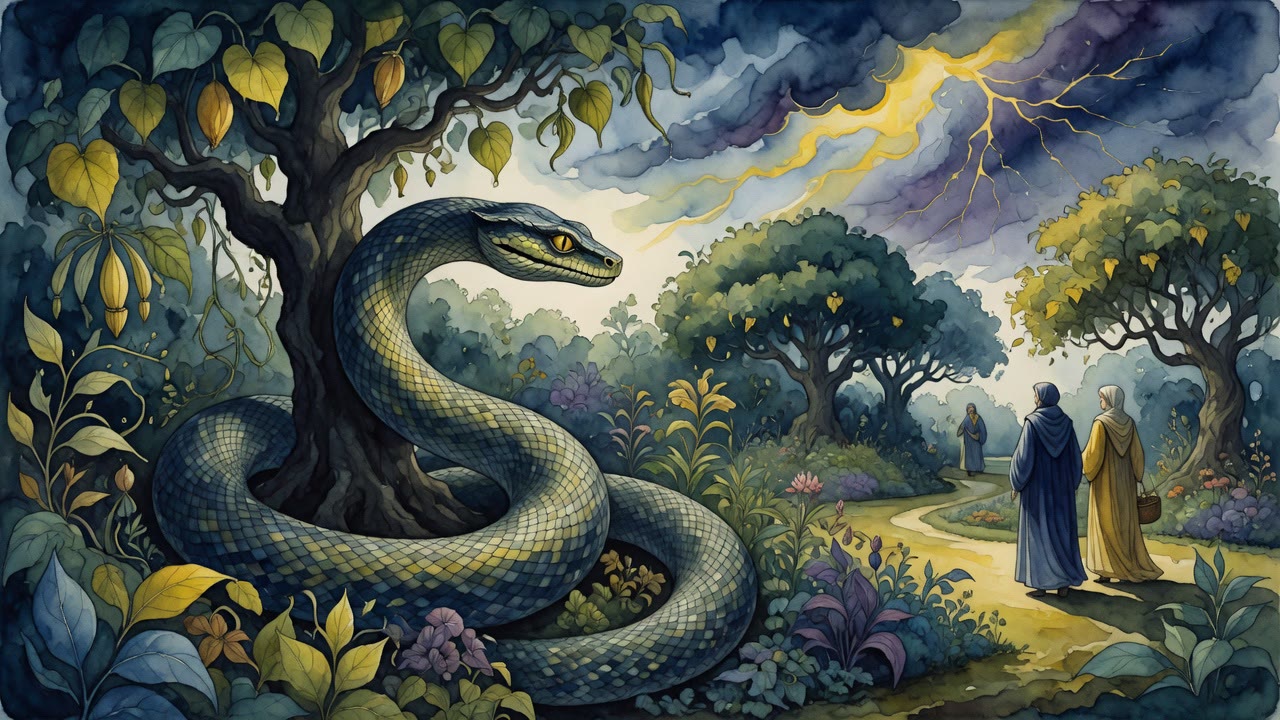
A folktale preserved in the Israel Folktale Archives, collected in the twentieth century but carrying threads that run back through centuries of rabbinic and Kabbalistic speculation, begins with Samael riding a serpent toward Eve. What distinguishes this version from the familiar Garden narrative is what Samael does not do. He does not simply tempt. He enters.
What Adam Found When He Came Back
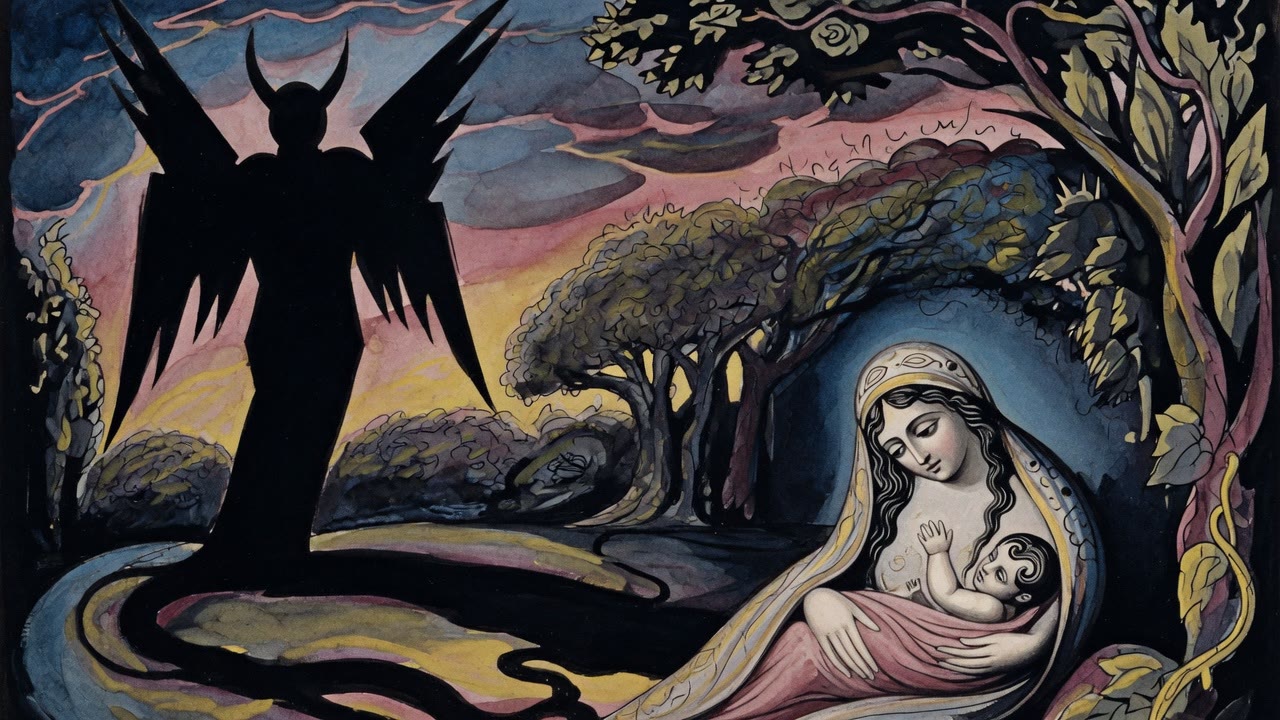
Samael seduced Eve. A child was born, and Eve told Adam the truth when he returned: the father was Samael, not him. Adam stood there looking at the infant, and then he asked a question. He asked what Samael was like. What form did he take? How did he move through the world?
Eve described him as she had known him: beautiful, powerful, a being of radiant presence. And while she was describing him, Adam felt something change inside his own chest.
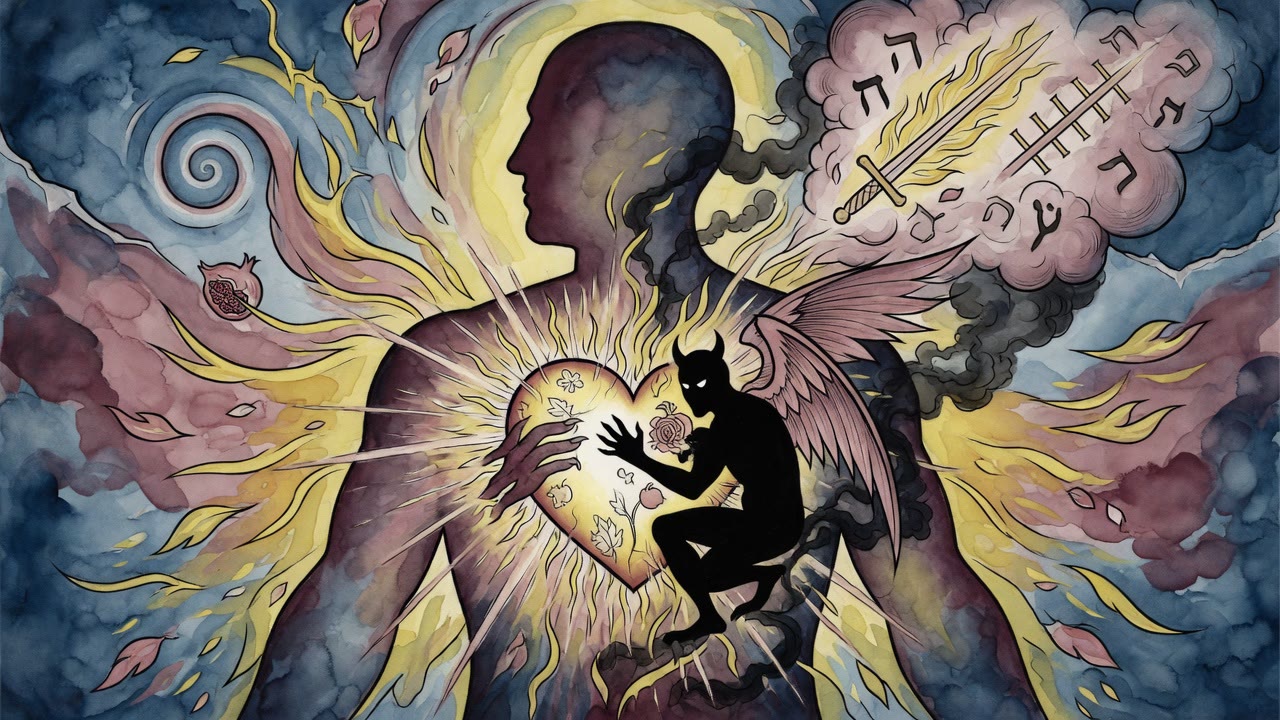
Samael was listening. And when Adam asked about his form, Samael understood that Adam had just given him an invitation. He slipped inside. Not into Eve, who had known him already and recognized him. Into Adam, who had only heard the description. He hid himself in the chambers of Adam's heart and has lived there ever since.
Why the Heart and Not Somewhere Else
The heart in Jewish tradition is not simply a pump. It is the seat of intention, the place where desire forms before it becomes action. The yetzer hara, the evil inclination, is described in the Talmud as living in the heart from the moment a person is born: it crouches at the door, as God warned Cain. The folktale gives this crouching a physical history. It was not always there. It was installed in a specific moment by a specific being who found the right opening.
The opening was curiosity. Adam asked about something dangerous, and the asking created a space. The tradition does not blame Adam for the question; it records the consequence. Curiosity about evil, even secondhand curiosity through someone else's description, creates a residence for it. Samael had been outside. The question brought him in.
What God Said About the Installation
The folktale does not end with Samael triumphant. It ends with a negotiation. God confronted Samael and asked him where he had gone. Samael explained. God's response, in the version preserved by the folklorist Dov Noy and connected to earlier rabbinic material, was to establish the terms under which the yetzer hara (the evil inclination) could operate: it could tempt, but it could not compel. It could press on the door, but the door could be held. Every human being would carry it from birth, as Adam had carried it from the moment of the installation, but every human being would also have the capacity to refuse what lived inside them.
The circumcision covenant, in related traditions, is the physical mark of that refusal. The covenant cut into the body was understood partly as a counter-inscription to the presence of the yetzer hara in the heart: a sign that the body belonged to holiness even with evil living inside it.
← All myths