Was Cain the Son of Adam or the Son of the Angel of Death
A tradition in Talmud and Kabbalah says Adam was not Cain's father. Samael seduced Eve in the Garden, and the murder of Abel was written into Cain's blood.
Table of Contents
 Click for full size
The Question Beneath the Murder
Cain killed Abel because an offering was rejected and jealousy turned inward until it had no direction left but violence. That is the surface answer. The rabbis were not satisfied with it. They kept pressing. They wanted to know why one brother's offering was accepted and the other's was not, and the answer they arrived at was genealogical. It was about whose blood ran in Cain's veins.
Talmud Bavli Shabbat 146a, redacted in the Babylonian academies between the third and sixth centuries CE, contains the seed of the tradition: when the serpent came to Eve in the Garden, it infected her with a spiritual contamination she transmitted to her descendants. The contamination was lifted when Israel stood at Sinai. But before Sinai, and in Cain more than anyone else, the serpent's touch was something more than contamination. It was parentage.
What Samael Did in the Garden
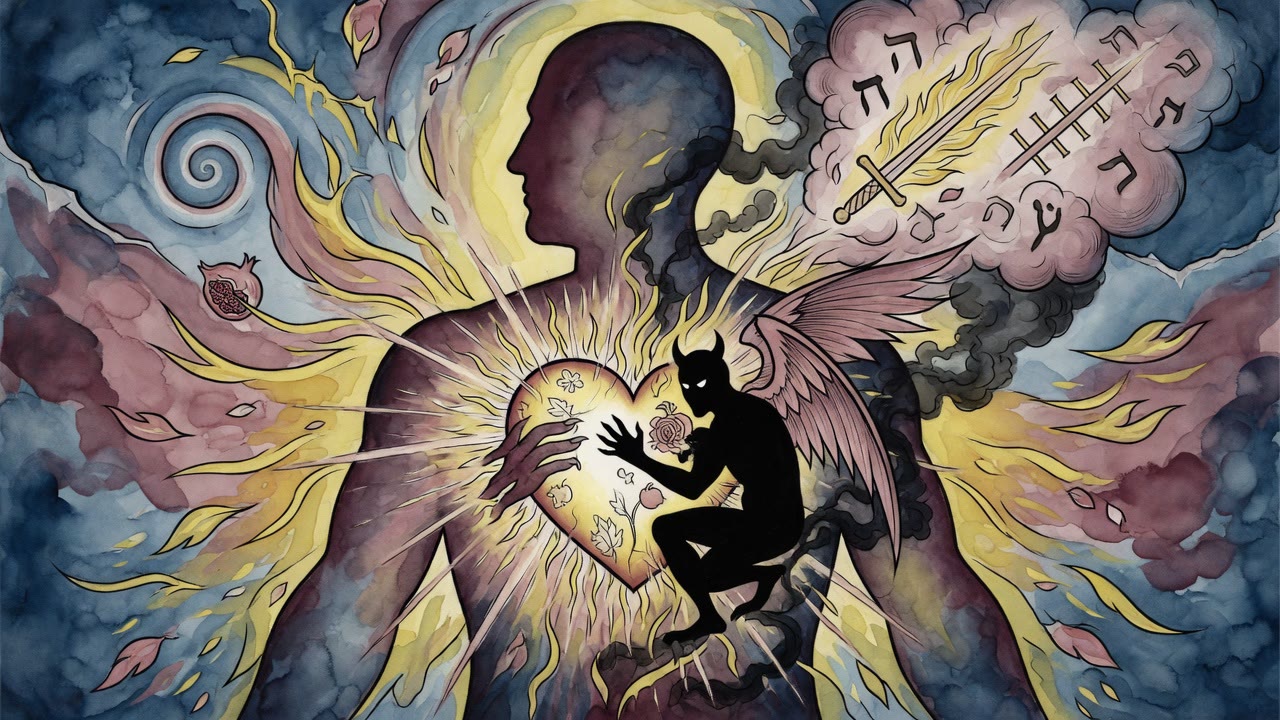
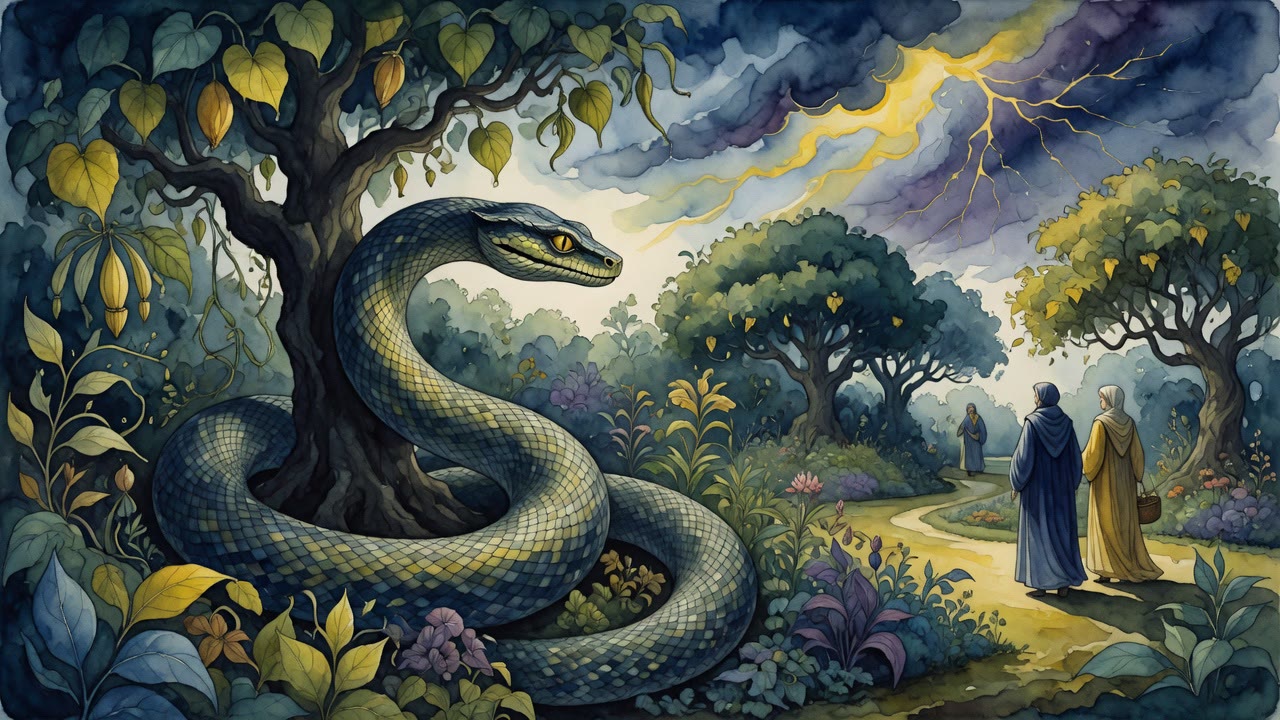
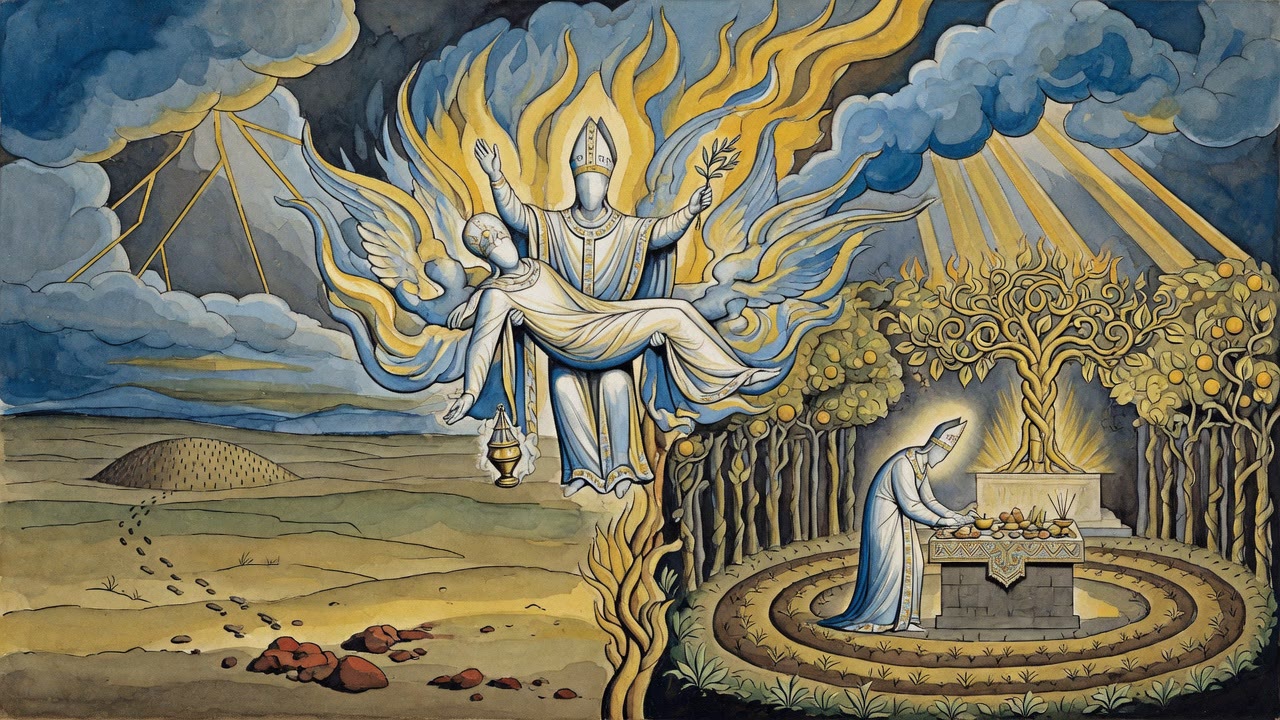
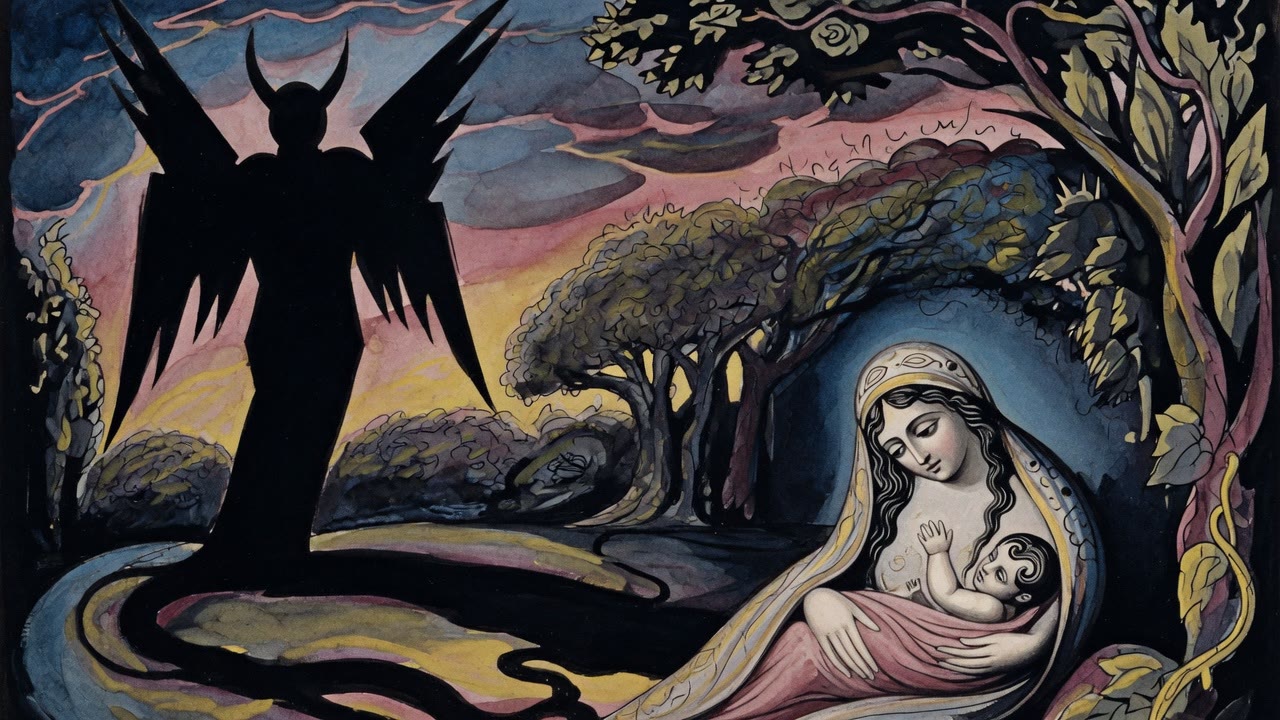
The explicit claim appears in Pirkei DeRabbi Eliezer, the eighth-century Palestinian midrash: Samael, the angel of death and the chief of the accusing spirits, rode the serpent into the Garden and seduced Eve. The union produced Cain. Adam was not the father.
This is why, the tradition argues, Genesis 5:3 notes that Adam begot Seth in his likeness after his image, using the same language as God's creation of Adam. The formula is conspicuously absent from Cain's birth narrative. Cain was not in Adam's likeness. He was in Samael's. The murder was not a failure of character building on ordinary human jealousy. It was the nature Cain had inherited expressing itself in the most direct way available to it.
What Abel's Blood Carried
After Cain killed Abel, God confronted him with a word the rabbis found strange. The Hebrew says your brother's bloods cry out to me, using the plural form. Why bloods? One man was killed. One blood was shed.
The Midrash answers: Abel's blood and the blood of his potential descendants who would never be born. Every person who might have come from Abel, every generation that died before it could begin, was contained in that plural. Cain had not just murdered a man. He had murdered a lineage.
The Zohar, the foundational Kabbalistic text compiled in thirteenth-century Spain but attributed to the second-century sage Shimon bar Yochai, extends the tradition further. Cain's lineage carried the Samaelic contamination forward into history. The violence that began with Abel was not Cain's personal failure. It was a genetic inheritance that passed through his descendants, a strain of destructive capacity woven into a particular bloodline.
The Contamination That Lifted at Sinai
The Talmud's tradition about the serpent's contamination lifting at Sinai adds a crucial nuance. The story is not simply about Cain being irredeemably evil. It is about a contamination that affected all humanity from the moment of the serpent's intrusion and that was specifically removed, for Israel, at the moment of the covenant. Before Sinai, every human being carried something of the serpent's touch. After Sinai, Israel was purified of it. But Cain lived and died before Sinai, in the full weight of what had been installed in his blood from the beginning.
The tradition offers no comfort to simple hereditary fatalism. The rabbis who preserved it also preserved the tradition that Cain repented after his punishment, that he walked through the world bearing the mark of God's protection, that his descendants built the first cities and invented music. The Samaelic origin explained the murder. It did not determine everything that followed.
← All myths