The Blind Man Carried the Lame Man and the Soul Blamed the Body
A blind man and a lame man strip the kings figs, then each blames the other. The soul tries the same defense and learns it grew up at court.
Table of Contents
 Click for full size
The King Set Two Cripples Over the Figs
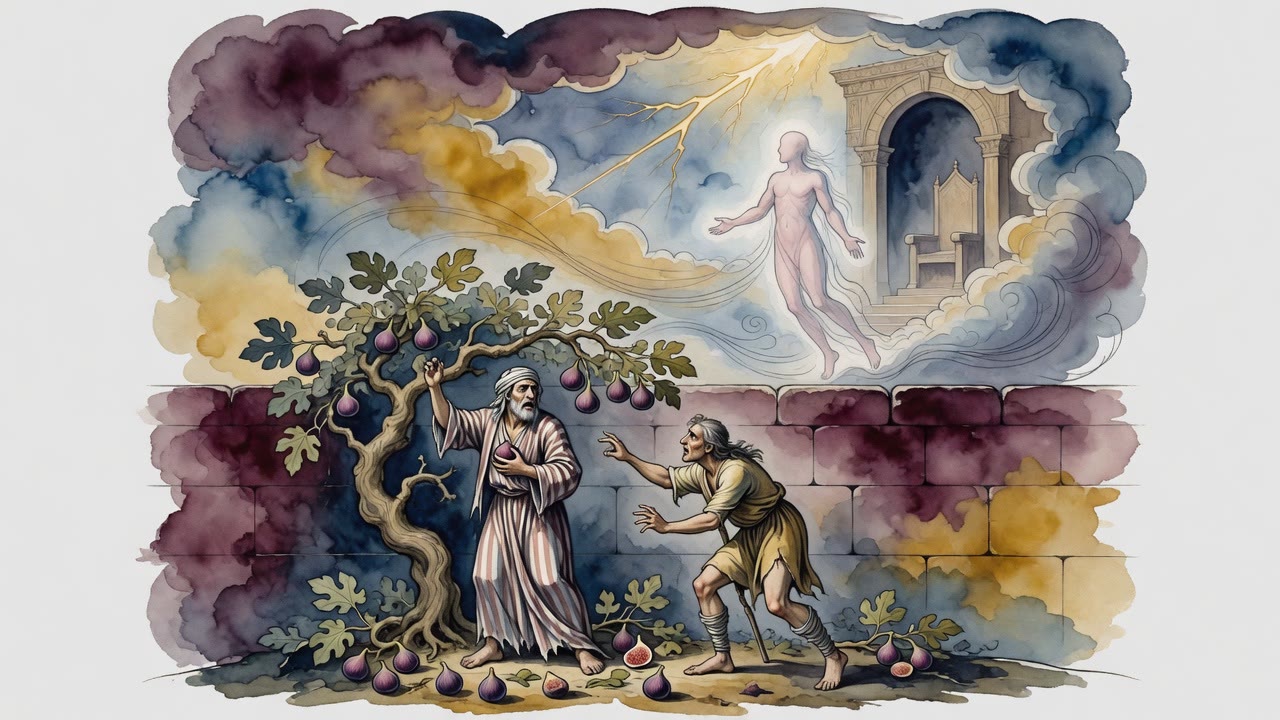
A king walked his orchard in the cool of the morning and stopped at the early figs, the first of the season, fat and splitting on the branch. He wanted them guarded. So he chose two men whose weaknesses, set against each other, would make theft impossible. One was blind. One was lame. "Be careful with the early figs," he told them, and went away.
The blind man could not find the figs. The lame man could not reach them. Between the two of them, the king reasoned, the fruit was safe behind a wall of broken bodies. He reasoned wrong.
One Climbed Onto the Other
It was the lame man who saw the opening, because seeing was the one thing he could do. "I see fine early figs," he said. The blind man turned his face toward the voice. "Bring them, and let us eat." The lame man laughed at him. "Can I walk?" The blind man laughed back. "Can I see?"
And there it was. The defect in each was the cure for the other. The lame man climbed onto the back of the blind man and rode him down the row, calling left, calling right, plucking fruit he could never have reached, dropping it into the hands of the man who could never have found it. They ate until the branches were bare. Then they climbed apart and each sat in his own place, separate again, blameless again, two ruined men who could not possibly have done a thing.
Days later the king came back. "Where are the early figs?" The blind man spread his empty hands. "Can I see?" The lame man slapped his dead legs. "Can I walk?"
The king was no fool. He lifted the lame man and set him on the back of the blind man, exactly as they had stood among the trees, and judged the two of them as the single thief they had been. "This is how you did it," he said. "And this is how you ate."
The Soul That Sat Above Them All
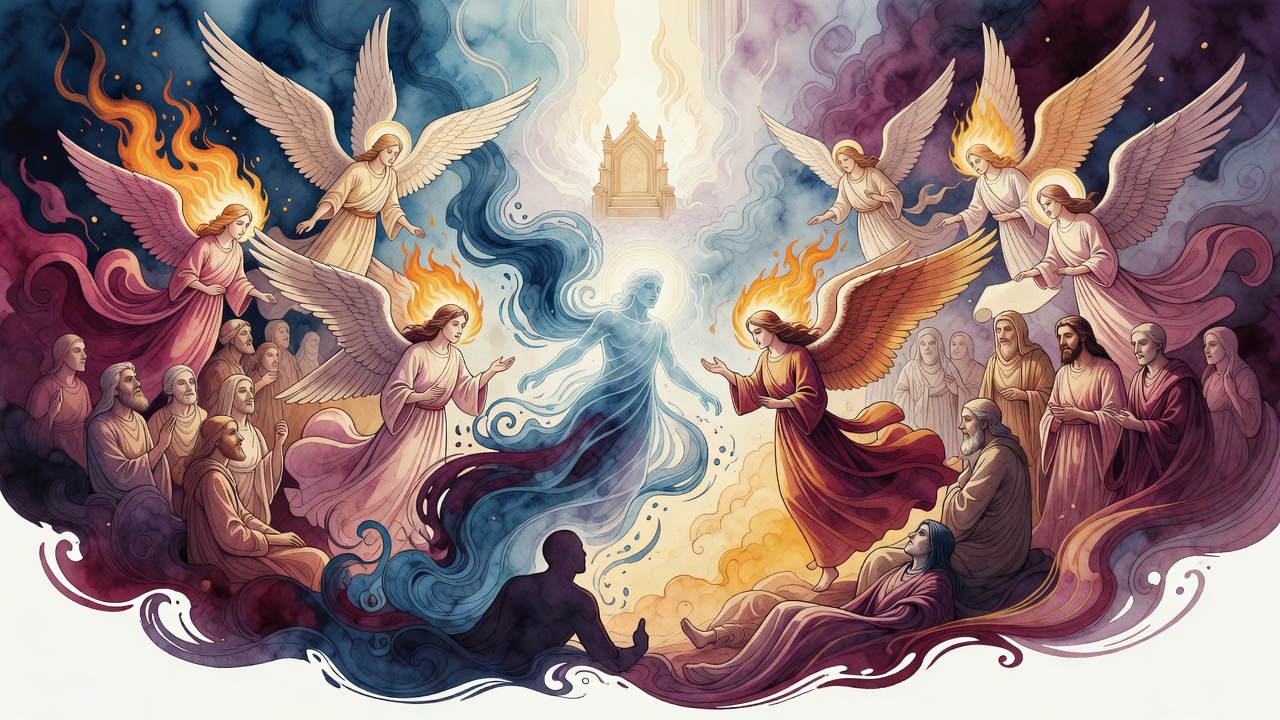
The parable was told to answer a harder theft. Inside every person sits a soul, and beneath it labor the servants of the body. The gullet takes in food, the windpipe carries the voice, the liver holds anger, the gall holds envy. The spleen laughs, the stomach sleeps, the tongue speaks, the heart understands, the kidneys give counsel. Workers in the dark, and the soul enthroned over all of them, set highest, given the best seat in the house.
And that soul went out and sinned. The Holy One had made it ruler of the whole company and it stole the figs anyway. So the same question waits at the end of the world. The soul is summoned. "Why did you sin?" It points downward. "Master of the universe, the body sinned. From the day I left it, am I not flung before You like a broken shard?" Then the body is summoned, and it points upward. "From the day the soul left me, am I not a shard as well?" Each true. Each alone untouchable. A corpse steals nothing. A breath of air reaches no branch.
The Holy One does what the king did. He lifts the soul and sets it back into the body it rode, and judges them together. The heavens are called to bring the soul, the earth to bring the body. Only then is His people judged.
Why He Pressed the Soul and Spared the Flesh
But there is a second case, and it does not end evenly. A priest gave dough of the holy portion to his two wives, one a priest's daughter, one an Israelite's daughter, and both defiled it. He turned on the priest's daughter and let the other go. She cried out. "My lord, you handed it to both of us as one. Why quarrel with me and leave her alone?" He answered, "You grew up in a priest's house, you learned these things at your father's table. She did not. So I quarrel with you."
And the soul, at the end, cries the same cry. "I and the body sinned as one. Why do You press me and leave it alone?" The answer is not soft. "You are from the upper realms, from the place where no one sins. Therefore I press you."
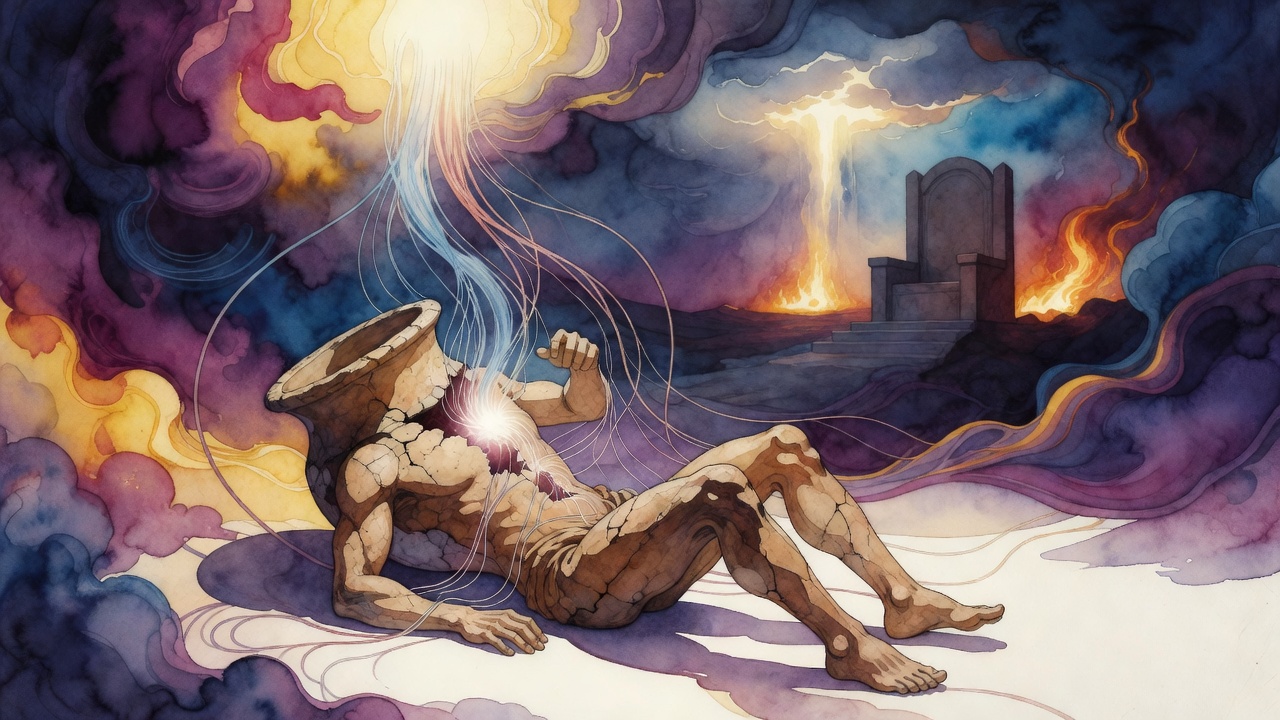
The body is the provincial, raw clay scooped from the ground, formed by the LORD God from the dust, ignorant of the customs of the court. The soul is the child of the palace, breathed straight from the mouth of the Holy One into the nostrils of the dust, present every day, fluent in every rule. When both commit the same crime, the palace child is called to account, because the palace child knew better and did it anyway. The astonishment is in the verse itself. A soul, when it sins. As though heaven could not believe it would stoop so low.
The Stone Heart Pulled Out at the End
The soul has one defense left, and it is the truest. In this world the evil inclination rules. It rides the body the way the lame man rode the blind, steering it toward the fruit, and the soul is dragged along on a back it cannot fully command. Even an honest mistake in study hardens, over time, into open rebellion.
The Holy One does not deny it. He answers with a promise. In the world to come He will reach into the chest and tear out the heart of stone that let the inclination ride at all, and set a heart of flesh in its place. The thief and the mount will be parted for good. Until then the soul sits highest in the house, sees the figs first, and carries the weight of having known.
← All myths