Parshat Vayechi6 min read

Matia ben Heresh Burns Out His Eyes Against Satan's Temptation

Satan built a face no man could resist and set it in the rabbi's doorway, so Matya took white-hot nails and burned out his own eyes.

Curated by Arthur · Told by Maggid ·
Table of Contents
  1. The Accuser Grows Jealous of a Spotless Man
  2. A Face Crafted to Stop a Heart
  3. Fire and a Nail
  4. The Angel Sent to Heal Him
  5. The Eyes That Would Not Look

Rabbi Matya ben Heresh sat in his house of study in Rome, bent over the Torah, and the light coming off his face was like the sun. The students who served him said that in all his days he had never once lifted his eyes toward a woman. Not in the market, not on the road, not across a courtyard. His face had taken on the form of the ministering angels, and the hours of daylight passed over his bowed head without his noticing them go.
High above, this was noticed by exactly the wrong reader.

The Accuser Grows Jealous of a Spotless Man

Ha-Satan passed by the study house and could not look away. In the heavenly court he is the prosecutor, the one whose work is to test, and here was a man who gave him nothing to indict. The jealousy of it gnawed at him. "Is it possible," he said, "that a man like this has not sinned?"

He went up before the Holy One. "Master of the universe," he said, "what is Rabbi Matya ben Heresh to You?"

"He is wholly righteous," said God.

"Give me permission and I will incite him."

"You cannot prevail over him."

The Accuser waited. And still, the answer came. "Go."

A Face Crafted to Stop a Heart

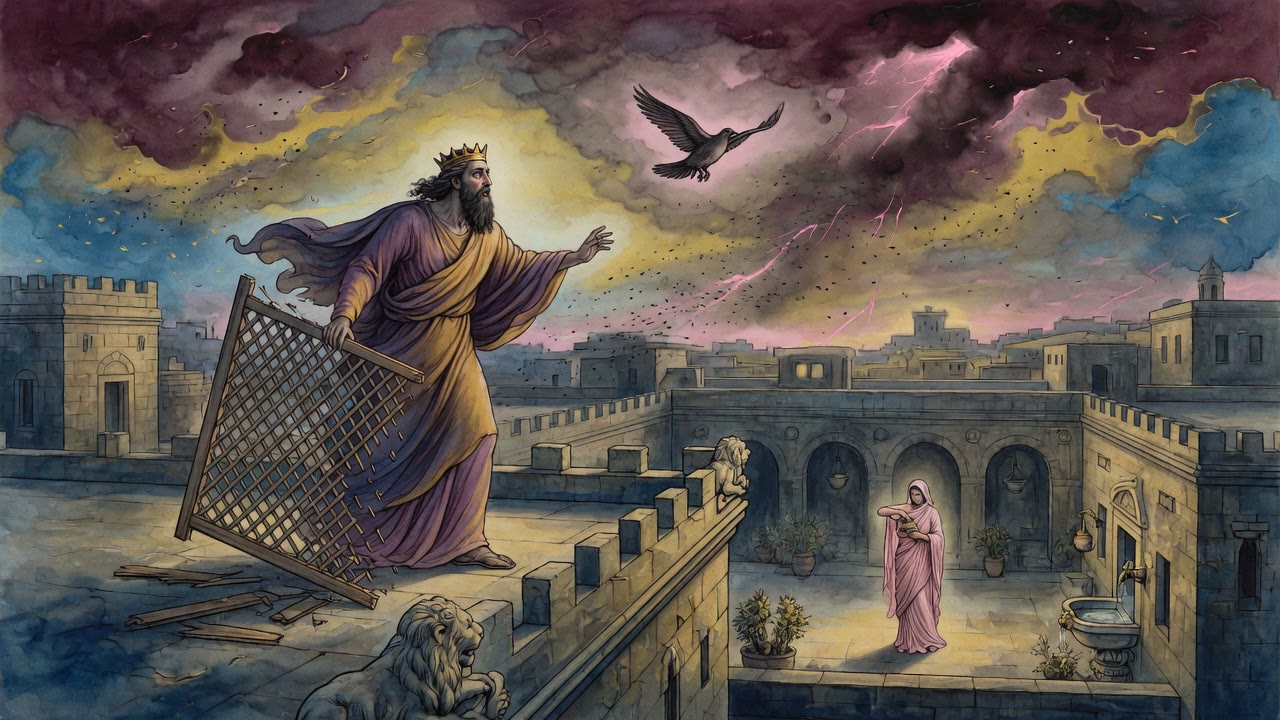
The Accuser took the shape of a woman. Not an ordinary beauty. He built a face the like of which had not existed in the world since Naamah, the sister of Tubal-Cain, the woman over whom the sons of God themselves had once erred, when they saw the daughters of men and could not master what they saw. That was the face he wore. He carried it to the doorway of the study house and stood there, directly in the rabbi's line of sight.

Matya looked up from the scroll. He understood in a heartbeat what stood in his doorway and why. He turned his face and set it behind him, toward the wall.

The Accuser moved. He came around and stood at the rabbi's left. Matya turned his face to the right. The Accuser slid to the right, and Matya turned again, and the woman of impossible beauty kept circling, taking up each new angle the instant the old one was abandoned, so that there was no direction the rabbi could face that did not have her in it.

Matya stopped turning. He sat very still. "I am afraid," he said, low, almost to himself, "that the evil inclination will overcome me and make me sin."

Fire and a Nail

He called the student who served before him. "Go," he said, "and bring me fire and a nail."

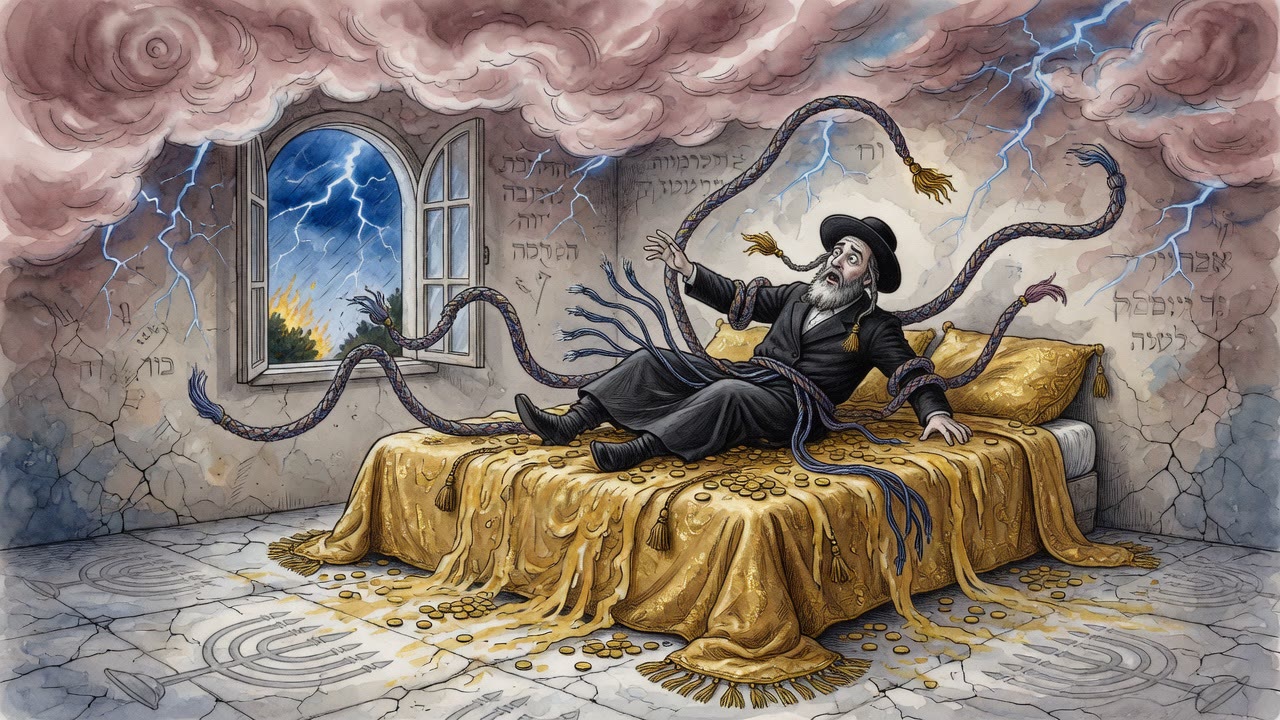
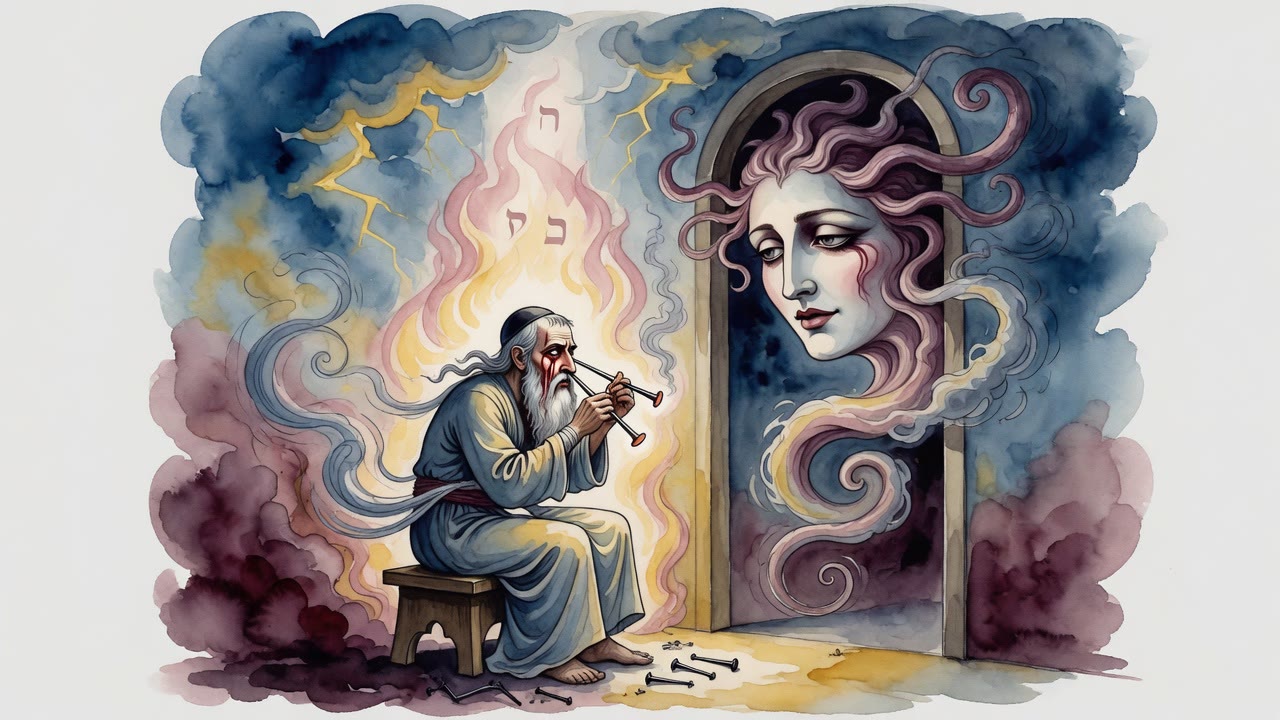
The young man hesitated, then went and came back with what his teacher had asked for, irons heating in the coals. Matya took them. While the circling woman watched from the doorway, certain now of the victory she had been promised would never come, the rabbi pressed the white-hot nails into his own eyes and put out his sight where he sat.

The Accuser felt the room change around him. The thing he had come to corrupt had chosen darkness over him, and there was nothing left in that house for jealousy to feed on. He shook. He fell backward, away from the threshold, and the beautiful borrowed face went with him into nothing.

Matya sat in the new dark, the scroll he could no longer read still open before him, faithful and blind.

The Angel Sent to Heal Him

In that same hour the Holy One called for Raphael, whose name means God heals. "Go," He said, "and heal Rabbi Matya ben Heresh."

The angel came and stood in the ruined quiet of the study house. The rabbi lifted his sightless face toward the new presence in the room. "Who are you?"

"I am Raphael," the angel said. "The Holy One sent me to heal your eyes."

And the rabbi, who had burned out his own sight rather than risk a single lingering glance, would not take the cure. "Leave me," he said. "What was, was."

Raphael did not argue. He went back up before the Throne. "Master of the universe," he said, "this and this is what Matya said to me." He had refused. He would keep his blindness.

Then the Holy One gave the angel a second message, and it was not a command to a healer but a promise to a man. "Go and tell him that I am a surety that the evil inclination shall never rule over him."

Raphael carried the guarantee down and laid it before the blind rabbi. The danger he had maimed himself to escape would never reach him again. Heaven itself had gone bond for it. Only then did Matya let the angel near, and Raphael healed him at once, and the light came back into the eyes that had chosen the dark.

The Eyes That Would Not Look

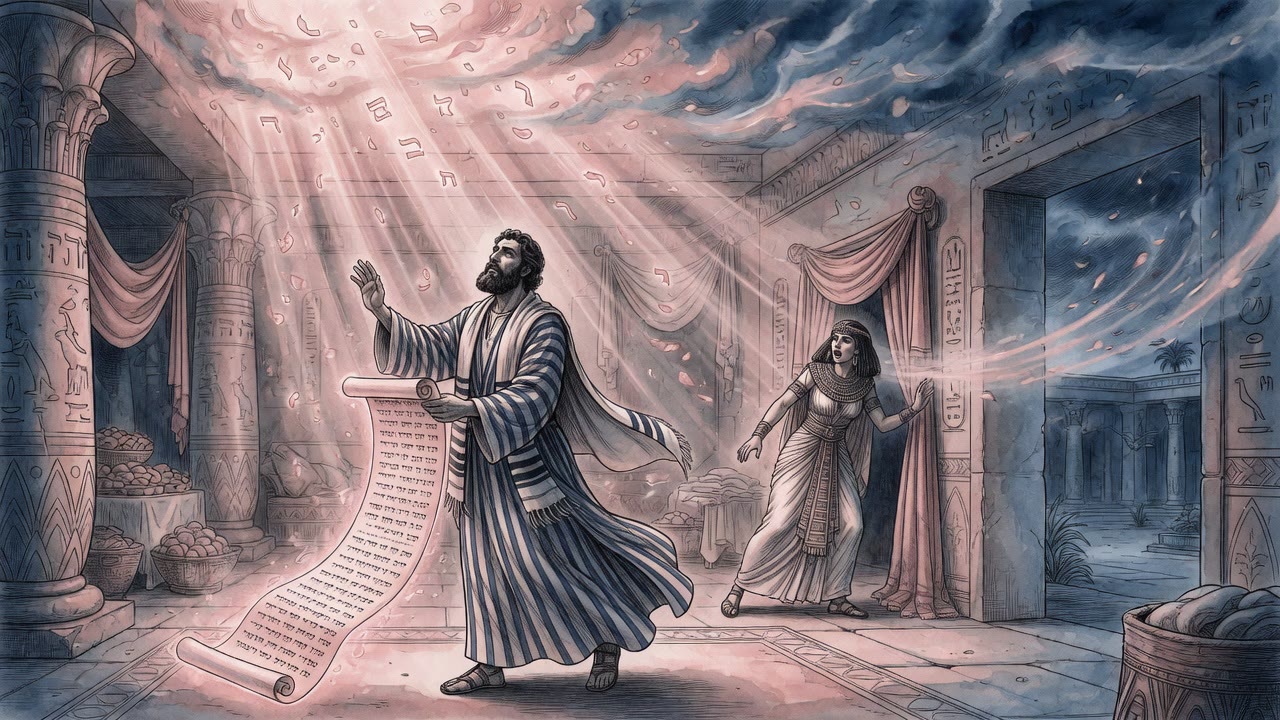
In the same tradition that keeps Matya's story, there is Joseph in Egypt, and the daughters of kings who climbed the wall to stare at his face, and how he never once fixed his eyes on any of them or let a thought of them in. For that, the tradition says, no evil eye ever held power over his line, and he was given to inherit two worlds. Matya belongs to the same line of men. He had heard, perhaps, what the Sages drew out of his own ordeal: that whoever will not gaze at women, and all the more so at the wife of his neighbor, hands the evil inclination nothing to grip.

So the rabbi went back to his scroll in Rome, his sight restored and his guard never once lowered. The hours of daylight passed over his head again. He did not notice them go.


← All myths
From the tradition

Sources

2 sources

The texts this telling draws on, in full. Open a card to read inline, or expand it for a wider, quieter read.

Gaster, Exempla of the Rabbis No. 136 (1924); Midrash Tanhuma ChukatThe Exempla of the Rabbis (1924)

Rabbi Matia ben Heresh, a second-century Tanna who founded a Torah academy in Rome during the age of the later Roman emperors, was known among his peers for an almost iron constancy in Torah study. He sat in his house, it was said, and the hours of daylight passed over his head without him noticing.

This was exactly the virtue the yetzer hara, the evil inclination, could not stand. In the rabbinic imagination, Ha-Satan, the Accuser, is not a rebel outside God's command against God but a heavenly prosecutor whose job is to test human beings. He went to the Holy One and asked permission to test Matia. Permission was granted. The Accuser took the shape of a beautiful woman, a vision crafted to stop any human heart, and presented herself in the Rabbi's doorway.

Matia saw her. He understood in an instant what was happening. And then he did something most students of Torah would never do. He reached for two hot coals from the brazier, or in another version a pair of iron nails, and pressed them to his own eyes. He blinded himself on the spot rather than risk looking at her long enough to fall. When the vision departed, the Rabbi sat in the dark, faithful but sightless.

The Holy One then sent the angel Raphael, whose name means God heals, to restore Matia's sight. Raphael came with his instructions: Fear not, Matia. I have been sent to heal you. The Rabbi asked if he would be able to see again. The angel answered yes, and his eyes were opened. This exemplum, preserved as number 136 in Moses Gaster's 1924 Exempla of the Rabbis and also found in Midrash Tanhuma on Parashat Chukat, teaches that holiness will go very far to protect itself, and that heaven sends healing to those who have wounded themselves for its sake.

Full source
Yalkut Shimoni on Torah 161:2Yalkut Shimoni on Torah

"Issachar is a strong-boned donkey" (Genesis 49:14). Just as this donkey breaks the bone, so his tribe would break all Israel in halakhah, as it is said, "And of the sons of Issachar, men who had understanding of the times" (1 Chronicles 12:33), for he raised up two hundred heads of Sanhedrin courts.

"Dan shall be a serpent on the way" (Genesis 49:16-17). This is Samson, whom our father Jacob foresaw standing between the pillars, and he prayed for him that the Holy One, blessed be He, would give him strength, "O LORD God, remember me and strengthen me" (Judges 16:28). There was a certain man who said to them, "Judge my case." They said, Learn from this that he comes from Dan, as it is written, "Dan shall judge his people." Rabbi Yohanan said: Samson judged Israel as their Father in heaven, as it is said, "Dan shall judge his people as one." Rabbi Yohanan said: Balaam was lame in one leg, as it is said, "and he went limping" (Numbers 23:3); Samson on both his legs, as it is said, "a viper on the path."

"Naphtali is a hind let loose" (Genesis 49:21). This teaches that he leaped to Egypt and brought a document in his hand from the cave to bury his father. "Gad, a troop shall raid him" (Genesis 49:19). For the whole tribe of Gad, when one of them went out to war he would be victorious, and their slain were recognizable, "and he tears the arm, even the crown of the head" (Deuteronomy 33:20). "From Asher, his bread shall be rich" (Genesis 49:20), for they supplied the anointing oil for the Temple. "Joseph is a fruitful son" (Genesis 49:22), this teaches that the evil eye has no power over the seed of Joseph. "Daughters strode upon the wall", for the Egyptian women, daughters of kings, sought to look upon the face of Joseph, and he did not fix his eyes upon any of them nor entertain a thought of any of them; therefore he merited to inherit two worlds.

There was an incident with Rabbi Matya ben Heresh, who was sitting in the house of study occupied with Torah, and the radiance of his face was like the sun, and the form of his face was like the ministering angels, for in all his days he never lifted his eyes toward a woman in the world. Once Satan passed by and grew jealous of him. He said: Is it possible that such a man has not sinned? He said before the Holy One, blessed be He: Master of the universe, what is Rabbi Matya ben Heresh before You? He said to him: He is wholly righteous. He said before Him: Give me permission and I will incite him. He said to him: You cannot prevail over him. Nevertheless, He said to him: Go. Satan made himself appear to him as a beautiful woman the like of whose form had never been since the days of Naamah the sister of Tubal-Cain, over whom the ministering angels erred, as it is said, "And the sons of God saw the daughters of men" (Genesis 6:2). He stood before him. When Rabbi Matya saw him, he turned his face and set it behind him. Again Satan came and stood at his left side; he turned his face to the right. Satan kept turning to him from every side. He said: I am afraid lest the evil inclination overcome me and make me sin. What did that righteous man do? He called to the student who served before him and said: Go and bring me fire and a nail. He brought him nails and he set them into his eyes. When Satan saw this, he was shaken and fell backward. At that hour the Holy One, blessed be He, called to Raphael and said to him: Go and heal Rabbi Matya ben Heresh. He came and stood before him and said: Who are you? He said: I am Raphael, whom the Holy One, blessed be He, sent to heal your eyes. He said to him: Leave me; what was, was. Raphael returned before the Holy One, blessed be He, and said: Master of the universe, thus and thus Matya said to me. He said to him: Go and tell him that I am a surety that the evil inclination shall not rule over him. Immediately he healed him. From here the Sages said: Everyone who does not gaze upon women, all the more so upon the wife of his fellow, the evil inclination does not rule over him.

"Benjamin is a wolf that tears" (Genesis 49:27). As it is written, "and you shall see, and behold, if the daughters of Shiloh come out... and you shall seize." Another explanation: this is Ehud, "And Ehud made for himself a sword."

Full source