The Accuser Strikes Only Where the Road Turns Dangerous
Jacob counted it out loud. Joseph gone, Simeon gone, and now Benjamin. His sons waited in the doorway with the grain sacks already roped to the donkeys.
Table of Contents
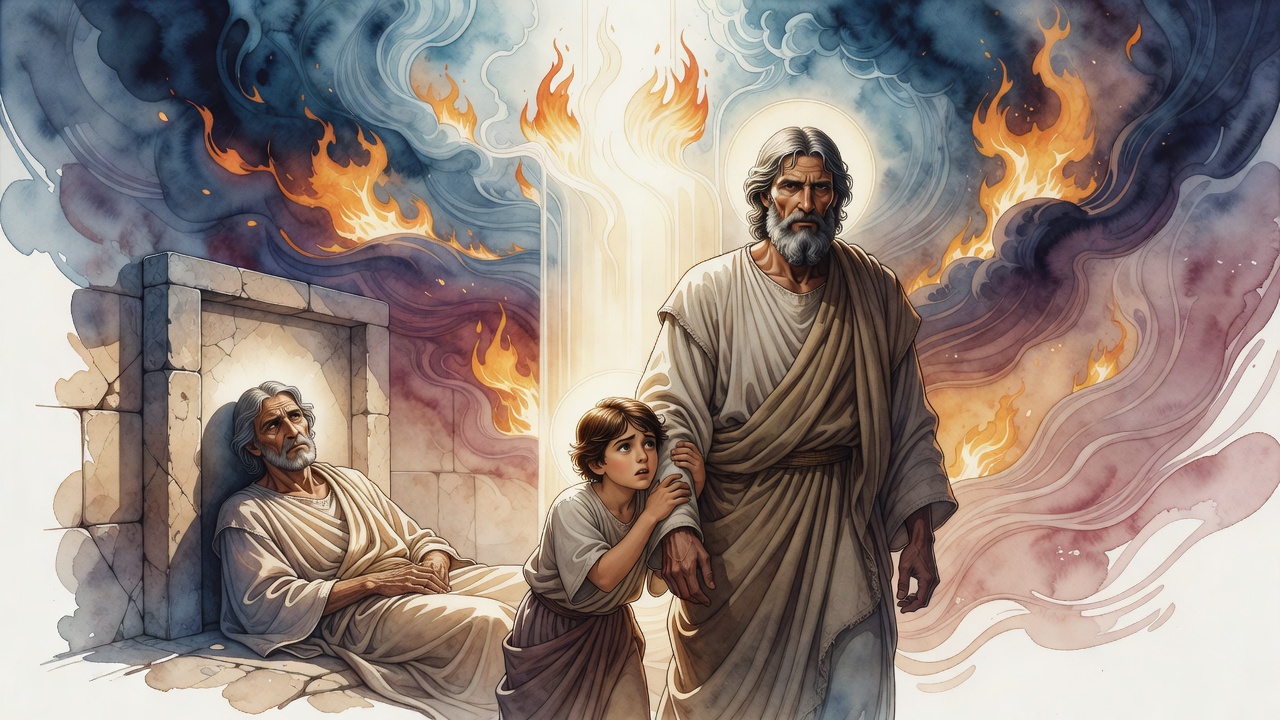
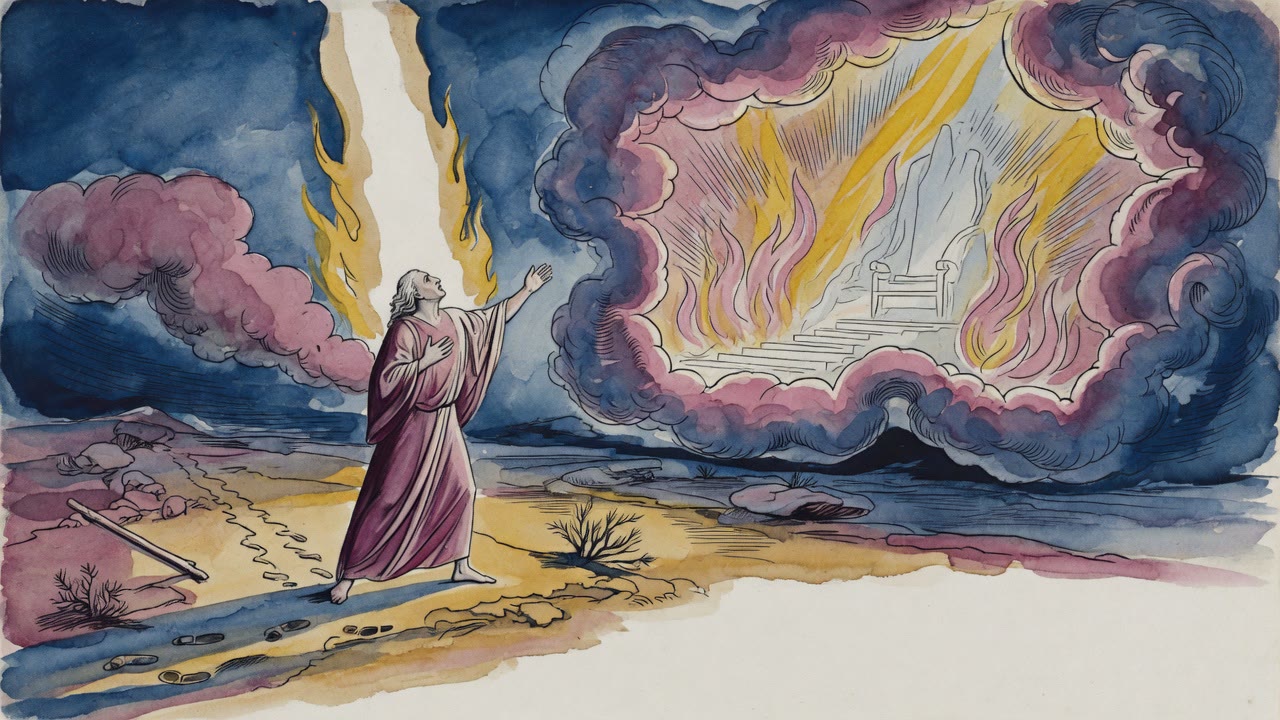
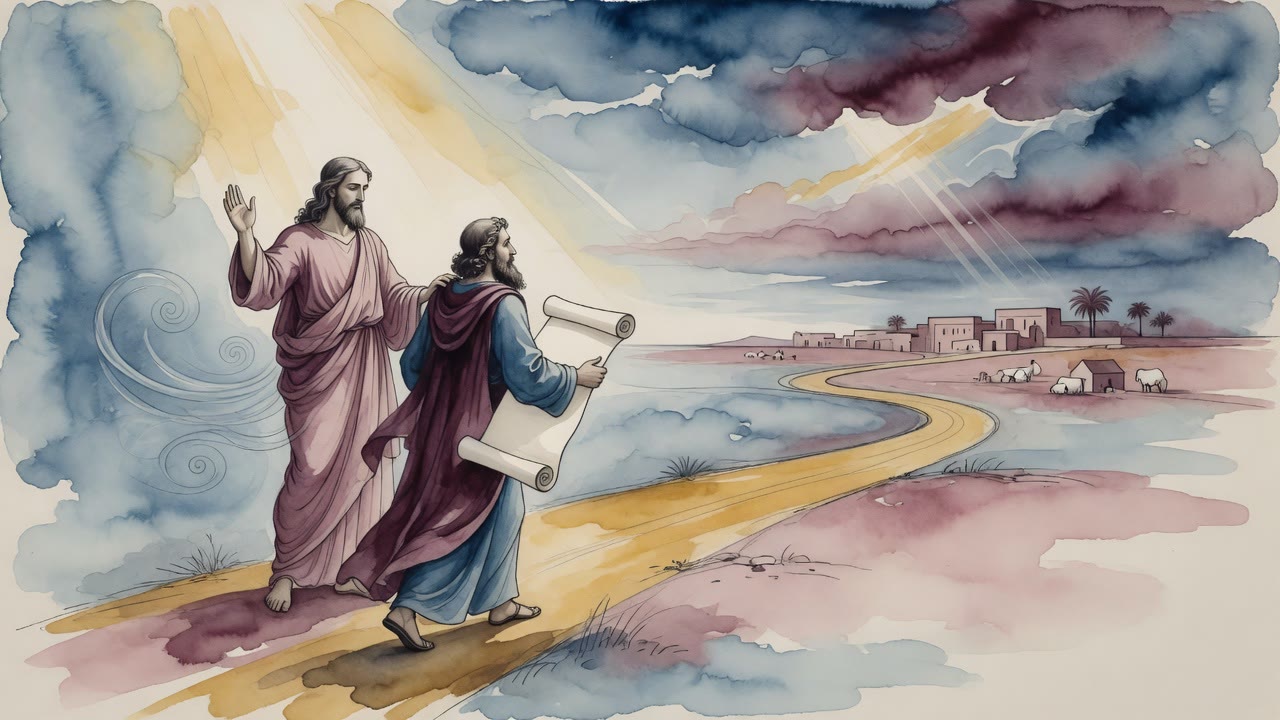
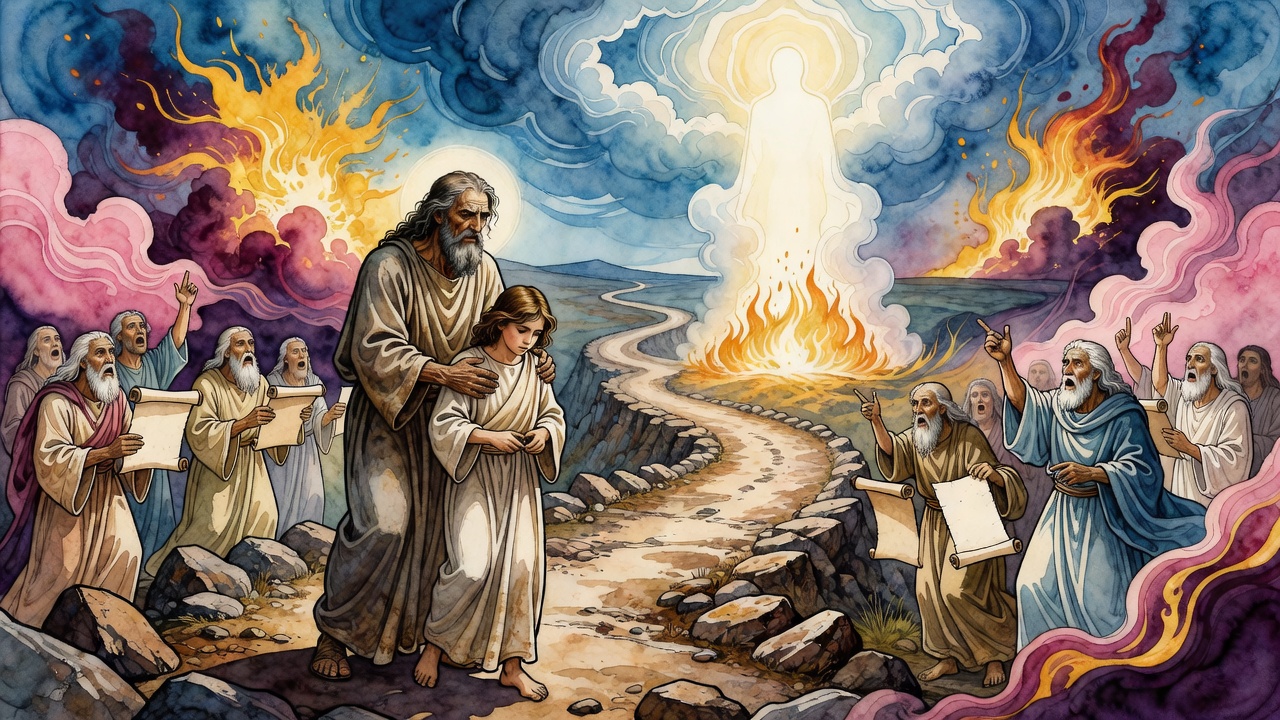
The famine had hollowed out the household, and still the old man would not say the word. His sons stood in the doorway with the grain sacks already roped to the donkeys, waiting for him to give up the youngest. Jacob did not look at them. He looked past them, toward the road that ran south into Egypt, where the dust rose and a man could vanish between one well and the next.
 Click for full size
"And harm should befall him on the way," he said.
On the way. Not in the house. He had hidden that distinction inside the sentence like a coin in a closed fist, and the sages who later bent over his words heard the metal of it. He did not fear for Benjamin at the table or under his roof. He feared the road, the open country where the path turns and the traveler is alone and the thing that watches from the edges of the world can finally close.
The Word Jacob Hid Inside His Fear
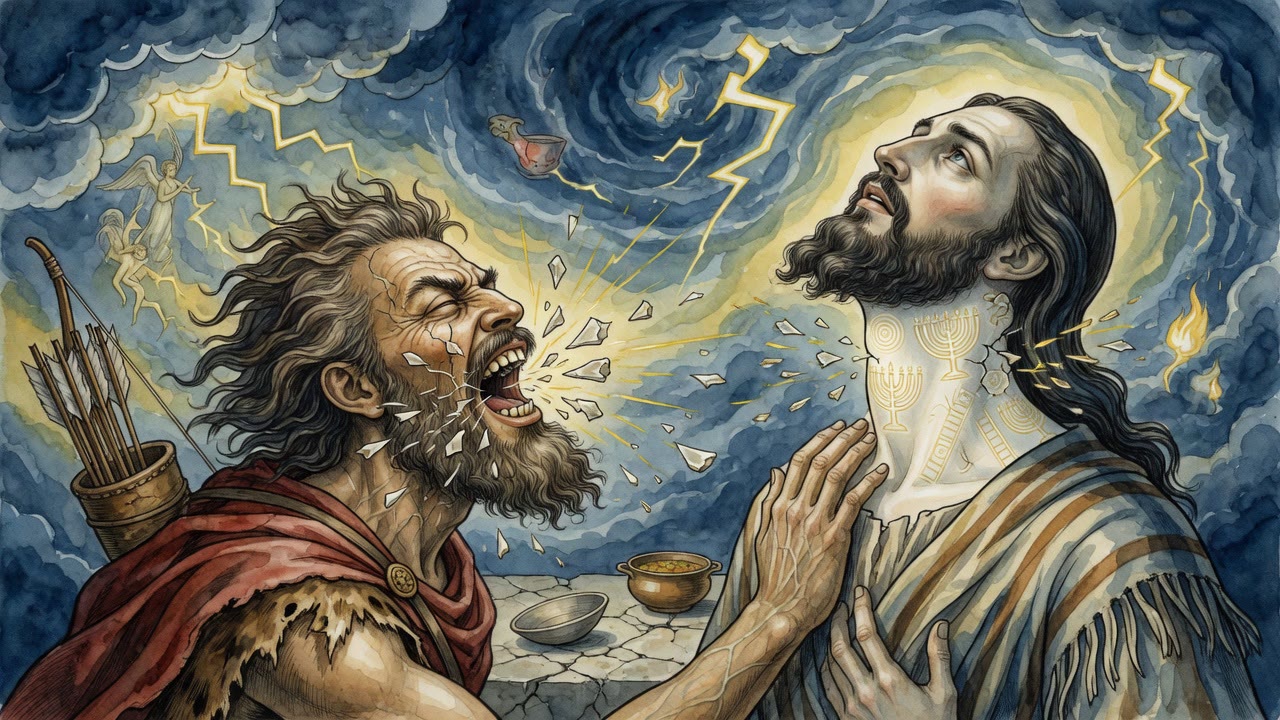
There is an accuser who keeps a ledger. He does not stand in a quiet house and read out a man's failures while the bread is rising. He waits for the hour when the floor drops away, when the ship leans into the wave, when the child steps onto the road. The danger itself is his summons. Where the ground is firm he has no standing, but the moment the path turns dangerous, he opens his book and begins to speak.
This is why Jacob clutched at the boy. He was not imagining shadows. He knew the law of the unseen court. A house, an infant, a wife, even where no true omen hangs over them, carry a sign, and a thing that has happened three times has hardened into a pattern the heavens can read. The pattern over Jacob's house had hardened. He counted it out loud, the arithmetic of his loss. "Joseph is no more, and Simeon is no more, and you would take Benjamin." Three. The number that turns a misfortune into a verdict. Send the last son down the dangerous road and the accuser would have his case complete.
The Brothers Answer With Empty Words
The men in the doorway grew impatient. The grain would not last. "And if you will not send him," they told him, "we will not go down." The lord of Egypt had been plain. No youngest brother, no audience, no food. They were telling their father the hard truth of the situation, and he answered as if they had wounded him on purpose. "Why did you treat me so ill?"
They thought him unfair. But Jacob never spoke an idle word, and this complaint was not idle either. In the same hour, far above the dust of the road, the Holy One was already arranging the throne in Egypt onto which a lost son would climb. The whole machinery of rescue was turning, and the old man could not see a single gear of it. So out of the dark came the cry men cry when the cosmos seems to have forgotten them. "My way is hidden from the LORD, and my cause has passed over from my God." The accuser strikes in the hour of danger, and that same hour is when the sufferer is most certain no one is watching but the enemy.
The brothers pressed their case. They had not volunteered the boy's name, they swore. The man in Egypt had interrogated them down to the smallest thing, even, they said, about the wood their cradles were carved from. Every answer had tightened the snare.
Judah Puts His Own Soul Into the Breach
Then Judah stepped forward and changed the shape of the room. He did not argue about omens or signs. He did the one thing that stops an accuser, which is to volunteer to be accused in another man's place.
"Better that one soul be in doubt," he said, "and not all of us in certain peril." Then he laid down the bond. "I myself will be surety for him." He made himself the guarantor, the man whose own hand could be seized if the debt went unpaid, and he stretched the pledge past the borders of this life. All the days, he swore, meaning even the World to Come, the one long unbroken day with no evening in it. If the boy did not return, Judah would carry the sin not for a season but forever.
He felt the weight of it even as he spoke. The small Hebrew word he chose for the oath, the word for then, was the same word that had once trembled in his father Isaac's mouth on the day of the stolen blessing, when the old blind man shook and asked, "Who, then, is he?" The same terror Jacob's house had once inflicted now coiled back upon Judah's own tongue. A ban binds even when spoken on a condition, and even a vow made if-this-then-that must one day be loosed. Judah had bound himself with one, and the bond would follow him past the grave before another hand rose to release it.
When the Decree Is Already Signed
The same prosecutor who waited at the bend in Jacob's road did not stop at one household. He built his case against the whole people, and built it high enough that the decree of annihilation was written out, sealed, and laid down as though nothing could lift it.
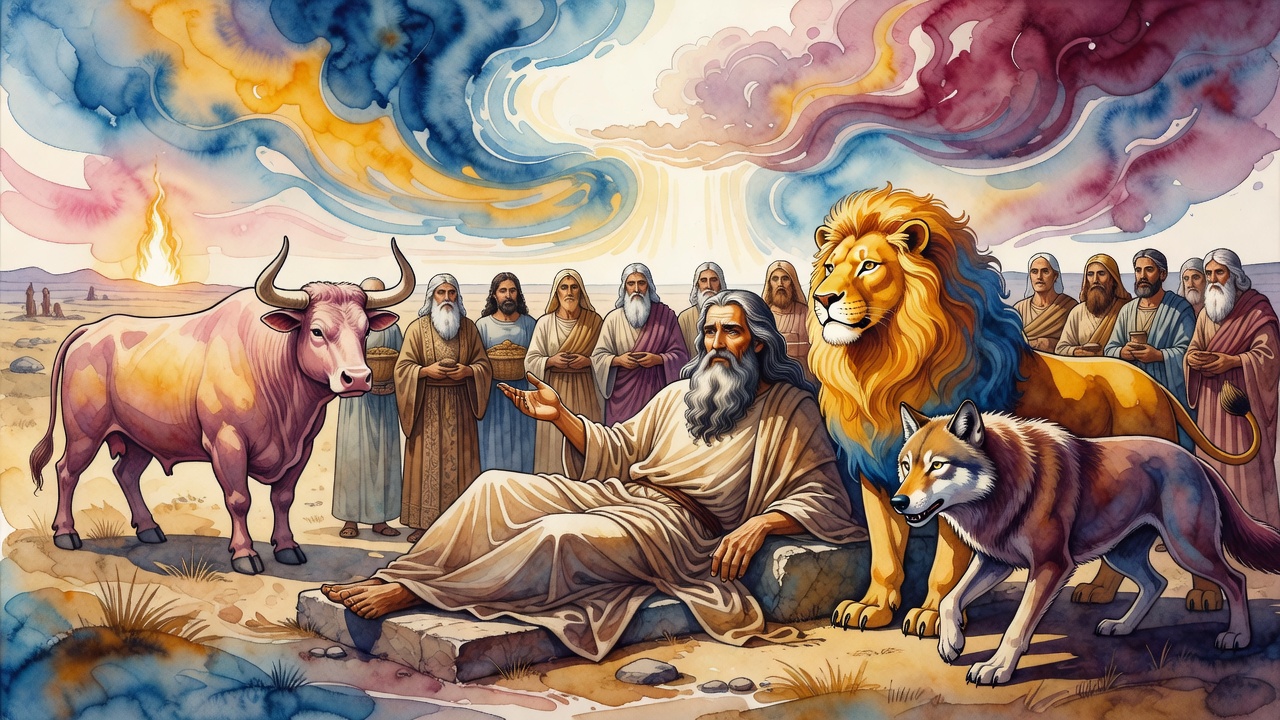
The Torah heard of it and wept, a lament so deep it rang through the upper chambers. The angels caught the sound of it and shook. "If Israel is to be destroyed," they cried, "of what avail is the whole world?" The sun and the moon pulled mourning over themselves like sackcloth and grieved aloud for a people who wander from town to town and land to land only to study the Torah, who suffer under the hand of the nations only because they keep the covenant.
The accuser had chosen his hour as he always did, the hour of greatest danger, the moment the sentence seemed beyond appeal. He had learned long ago that a road is safer to strike than a house, and a sealed decree safer still. But into that sealed hour the weeping rose, the Torah and the angels and the very lights of heaven crying as one, and the upper chambers leaned down to listen. A sealed decree is exactly the kind of thing that the right cry, at the right hour, has been known to break.
← All myths