Body and Soul in Jewish Mythology

4 myths

The relationship between body and soul in Jewish thought, from the parable of the blind man and the lame man to resurrection theology.

What does Body and Soul mean in Jewish mythology?

The relationship between body and soul in Jewish thought, from the parable of the blind man and the lame man to resurrection theology.

4 myths on JewishMythology.com retell how Jewish tradition imagines body and soul, drawn from the Hebrew Bible, Midrash, Talmud, Kabbalah, and later Jewish literature. Each story below synthesizes primary sources into a single narrative; follow any myth to read it, and from there into the source passages behind it.

Myth 5 min

Adam Was Built from Temple Dust and the Whole Earth

God formed Adam from dust, but the Aramaic translators knew which dust: from the Temple site, the four winds, and every sea on earth.

AdamCreationTempleShabbatBody And Soul
Myth 5 min

Abraham Could Not Stand Before God Until He Was Circumcised

The Torah says Abraham fell on his face before God. The Aramaic translators said he fell because his uncircumcised body physically could not stand.

AbrahamCircumcisionCovenantDivine PresenceBody And Soul
Myth 5 min

Antoninus Asked If God Could Judge Body and Soul

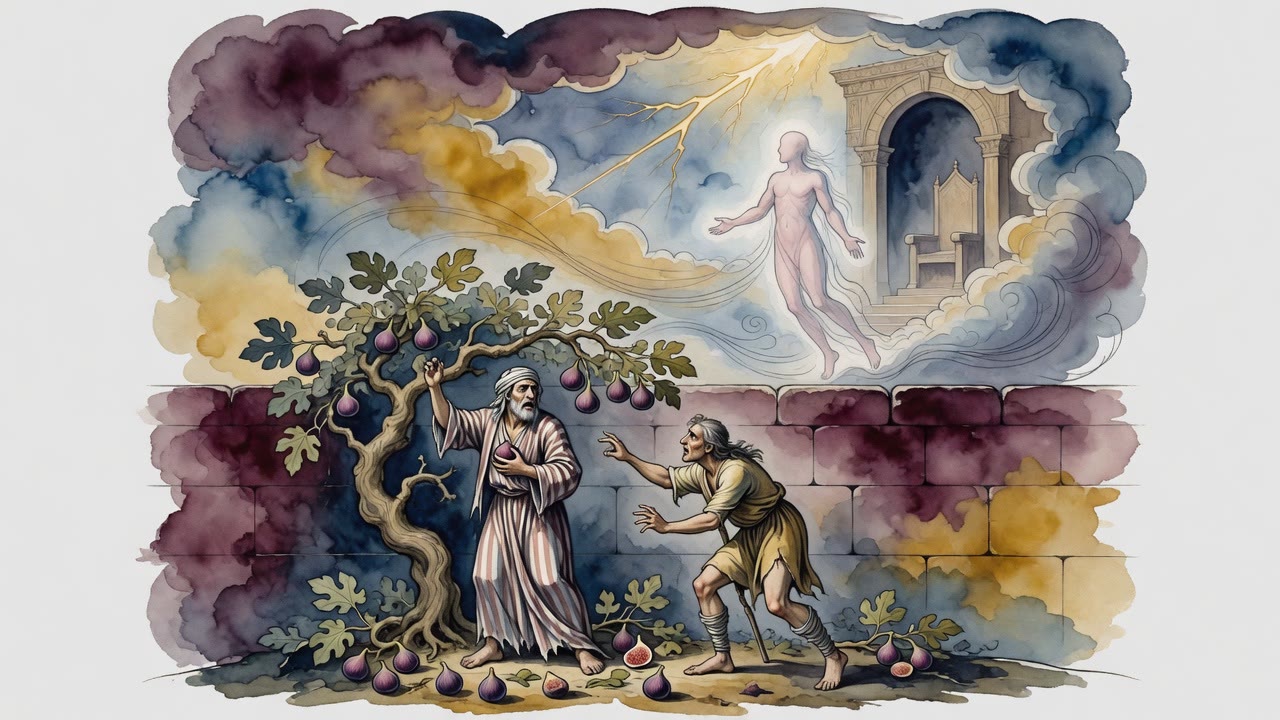
The body says the soul sinned. The soul says the body sinned. Rabbi Judah answers with a blind man and a lame man who stripped the orchard together.

AntoninusRabbi JudahBody And SoulParableResurrectionJudgmentDivine Justice
Parshat Vayikra 6 min

The Soul Came From the Palace and Could Not Plead the Body

A blind man and a lame man strip the kings figs, then each blames the other. The soul tries the same defense and learns it grew up at court.

Body And SoulFinal JudgmentParableYetzer HaraResurrectionMidrash