Daniel Refused Divine Honors and Nebuchadnezzar Accepted It
Nebuchadnezzar wanted to worship Daniel after the dream. Daniel refused. The king removed him from Dura before the furnace decree could force a confrontation.
Table of Contents
 Click for full size
The King Who Wanted to Bow
Nebuchadnezzar wanted to bow down to Daniel. Daniel would not allow it.
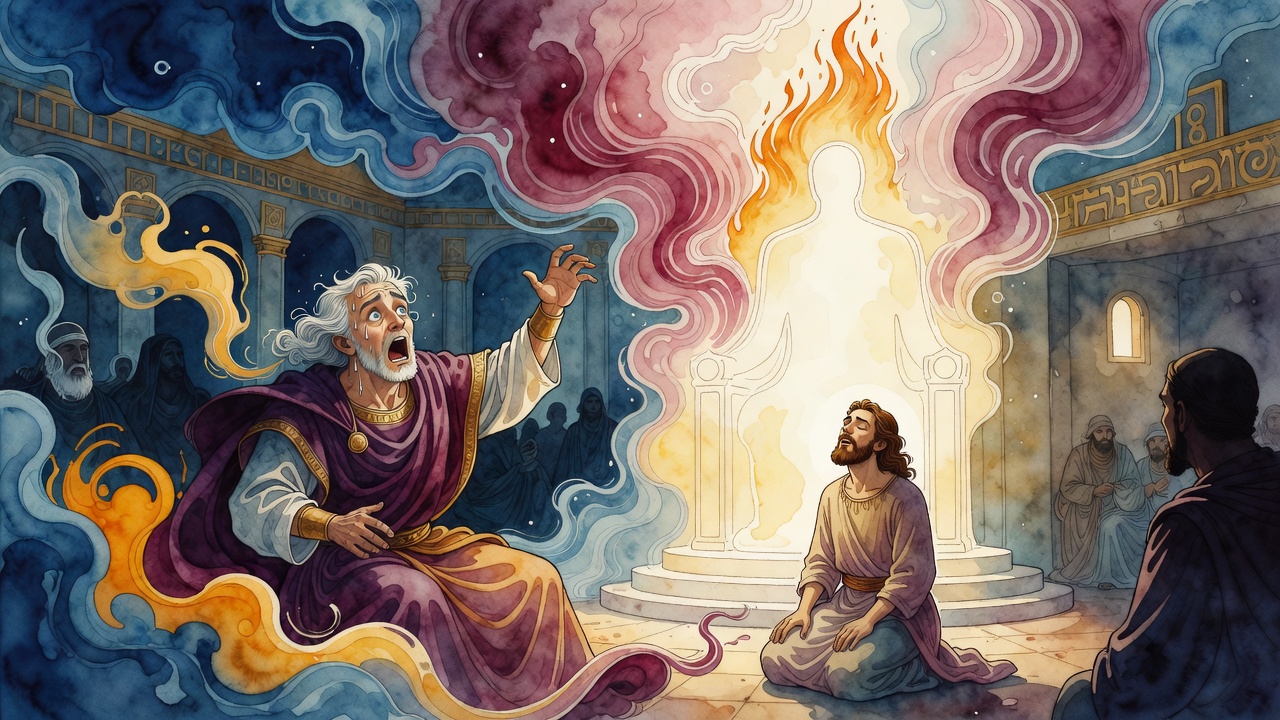
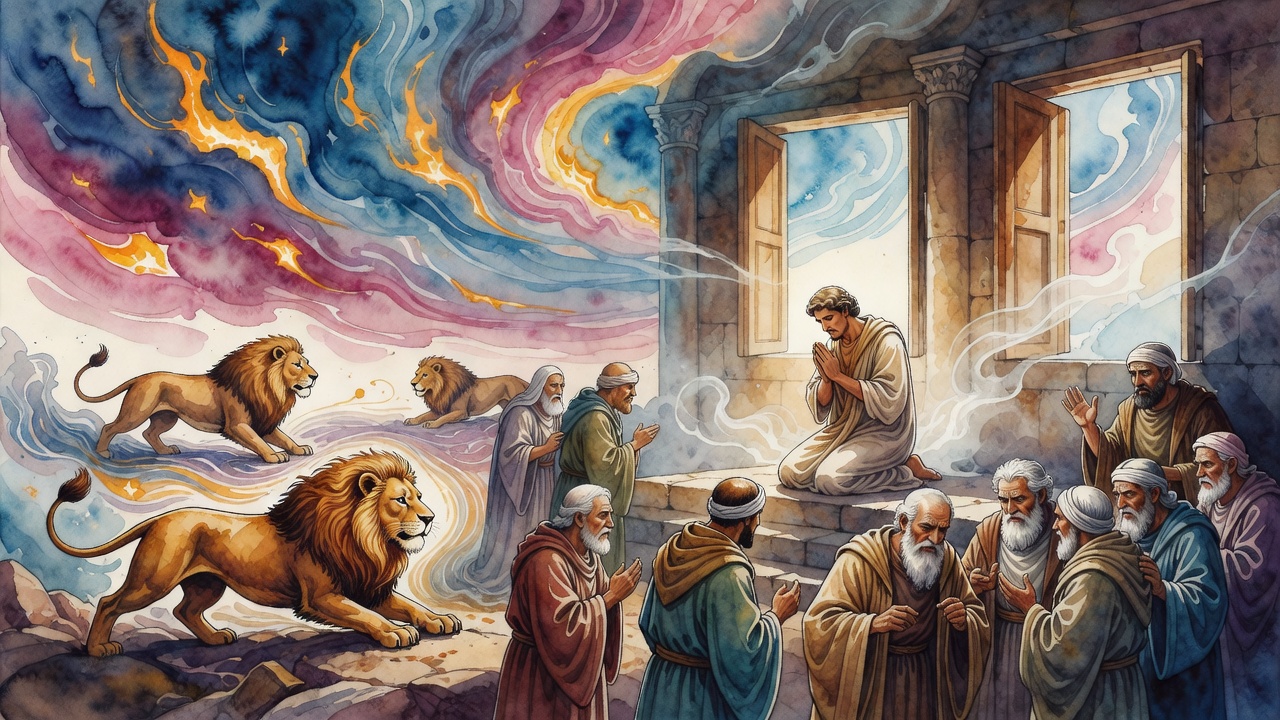
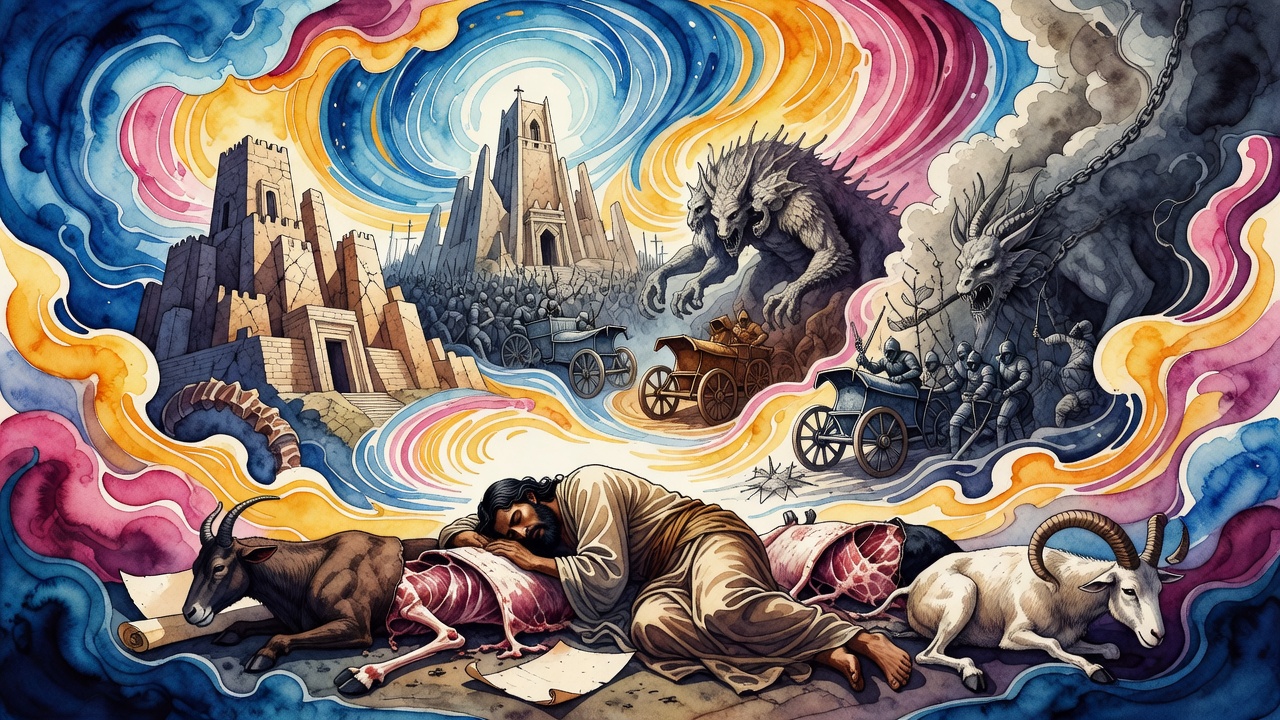
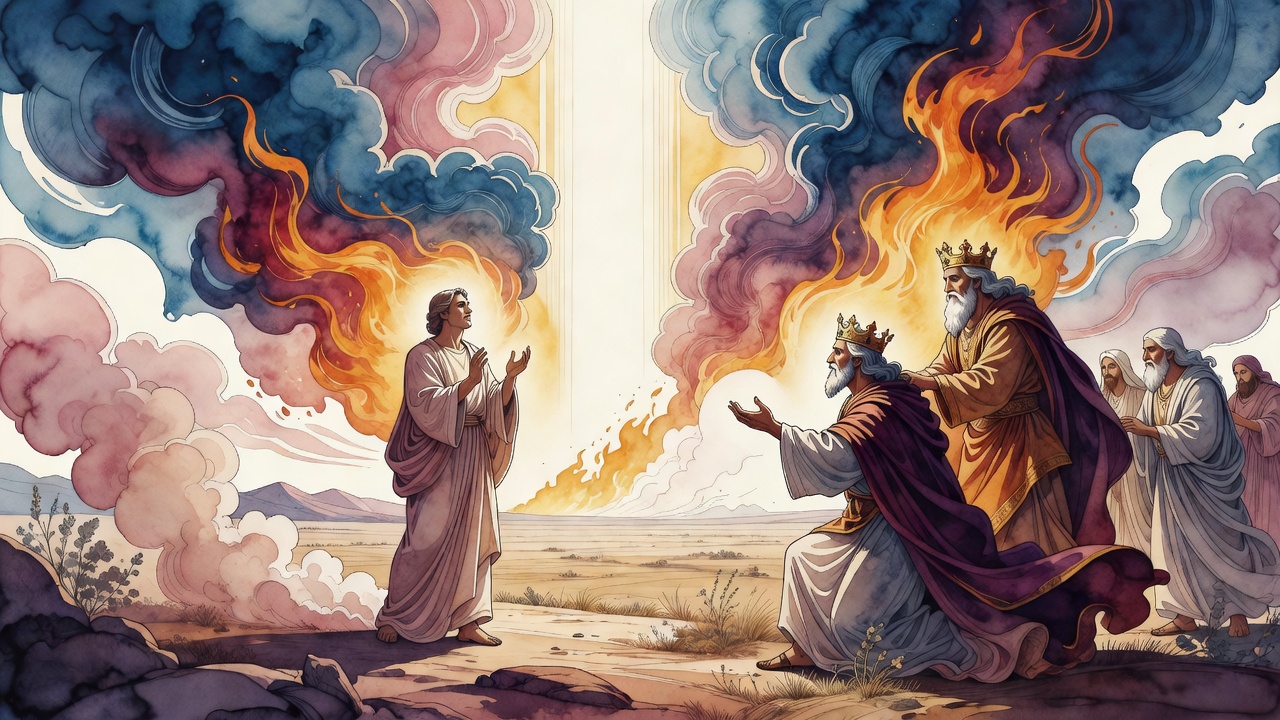
After Daniel had interpreted the king's dream, the statue of four metals struck by a stone not cut by human hands, after he had described the rise and fall of four empires and the final kingdom that would stand forever, Nebuchadnezzar fell on his face before Daniel and ordered that a grain offering and incense be brought to him. He said: truly your God is the God of gods, and a revealer of mysteries, for you were able to reveal this mystery.
The reverence was genuine. The king had been in the presence of something he could not account for and he responded the only way he knew how to respond to overwhelming power: with prostration. But the object of his prostration was a man, and the man refused it.
Why Daniel Was Not at the Plain of Dura
This is the key to understanding what happened next, and it is the detail the tradition preserves because without it the furnace story is incomplete. When Nebuchadnezzar erected the golden statue in the plain of Dura and issued the decree to bow or burn, Hananiah, Mishael, and Azariah were there and refused. Daniel was not there at all.
The king had sent Daniel away beforehand. Not into exile, not into prison. He had removed Daniel from the situation because he could not bring himself to put Daniel in the position of choosing between the decree and his God. The man who had told Nebuchadnezzar the truth about his dream, who had refused prostration from the most powerful king in the world, was not going to bow to a gold statue, and Nebuchadnezzar knew it, and Nebuchadnezzar did not want to watch what would happen.
He protected Daniel. This was the only form of reverence available to him after Daniel had refused the more direct form.
What Nebuchadnezzar Understood About Daniel
The king had spent years in the company of court astrologers, dream interpreters, magicians, and wise men who worked by methods that were part skill and part performance. He understood that system. He also understood that Daniel was outside it. Daniel did not perform. He was accurate in ways that the others were not, and the accuracy was not luck or technique. It was access to something the rest of the court did not have access to.
Nebuchadnezzar had built the golden statue to compel worship from his entire empire. He believed in the principle that a ruler who could make everyone bow had demonstrated something real about the nature of power. But he also knew that one person in the empire carried an authority that the statue could not touch and the furnace could not threaten, and that person had refused to receive the king's prostration not out of modesty but out of a clear understanding of what prostration meant and to whom it belonged.
The king who demanded universal bowing removed Daniel from the scene before the demand could be applied to him. It was, in its way, an acknowledgment.
The Relationship That Continued
After the furnace, after Hananiah and Mishael and Azariah walked out of the fire with their garments unsinged, Nebuchadnezzar's language changed. He made a decree protecting their God. He promoted them. He did not renounce the golden statue, did not become a worshipper of the God of Israel, remained the king who had built the thing in the first place. But the man he had removed from the scene before the decree came down continued to serve in his court, and the king continued to bring him his dreams and his anxieties and his grandiose visions, and Daniel continued to tell him the truth about all of them.
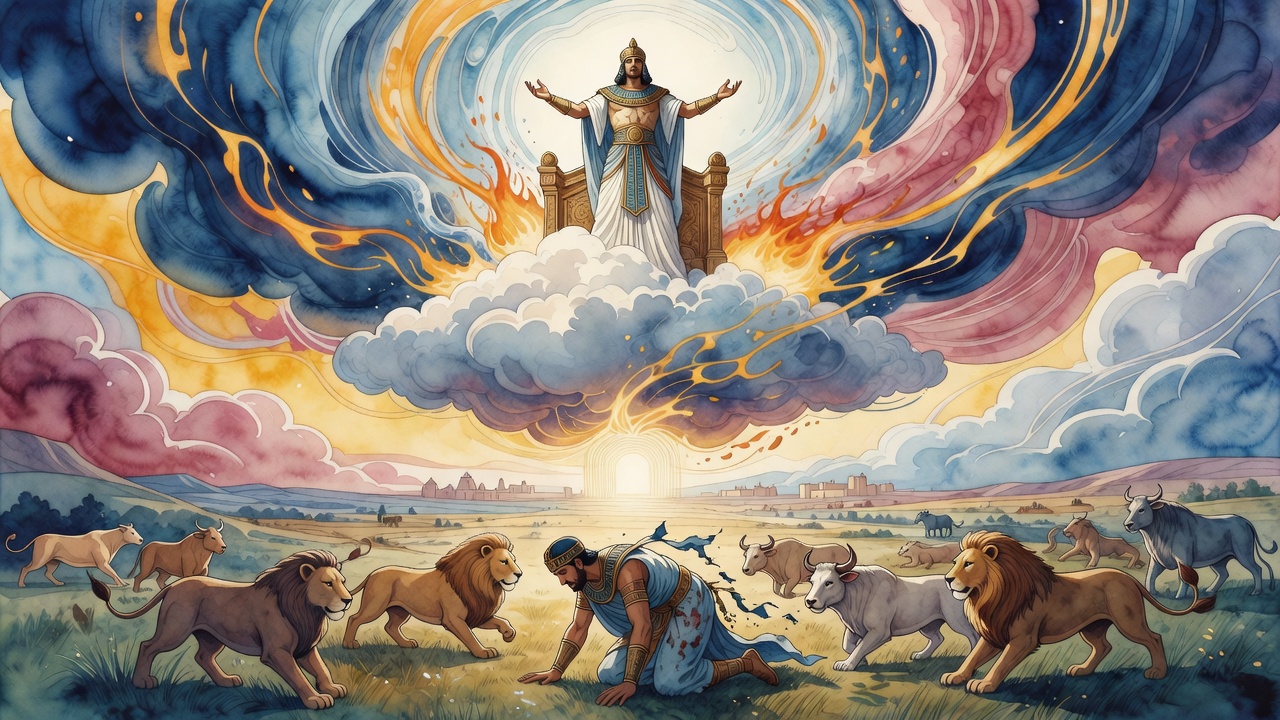
This is the dynamic the tradition insists on: Nebuchadnezzar never converted and never repented in any complete sense, but he recognized something in Daniel that he recognized nowhere else, and he arranged the world around him accordingly. He removed Daniel from the furnace situation. He listened when Daniel told him he was about to go mad and eat grass in the fields. He wept, the tradition records, when Daniel confirmed that the dream of the great tree cut down was about him. There was something in the man who refused to be worshipped that the man who demanded worship could not stop returning to.
← All myths