Hagar Named God and the Rabbis Debated Who She Actually Spoke To
Pregnant in the desert, Hagar called the voice she heard El Ro'i, God Who Sees Me. Bereshit Rabbah and Philo's Midrash disagree about who she spoke to.
Table of Contents
 Click for full size
The Name She Gave in the Desert
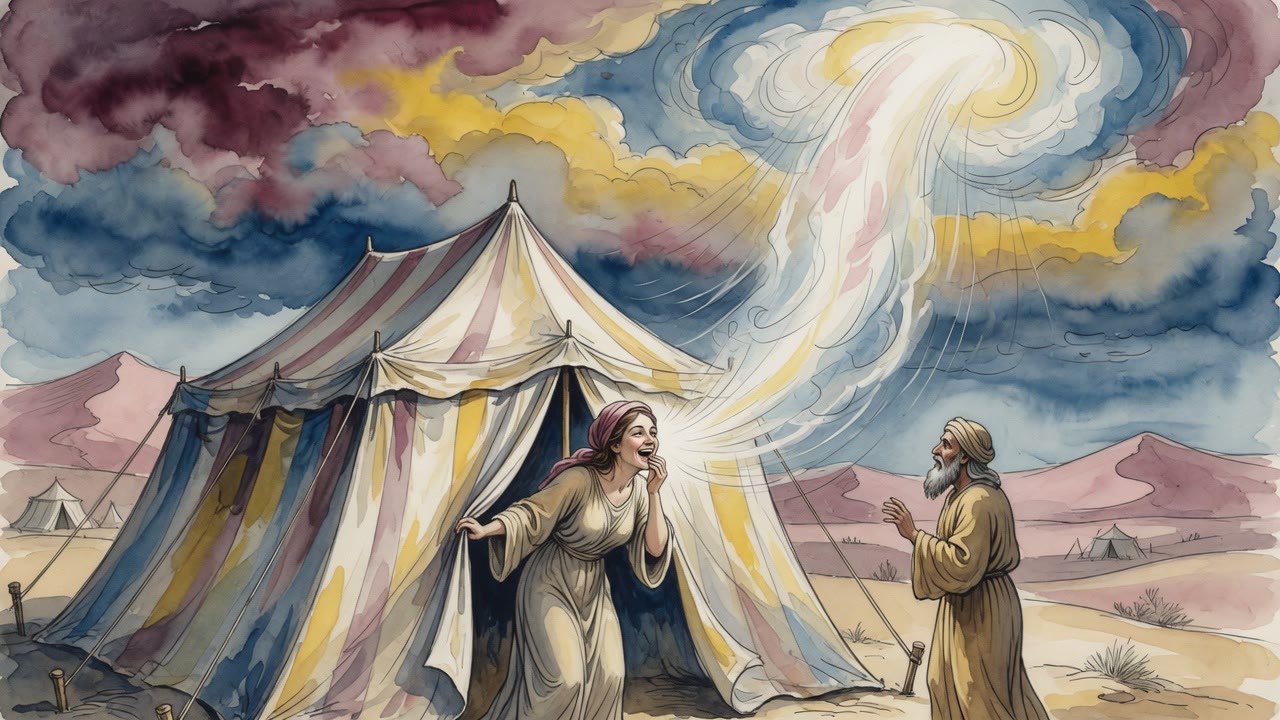
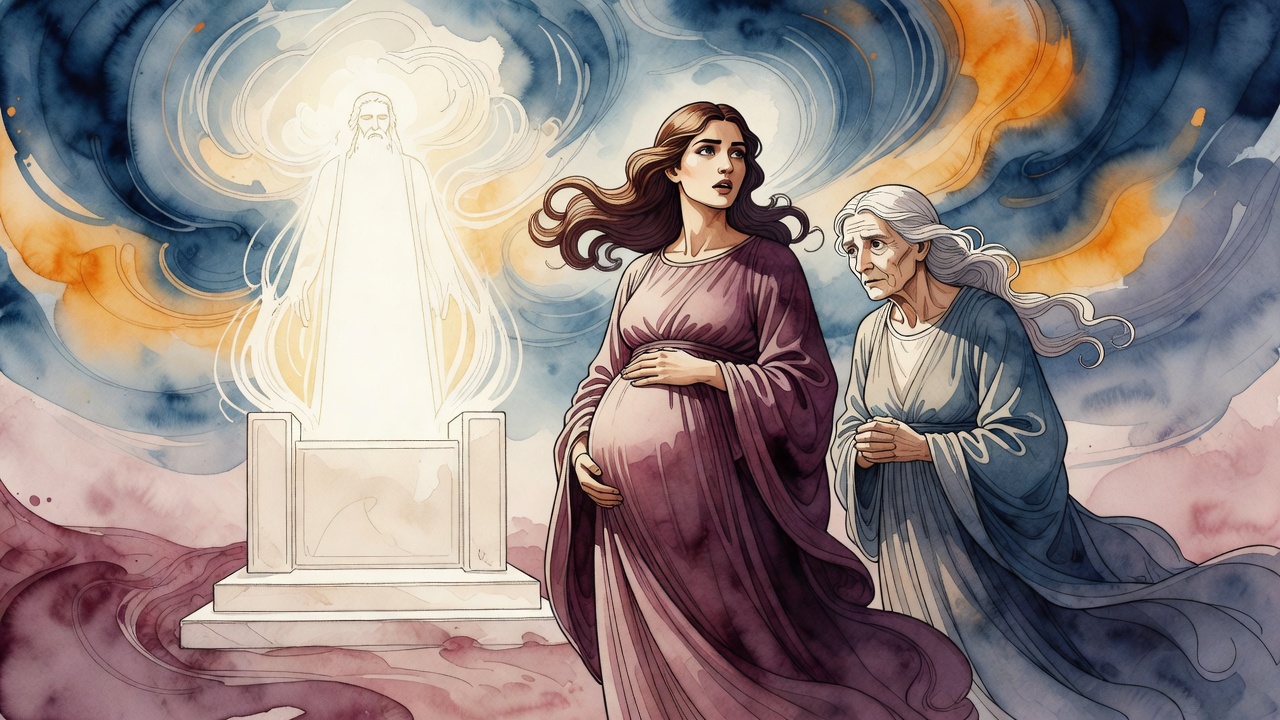
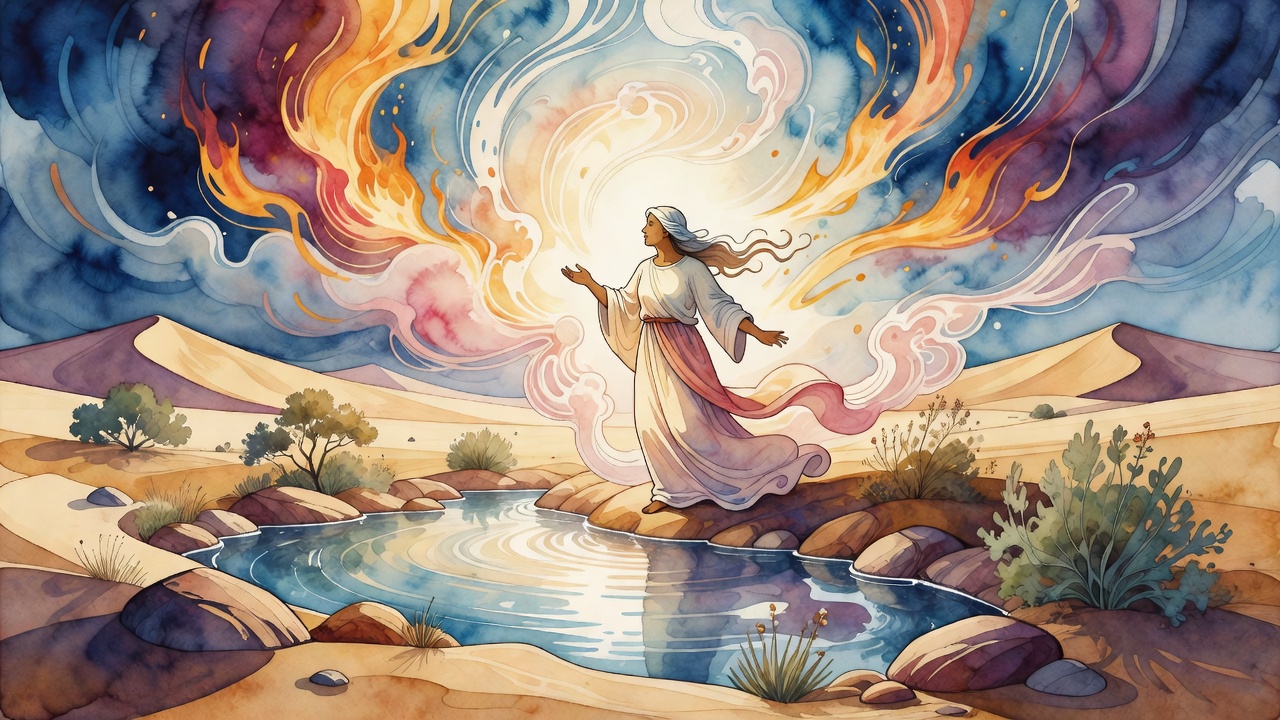
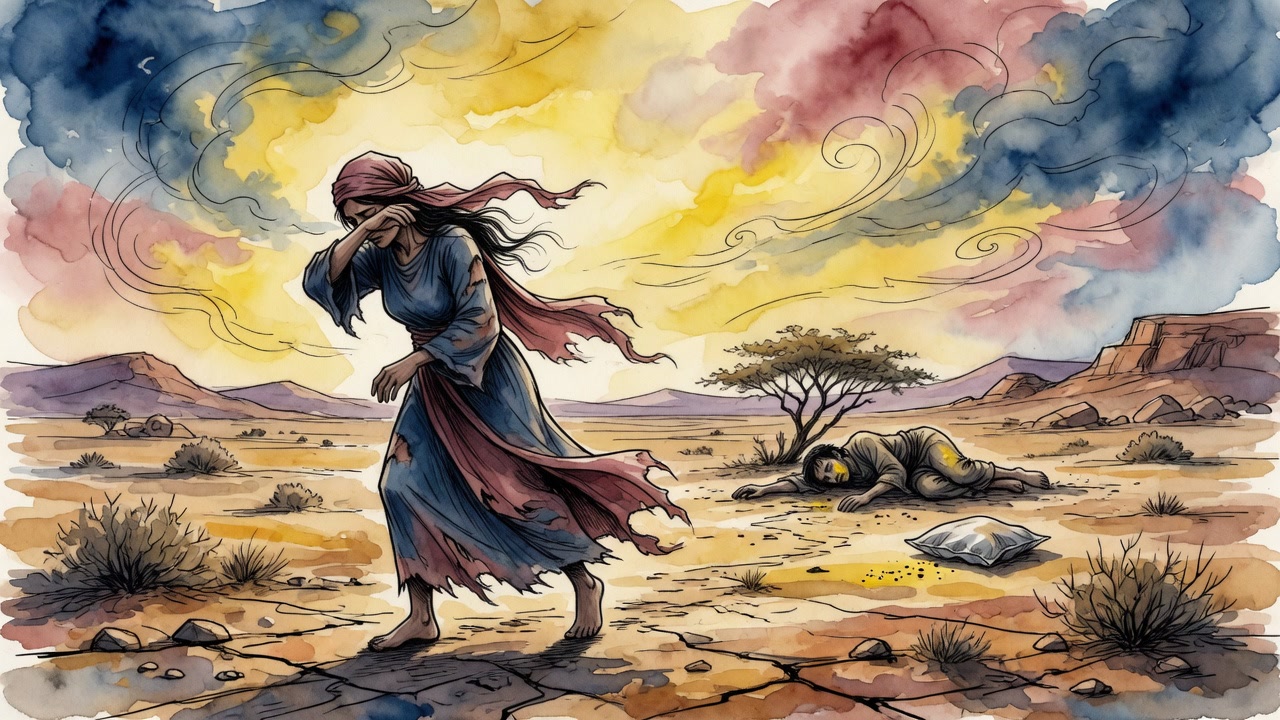
Pregnant and alone beside a spring on the road to Shur, Hagar did something no patriarch in the Torah managed to do. After the encounter in the wilderness, she named the One who had spoken to her. "El Ro'i," she called him. God Who Sees Me (Genesis 16:13). A runaway Egyptian handmaid, carrying a child whose father had handed her back to the woman who wanted to drive her out, stood in the desert and assigned a name to God from inside the experience of abandonment. The rabbis spent centuries trying to determine exactly what had happened in that encounter, and they never fully agreed.
The Fracture in Abram's Household
The story that led to the desert begins in the household of Abram and Sarai, in the gap between promise and fulfillment. Sarai was childless and the divine promise had not arrived. She gave her Egyptian handmaid to Abram to bear a child on her behalf. The arrangement was recognized practice in the ancient Near East. What the arrangement did not account for was the change that came over Hagar when she conceived.
Bereshit Rabbah 45, the foundational midrash on Genesis compiled in fifth-century Palestine, preserves the raw language of Sarai's complaint to Abram: "The injustice done to me is on you." Rabbi Yudan, in the name of Rabbi Yehuda bar Simon, explains what she meant: "You are committing an injustice of words against me." Abram had said something in Hagar's presence that diminished Sarai. More specifically, Hagar had begun to question whether Sarai was truly as righteous as she appeared, since if she were, why had she not conceived while Hagar had immediately? Sarai felt herself measured by her handmaid and found insufficient. She asked Abram to restore the proper order. He told her the matter was in her hands. What he did not do was intervene.
What followed was hard enough that Hagar ran. She left in the direction of Egypt, the country she had come from, and she got as far as a spring on the road to Shur. Bereshit Rabbah notes that the angel found her specifically at the spring "on the road to Halutza." The place was on a route, not in a void. She was going somewhere. She had not simply collapsed. She was leaving.
What the Angel Actually Said to Her
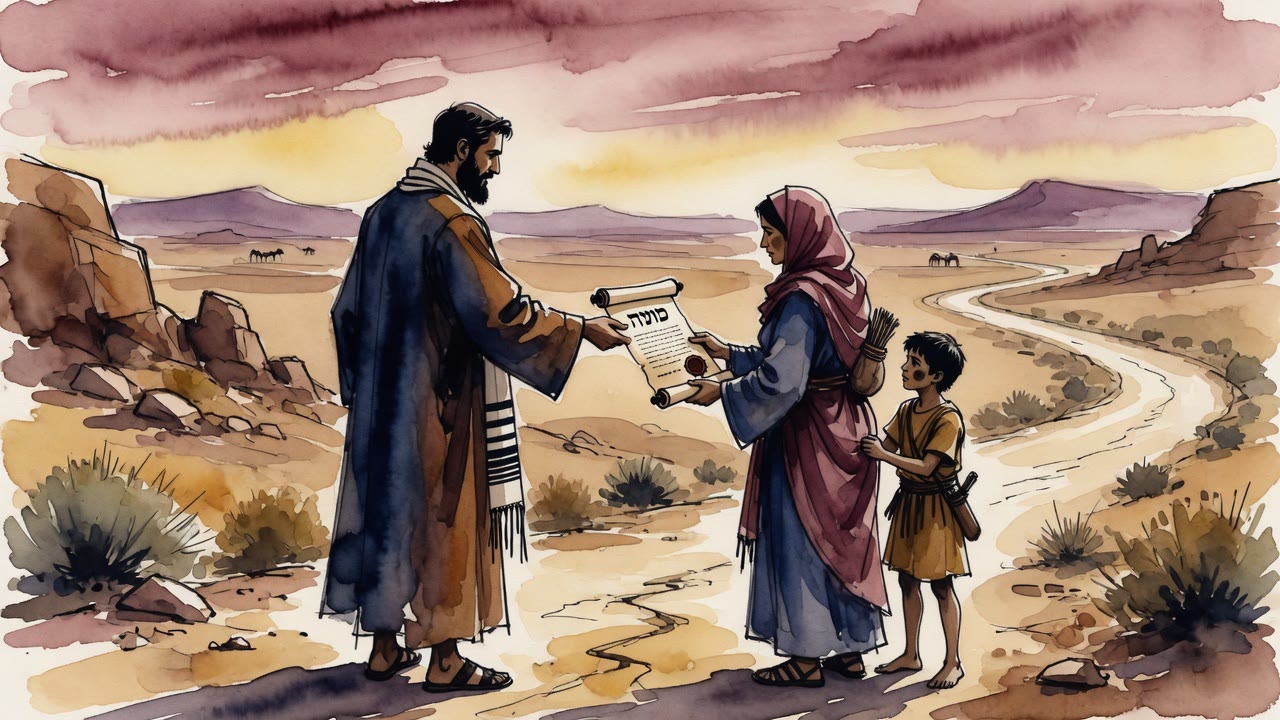
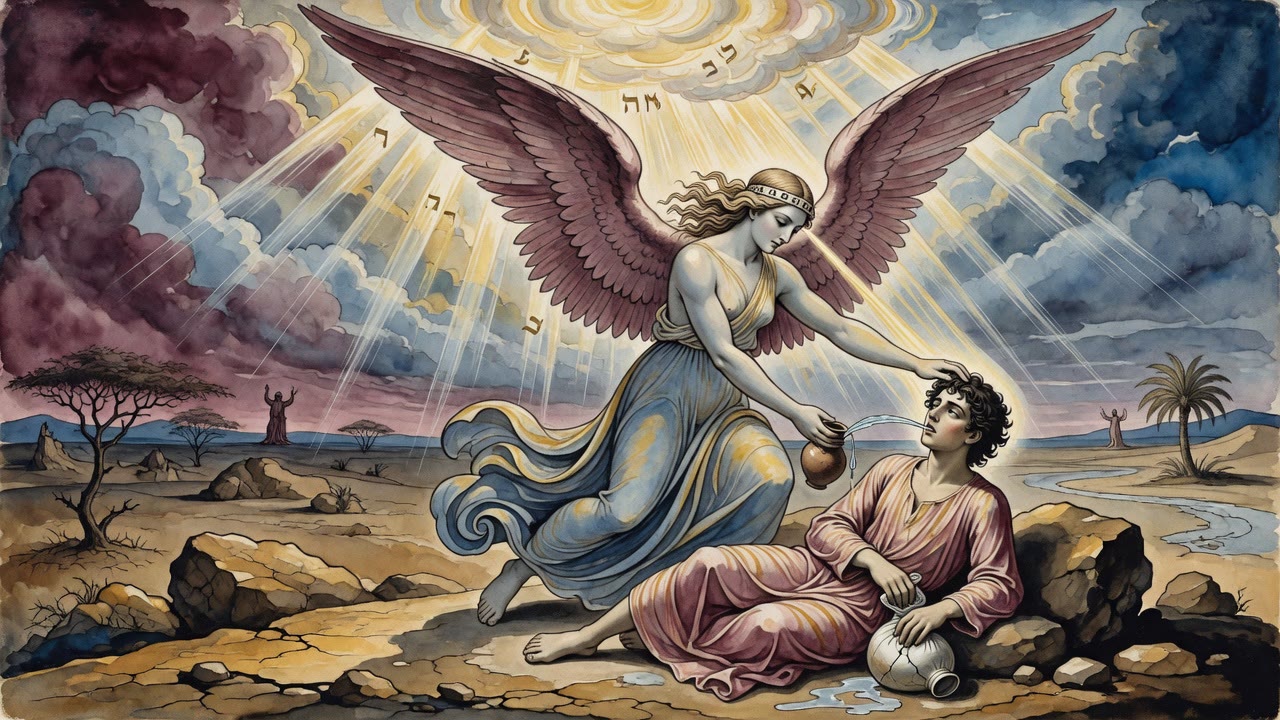
The angel's message, when it came, was not rescue. "Return to your mistress and be humbled beneath her hands." Bereshit Rabbah finds significance in the precision of the address: "Hagar, Sarai's maidservant." The angel reminded her who she was and where she belonged before telling her what to do. The midrash adds an observation: "if one has an address, one can be held accountable." Hagar had an identity. She was not dissolved into the wilderness. The naming preserved the possibility of return.
The reason the angel gave, at least in part, was what lay ahead. He promised her a son whose name would be Ishmael, for God had heard her affliction, and he promised her descendants beyond counting. The promise was not conditioned on her obedience. It was given before she agreed to go back. Then he said: go back. And she went.
The Midrash of Philo, a distinct interpretive work sometimes associated with Philo of Alexandria's Biblical commentary tradition, asks the uncomfortable question that Bereshit Rabbah passes over: why would a divine messenger tell someone to return to a situation of suffering? The answer the Midrash presses toward is that the return was not acquiescence. It was the path through which the promise would be fulfilled. Ishmael would be born inside Abraham's household. The covenant, even if it ran through Isaac, would acknowledge Ishmael's existence within its boundaries.
El Ro'i and the Question of the Name
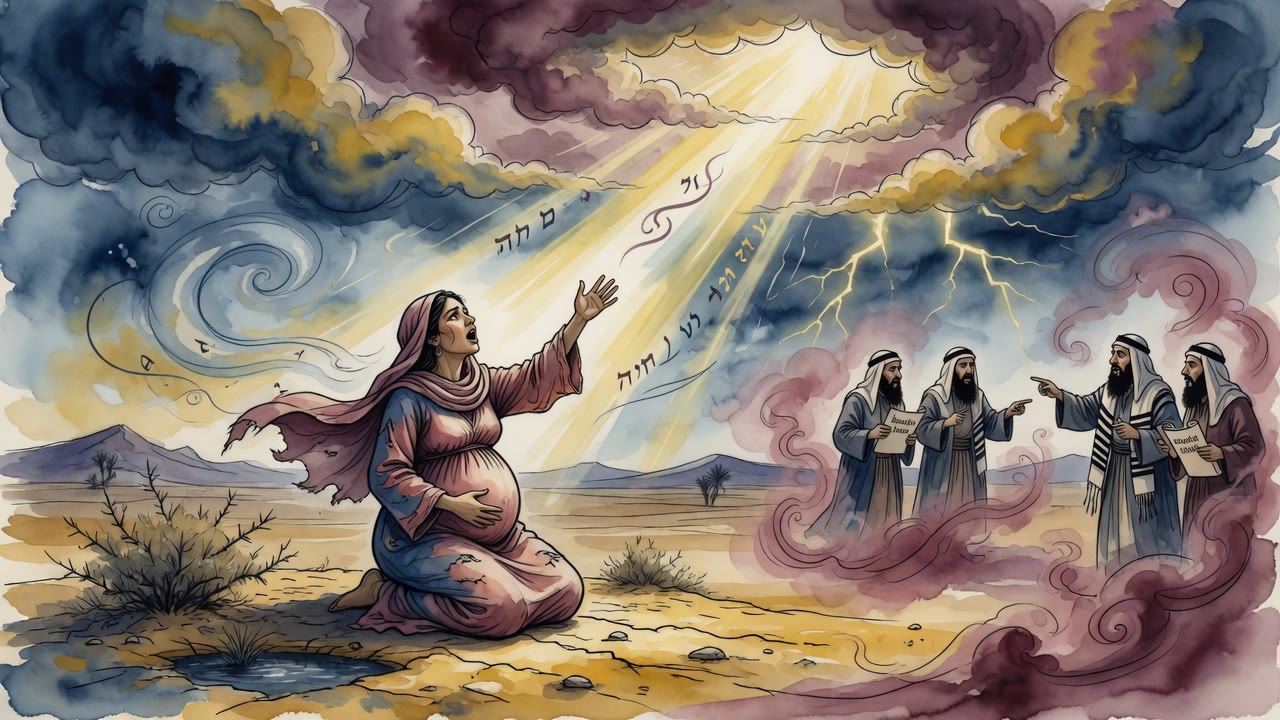
Genesis 16:13 creates a grammatical puzzle that the rabbis could not leave alone. Hagar "called the name of the Lord who spoke with her" El Ro'i. But was it the Lord who spoke with her, or an angel speaking on behalf of the Lord? Bereshit Rabbah records a dispute with several positions. One view, attributed to Rabbi Yehoshua citing Rabbi Nechemiah in the name of Rabbi Idi, holds that Hagar's interaction was mediated through an angel, not direct divine speech. A second tradition, attributed to Rabbi Eleazar citing Rabbi Yose b. Zimra, proposes that even when Scripture says God spoke to Rebecca, the speech was mediated by Shem son of Noah as an intermediary.
The Midrash of Philo addresses the promise of Hagar's uncountable descendants specifically. The phrase "it shall not be numbered for multitude" is not merely a description of large numbers, the text argues, but a deliberate signal about the nature of the blessing. The descendants of Ishmael would be spread so widely across the world, so diffused among the nations, that no single counting could capture them. The phrase is designed to say something about the kind of presence they would have in history: dispersed, pervasive, impossible to hold in a single census. The Midrash of Philo 9 takes this seriously as a statement about the shape of the promise.
← All myths