Shem Asked the Nations to Take the Torah for Four Hundred Years
If my Torah had been among the ten generations before this, God told Shem, I suppose I would not have drowned the world. Go and ask the nations.
Table of Contents
 Click for full size
God Sent Him Out With One Question
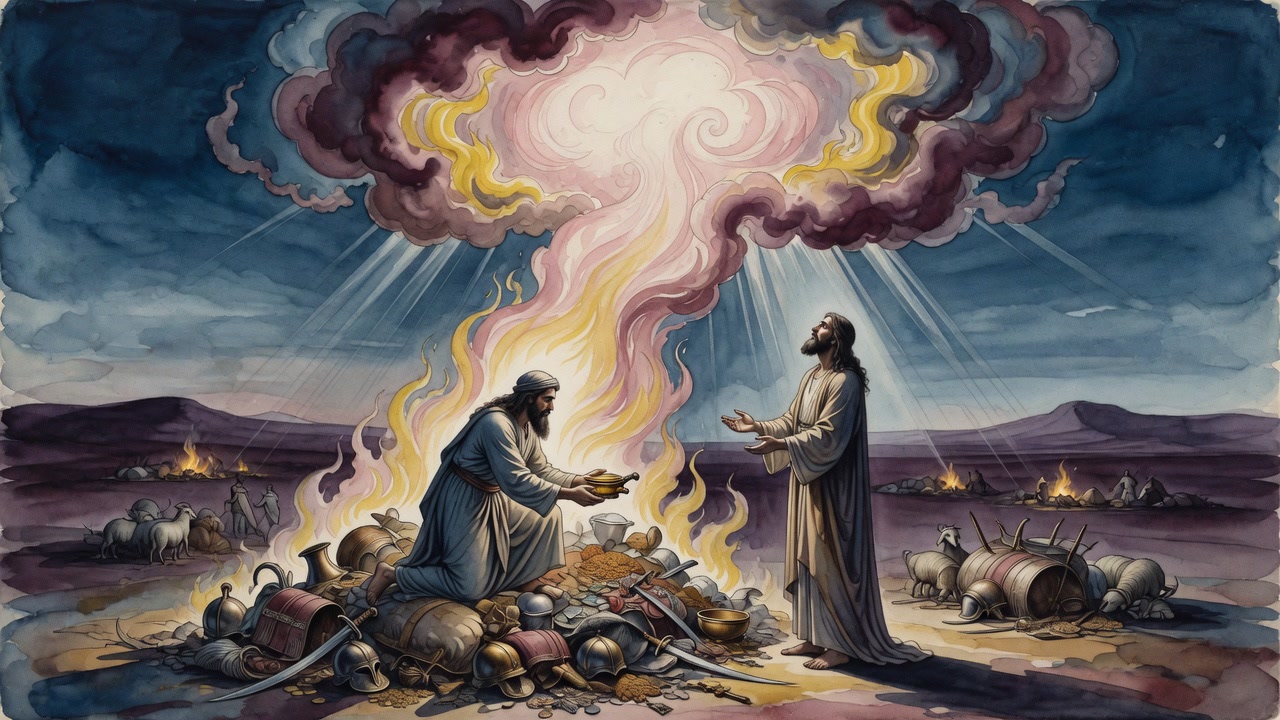
The water had gone down and the ground was still soft when God spoke to Shem.
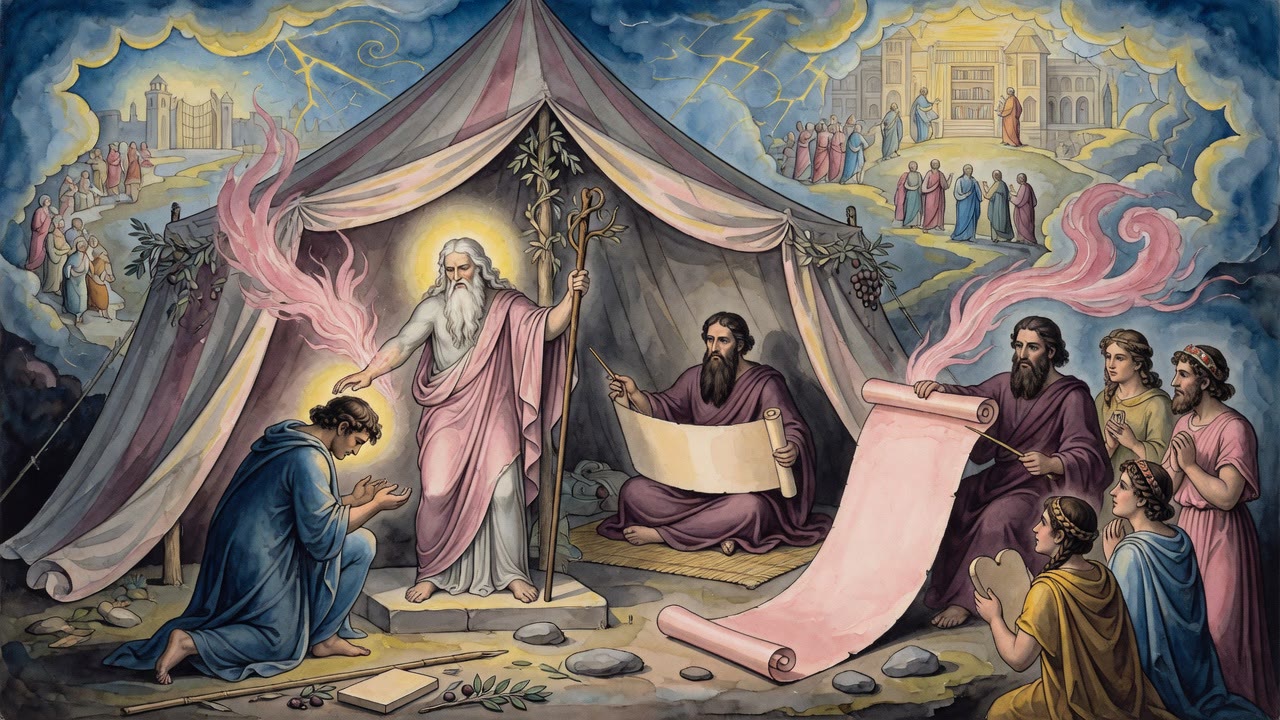
"Shem, if my Torah had been among the ten generations before this, I suppose I would not have destroyed the world with a flood. Go now. Announce my revelations to the nations of the earth. Ask them whether they will take my Torah."
So the second son of Noah walked out to ask a question of people who had just buried a world. Every family he came to was descended from the eight who had ridden out the year on the water. Their grandparents had watched it happen. He was not arguing with skeptics. He was standing in front of witnesses.
What He Was Carrying
Rabbi Yose used to say it in six words. Woe to the creatures, who see and do not know what they see. Who stand and do not know what they are standing on.
What they were standing on was pillars. The pillars rest on water. The water rests on mountains. The mountains hang in the wind. The wind hangs in the storm. And the storm hangs from the arm of the Holy One, blessed be he, and has nothing under it at all.
Over their heads there were seven of them. Vilon does no work whatsoever. It comes in at dawn and goes out at dusk and renews the work of creation every single day. Rakia holds the sun and the moon and the stars and the constellations, nailed where they are. In Shechakim there are millstones, and they turn, and what they grind is manna for the righteous. In Zevul there is a Jerusalem and a Temple and an altar already built, and Michael the great prince stands at it and offers on it. In Ma'on the companies of ministering angels sing all night and go silent all day, out of respect for Israel, so that Israel's praise can be heard first.
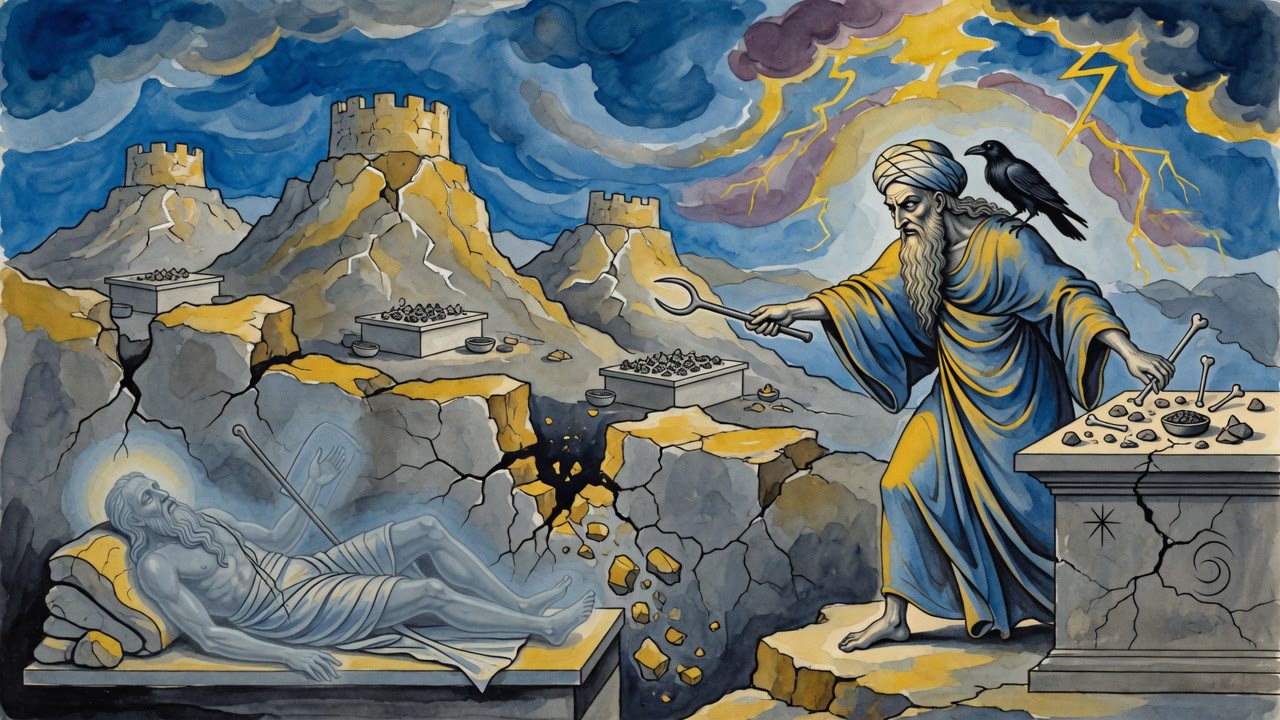
Machon is a warehouse. Snow is kept there and hail is kept there, and there is a loft of harmful dews and a loft of drops, and a chamber for the whirlwind and the storm, and a cave full of vapor, and the doors of all of it are made of fire. David asked God for mercy on the world and had those storerooms brought down to earth, because he said a thing that is evil should not lodge with a God who takes no pleasure in wickedness.
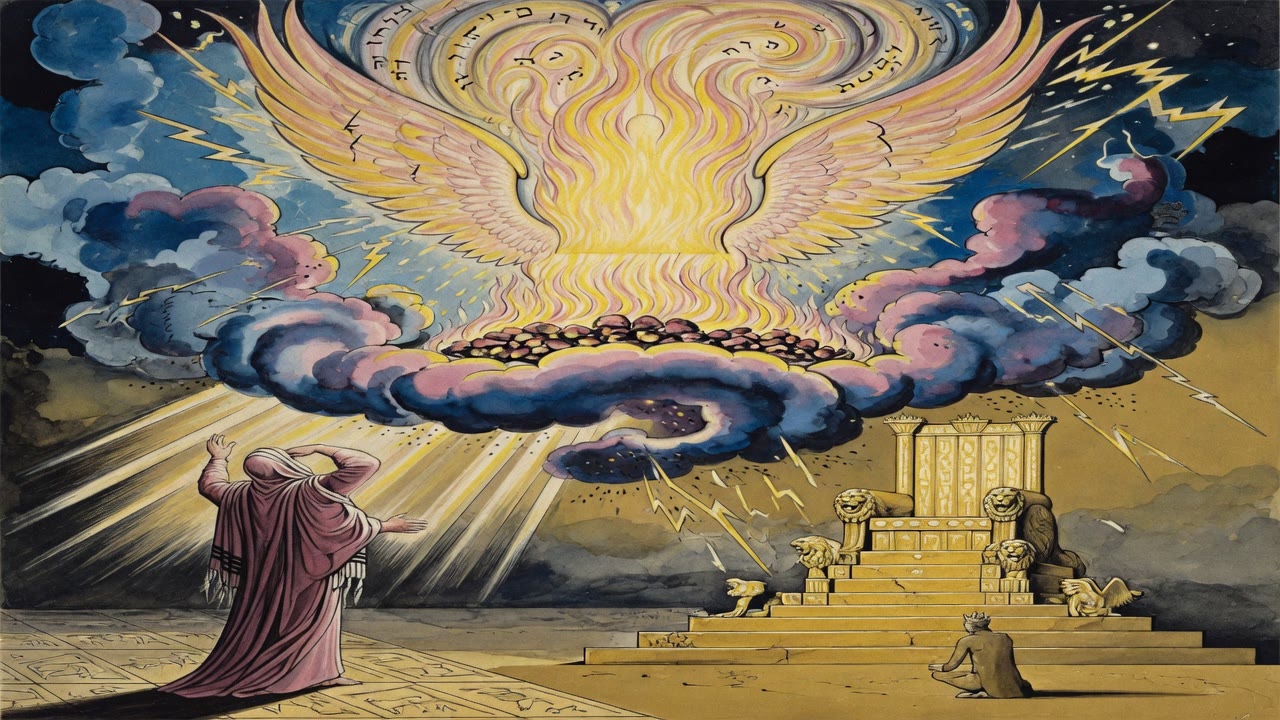
Aravot is the top. Righteousness is there, and justice, and charity, and the treasuries of life and the treasuries of peace and the treasuries of blessing. The souls of the righteous are there. So are the spirits and souls not yet born. So is the dew God will use to bring the dead back up. The wheels and the fiery ones and the holy creatures are there, and the ministering angels, and the throne of glory, and the living King above all of it, with darkness and cloud and thick fog wrapped around him.
This was the offer. A man could come out of a flooded field and be told the whole architecture, floor by floor, up to the room where the souls of the righteous are kept.
The Light That Had Already Been Taken
Ten things were made on the first day. Heaven and earth. Formlessness and void. Light and darkness. Wind and water. The measure of day and the measure of night.
The light made on that first day was not the sun. A man could stand inside it and see from one end of the world to the other. Then God looked ahead at the generation of the flood and the generation that would build the tower, saw what their deeds were going to be, stood up, and put the light away where they could not get at it.
The world itself had needed handling. At the beginning it kept spreading, unwinding like two balls of warp thread running out, until God shouted at it and it stopped where it was. That is what the name El Shaddai carries. I am the one who said to the world, enough.
The people Shem was sent to were the children of the generation the light had been hidden from. He walked into their fields carrying an account of a house they could no longer see the top of.
Four Hundred Years of No
He kept at it for four centuries. Four hundred years of walking into settlements and asking the same question, and the nations of the earth did not take it.
Prophets came after him. Job, and Eliphaz and Zophar and Bildad and Elihu, all of them out of Nahor, Abraham's brother, by Milcah. Balaam came out of the same family last of all, given a gift the size of Moses' own so that no nation could ever claim it had been shortchanged. He used it to talk, and his talk nearly ended the world, and after him the gift was not given to the nations again.
A Prophecy Spoken Over a Newborn
Ten generations ran from Noah to Abraham, and every one of them provoked God, and God held his hand the whole way down the list.
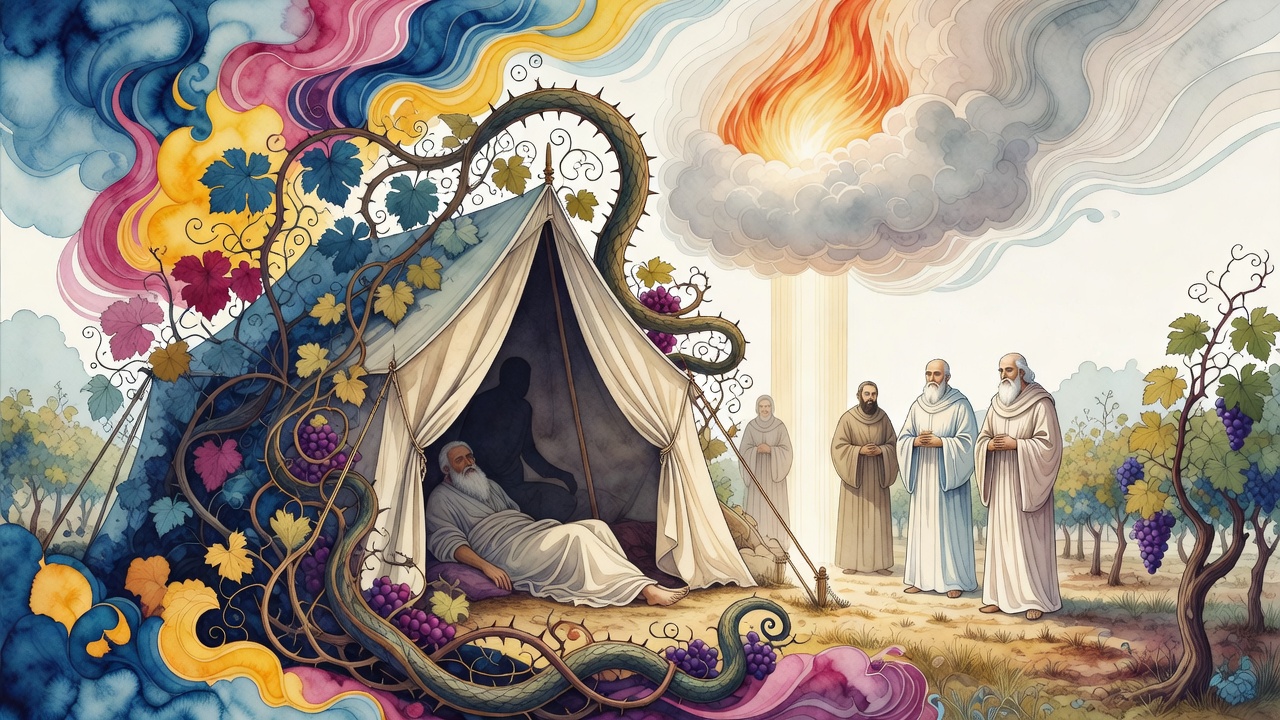
Then Reu had a son and called him Serug, and standing over the infant Reu said something nobody in the room could have used yet. "From this child, in the fourth generation, one shall be born who will set his dwelling above the highest. He shall be called perfect and spotless. He shall be the father of nations, and his covenant shall not be dissolved, and his seed shall be multiplied forever."
Shem had gone to everyone and been turned down by everyone. The offer did not get louder. It got smaller. It shrank down to one man, four generations off, still unborn, who would collect the reward of all ten generations that had refused it.
← All myths