Hagar Was Pharaoh's Daughter Who Chose a Tent Over a Palace
The king of Egypt sent his daughter out with Sarah. Years later, pregnant and alone, she named God El-Roi at a well in the desert.
Table of Contents
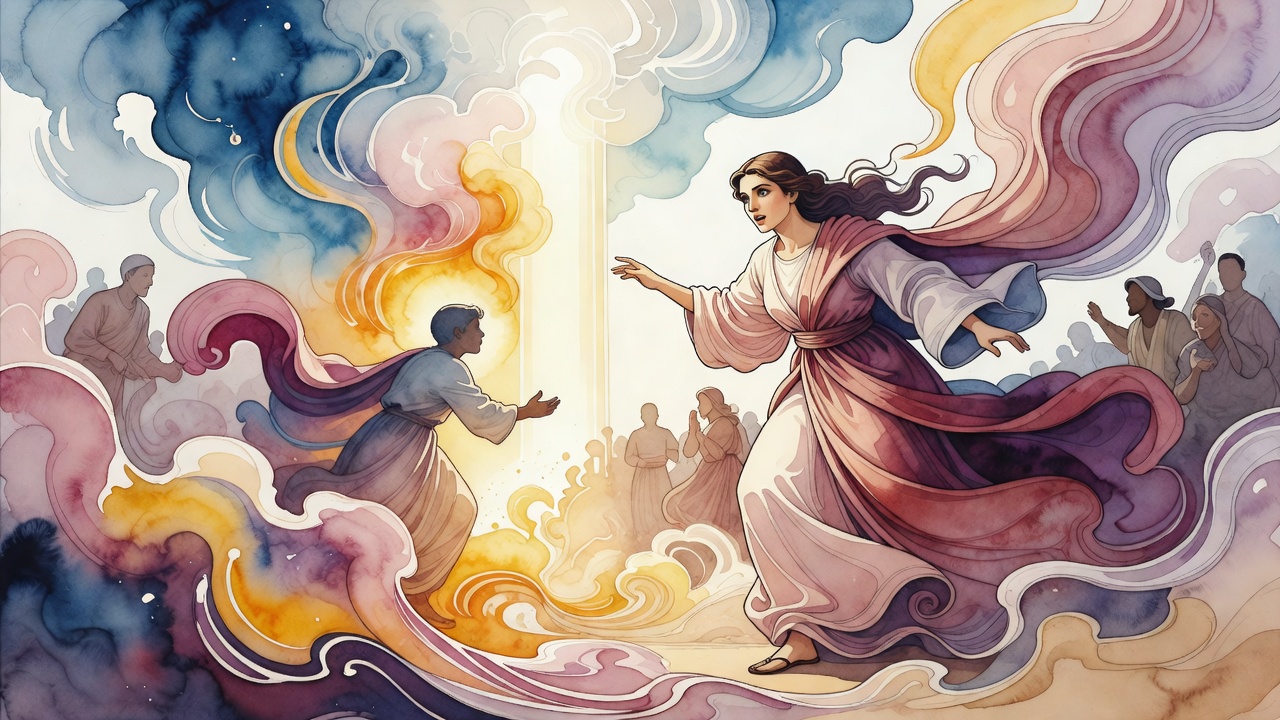
The plagues had emptied Pharaoh's house. Servants lay sick in the halls. The king who had taken Sarah into his rooms now wanted her gone, and the God who had done this gone from his threshold.
 Click for full size
He looked at his daughter. He made a king's bargain out loud.
"It is better for my daughter to be a servant in the house of this righteous man than a mistress in any other house."
He sent her with Abraham and Sarah. The girl who left Egypt was not a court maid. She was the king's daughter, paid for the night God struck Pharaoh's house when he took another man's wife (Genesis 12:17).
The Tent That Was Not a Palace
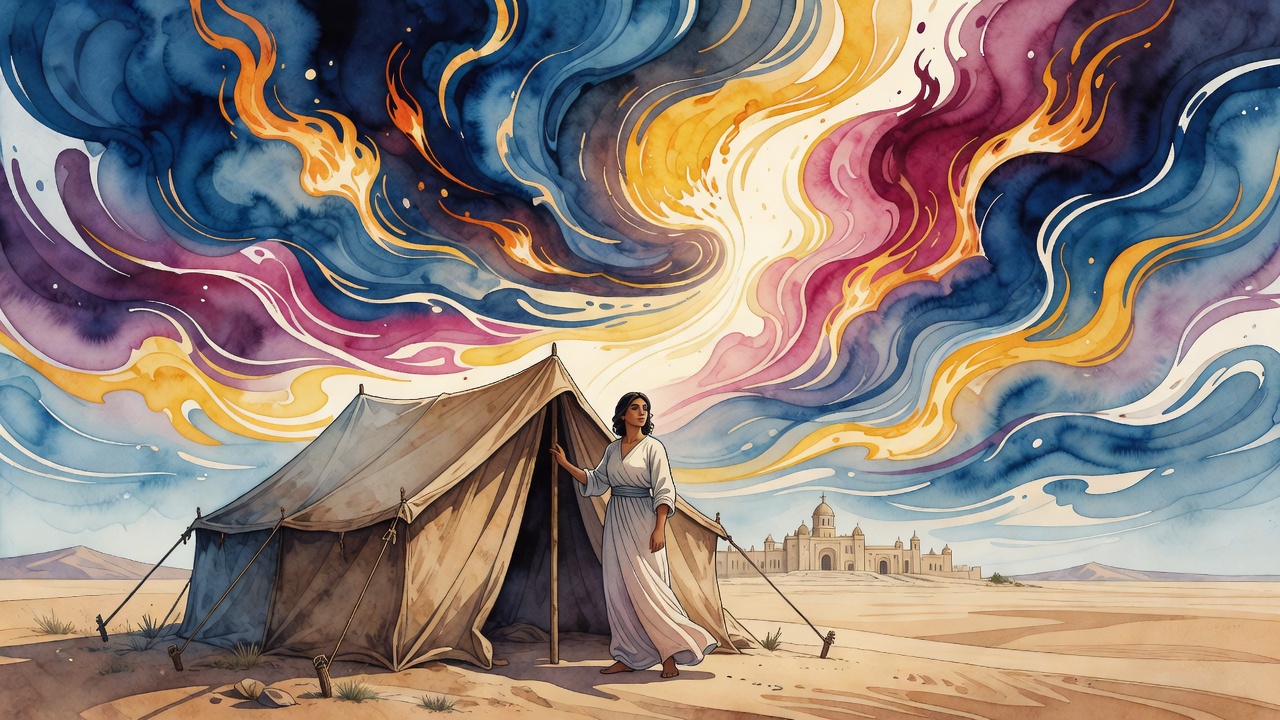
Hagar walked into dust, goats, and a God she had not yet named. No throne. No Nile. Sarah's word ran the tent. The household called her a shifchah, a handmaid. It was not the word her father had used when he gave her away.
Years passed. Sarah still had no child. She took Hagar by the wrist and put her into Abraham's bed so the house would have an heir. Hagar conceived. Then the tent turned.
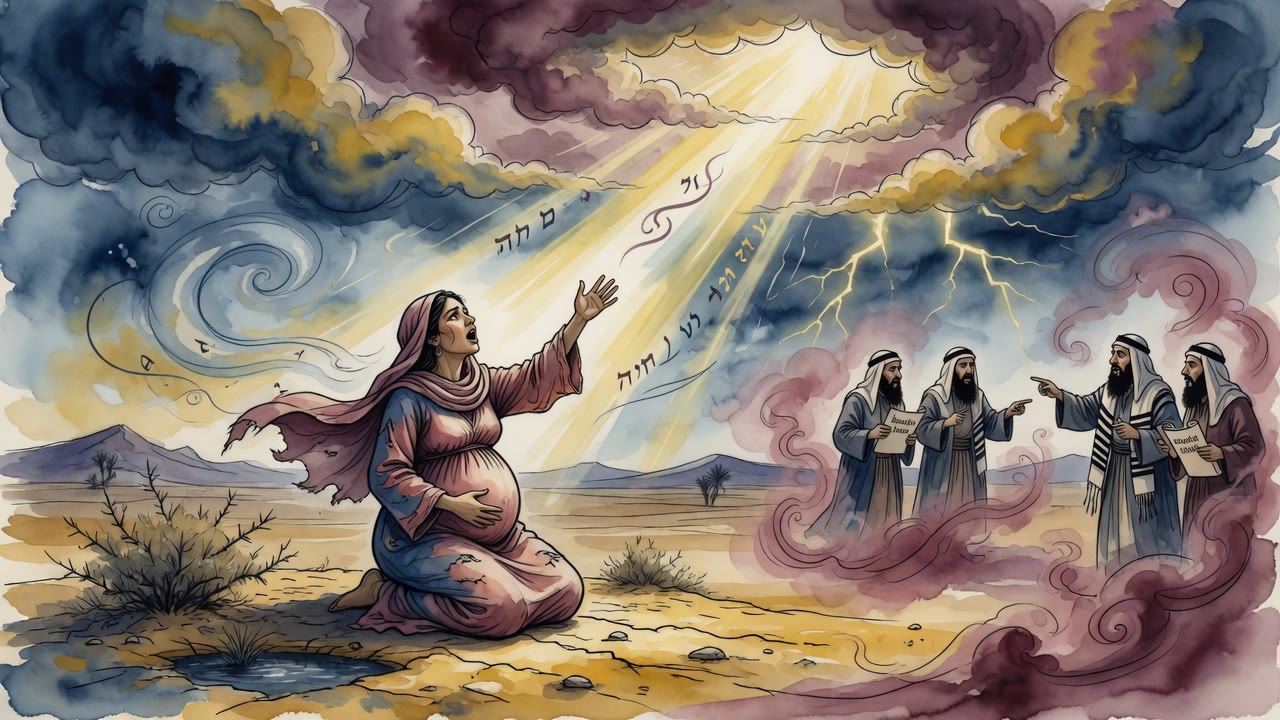
The pregnant girl walked like someone who had been a princess once. Sarah would not bear it. She spoke to Abraham. He told her the girl was in her hands. Sarah made the days hard enough that the road out of camp looked kinder than the rugs inside.
Hagar packed a skin of water. She did not ask permission. She fled toward Egypt, pregnant, the skin slapping her hip with every step. The palace of her childhood lay that way. She chose the desert first because the tent had closed.
The Messenger Who Used Her Name
At a spring on the way to Shur a messenger of God found her and spoke her name.
"Hagar, Sarah's maid, where have you come from, and where are you going?"
She told the truth. She was running from her mistress.
"Return," the messenger said. "Submit under her hand. You will bear a son. Call him Ishmael, because the Lord has heard your affliction. He will be a wild ass of a man, his hand against every man, and every man's hand against him."
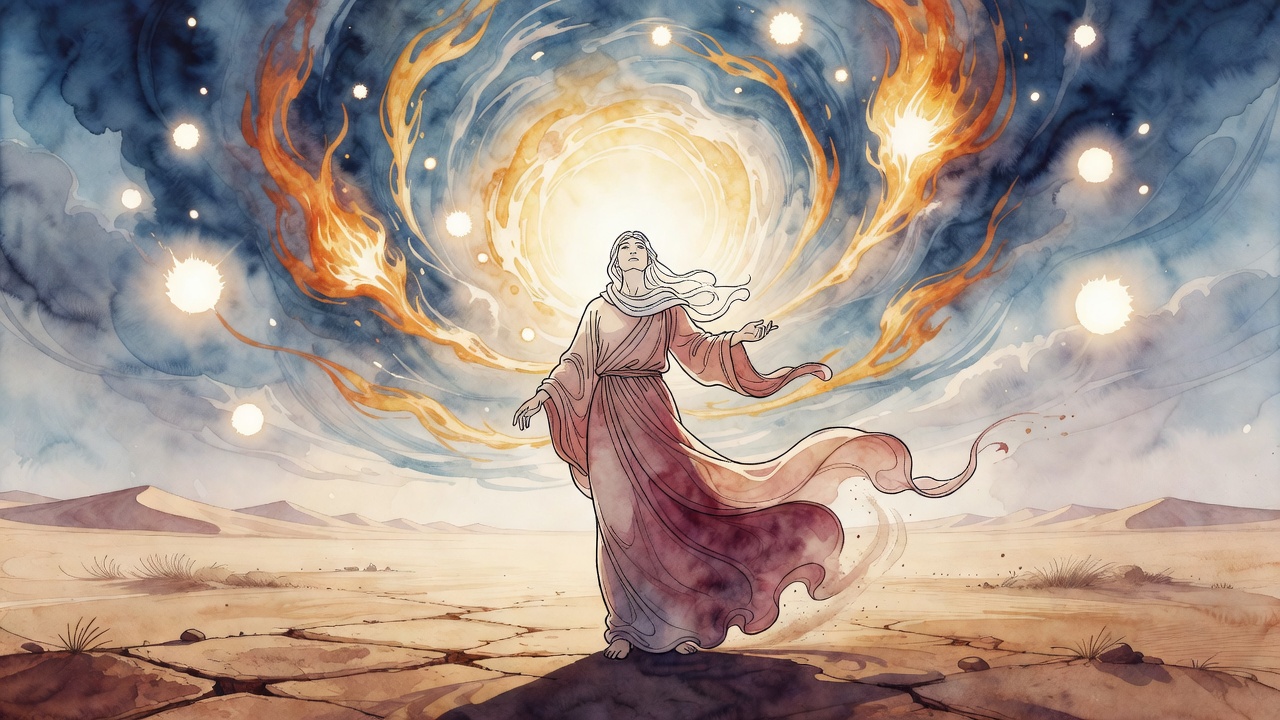
The spring made a small noise in the sand. Hagar stood with a name in her mouth that no priest in Egypt had taught her. She did a thing no patriarch in Genesis had done. She gave God a name.
"You are El-Roi," she said. "I have now seen the One who sees me" (Genesis 16:13).
The well took a name from her mouth: Beer-lahai-roi, the well of the living One who sees me. A king's daughter, sent as a gift, named God in sand where no palace priest had stood.
She Chose the Road Back
Egypt still lay ahead. A palace still had rooms. The messenger had not offered her those. He had offered her a son and a command to walk back into the tent that had driven her out.
She turned around. The goats, the dust, Sarah's eyes. She went back anyway. That was the choice her father could not make for her. He had paid her into Abraham's house. She paid herself back into it, carrying a name for God and a child the house had not wanted to admit was hers.
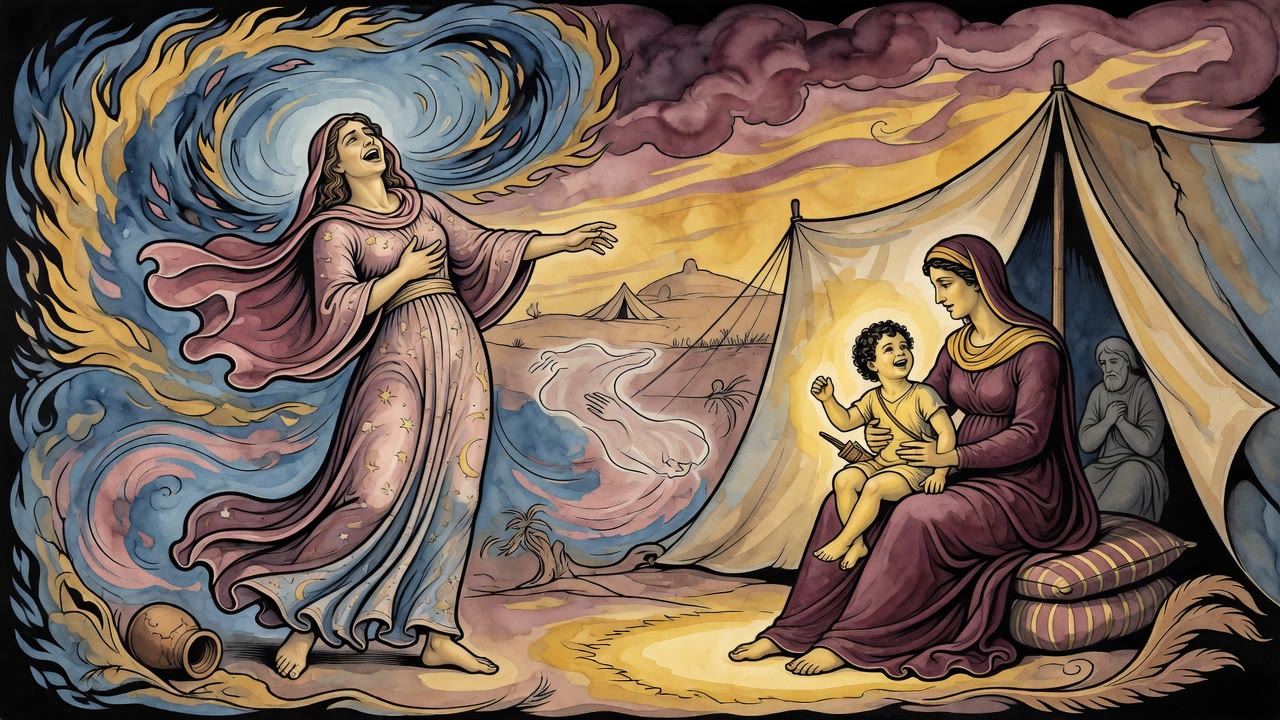
Ishmael was born. Abraham held him. For a while the tent had room. Then Isaac was born, and Sarah's heart had room for one son only.
Bread and a Bottle at Dawn
On the day Isaac was weaned, Sarah saw Ishmael laughing at the feast. She told Abraham to drive out the slave woman and her son, for the son of the slave would not inherit with Isaac. Abraham rose early. He took bread and a bottle of water, set them on Hagar's shoulder, and put the boy in her hand.
No speech. No blessing. The camp shrank behind them until the tents were a smear on the horizon.
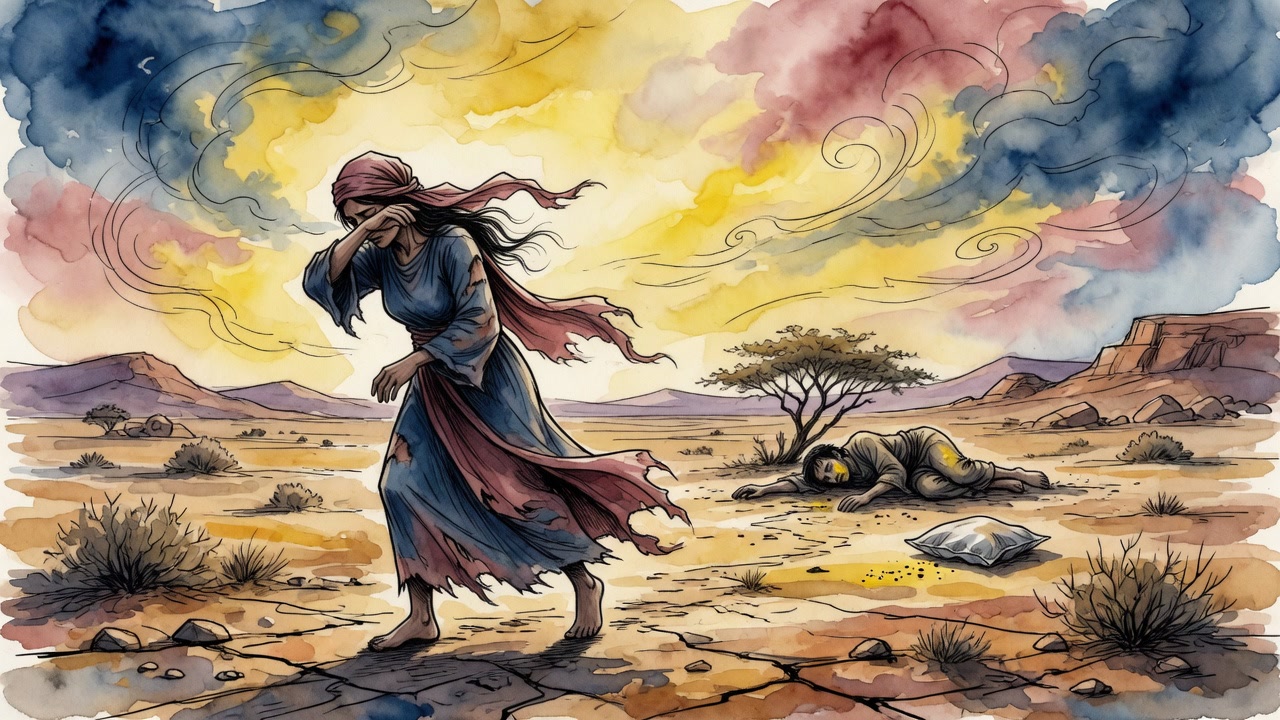
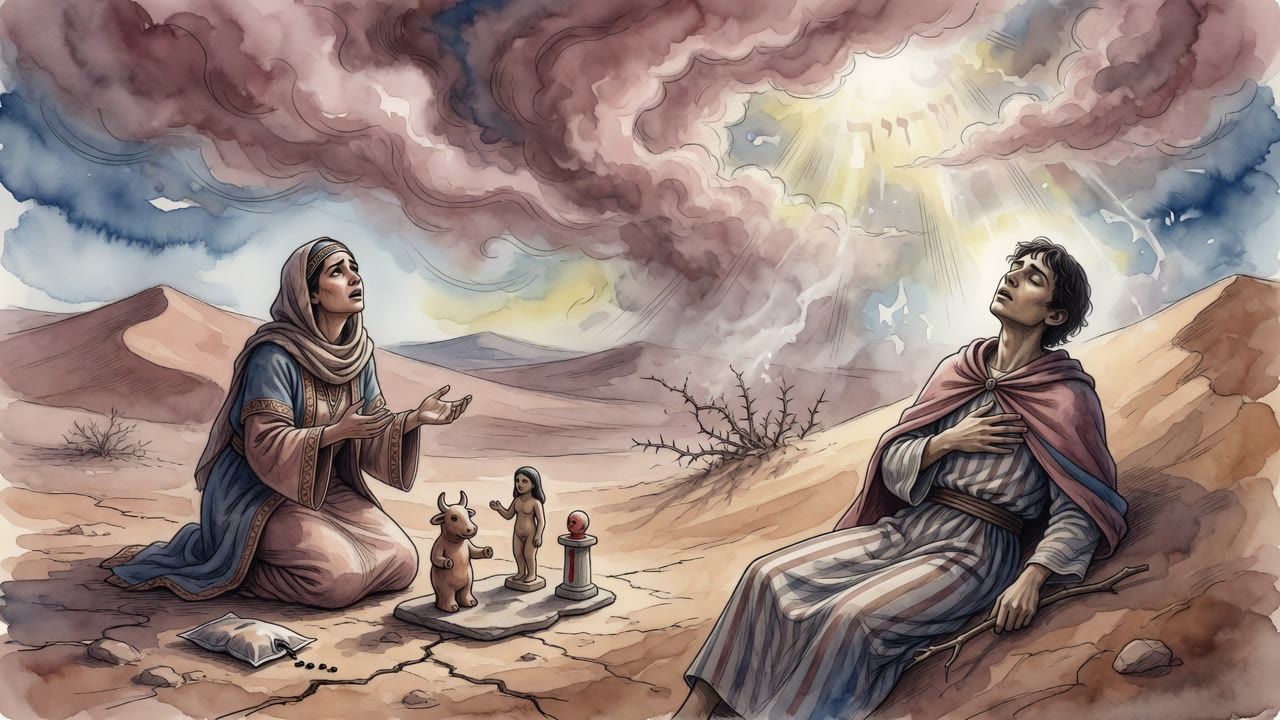
The water ran out. Heat sat on the boy's mouth. Ishmael fell. Hagar lifted him and carried him until her arms failed. She laid him under a bush and walked a bowshot away, because she would not watch him die.
She counted the steps. A bowshot is not far. It is far enough that a mother does not have to see the last breath. She put her back to the bush and sat. She lifted her voice and wept.
What Troubles You, Hagar
The messenger came a second time. Same wilderness. Same woman. A different grief.
"What troubles you, Hagar? Fear not, for God has heard the voice of the lad where he is."
God opened her eyes. A well was there, close enough that a woman who had already given her son up could miss it. She filled the bottle. She held it to Ishmael's mouth. He drank. He lived.
The God she had named at Beer-lahai-roi had seen her twice. Pharaoh's daughter lost a palace to enter Abraham's tent. She lost the tent and kept a well. What no court in Egypt had given her, the desert gave twice: a Name that answered when she said it, and a son who did not die under a bush.
← All myths