The Three Steps That Decided Jewish History
Nebuchadnezzar caught a disrespectful letter and ran to fix it. He took three steps. Gabriel stopped him. Those steps were the reason he rose to power.
Table of Contents
 Click for full size
The Secretary Who Read a Draft
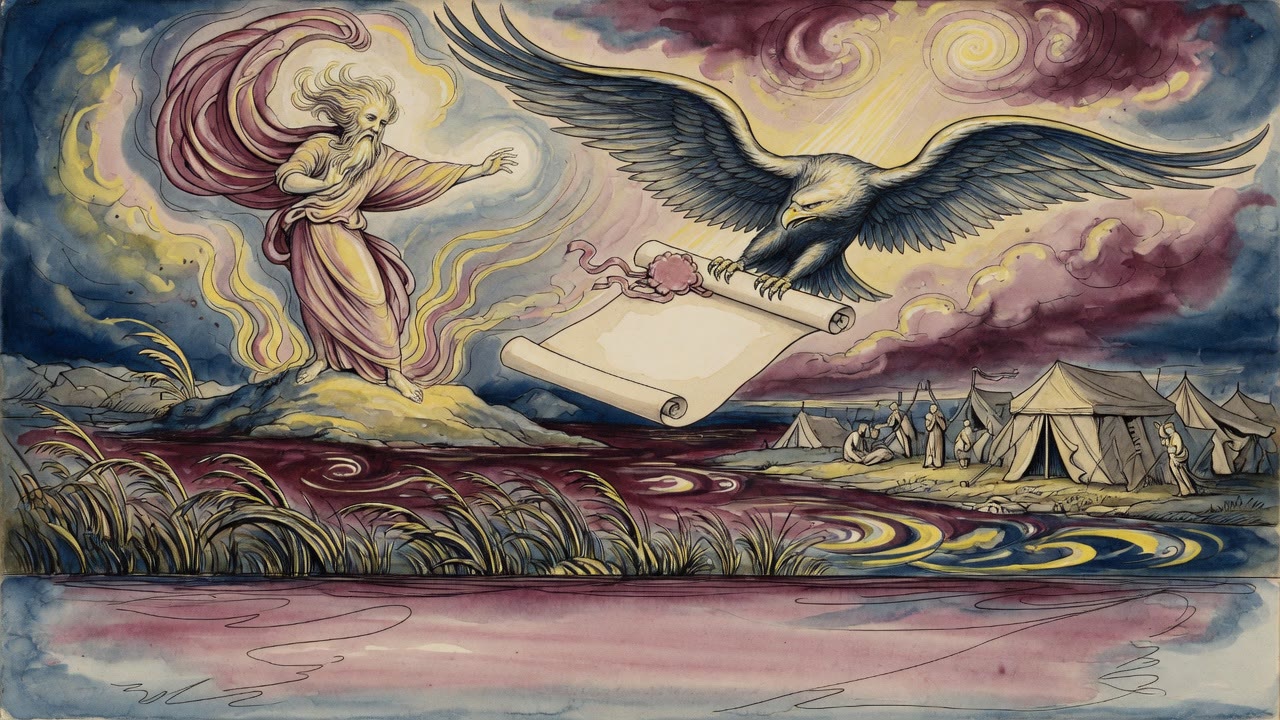
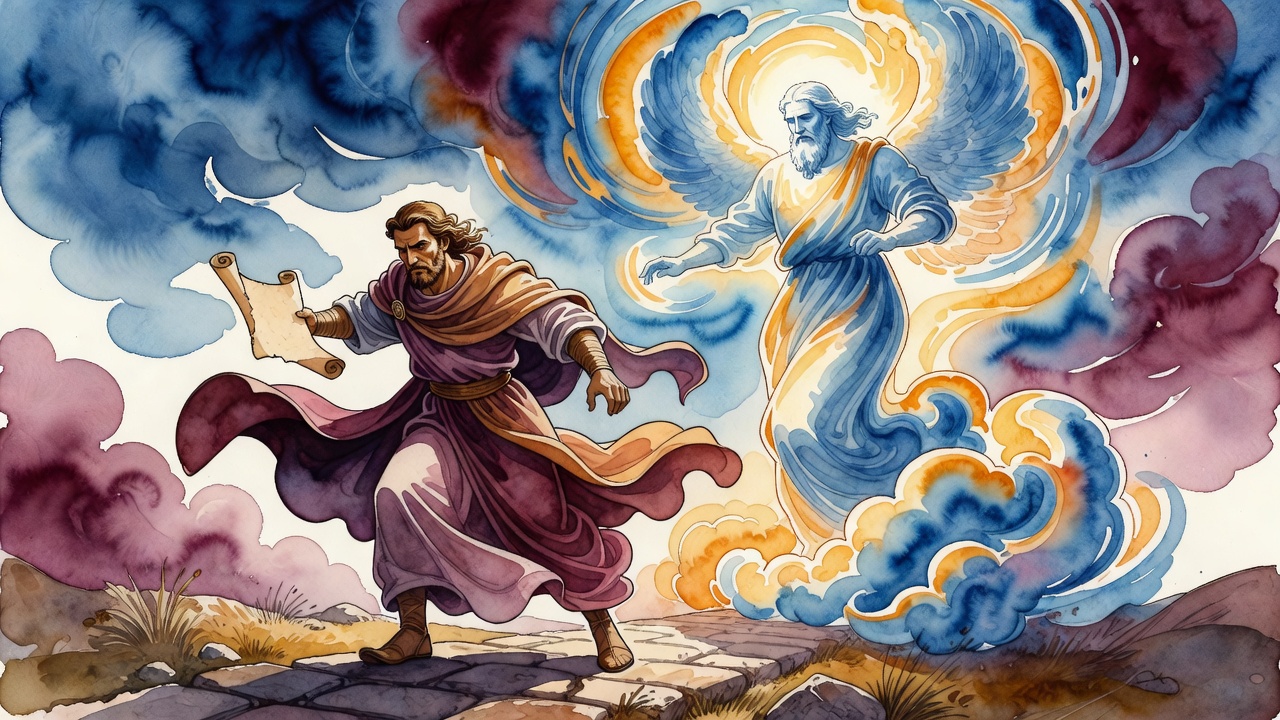
Nebuchadnezzar was not yet a king. He was a scribe in the court of the Babylonian king Merodach-baladan, a capable young man who understood bureaucracy and understood protocol. When the king dictated a letter to the Jewish king that named the Jewish monarch before the name of God, Nebuchadnezzar read the draft and stopped.
It was a small thing. A matter of ordering. The king had said: "Greetings to the king, and to his great God." Put the man before the deity, which was either carelessness or a deliberate slight, and either way it was wrong. Nebuchadnezzar noted it. "He is called the great God," he said. "His name should come first."
The messenger had already been sent ahead. Nebuchadnezzar ran after him to retrieve the letter and have it corrected.
He took three steps.
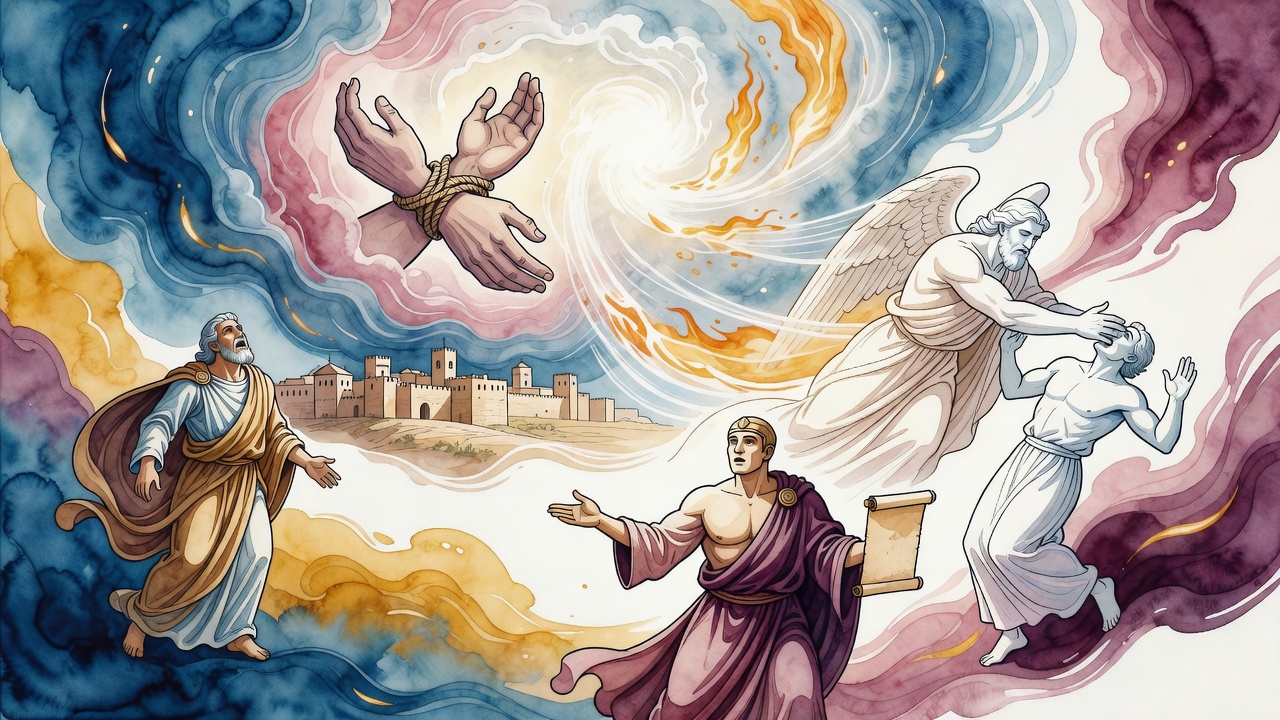
The angel Gabriel descended and stopped him.
What Three Steps Purchased
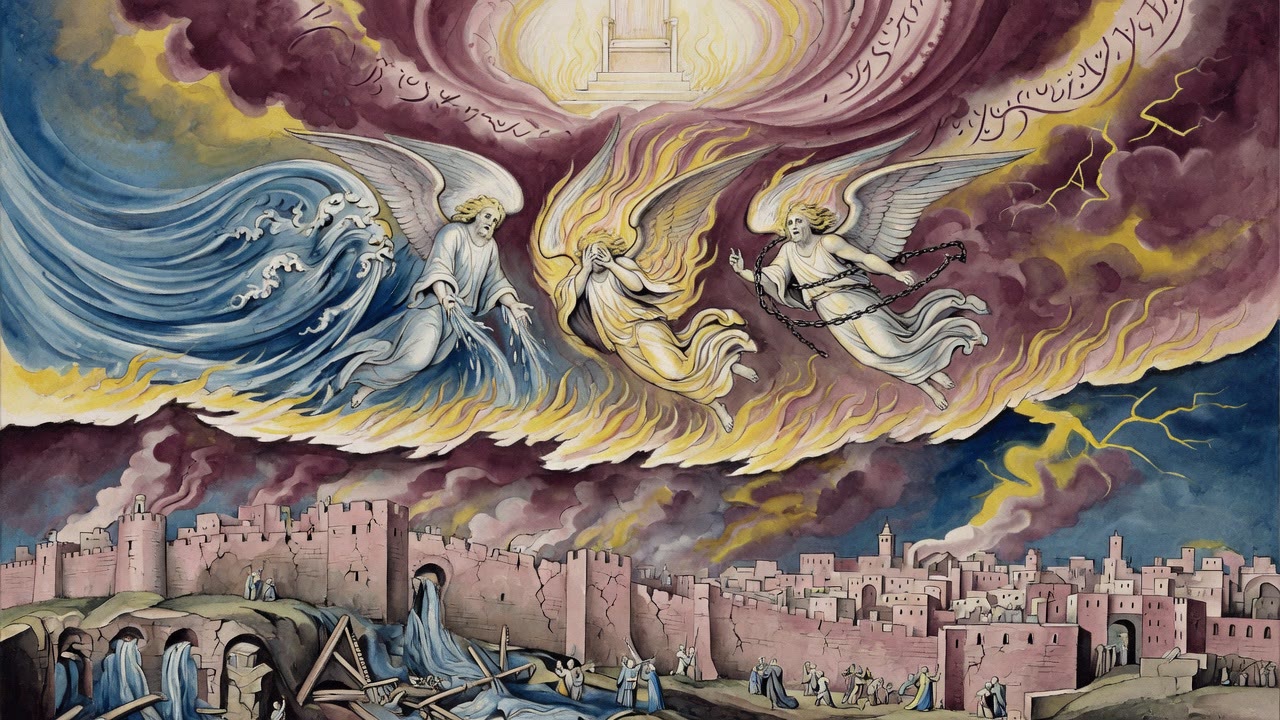
The logic that the tradition applies here is stark and precise. Those three steps, taken in genuine reverence for God's honor, with no audience and no benefit and no reason except that the thing was wrong and needed to be corrected, were the spiritual capital that purchased everything that followed. The power Nebuchadnezzar would exercise over Israel, the authority to destroy the Temple and drive the people into exile, the dominion that would define a generation of Jewish history, was bought with three steps taken before the man was anyone.
Gabriel stopped him not to punish him but to limit him. Had he taken four steps, or five, or run the full distance to the messenger, his power would have grown proportionally, to a degree that would have been catastrophic beyond any measure the tradition cares to describe. The mercy of the interruption was that Nebuchadnezzar received only the power his three steps had purchased, no more, and therefore the destruction he would eventually accomplish, as terrible as it was, was bounded by the precise length of a young scribe's sprint across a palace courtyard.
The Arithmetic of Consequence
This is the kind of moral accounting the rabbis were always doing, and it is more disturbing than it first appears. It does not say that Nebuchadnezzar's piety excused what he later did. It says that what he later did was calibrated by what he once, unknowingly, had done well. The three steps set a ceiling on how much damage could flow from him. Without them, there would have been no ceiling.
The Babylonian Talmud, tractate Sanhedrin, preserves the ruling that Nebuchadnezzar was rewarded for honoring God's name in that letter, and the reward was power. Power in this tradition is not unambiguous. It is a resource. It can be used to destroy, but even destructive power that flows from a genuine act of reverence carries the mark of that reverence in its limits.
The Man Who Freed Jeremiah
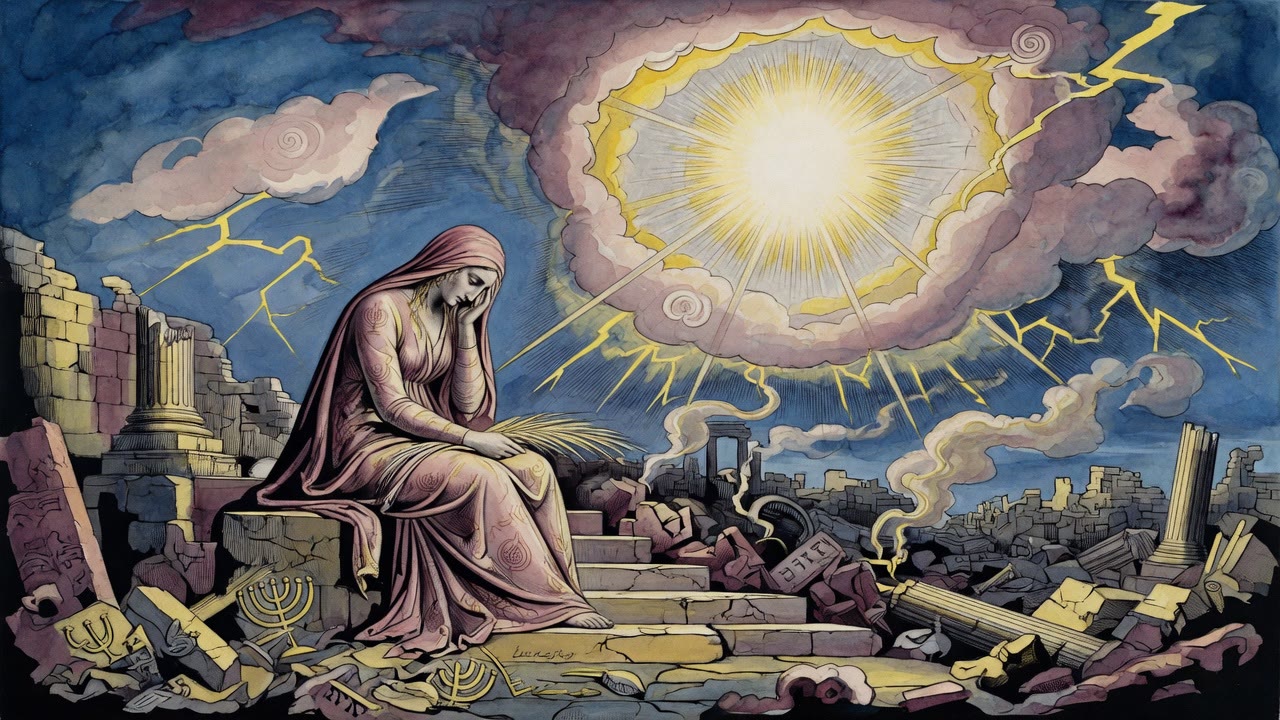
The same logic applies forward in Nebuchadnezzar's story. When the city fell and the king of Babylon finally stood in the ruins of Jerusalem, he received the prophet Jeremiah with a care that his reputation as a destroyer did not predict. He gave Jeremiah a choice: come to Babylon, or stay in the land with whatever scattered people remained. He gave him provisions. He gave him freedom. Tradition records that Nebuchadnezzar recognized in Jeremiah the same quality he had recognized in God's name on the draft letter decades before, something that could not be used, only honored.
He had built his power through conquest and terror. But the first thing he had ever done for the God of Israel, before he was powerful, before he was even a king, was run across a courtyard to correct a name in a letter. That act had preceded all the others. Gabriel had made sure he took only three steps instead of five. The shape of Jewish history under Babylonian rule was set by the length of a young man's run.
← All myths