Jonah Refused to Pray for Three Days Inside the Great Fish
Inside the fish, Jonah had light, space, and no urgency. He sat there for three days without praying once, until God sent a pregnant fish to change his mind.
Table of Contents
 Click for full size
The Fish Was Built Before He Was
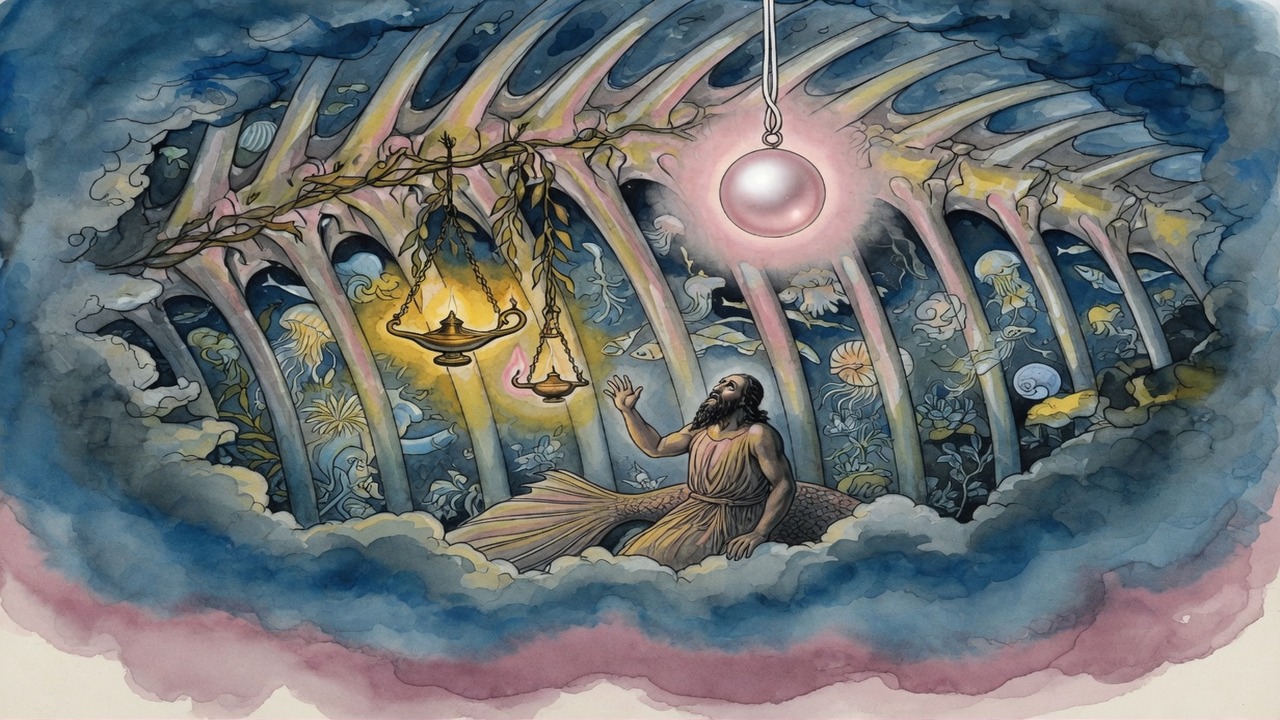
The fish had been made during the six days, finished and set swimming generations before there was a prophet to put inside it, and every measurement in it had been taken off a man who did not exist yet. Its eyes worked as windows, and a jewel hung in the belly burning like the sun at noon, so Jonah could see the whole floor of the sea through the eye-holes, the ridges and the trenches and whatever moved along them. There was room to stand in and room to walk in. A man could have prayed in there the way he prays in a large synagogue, with space on all sides of him.
Jonah sat down in it and said nothing at all.
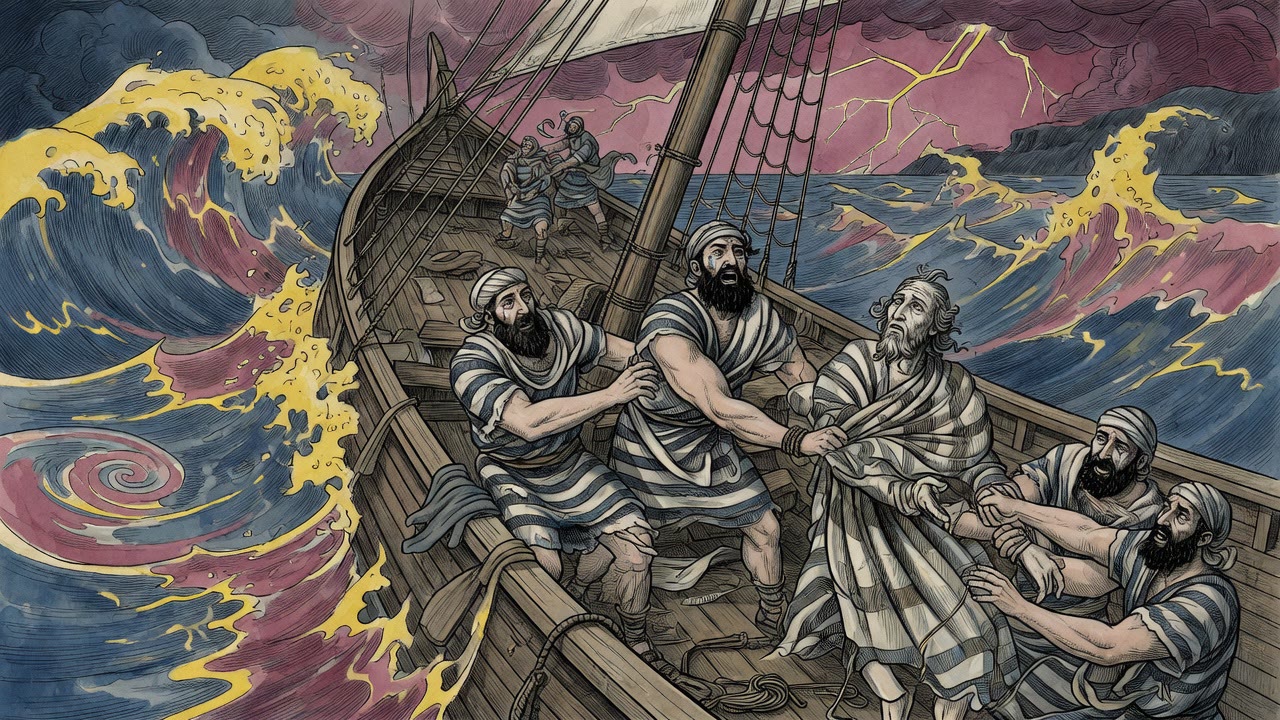
He had paid his own fare at Joppa to get out of the assignment, which is a thing a man does with his hands and his money and cannot pretend he did by accident. The sea had come for the ship, the sailors had thrown him over, and now he was warm and dry and lit and breathing, and the arithmetic looked to him like a verdict in his favor. Any sentence he started toward heaven was going to end with him agreeing to walk to Nineveh. So he kept his mouth shut and watched the sea floor go by.
He Would Talk to Leviathan
On the second day the fish told him its own news. Every fish in the sea, when its time is up, goes to Leviathan and is eaten, and this one's time was up. So it turned and swam toward the mouth.
Jonah did not pray then either. He argued. He put himself where the great creature could see him and said it straight: I came down here for you. It is my task to hook you in the world to come and slaughter you for the table of the just and the pious. Then he showed Leviathan the sign of the covenant cut into his own body, and because of that mark the thing that eats every fish in the ocean turned and went.
The fish, grateful and reprieved, gave him a tour. It carried him to the river the whole ocean pours out of, and along the seam of the sea bottom where Israel had walked between two standing walls of water, and down past the mouth of Gehenna, and to the edge of Sheol. Jonah looked into all of it. He had bargained with the monster of the deep and stood at the door of the underworld, but he had still not said one word to God.
Two Days of Silence
Day one went. Day two went. He was not choking and he was not in the dark and there was nothing wrong with his voice, so the silence was work he was doing on purpose, hour after hour, the way a man holds a door shut against someone knocking. The comfort was the whole trouble. A drowning man prays because the water is in his mouth; a man in a lit room with a view of the sea floor can tell himself he was rescued, that the matter has been settled generously, and that nobody is waiting on an answer.
Three Hundred Sixty-Five Thousand
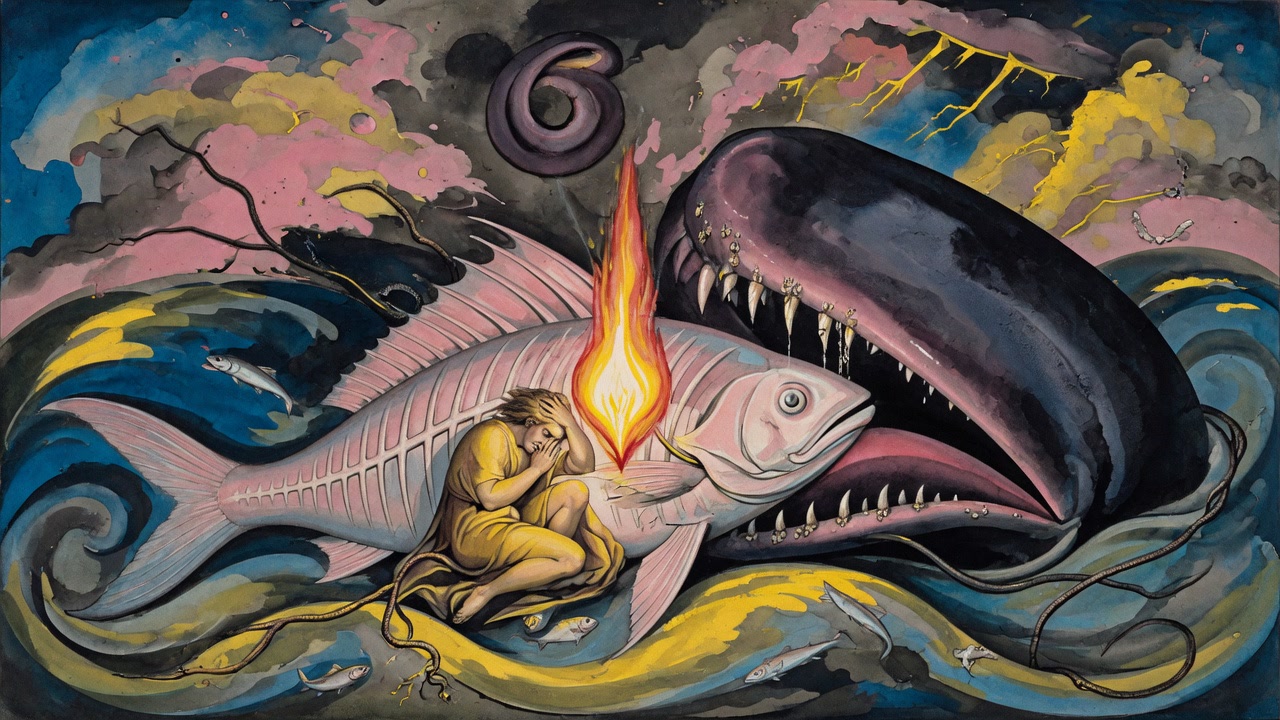
So God sent a second fish, and she was pregnant with three hundred and sixty-five thousand young. She came alongside and delivered her order to the male: hand over the prophet, or I swallow the two of you together. He would not believe her. Leviathan himself had to come back and stand there and confirm that God had sent her, and only then did the male open and pass Jonah across.
The new place had no room in it. Young fish pressed against his ribs and his back and under his knees, thousands of them turning at once, and the light was not the same light. He could not lie down, and he could not stand up straight, because there was nowhere in that belly that was not already occupied. Everything the first fish had given him was gone in the space of a breath, and the arithmetic that had looked like a verdict in his favor stopped adding up.
The Vow He Paid
Then he prayed, and what came out of him was not about where he was. It was about where he had been. The waters had closed in on him up to the soul, he said. The deep had gone round him, and weeds were bound about his head. He was describing the minutes in the open sea before the fish came, the drowning he had refused to feel for two days while the room was warm, and it all arrived at once, out of order, three days late.
He finished with the only line that cost him anything: what I have vowed, I will pay.
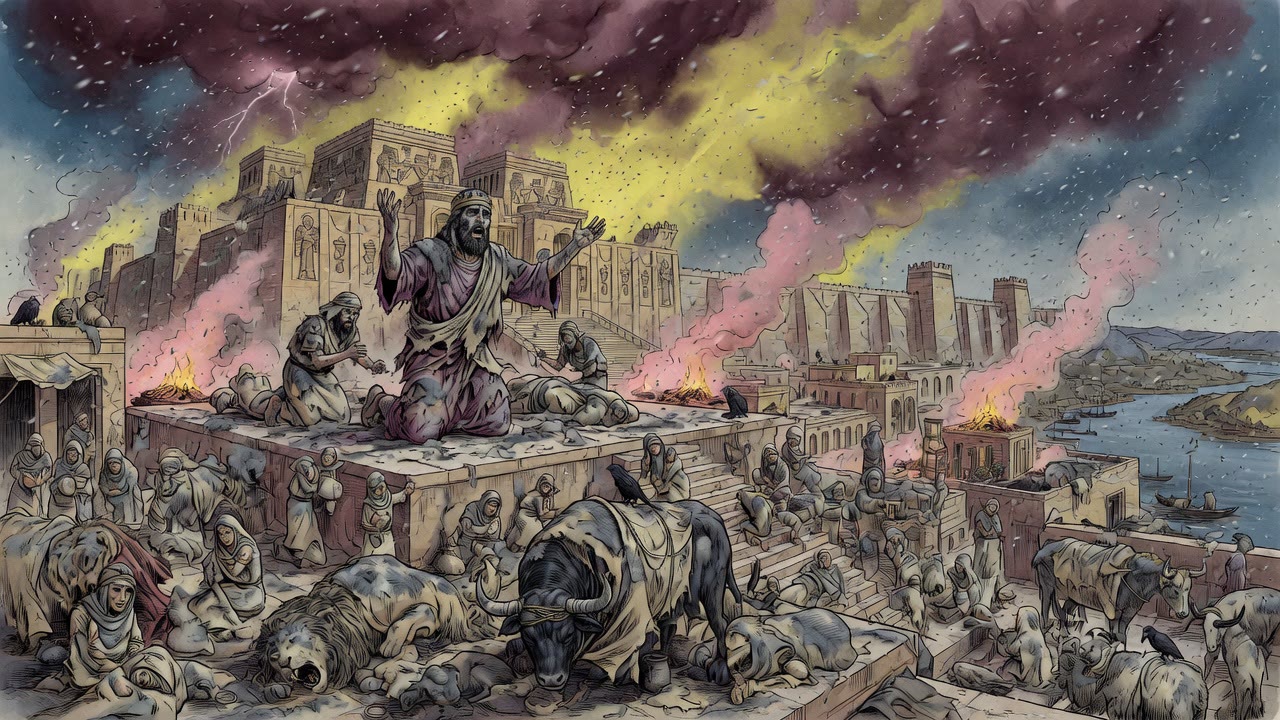
God spoke to the fish and the fish spat him out onto dry land. Somewhere behind him, the sailors who had thrown him overboard were on their way up to Jerusalem to be rid of their idols, and Jonah stood on the sand with nothing at all between him and Nineveh.
← All myths