Methuselah Walked to the Ends of the Earth to Find Enoch
Lamech's son was born glowing with light that filled the house. Lamech feared the child was not his. Methuselah walked to the ends of the earth to ask Enoch.
Table of Contents
 Click for full size
The Child That Lit the House
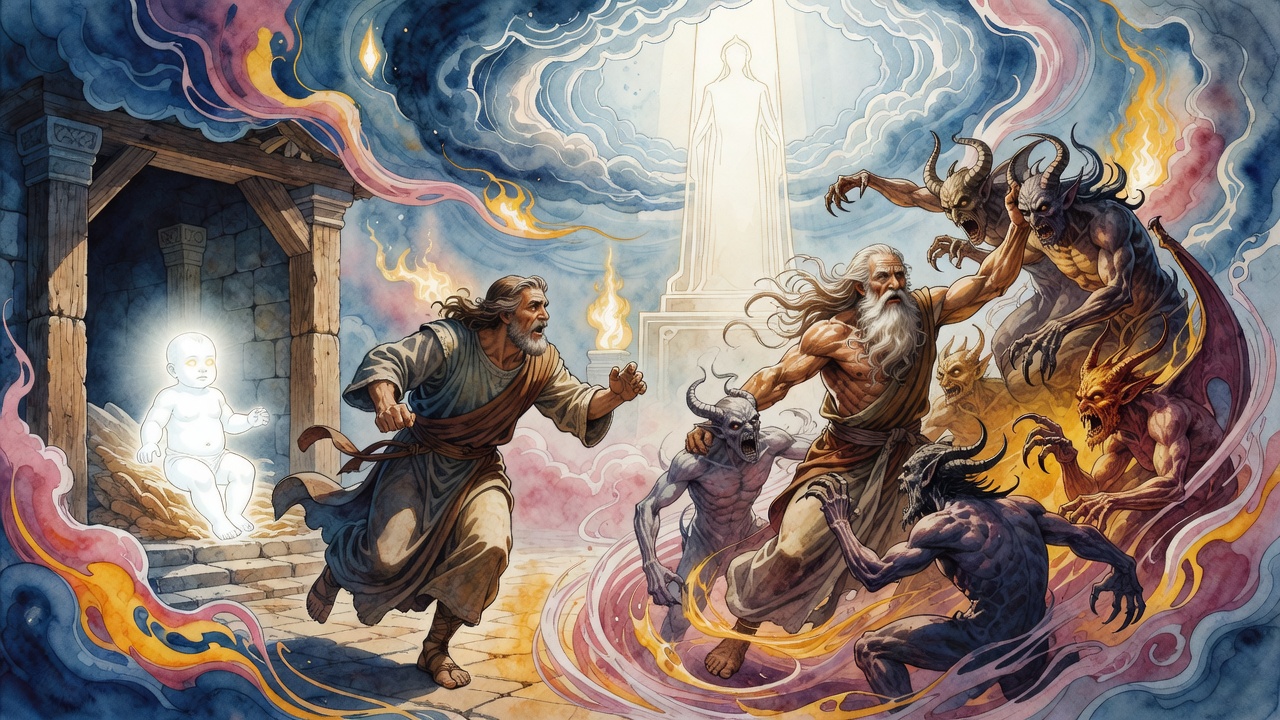
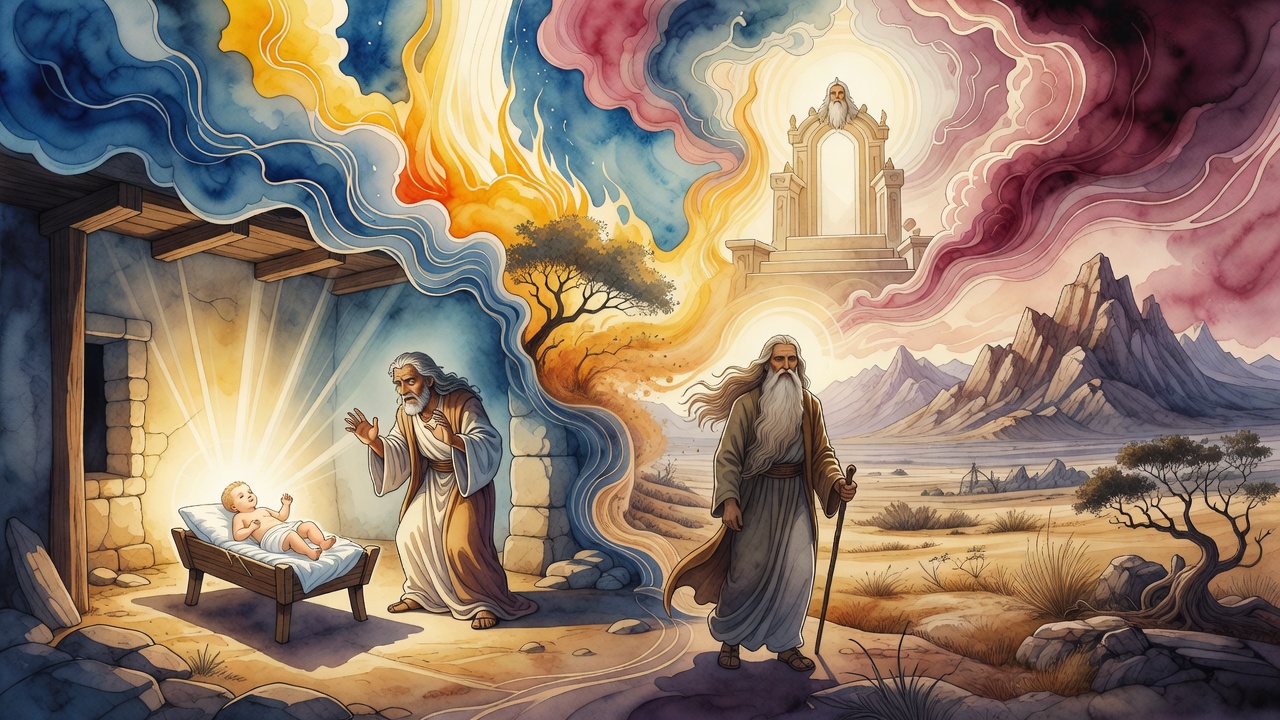
Lamech's wife gave birth, and the child that came into the world was wrong in the way that signifies. His body was luminous. The house filled with light when he was born, a radiance coming from the infant's skin that was unlike anything Lamech had seen in a human child. The child's eyes, when he opened them, were bright as the sun. He opened his mouth and praised God. He was a newborn praising the divine before he had a name.
Lamech went to his father Methuselah with the fear still on him. He said: I have had a son who does not look like the sons of men. He looks like the angels, the sons of heaven. I am afraid he is not mine. Lamech's anxiety was not irrational in the context of the times: the sons of God had been taking wives from the daughters of men. The boundaries between the human world and the world of the divine beings were not secure. A child born glowing was a child whose parentage required explanation.
Methuselah Walks to the Ends of the Earth
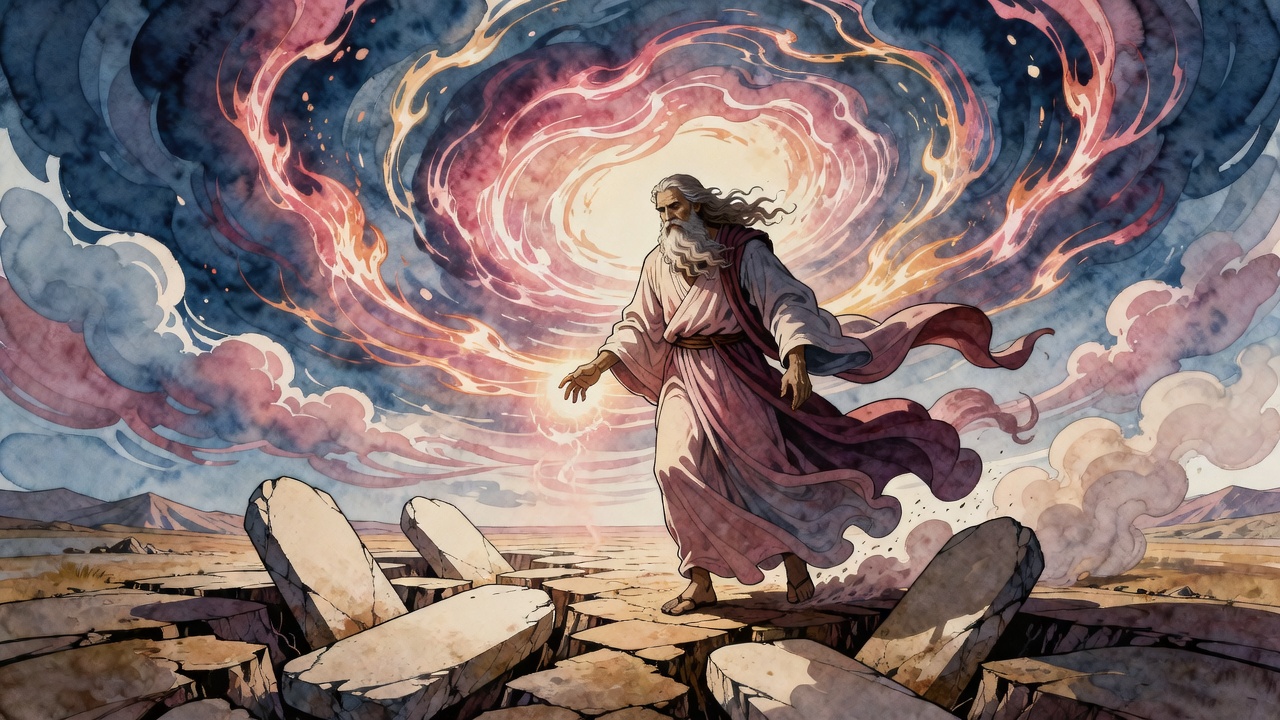
Methuselah did not consult a local priest or a prophet of the surrounding nations. He walked to the ends of the earth to find his own father. Enoch had been translated. He had walked with God and been taken up, removed from the ordinary world into the space beyond ordinary habitation. He was still reachable, but only by someone desperate enough to make the journey and with enough faith that the journey would arrive somewhere.
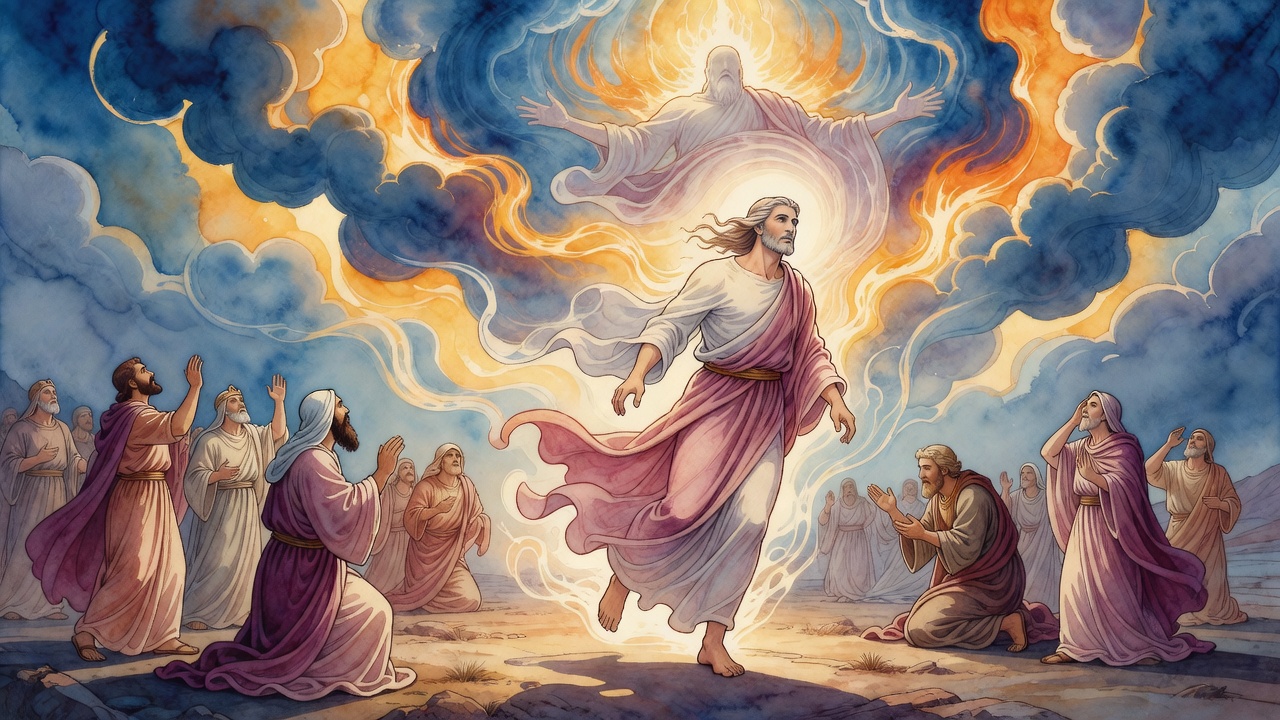
Methuselah called aloud from a distance and Enoch heard him and came. This detail is specific in the Book of Enoch: the cry from a distance, the hearing across what should have been an unhearable space, the father who had gone beyond the world still able to be reached by a son who needed him. Enoch came and Methuselah told him what had happened: the child, the light, the fear about the parentage.
The Name and What It Meant
Enoch told Methuselah the truth about the child. This son of Lamech was legitimate. He was born of the human line. He was not a child of the angels. But he was special in a specific way: he had come into the world at a particular moment in the history of the creation, and his life would overlap with what was coming, and because he would be alive when it came, he had been born with the marks of what he would survive.
Enoch told Methuselah to go back and tell Lamech to call the child Noah: because he will give the earth rest after all the destruction, and through him the remnant will survive. The name Noah in Hebrew carries the root of rest and comfort, and it was chosen at the ends of the earth by the patriarch who had been translated to heaven, given to a child whose body had already begun to announce what was coming.
What Enoch Said About the Flood
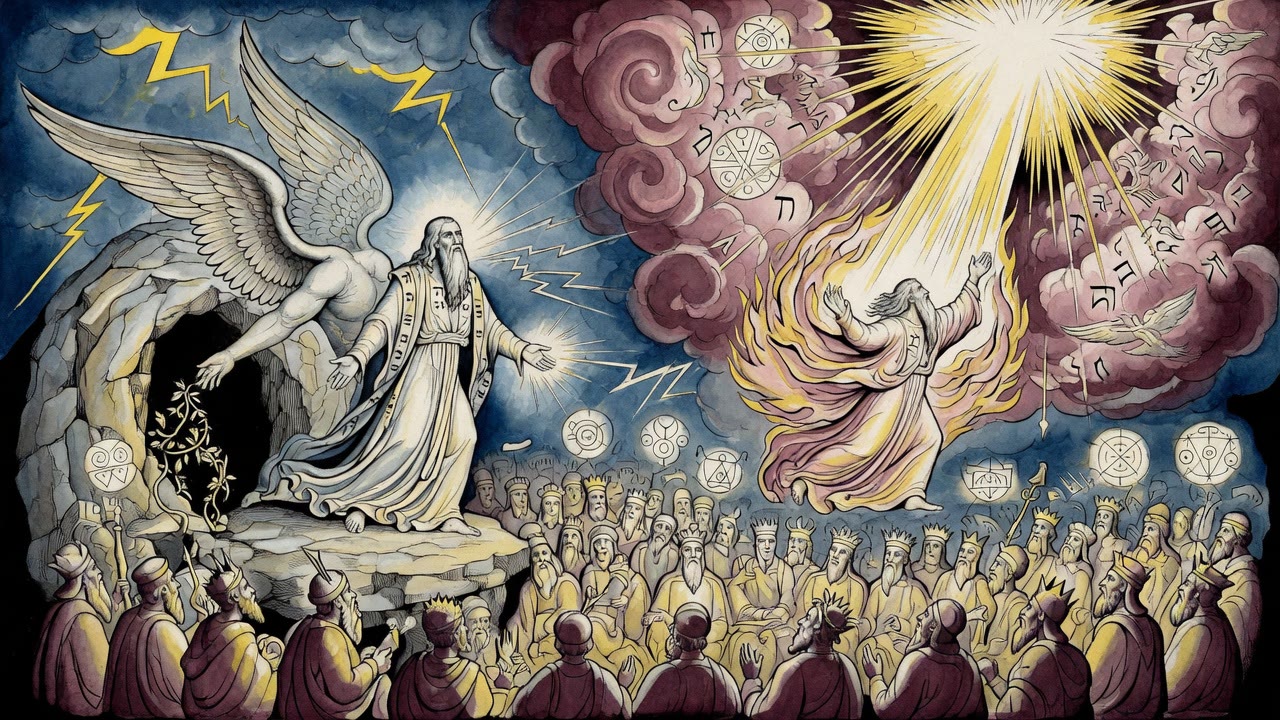
Enoch told Methuselah more than the child's name. He told him about the flood. He said that in the days of this child's son the decree would be carried out. The earth would be flooded. Every creature that breathed would die except what was carried on the boat. The generation that was coming would be the most wicked the world had produced, and the patience of God with them had limits.
Methuselah walked home carrying the name. The child who had filled the house with light on the night of his birth received it and grew up in it, and in the course of time he had a son, and that son was Shem, and from Shem the line ran forward through the centuries to Abraham. The flood came in Noah's day as Enoch had said it would, and Methuselah, the oldest human being who ever lived, died in the year the flood began, seven days before the water rose, as if the world had kept him alive precisely long enough to see that what Enoch had told him was true.
← All myths