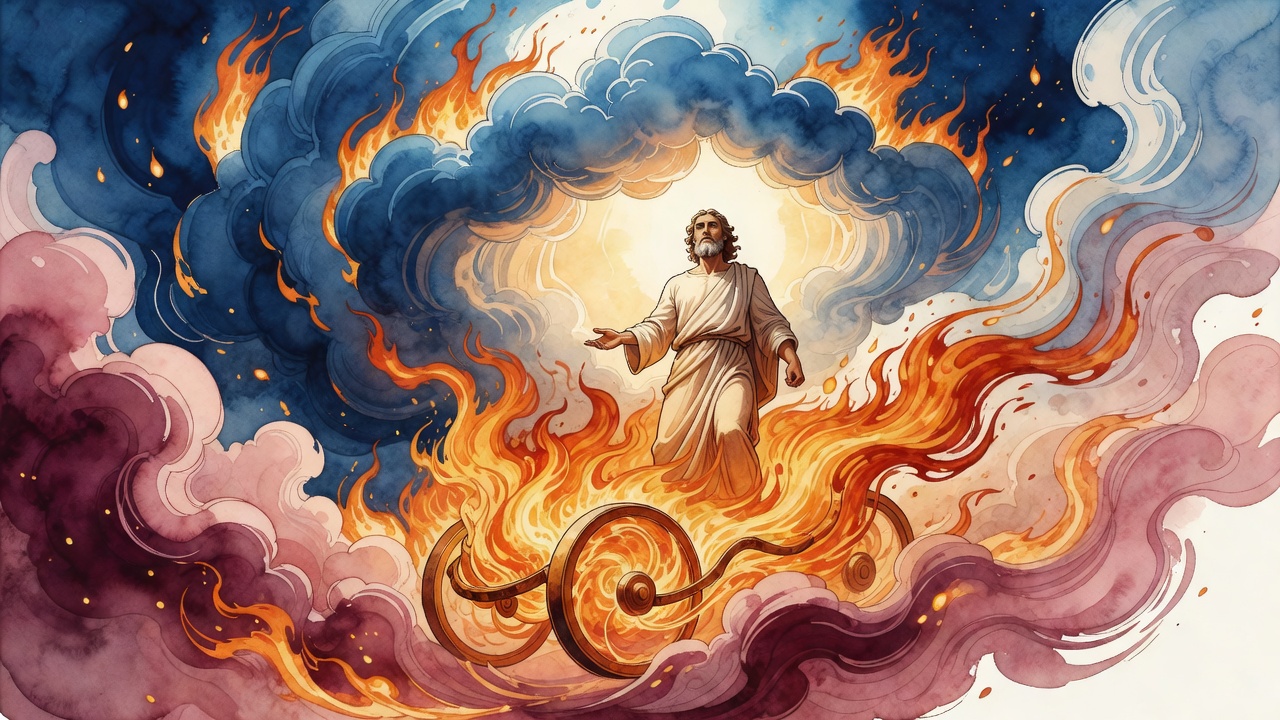
Elijah Has Not Been Wandering. He Has Been Waiting.
Every seder has a cup for Elijah. Every circumcision has his chair. But a tradition older than both holds that Elijah is not present everywhere. He is hidden.
Table of Contents
 Click for full size
The Most Present Absent Figure
Every Passover seder has an empty chair and a cup of wine no one touches. The door opens and we wait. Every circumcision has the Chair of Elijah, where the prophet is said to witness the covenant. He is the most present absent figure in Jewish life, simultaneously here and not here, announced at every threshold, nowhere to be seen.
But there is a tradition that complicates even this familiar picture. It holds that Elijah is not wandering the world in disguise, attending every seder and every brit milah simultaneously. He is hidden. Specifically, deliberately, withdrawn from his role in the present world while he waits for the moment when he will be needed most.
Why God Removed Him From His Post
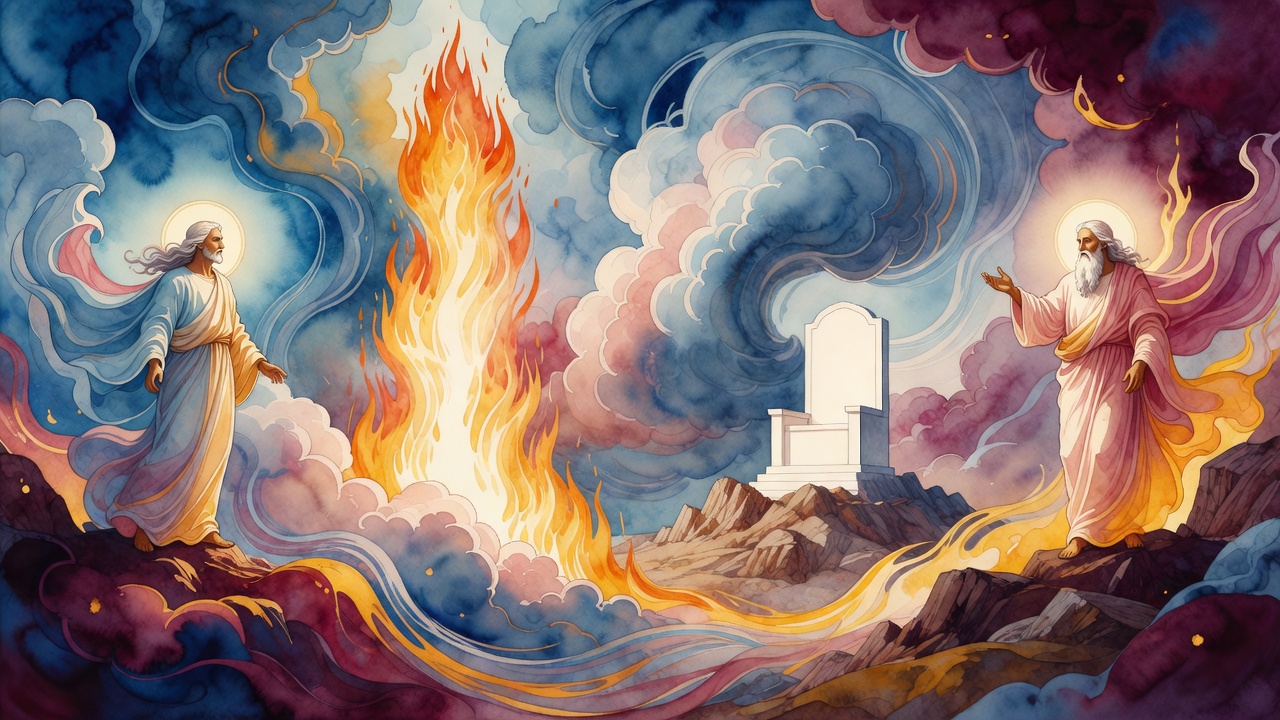
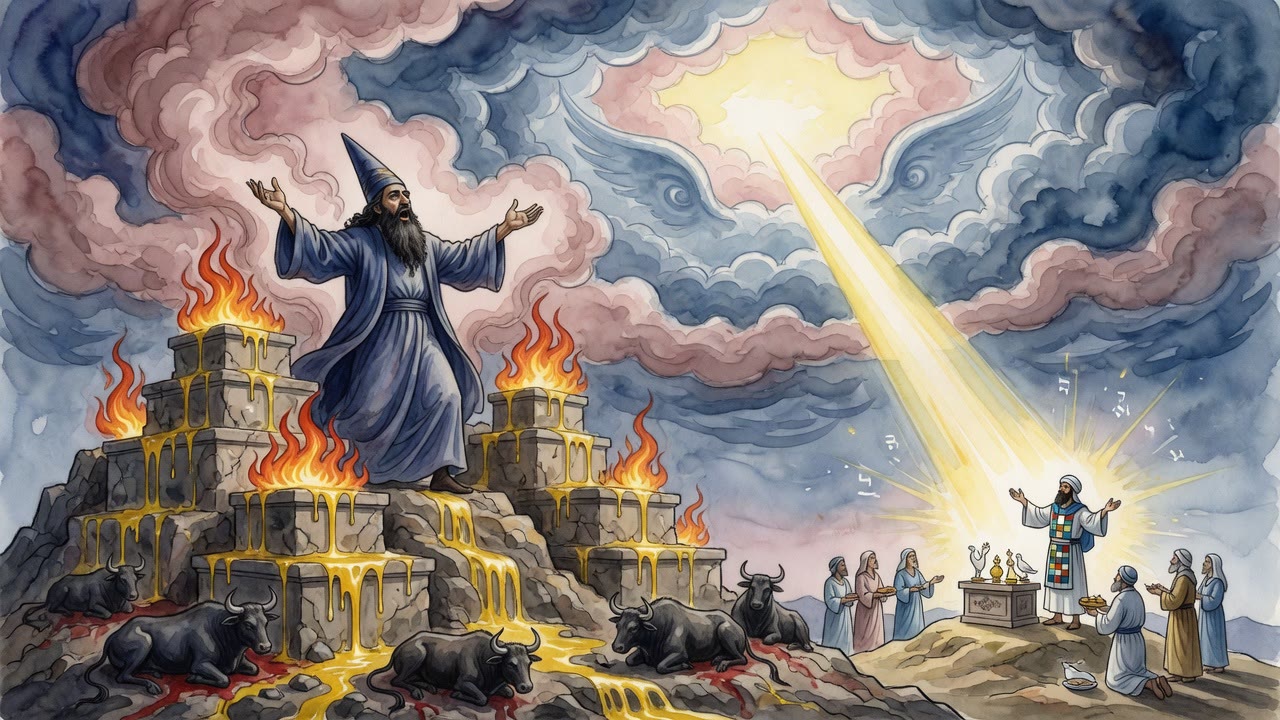
The Talmud in tractate Sanhedrin 113a records the tradition that Elijah was removed from his prophetic role after the confrontation at Mount Horeb, the same encounter described in 1 Kings 19. Elijah had fled into the wilderness after his triumph at Mount Carmel, terrified of Jezebel's threat. He sat under a broom tree and asked to die. An angel fed him twice and sent him south, forty days south, to the mountain of God.
At Horeb, God asked him: what are you doing here, Elijah? Elijah answered with a complaint: I alone am left, and they seek my life. He had fought for God alone. Everyone else had abandoned the covenant. He was the last one.
God's response was not comfort. It was a correction: there are seven thousand in Israel who have not bowed the knee to Baal. Elijah's claim to be the last loyal Israelite was wrong. His grief had distorted his account of the situation. And because he had stood at the cave mouth and accused Israel when the reality was more complicated, God recalled him and sent Elisha in his place.
The Role Reserved for the End of Days
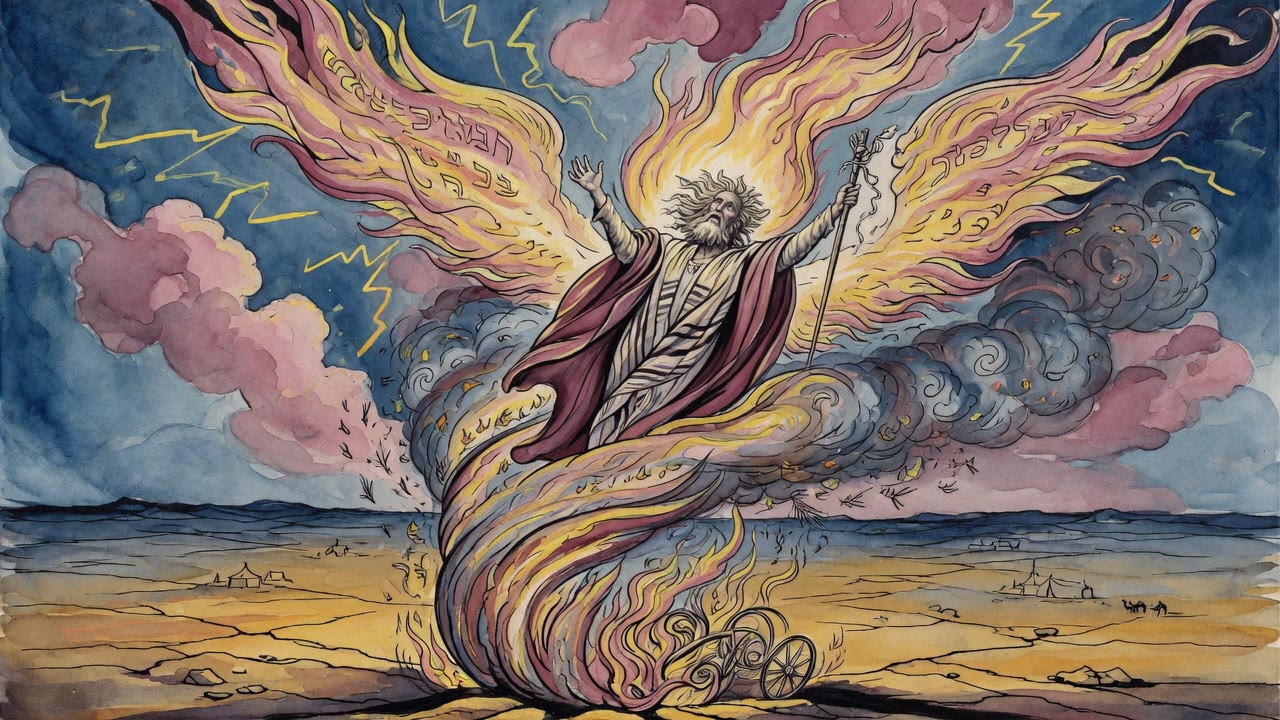
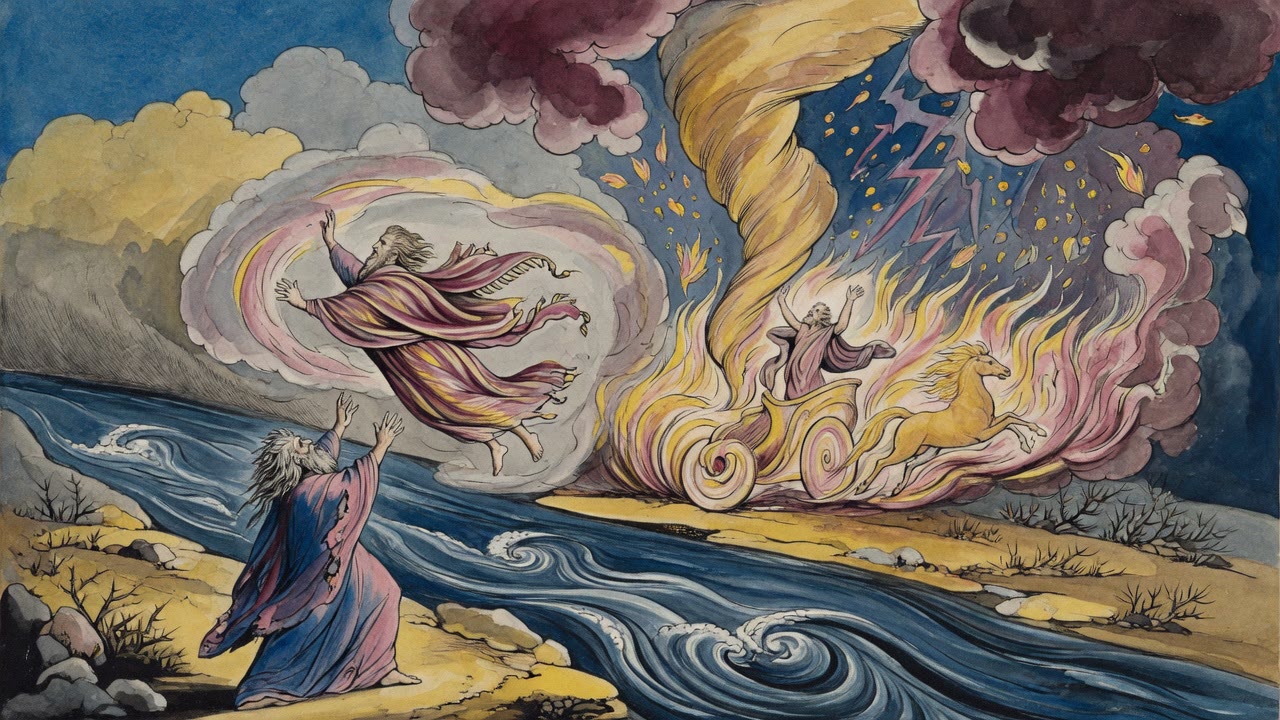
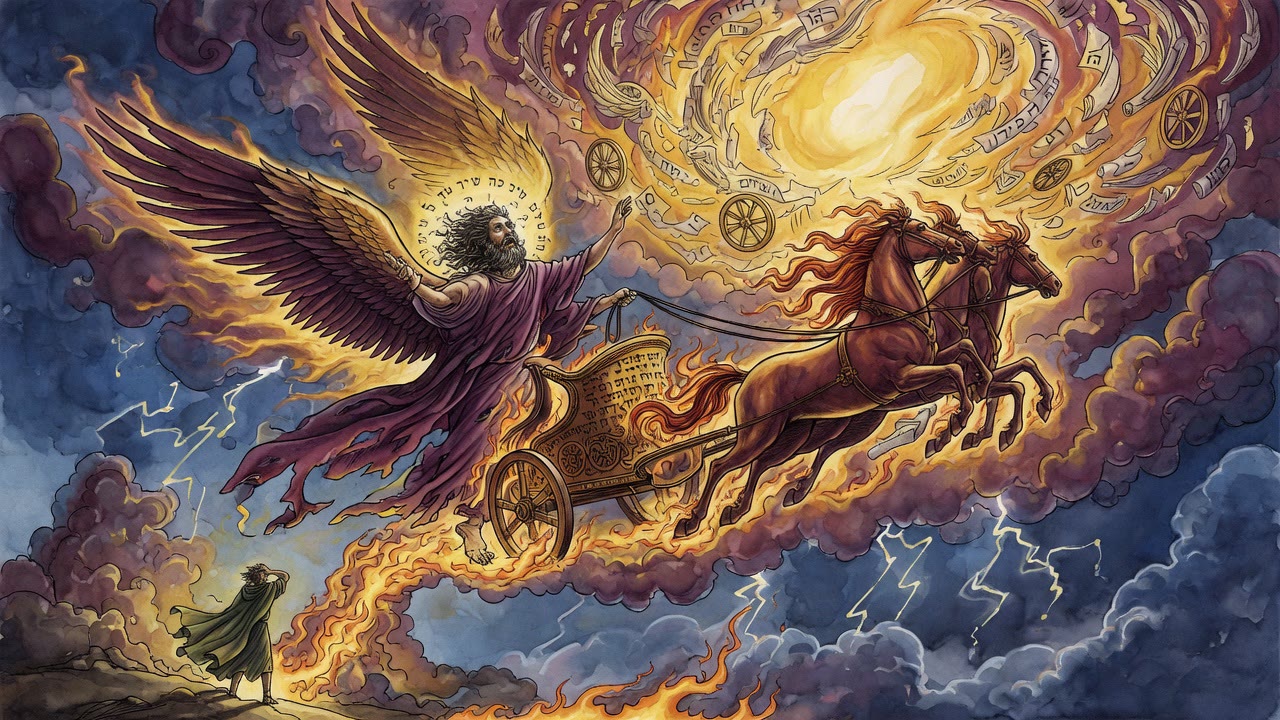
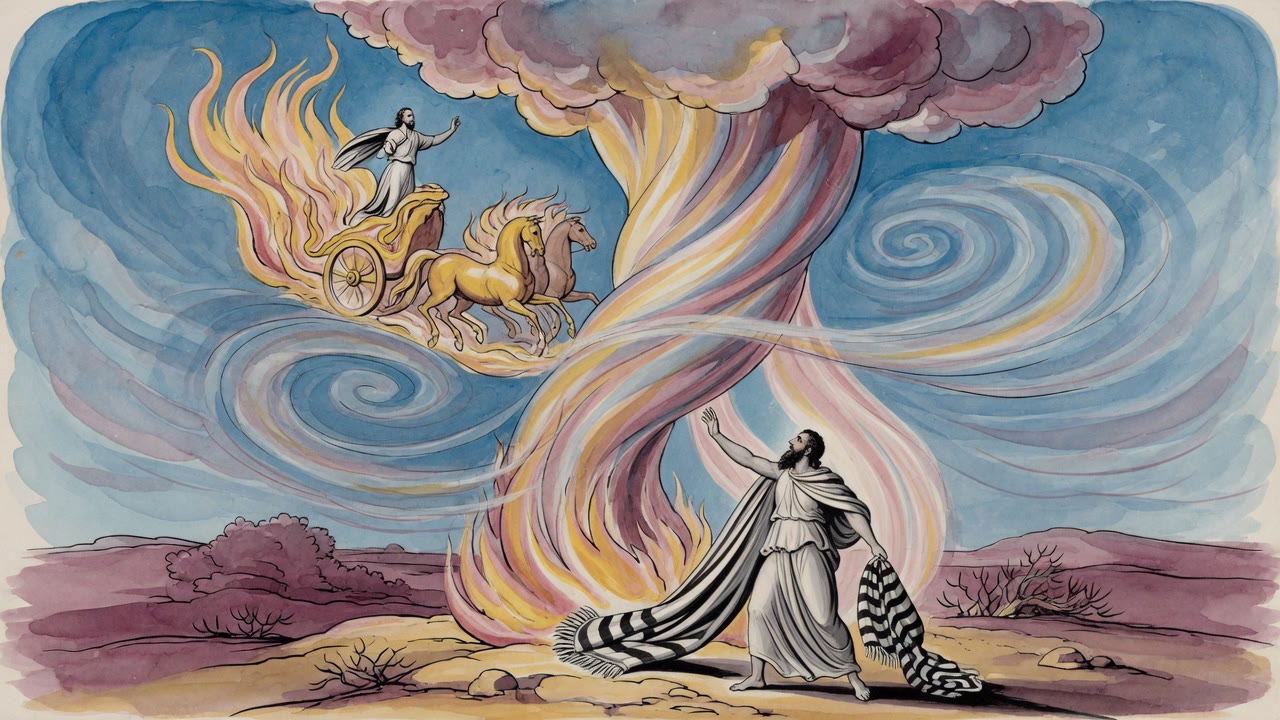
Seder Olam Rabbah, the chronicle of biblical chronology compiled by the second-century sage Rabbi Yose ben Halafta in Roman Palestine, tracks Elijah's movements after his ascent into heaven in the fiery chariot and places him in a condition of deliberate waiting. The traditions of the Midrash that develop this picture describe an Elijah who is not simply present at every Jewish life-cycle event but withheld from a specific role that only he can perform: the one who will come before the great and terrible day, who will turn the hearts of parents toward children and children toward parents, who will announce what the current age cannot contain.
The last verses of Malachi, the last book of the prophetic canon, promise this return. But the rabbis understood the promise as operating under a specific condition: Elijah cannot appear until the world is ready for what comes after him. He is not delayed. He is prepared and waiting, held in reserve for the moment his particular function becomes possible.
The 130 Names Written at Havdalah
A tradition preserved in Midrash Aggadah records that some communities write the name Elijah the Prophet 130 times at the conclusion of Shabbat, as the week's holiness recedes. The number connects to layers of Kabbalistic numerology around Elijah's name, but the practice points to something older: the awareness that Elijah stands at the boundary between the sacred and the ordinary, between the Shabbat that is ending and the week that is beginning, between the present age and the one he will announce.
The empty chair and the untouched cup are not invitations to someone wandering nearby. They are held open for someone who will come at a moment not yet arrived. The door is opened not because Elijah is outside but because the tradition insists on keeping the gesture available, marking the threshold, practicing the posture of expectation for the appearance the whole tradition points toward.
← All myths