Levi Found the Brass Shield on the Road to Shechem
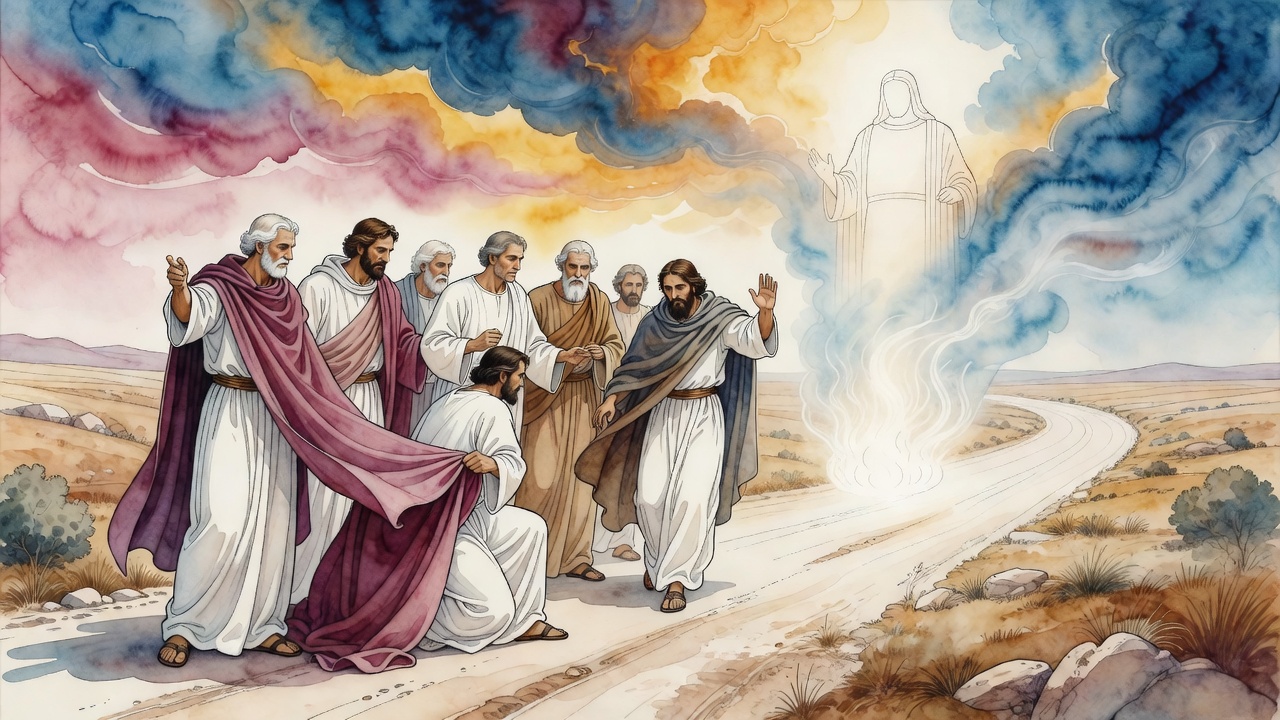
Levi asked the angel for a name he could cry on a bad day. He woke holding a sword, and found the brass shield lying in the road.
Table of Contents
Levi was about twenty, out with the flocks at Abel-Maul, and what he could not stop thinking about was how bad people were. Not one man. All of them. Wrongdoing had built walls for itself and moved in. Lawlessness sat up on the towers where the watchmen belong. He grieved over the whole race of men, and then he prayed a short selfish prayer, that he personally might be got out of it.
 Click for full size
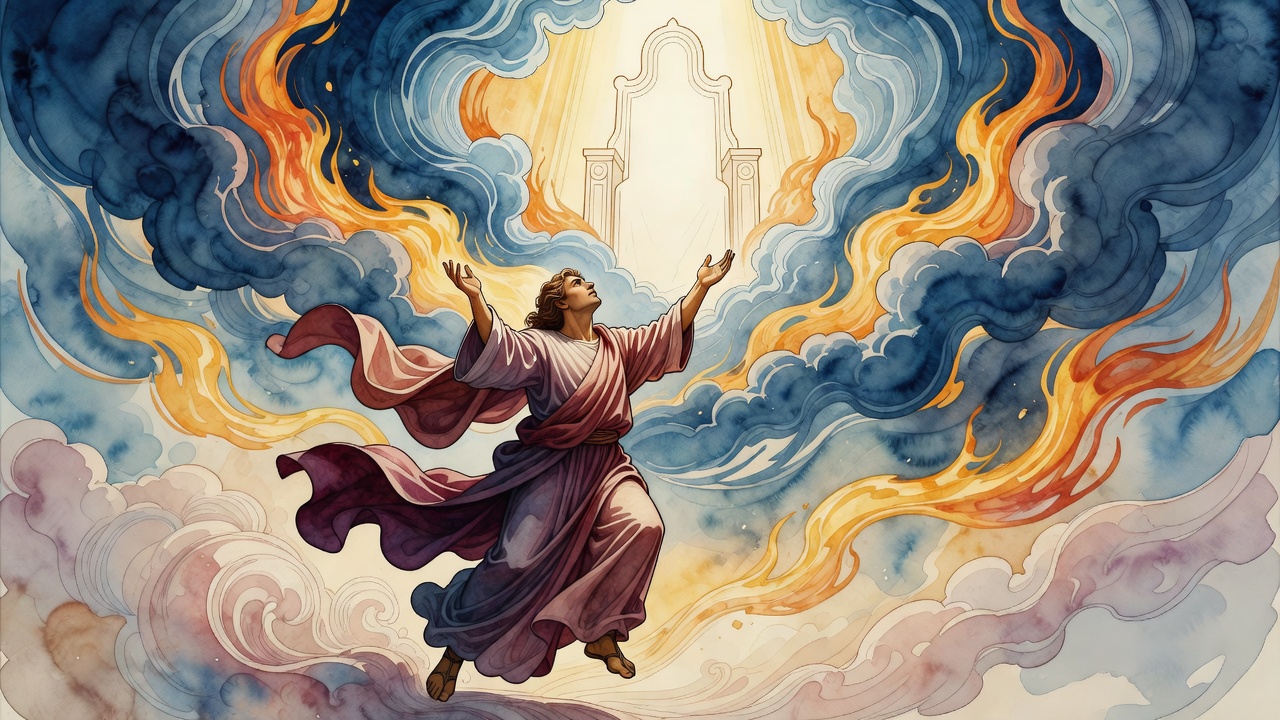
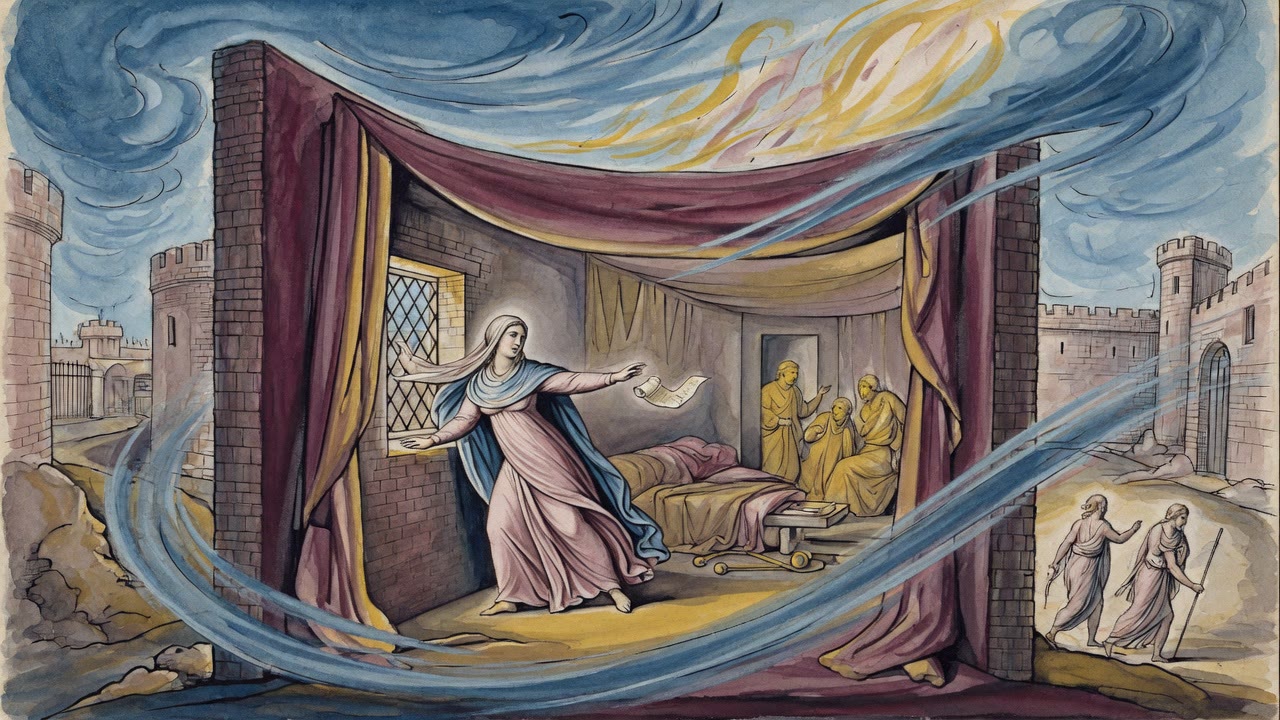
Sleep came down on him in the field. He was standing on a high mountain. The sky came apart above him and an angel leaned through the gap and said one word.
"Levi. Enter."
The Heavens He Climbed
He went up through the heavens one at a time. The lowest was dark, because everything men do passes through it, and fire and snow and ice were stacked in there for the day of judgment. A great sea hung in that first heaven. The next was brighter than anything he had words for. "Do not be amazed at this one," the angel said. "You will see a better one, and there you will stand next to the Lord and speak His secrets to men."
The gates at the top opened. Levi saw the holy temple and the Most High on a throne of glory, and heard the sentence that made him a priest before there was any priesthood to be made into. By him and by Judah, the Lord would appear among men. From the Lord's portion would his life be. He would have no field of his own. God would be the field.
The Brass Shield on the Road
Then the angel brought him back down to the earth and put a shield in one of his hands and a sword in the other.
"Take vengeance on Shechem for Dinah your sister. I will be with you. The Lord sent me."
Levi asked him for a name. Tell me what to call you, he said, so I can call on you on a bad day.
The angel would not give a name. What he gave instead was the work he did. "I am the one who stands between Israel and destruction, so the whole of it is never wiped out, because every evil spirit there is comes at that nation."
Levi woke up in the field. He set out for his father, quivering with rage for what had been done to Dinah, and on the way, near Gebal, lying on the ground in front of him, was a brass shield. The same one. He picked it up off the road and carried it. Afterward the mountain there was named for it. He did not tell anybody in the camp what he was holding or where he had seen it before.
The Third Day in Shechem
He went to Jacob, and to Reuben his eldest brother, with a proposal. Tell the men of Shechem to circumcise themselves. Make it the price of the marriage.
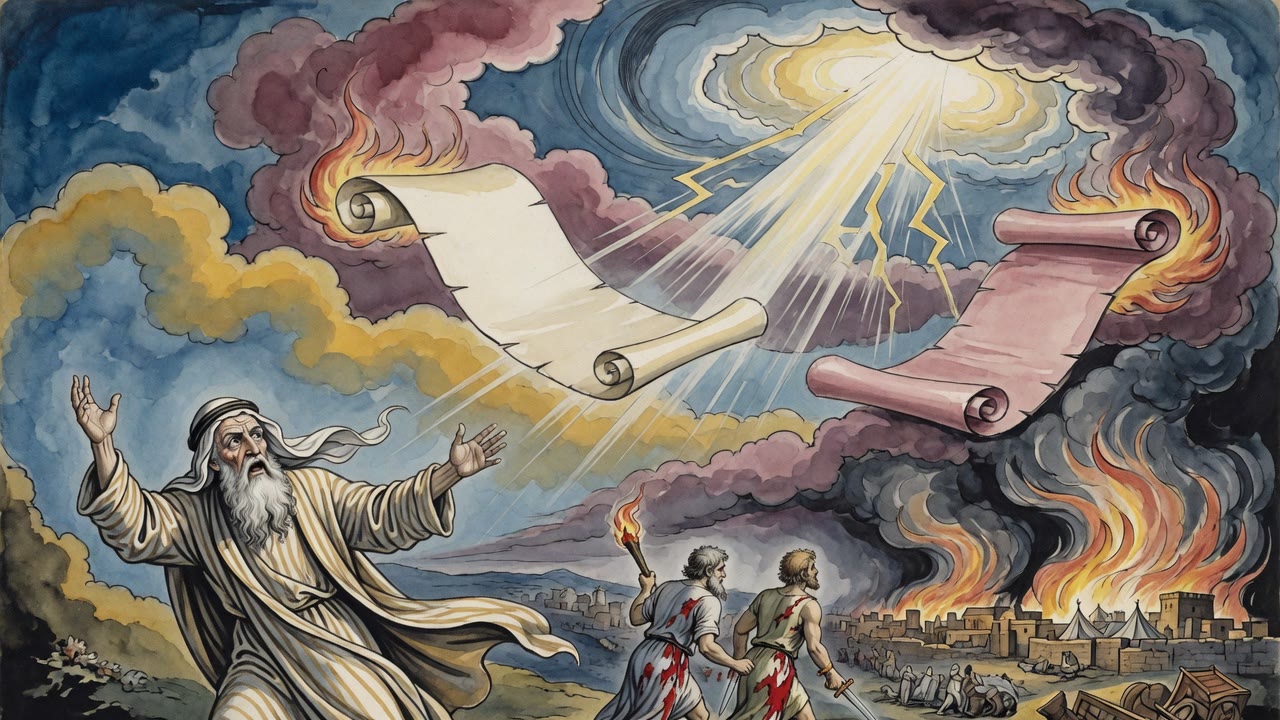
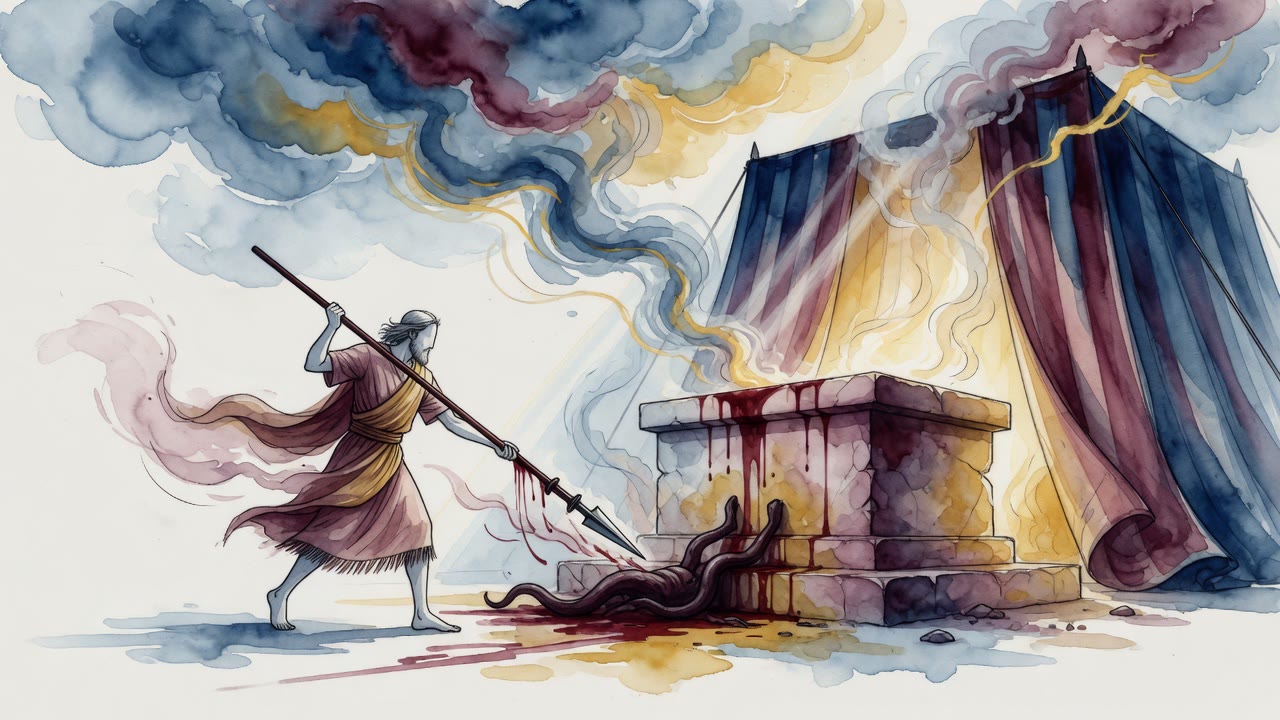
The men of Shechem agreed. On the third day, when every one of them was down and in too much pain to stand, Levi and Simeon walked in through the gate. Levi killed Shechem son of Hamor first. Simeon killed Hamor. Then the rest of the brothers came in behind them and went through the city and did not leave a single male alive in it. They slew them in torments, because those men had dishonored Dinah, and heaven had already ordained that the men of Shechem should be destroyed with the sword for the shame they had wrought in Israel.
They brought Dinah out of Shechem's house. They took the sheep and the oxen and the donkeys and all the wealth of the place and drove it back to their father.
Somewhere above them, on that same day, a line was written in heaven in their favor. Righteousness, it said. Vengeance carried out on sinners. It was entered as a blessing.
Jacob Went Sick That Day
Jacob did not see a blessing. He saw the animals and his sons standing there with blood on them, and went cold with anger. The Canaanites lived here. So did the Perizzites. He had a household, a few hundred people, women and children and flocks, sitting in open country that now had a very good reason to come and finish them. He told his sons they had made him a stink in this land. What sickened him most was the circumcision, that men had accepted the covenant sign in their flesh and then been killed for lying still under it. He was ill that day. Years later, blessing his sons before he died, he came to Levi and Simeon and his face changed.
Levi did not apologize. He told his father the land would come to him and to his seed after him, that God would strip the Canaanites out of it through exactly this. And he had one more thing to say about the city he had just emptied.
"From today Shechem is the city of fools. We mocked them the way a man mocks a fool, and they took it."
Then he laid out his reasons. Those men had wanted to do to Sarah what they did to Dinah, and to Rebecca, and heaven had stopped them both times. They had hounded Abraham while he was a stranger camped among them, and gone at his flocks when the ewes were heavy with young. Every stranger who came through, they took his wife by force and drove him out. Levi had been quivering since Abel-Maul. The brass shield had been waiting in the road. He used it.
Seven Men in White at Bethel
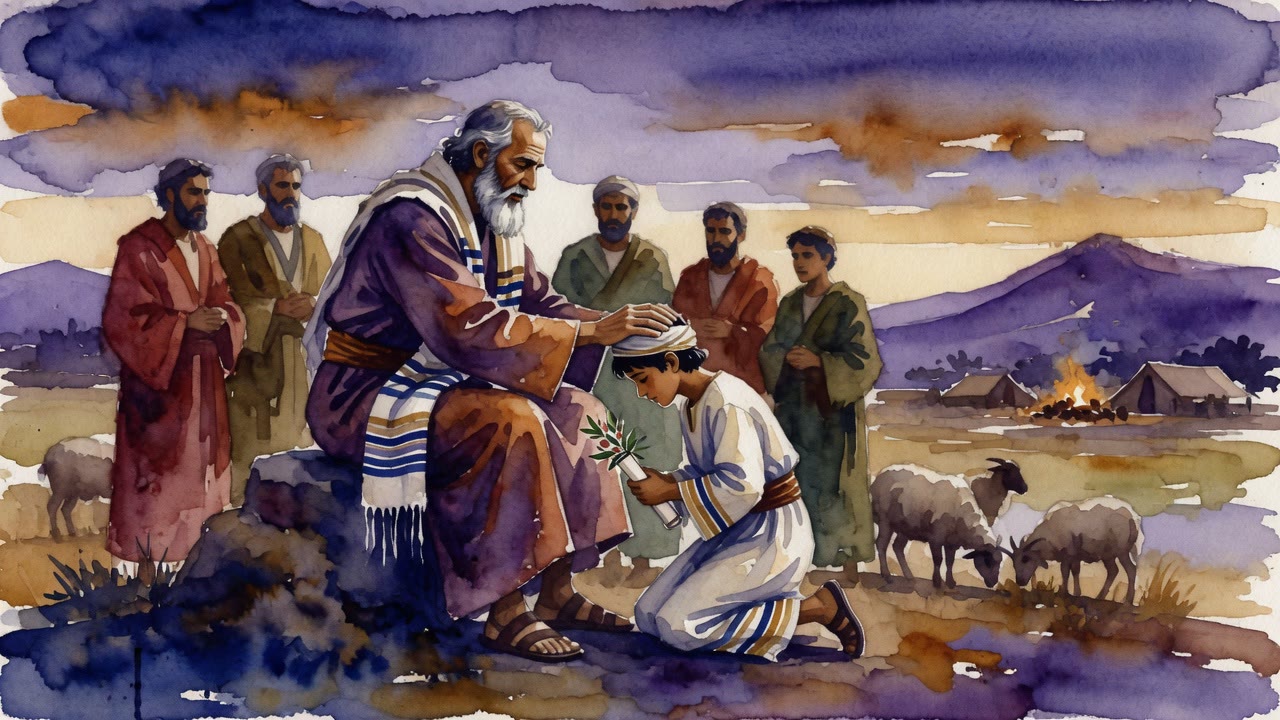
Seventy days after Shechem, at Bethel, Levi dreamed again. Seven men in white clothing stood around him and told him to get dressed. Then they dressed him themselves, one item each. The first anointed him with holy oil and handed him a staff for giving judgment. The second washed him in clean water and fed him bread and wine, the most holy things, and put a glorious robe on him. The third put on the linen vestment. The fourth tied the purple sash. The fifth gave him a branch of thick olive. The sixth set the crown on his head. The seventh set the priestly diadem over the crown and filled both his hands with incense.
Then they told him his descendants would be split three ways, and left.
He woke up and understood that this dream and the first one were the same dream. He hid this one in his heart too, and told it to no man on the earth. Two accounts of one afternoon now existed, one written in a tent in Jacob's anger and one written upstairs as a blessing, and they did not agree.
At the very end of Jacob's life, when the old man was giving out what he had, he put all his books into Levi's hands, his own and the ones his fathers had left him, to keep and to copy for his children. The son who had made him a stink in the land was the son he trusted with the writing.
← All myths