Elijah Has Two Jobs in Heaven and Neither of Them Ends
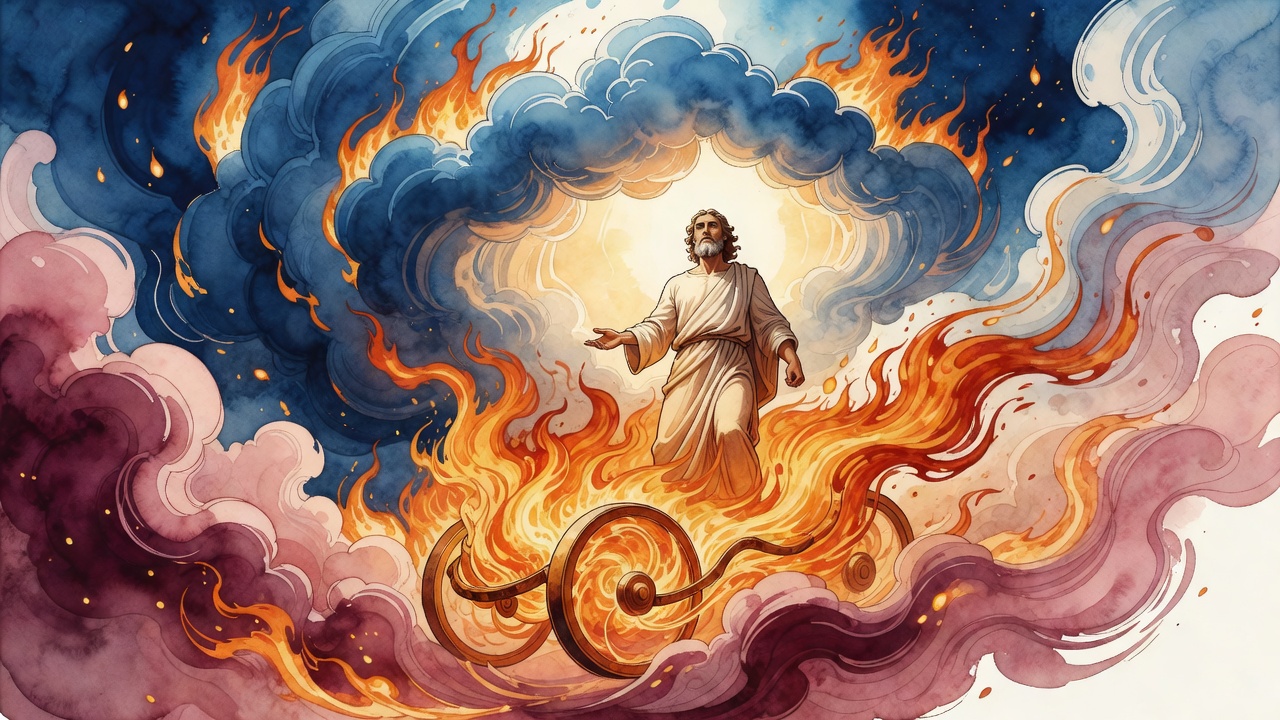
A chariot of fire took Elijah up alive, and he never got to rest. He writes down every deed any person does, and he walks the dead into paradise.
Table of Contents
 Click for full size
The Man Who Burned Everything He Touched
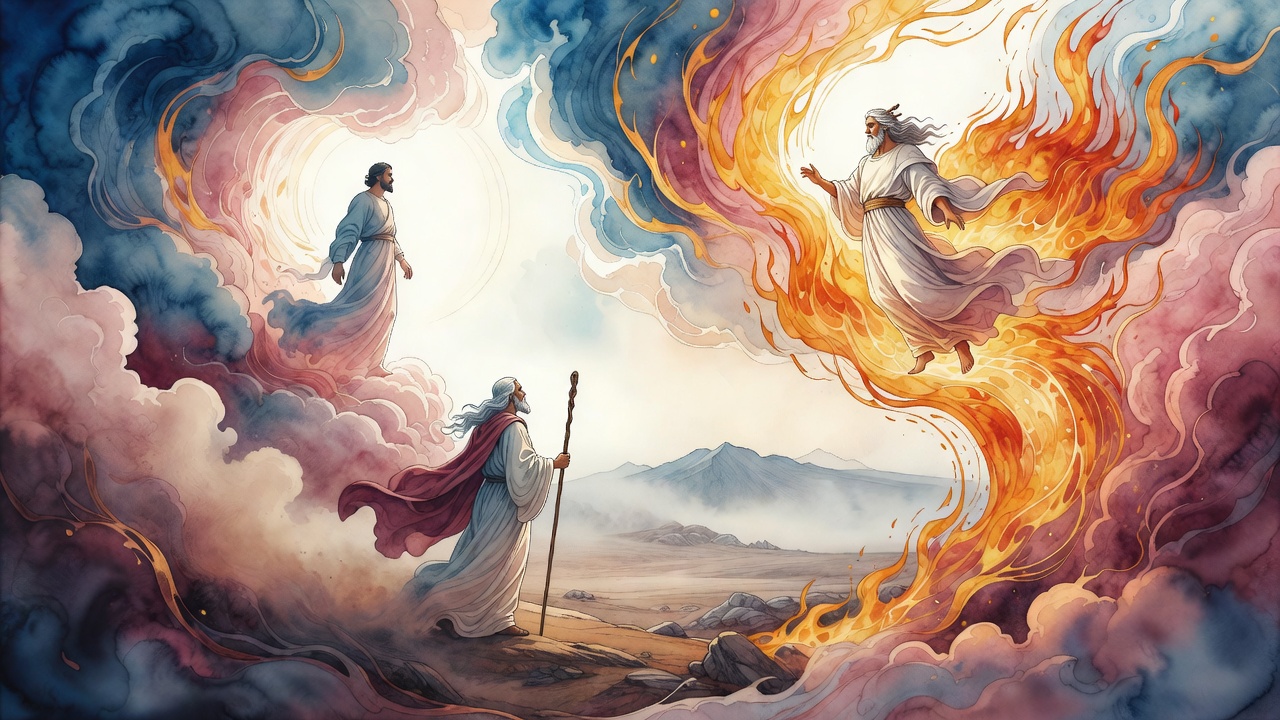
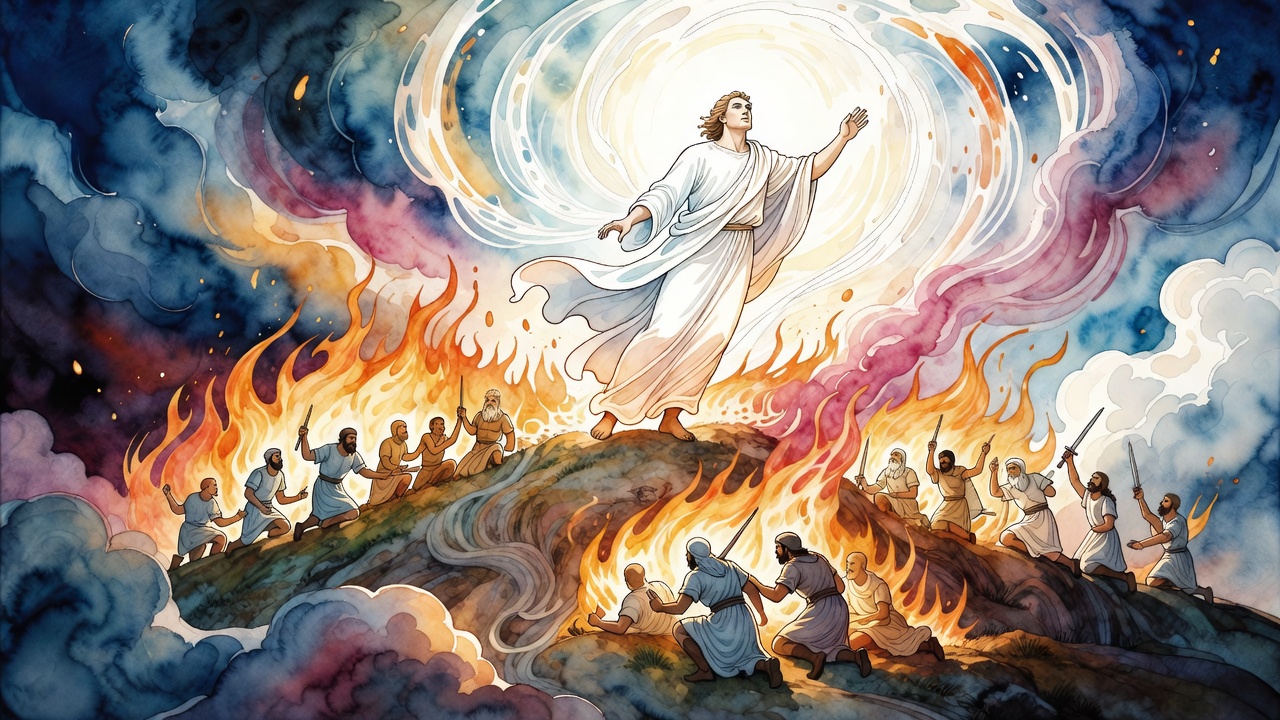
Before the chariot came, there was Carmel. Elijah stood on that mountain before the entire nation of Israel, eight hundred and fifty prophets of Baal and Asherah arrayed on one side, Elijah alone on the other, and issued the challenge that would determine who controlled the sky. He had already held back the rain for three years and six months. He had already killed a hundred soldiers the king sent to arrest him, twice. He had already stretched himself over a dead child and brought the child back from Sheol (the shadowy underworld of the dead). The famine was not a metaphor. Crops had failed. People had starved in the streets. Elijah had walked through all of it, certain in a way that made anyone near him uncomfortable, demanding in a way that made the soft interpretations of his century impossible.
Ben Sira, writing in Jerusalem around 180 BCE in his hymn of praise for Israel's great figures, reaches Elijah and his language loses its usual composure. "How awesome are you, Eliyahu, and who is like you in wonder?" Ben Sira is not given to this kind of plain amazement. He catalogs heroes with skill and appreciation. At Elijah, he simply stops and stares. The description that follows captures the force of the man: he held back rain with a word, called down three fires from heaven, shattered the staff of bread of those who abandoned God, brought the dead back from Sheol, brought down kings. Ben Sira could have kept going. He had material. He cuts it short because there is only one Elijah, and the catalog has already said what it came to say.
The Assignment After the Chariot
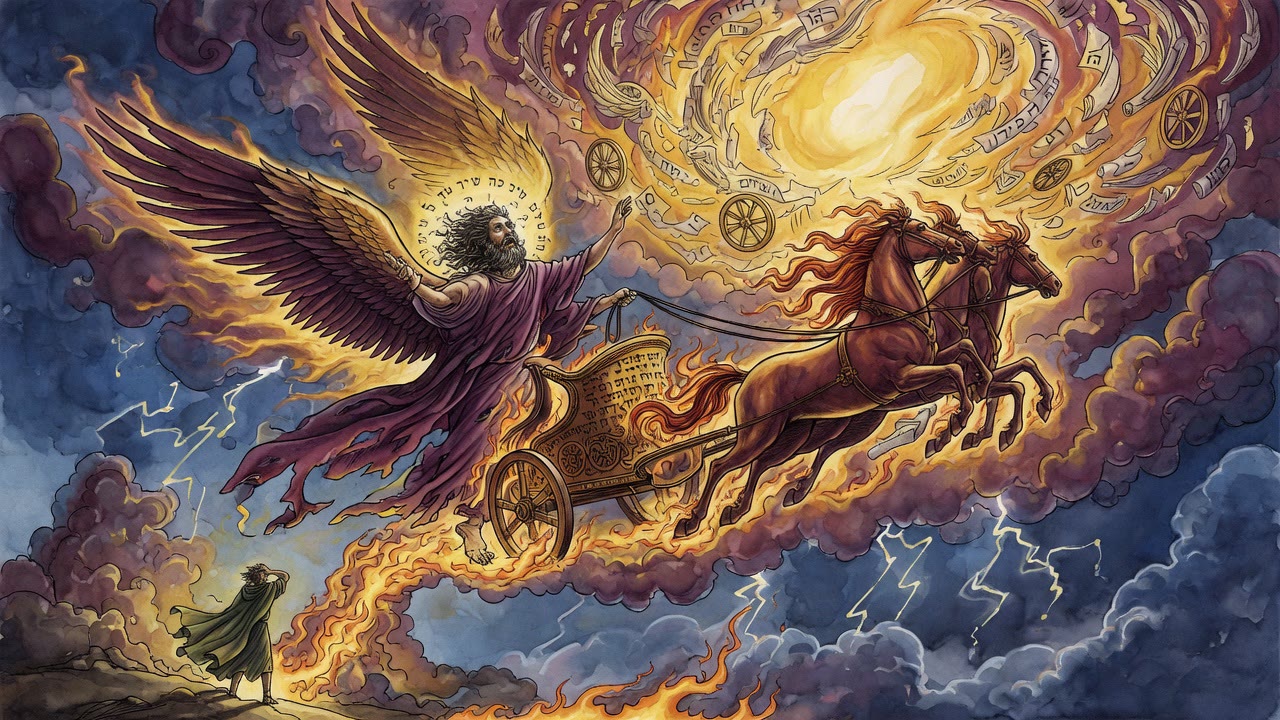
Then the chariot came, and Elijah ascended in the whirlwind, and the story should have been over. A prophet finished and taken. The traditions that came after the Bible say that what looked like a final exit was a reassignment, and that what Elijah has been doing since is more exhausting than anything he did while he was alive.
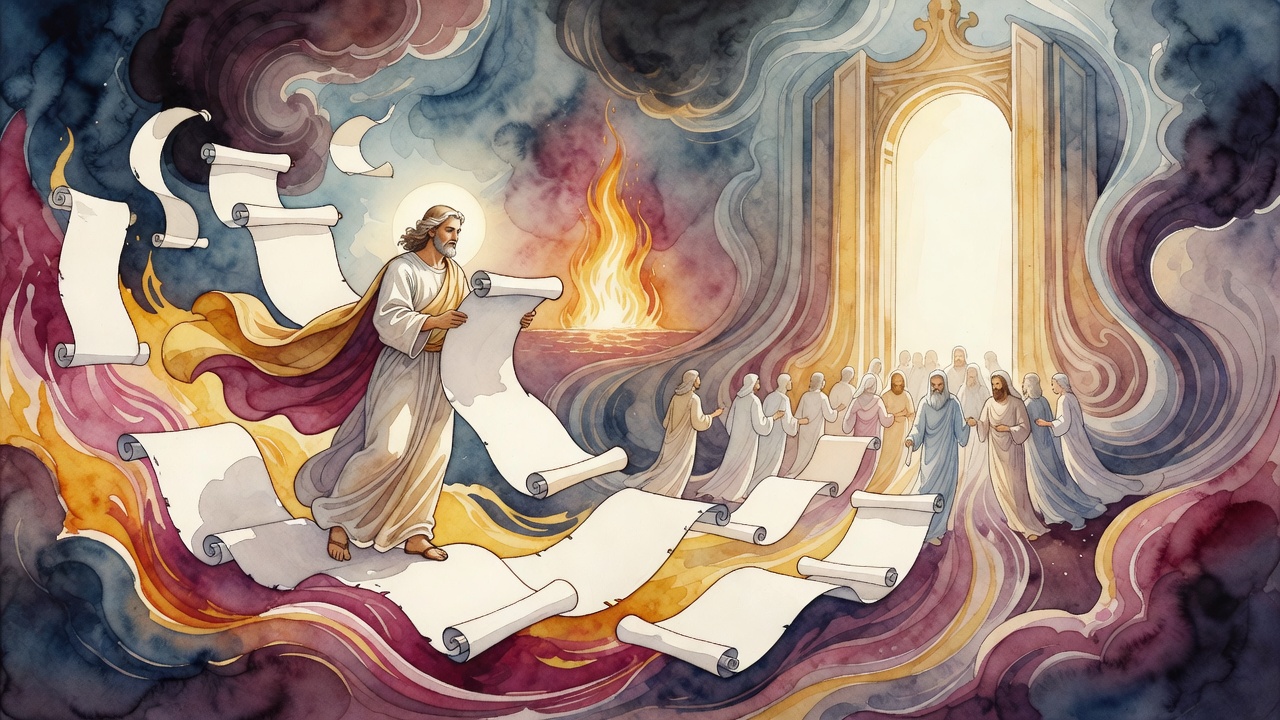
Ginzberg's Legends of the Jews, compiled between 1909 and 1938 from centuries of Talmudic and post-Talmudic tradition, gives us the terms of the reassignment. Elijah received two tasks at the moment of his ascent. First: he would document every human deed until the end of days. Not the major events, not just the deeds of kings and prophets. Every act of every person. Every kindness, every transgression, every moment of ordinary human life, recorded in heaven's ledger until the final accounting. Second: he would stand at the crossroads of paradise and guide the souls of the righteous to their eternal homes.
Both tasks are permanent. Neither one has an end until the end of everything else. Elijah, who on earth was burning and exhausting and impossible to be near for long, is in heaven doing two infinite jobs simultaneously. The man who could not stay still on earth is the one heaven chose to do the work that never stops.
The Scribe Who Sees Everything
The celestial documentation task carries weight that the plain description does not immediately convey. In Jewish tradition, the heavenly record is not a passive archive. It is the evidence base for the judgment that will happen at the end of days, when every soul stands before the divine court and the deeds of a lifetime are weighed. Elijah is not simply keeping notes. He is building the case, or the defense, for every person who has ever lived. He is the witness whose record will be read at the final accounting.
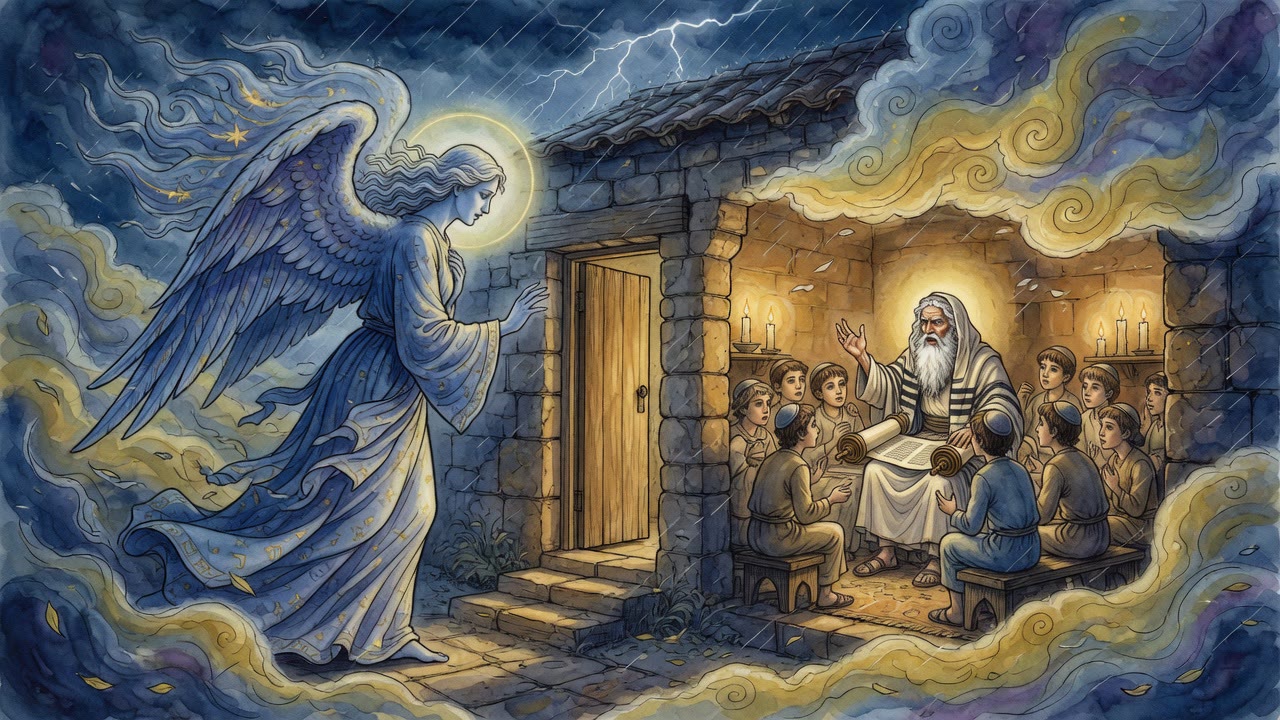
This gives a new dimension to the Elijah who appears throughout later tradition at the Passover seder, at every circumcision ceremony, at the threshold of every Shabbat that ends. He does not appear because he is sentimental about human occasions. He appears because his job requires him to be present at the moments when the human story is most itself: the births, the covenants, the meals that remember the exodus. Every seder cup left for him is a moment he is observing and recording. The seat at the circumcision is the seat of the official witness.
The Guide at the Gates of Paradise
The psychopomp function, the guide of souls, is equally permanent. The journey of the soul after death, as described in the mystical traditions that developed from the Merkavah literature (early Jewish visions of God's throne-chariot) through the later Kabbalistic frameworks, is complex and requires navigation. The gates of paradise have their own structure, their own guards, their own requirements. Elijah stands at the crossroads of that structure and directs the righteous toward their eternal homes. He has been doing this since his own entry into heaven, and he will do it until the last soul has made the crossing.
The man who was furious on earth, who turned around and called down fire on soldiers who were just following orders, who made the sky hold back its rain for three years because the people needed to feel what their faithlessness cost, is in heaven doing the gentlest possible work: receiving the dead and showing them where to go. The tradition does not explain the contrast. It simply presents it.
← All myths