Saul Went to Endor and Was Told He Could Still Run
Saul lied to his two officers on the road back. The prophet had promised him victory, he said, and high commands for his sons in the morning.
Table of Contents
 Click for full size
Three Doors and Nobody Behind Any of Them
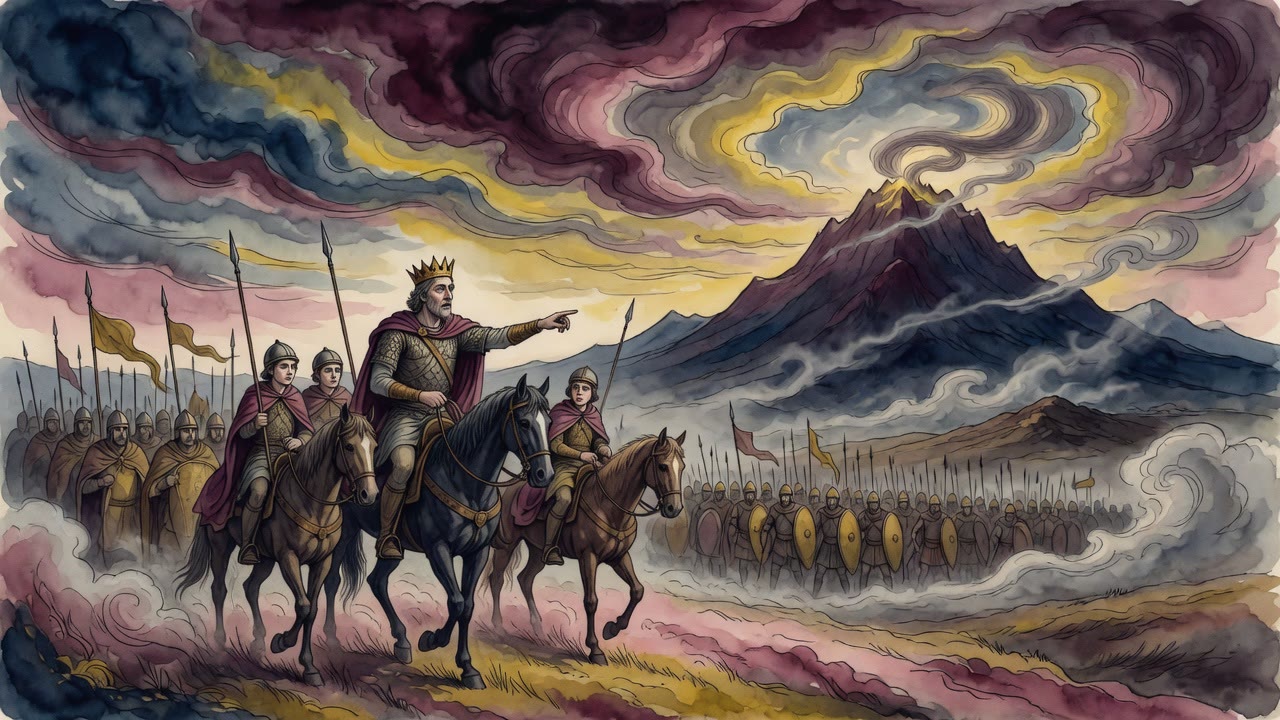
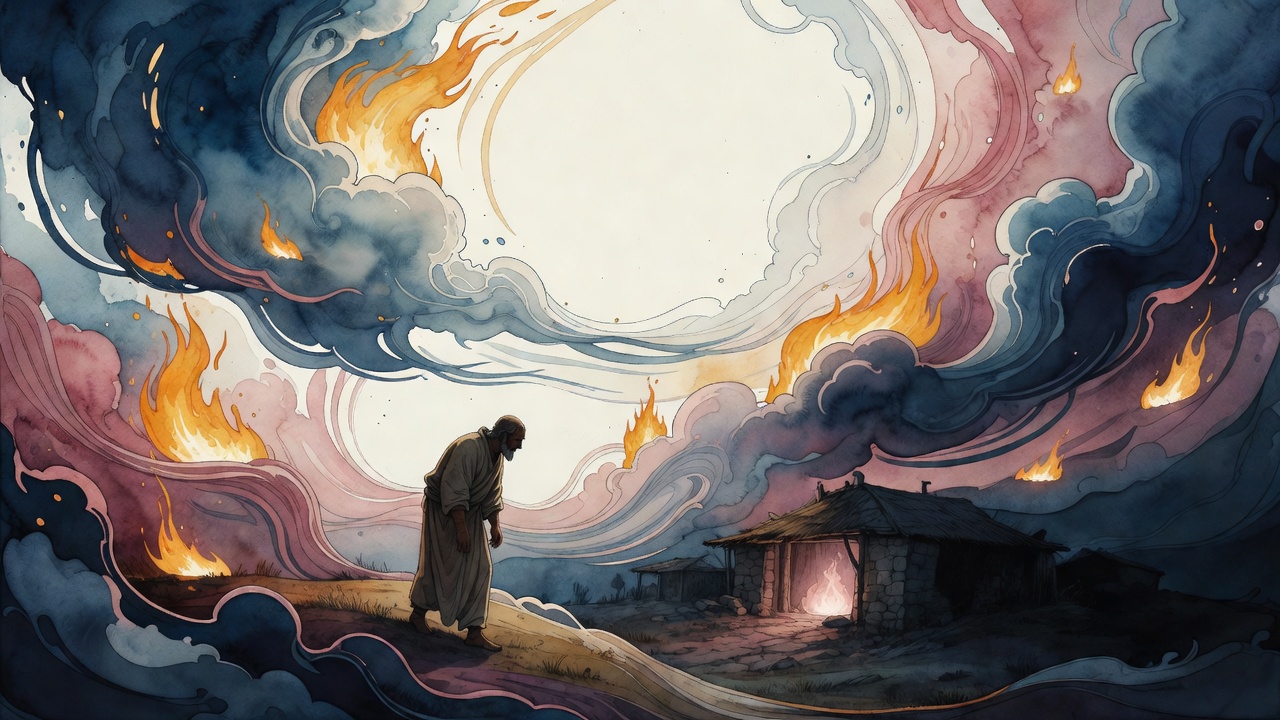
From the ridge at Gilboa Saul counted the Philistine camp spread out on the plain at Shunem and understood that he had brought too few men. That was ordinary fear and he had handled it before. What came next was not.
He asked through the prophets. Nothing came back. He asked through dreams. Nothing. There was still the breastplate with the sacred lots in it, and he did not ask through that, and he never explained why. He had put every priest of Nob to the sword, the whole town of them, and he knew exactly what a dead man would say to him about the Urim if he brought it up.
So he told his servants to find him a woman who could call up the dead.
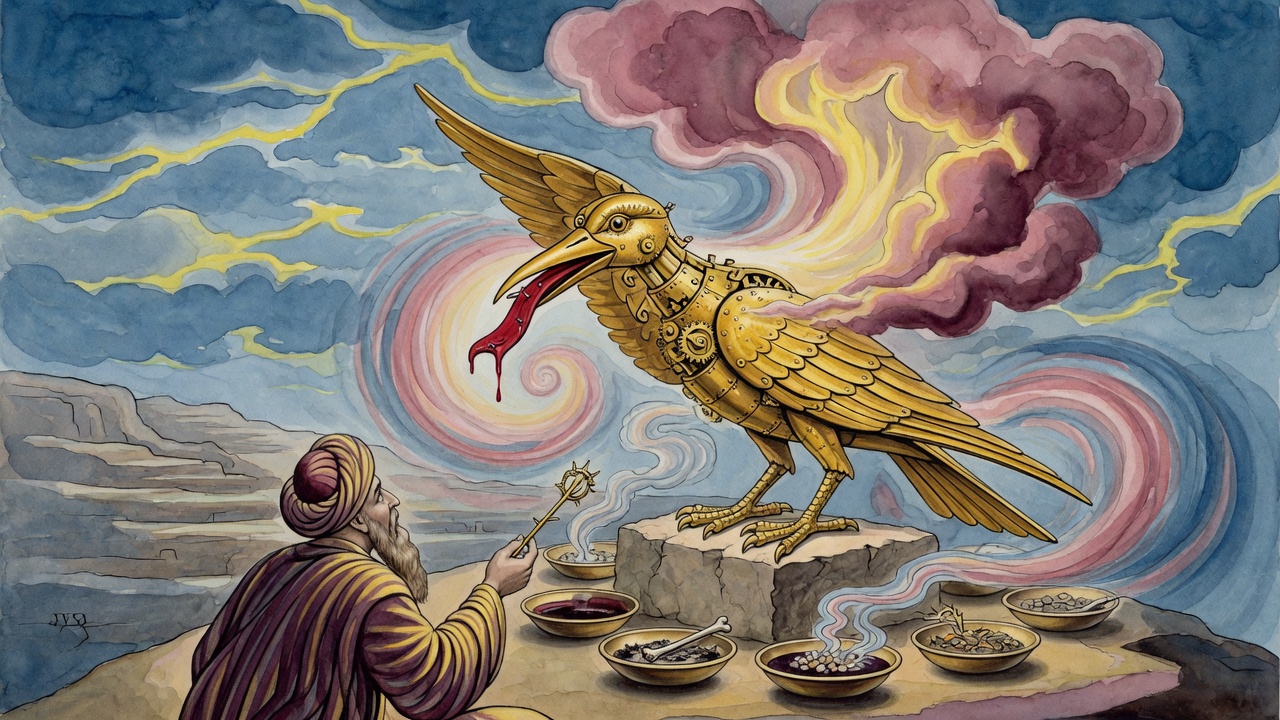
A king once came into a province and gave an order that every rooster in it be killed that night. In the morning he wanted to leave and asked whether any rooster was left to crow the dawn for him. Saul had cleared every medium and necromancer out of the country himself, by decree, and now he stood in the dark asking his own men where he could find one.
Plain Clothes and Two Men
He took off the royal clothes and put on plain ones. He took two men, Abner and Amasa, and no more, and they went to Endor at night.
It was not really night when they set out. It only felt like night to them, because the light that had been over that man for twenty years was not over him anymore.
The woman balked at the door. She knew the decree. She told the stranger that he was setting a trap for her and that she had done him no harm. So the stranger swore to her, by the God whose priests he had killed and whose lots he would not touch, that no punishment would come to her for it.
"Who shall I bring up?" she said.
"Bring me up Samuel."
One of Them Saw Him and One of Them Heard Him
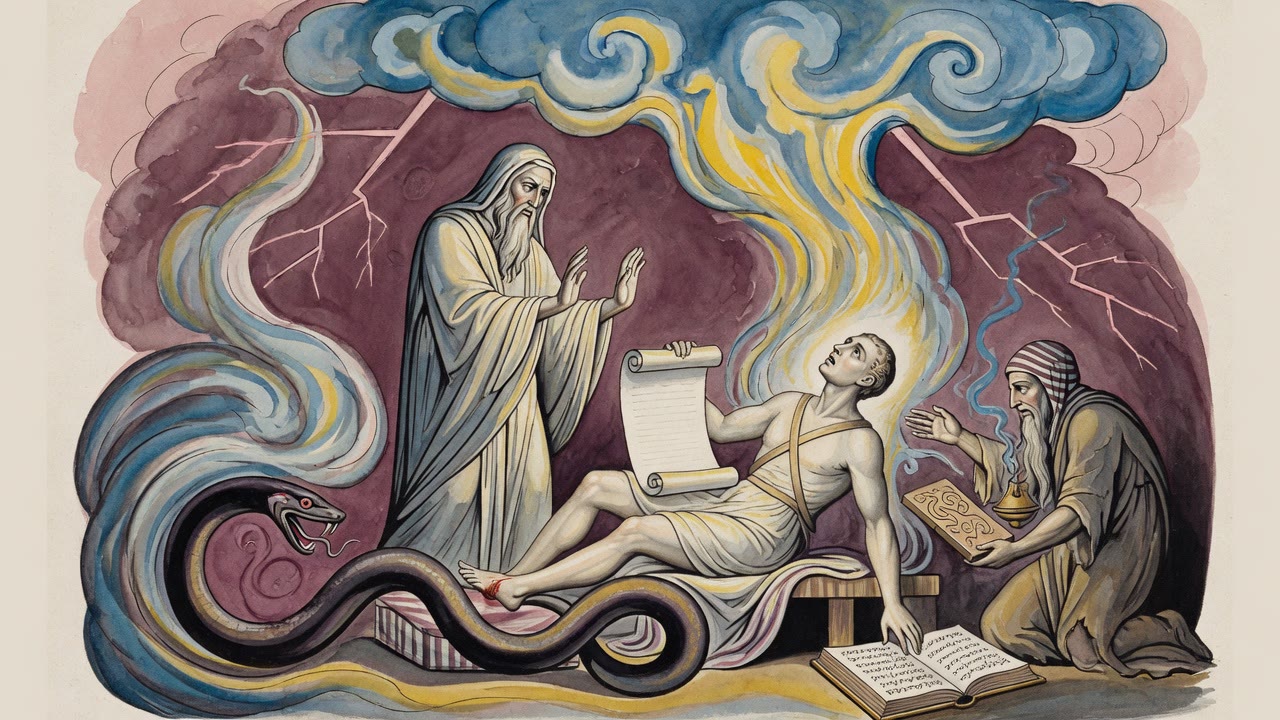
She did whatever it is she did, and she screamed.
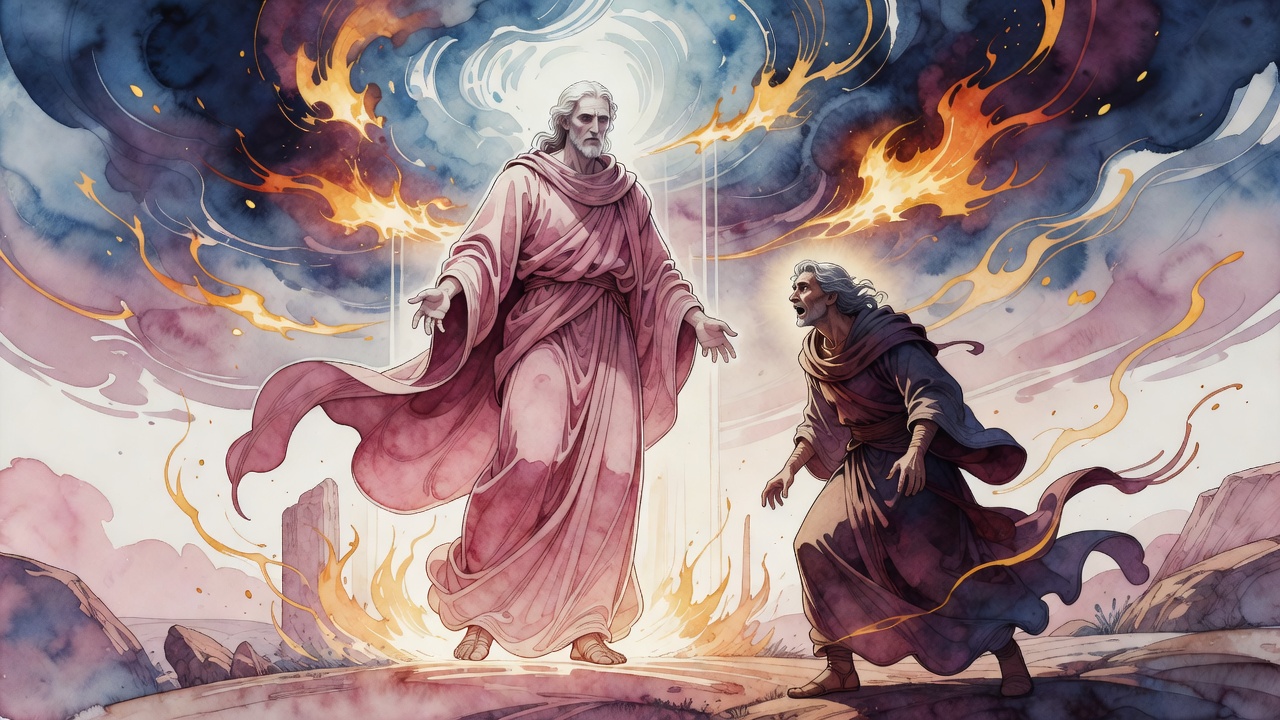
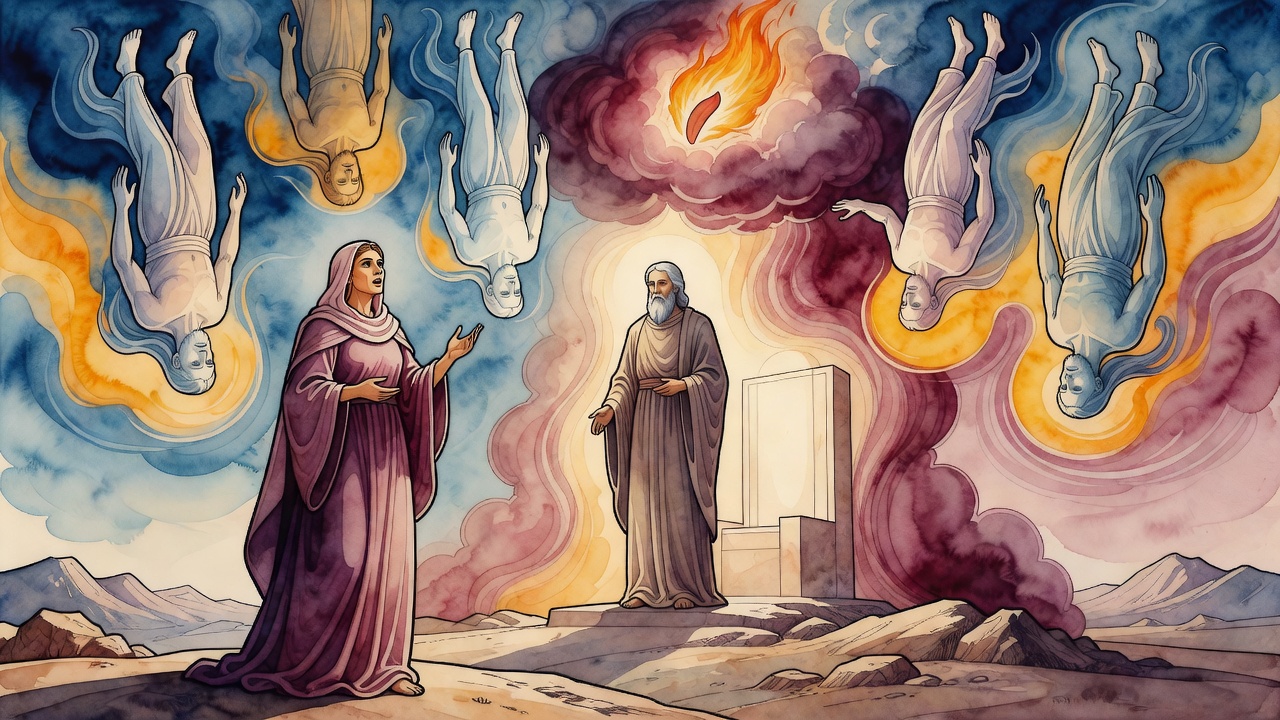
She knew who her customer was the moment the figure came, because the dead do not come up the same way for everybody. For an ordinary man they come face down. For a king they come face up, and this one was face up.
"Why have you tricked me? You are Saul."
"Do not be afraid. What do you see?"
"I see a great one coming up out of the ground." The word she used was the word for a god, and hearing it, Saul went cold. Some said that righteous men came up alongside Samuel. Some said that Samuel himself was terrified, that he thought the Day of Judgment had arrived, and that he brought Moses up out of the ground with him.
"What does he look like?"
"An old man, and he is wrapped in a robe."
The woman could see him and could not hear a word he said. Saul could hear him and could not see him. Abner and Amasa, who had no business with him, saw nothing and heard nothing at all. Saul put his face to the ground.
The World of Falsehood and the World of Truth
"Why have you disturbed me and brought me up? You had nothing else left to provoke your Creator with, so you made an idol out of me?"
Saul said he was in terrible trouble. The Philistines are making war on me and God has walked away and does not answer, not by prophets, not by dreams.
"Then why ask me? He has gone over to your enemy. He has gone over to your adversary."
Saul heard the change and named it. "That is not what you told me when you were alive. You said the kingdom would go to one better than I am. Now you say it goes to David, and you call him my adversary."
"When I was with you I was in the world of falsehood, and you heard false things from me, because I was afraid you would kill me. I am in the world of truth now, and you get only true things from me. He did not do this to you at random. You did not carry out His burning anger against Amalek."
Saul asked the only question left. "And if I run?"
"If you run, you live."
Then the rest of it. "If you take the judgment on yourself, then tomorrow you and your sons are with me." Inside my own partition. In my place.
Saul went down full length on the floor and stayed there.
What He Told Abner and Amasa
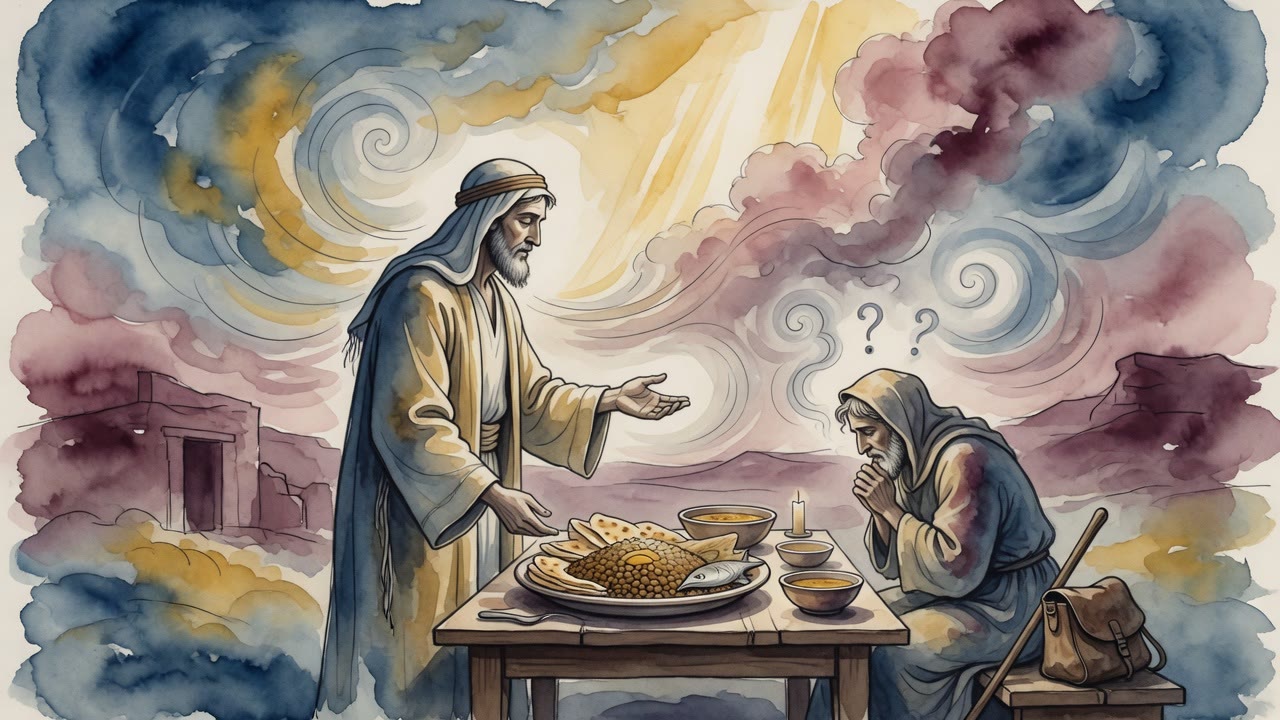
He had eaten nothing all day and nothing all night. The woman had one calf. She had raised it by hand and fed it herself and it was the only thing she owned, because she lived off the work of her own hands, and the man in front of her had outlawed the trade that fed her. He refused the food. She kept at him until he gave in, killed the calf, cooked it, and set it in front of him and his two servants. She wanted nothing back. She knew there was nothing to want. He would die before the next sunset and could do her no favors ever again.
He walked back to camp while it was still dark. Abner and Amasa wanted to know what the prophet had said.
"He told me I will go down into the battle tomorrow and come up out of it a winner. And that my sons will be given high commands."
In the morning he took Jonathan and Abinadab and Malchishua out with him onto the mountain.
God called the ministering angels over to look at him. Come and see a creature I made in My world. An ordinary man will not take his sons with him to a feast, in case somebody's eye falls on them. This one is walking into a war knowing it will kill him, and he is taking his sons, and he is glad about the justice coming for him.
All three of them died on Gilboa before their father did.
← All myths