The Ten Tribes Feasted While the Exile Was Already Sealed
Each chief drank wine from his own hills until dawn. They ranked Samson over Goliath. Samaria still had its walls.
Table of Contents
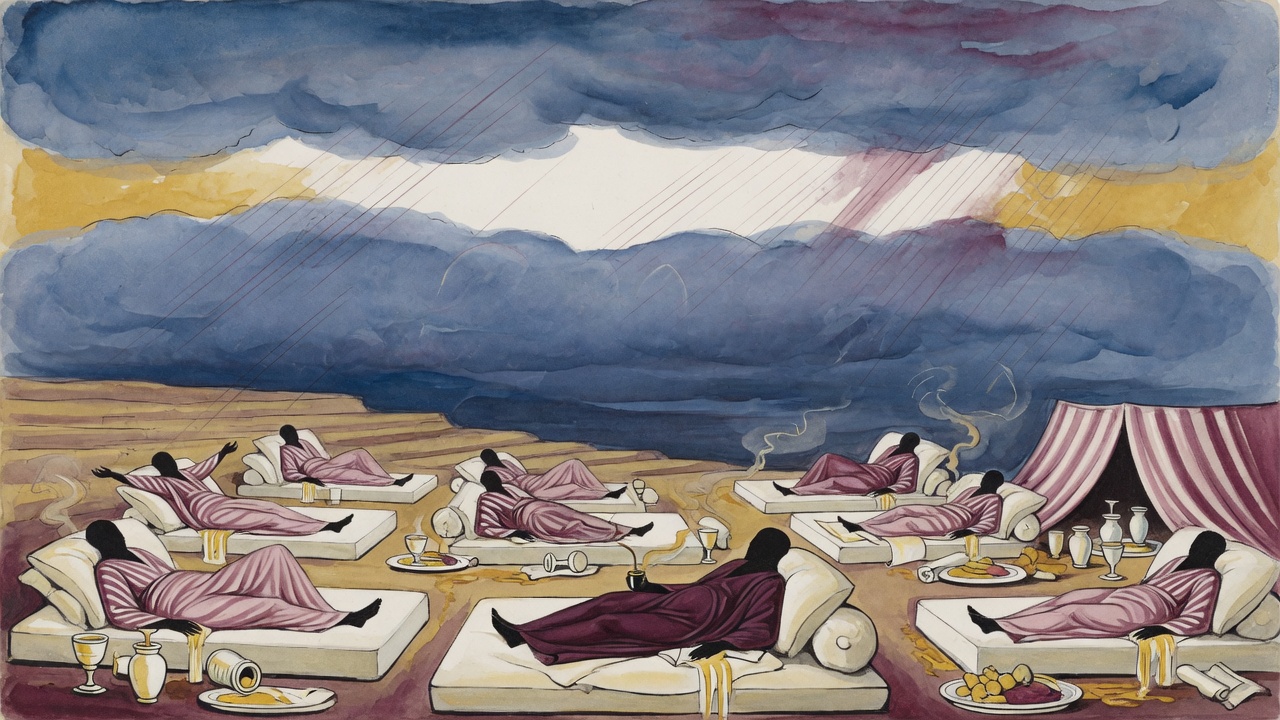
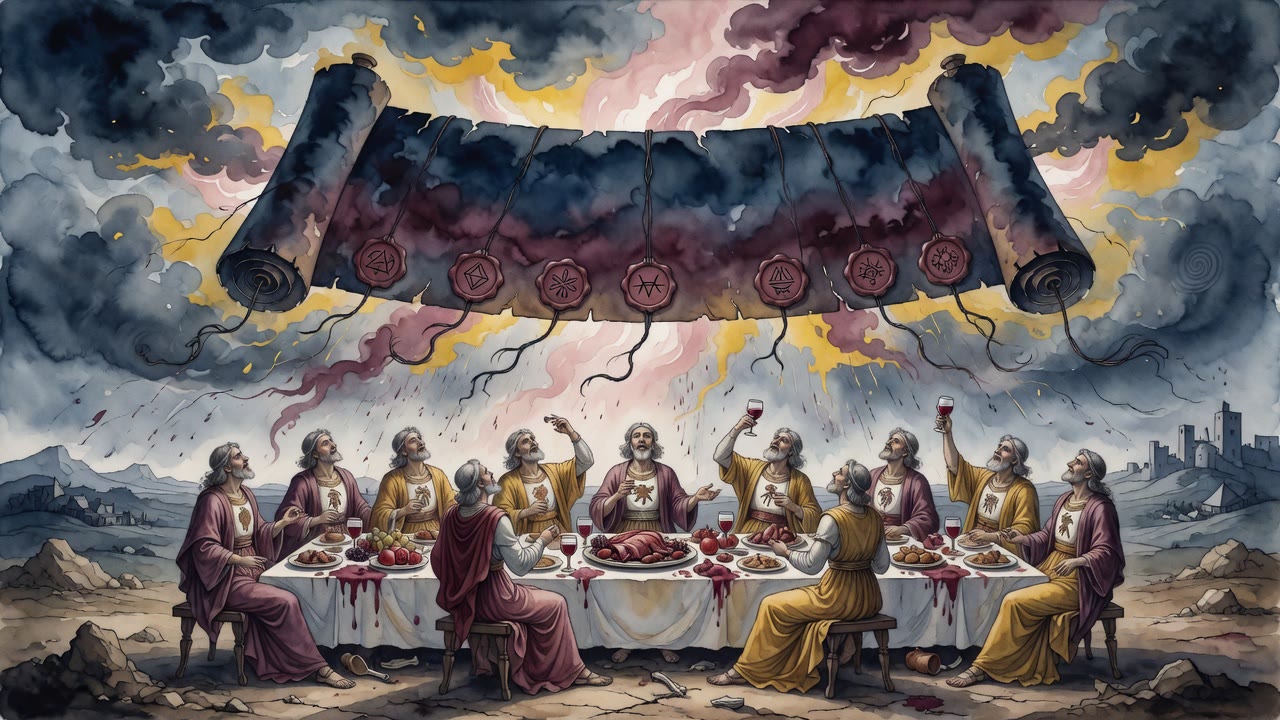
Midnight, and the vats were not empty. Each tribal chief drank only what his own hills had pressed. No shared cup. No borrowed vintage. The feast had already eaten the dark and started on the dawn.
 Click for full size
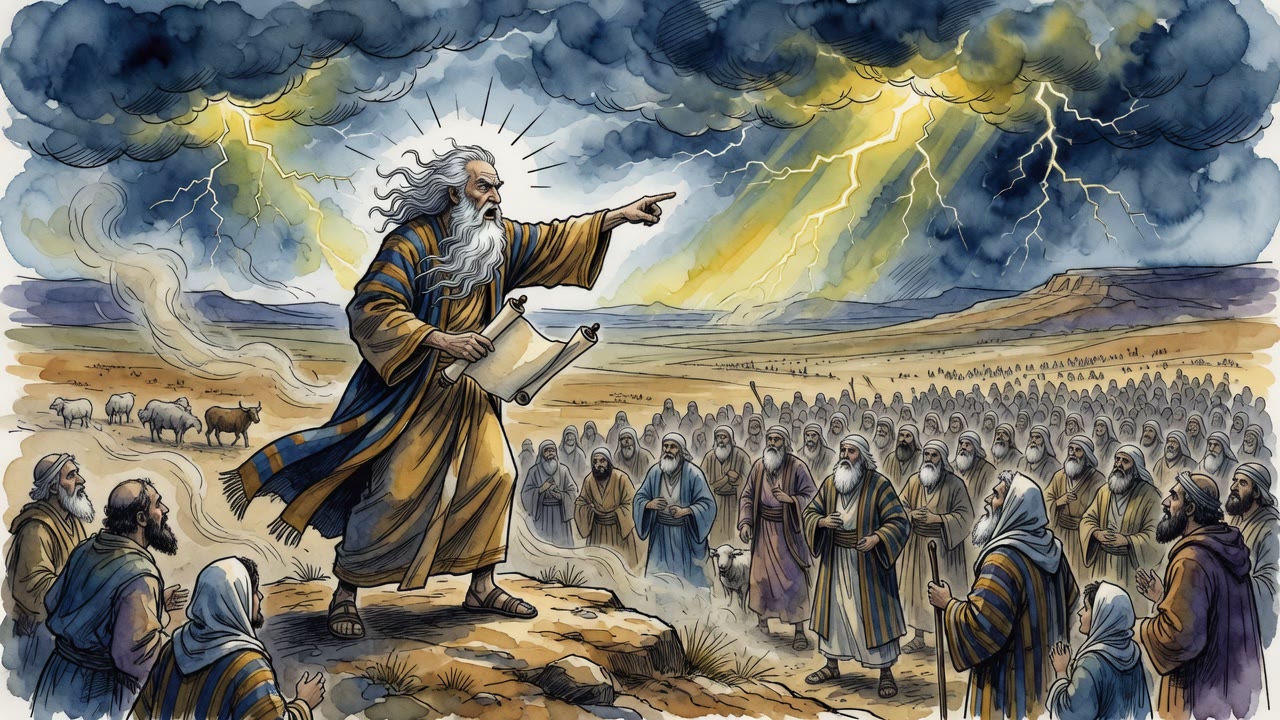
Amos stood outside the door long enough to hear the toast. He had come north in the days of Jeroboam son of Joash, when the land was fat and the ivory beds were not a rumor. They called themselves the foremost of the nations. He called them men who had stopped being afraid of losing that name (Amos 6:1).
Each Tribe Kept Its Own Cellar
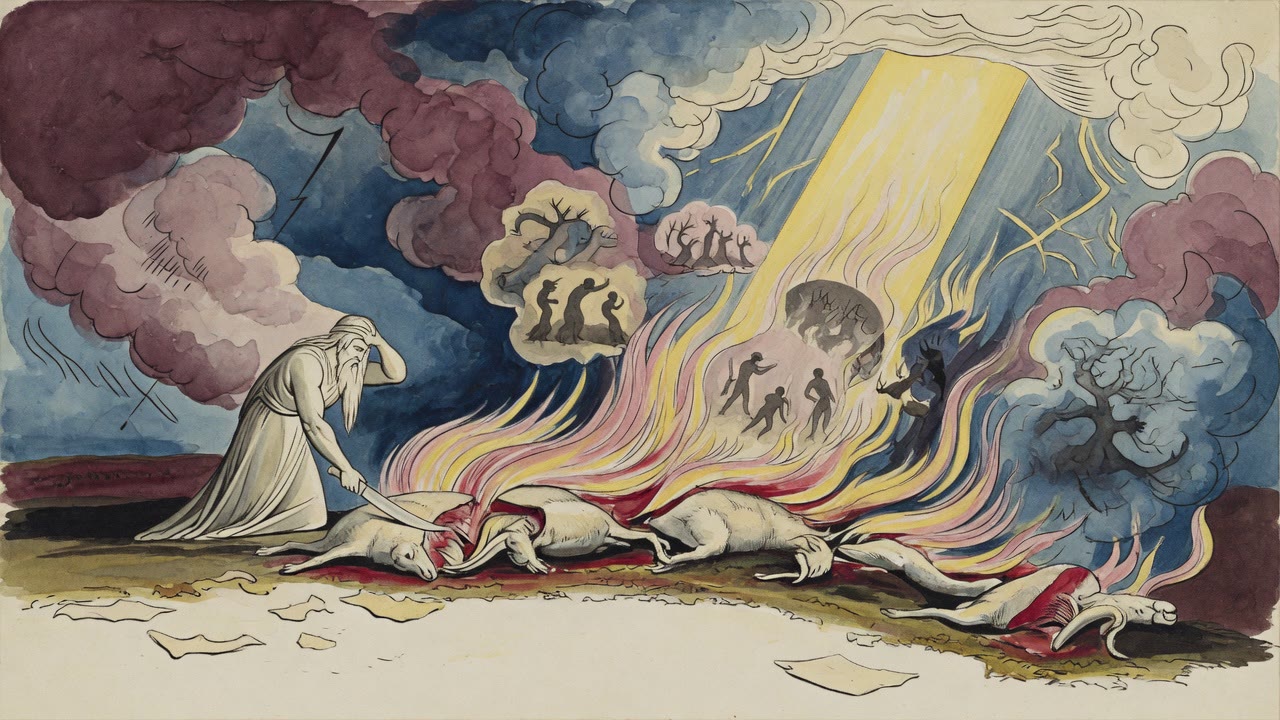
When a chief wanted his own wine, he did not send to his neighbor. He took his flock with him to his own store, so the meat on the table would be his fat lambs and the drink would be his press. Bowls, not cups. Oil that made the skin shine. They feasted until one jar failed, and by then another was being opened.
Amos named the ease out loud and got no answer that counted. The men inside ranked themselves against the world and liked the score. Who was strongest among the nations? Goliath, six cubits and a span. Who was strongest in Israel? Samson, who tore a lion with his hands and killed a thousand with a jawbone. Samson was greater. Who was richest? The nations named their emperors. Israel named Solomon, who made silver in Jerusalem as common as stone. Solomon was greater.
The game had a rhythm. Israel won every round. Pride at least knows it can fall. This was ease, the settled certainty of people who had compared themselves to every other nation and found themselves taller, and had begun to act as if height were a law.
Noah Finished the Pattern in a Day
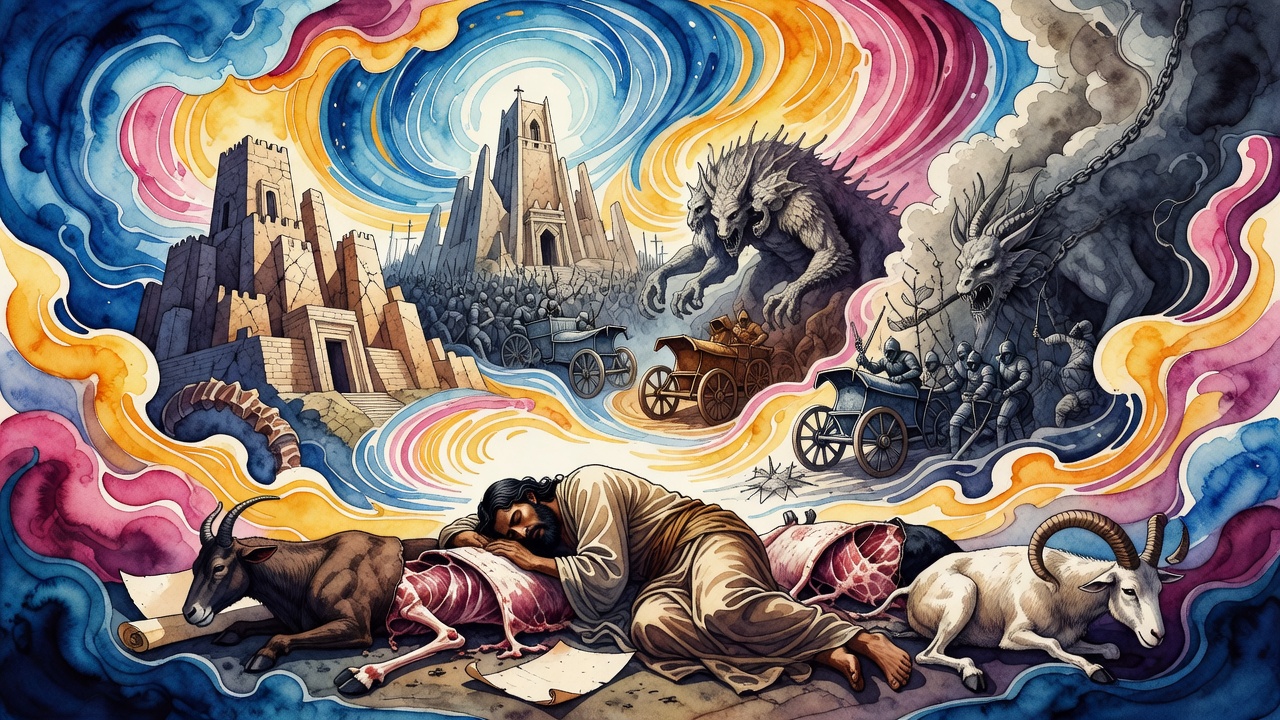
Long before those cellars, Noah stepped off the ark with grape pits in his hand. He planted. The same day the vine flowered. The same day it fruited. The same day he pressed and drank and was uncovered in the tent. He did not choose the shame. The wine chose it for him, and the uncovering, the word that sounds like exile, went out from that tent into later generations.
The northern tribes drank as if they had never heard that story. Judah and Benjamin would later stumble on wine as well. The pattern was older than Abraham. A man plants, a man drinks, a man is stripped, and a people learns the same motion with better cups.
Amos kept talking. They kept pouring. "Therefore they shall go into exile at the head of the exiles," he said, and the bowls still rang when they set them down.
Hoshea Sent Word to Egypt
Hoshea, last king in Samaria, tried a different kind of cup. He sent privately to So, king of Egypt, asking for help against Assyria. Shalmaneser heard it and came down angry. He arrived in Hoshea's seventh year. The city would not open. He sat against it three years.
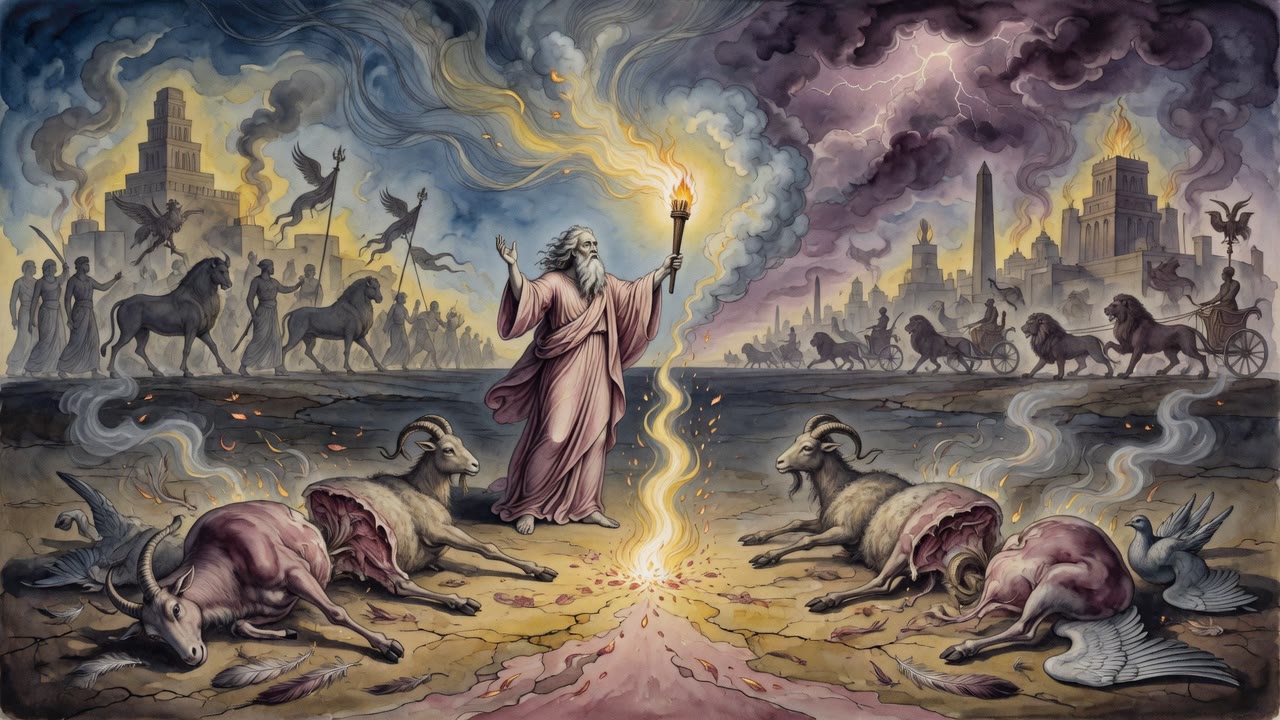
The exile was already sealed, and the cellars could not outlast a siege. Fat lambs thin. Oil runs out. Ivory is a poor wall. In the ninth year of Hoshea, and the seventh of Hezekiah in Jerusalem, the government of the Israelites was demolished. Hoshea was taken alive. The people were lifted out of their land and set down in Media and Persia. Other nations from Cuthah were poured into the empty houses, into the same streets where the tribal toasts had gone on until dawn.
Nine hundred and forty-seven years after the Exodus. Eight hundred years after Joshua led them in. Two hundred and forty years, seven months, and seven days after they broke from Rehoboam, grandson of David, and gave the crown to Jeroboam. Then they were gone.
A Day That Does Not Come Back
Later, in a house of study far from those cellars, the argument was not about wine. It was about whether the ten tribes would ever walk home.
Rabbi Akiva said they would not. Scripture says they were thrown into another land "as this day." A day goes and does not return. So they go and do not return.
Rabbi Eliezer refused that closed door. A day darkens and then it lights. So the tribes, for whom it had gone dark, would yet have light. He did not say when. He said the shape of a day is not only its going.
Rabbi said they come to the World to Come, because a great shofar would be blown and the lost would hear it. Other voices split the difference. If their deeds stay as they were on the day they left, they do not return. If the deeds change, the road opens.
Samaria did not hear that argument. Samaria had new tenants and old vats, some of them still stained. The men who had ranked Samson over Goliath were beyond the mountains, and the feast that had lasted until dawn had become the last thing their houses remembered of them.
← All myths