The Angel Sent to Collect Elijah Could Not Interrupt the Lesson
Two men sat inside a teaching so hard that a chariot of fire in the doorway meant nothing. The angel went back with the errand undone.
Table of Contents
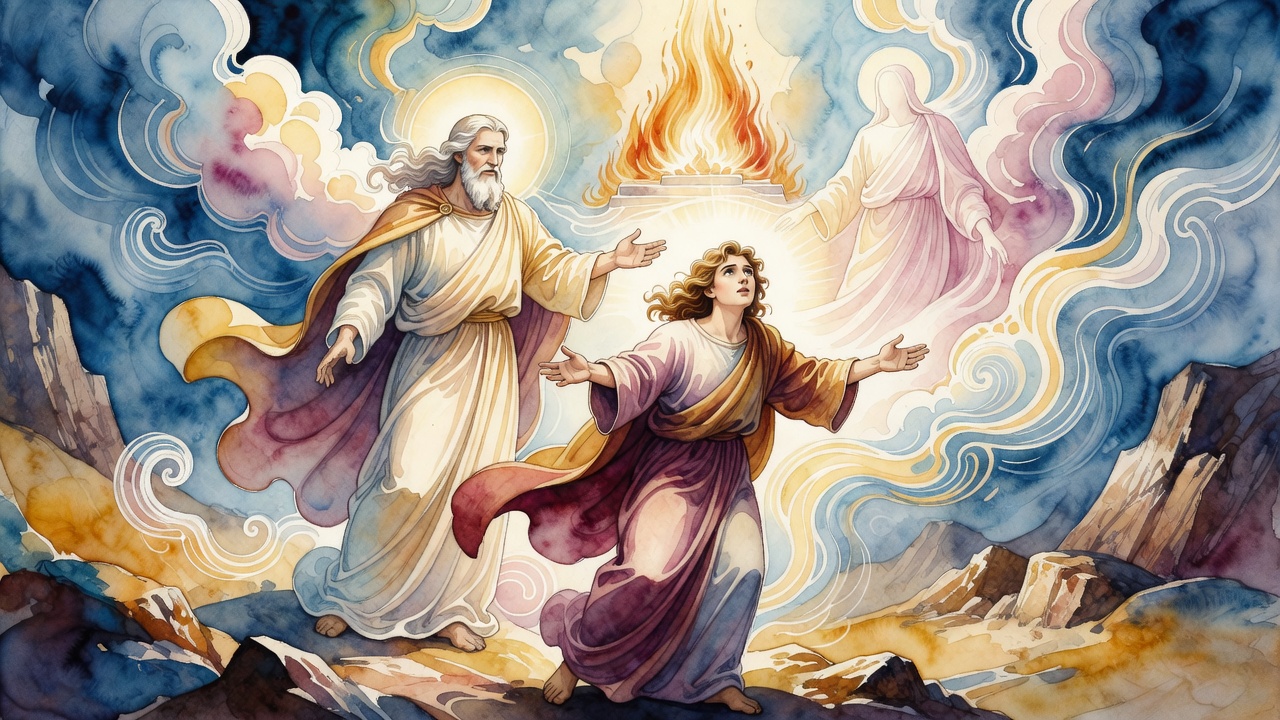
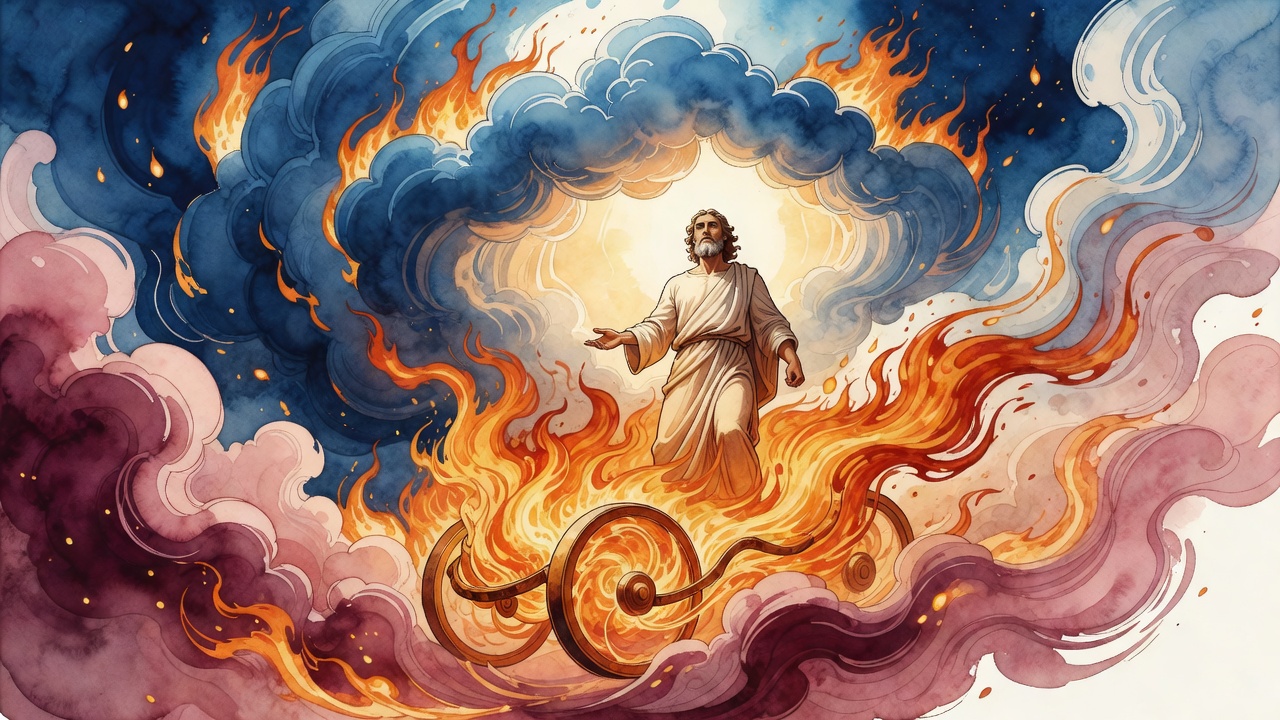
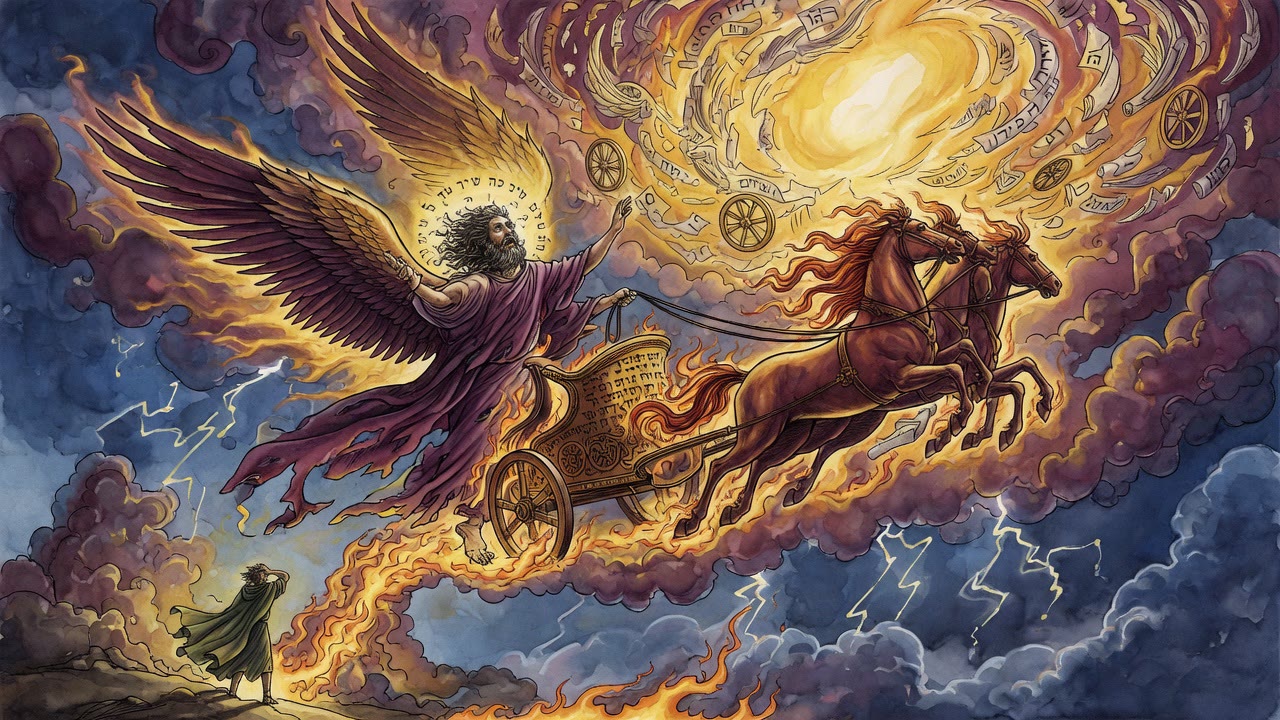
The chariot was harnessed. The horses of fire stood ready. The whirlwind waited. Heaven sent an angel down to collect Elijah.
 Click for full size
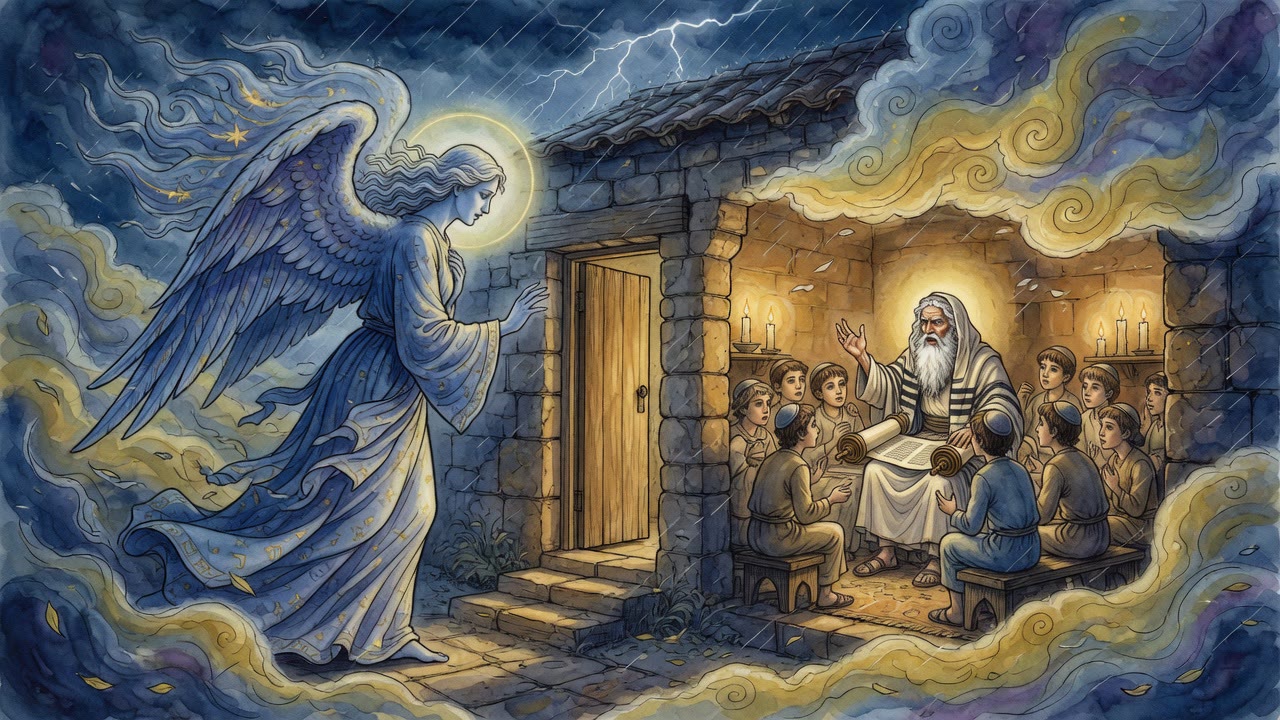
He found the prophet sitting with Elisha. The two of them were in the middle of an argument. Not a quarrel. A lesson, turned over and pulled apart and put back together, the old man pressing a point and the young man pushing back, both so far inside it that the light changing in the doorway meant nothing.
The angel stood there. Neither man looked up.
He went back to heaven with the errand undone.
He Left the Oxen Standing
Elisha had been plowing when Elijah first walked past him and threw the mantle. He did not finish the row. He slaughtered the oxen, boiled their flesh over the yokes, fed the people, and followed the prophet out of his own life. After that he never left him. Wherever Elijah went, the younger man was at his shoulder, and by the time the angel came for the errand the two of them had been arguing Torah together for years.
Elijah had thousands of colleagues in those days, prophets by the school and by the hundred, and some of them had been reckoned his equals. When he went up, their voices went out. The gift drained from all of them at once. No one who had it kept it.
Except Elisha. His grew stronger. The wages for a man who dropped his plow in the dirt when he was called.
The Whirlwind Waited Until They Were Done
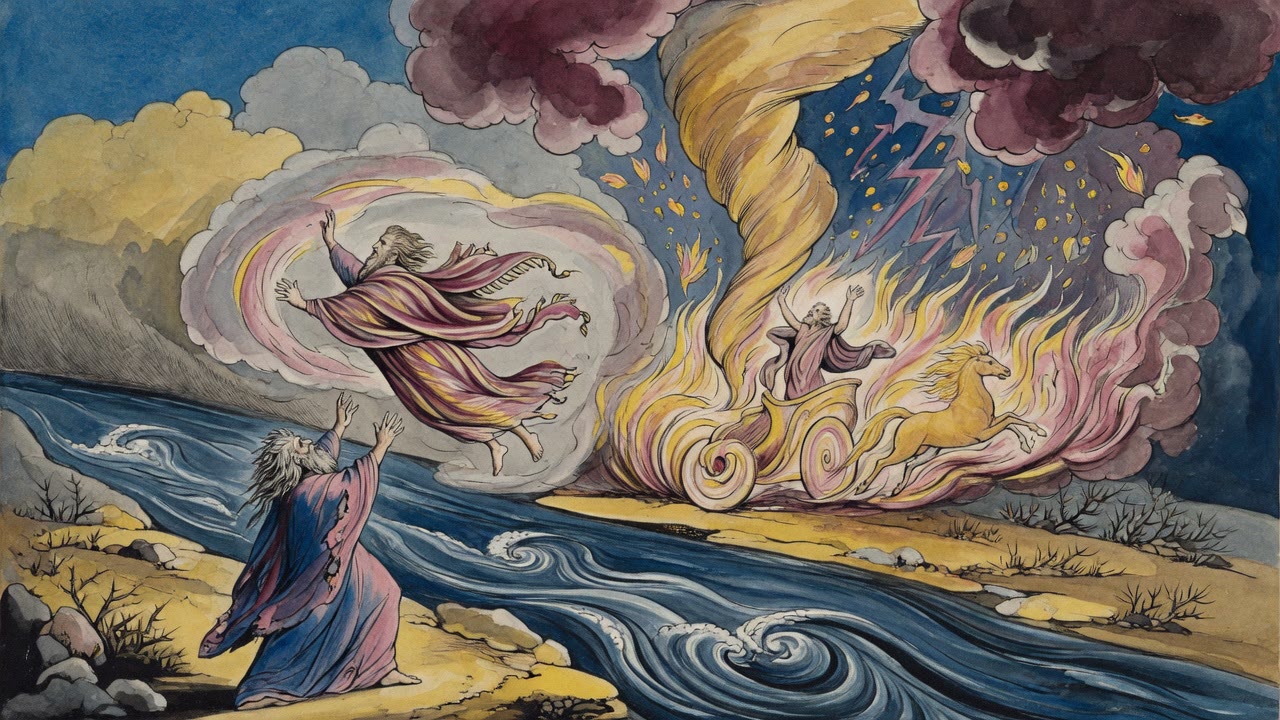
The angel came back when the talking paused. They were walking, still turning the same teaching, when the chariot of fire came down between them and split them apart, and the whirlwind took Elijah up.
Elisha shouted after him, "My father, my father, the chariot of Israel and its horsemen!" Then there was nothing overhead to shout at. He took hold of his own clothes and tore them in two.
Elijah's mantle had come down where the chariot went up. Elisha picked it out of the dust, walked to the Jordan, and struck the water with it. The river opened for him the way it had opened for the old man. The prophets watching from the far bank said to each other that the spirit of Elijah was resting on Elisha now.
Heaven Would Not Say the Name
Being taken up did not make Elijah quiet. He went on carrying news, down from the world and up into the court above, telling the academy on high what was happening on the ground and telling the ground what he had heard above.
One day he mentioned to Rabba bar Shila that the academy on high never quoted Rabbi Meir. Not once. One of the sharpest readers of Torah who had ever lived, and heaven passed over his name every time. The reason, Elijah said, was the man Rabbi Meir had learned from: Elisha ben Abuyah, a sage the rabbis counted among the wicked, and no relation to the prophet who had inherited the mantle.
Rabba bar Shila did not accept it.
He Ate the Fruit and Threw the Peel
"Rabbi Meir found a pomegranate," he said. "He ate the inside of it and threw the peel away."
That was the whole defense. A man walking home with a fruit in his hand, eating what was good in it, dropping the rind on the road. Not a speech. Not a legal brief. A picture small enough to carry upstairs.
Elijah heard it and was persuaded. He carried it up, and the powers above were persuaded too. After that a reading of Rabbi Meir's was spoken aloud in the academy on high, where his name had never been said.
The angel who could not interrupt a lesson learned the same law from the other side. Heaven itself had to be argued into quoting a man. Elijah is not finished. The last errand of his career is still in front of him. When the end comes he will carry out God's order to kill Samael, and evil will be put out of the world for good. Until then he keeps arriving, at a door, at a table, at a circumcision, at the edge of somebody's argument, and there is still no reliable way to make him look up before he is done.
← All myths