Sarah Was the Only Woman God Spoke to Directly
Three visitors promised her a son. She laughed inside the tent and then denied the laugh. The voice that answered her sent no angel.
Table of Contents
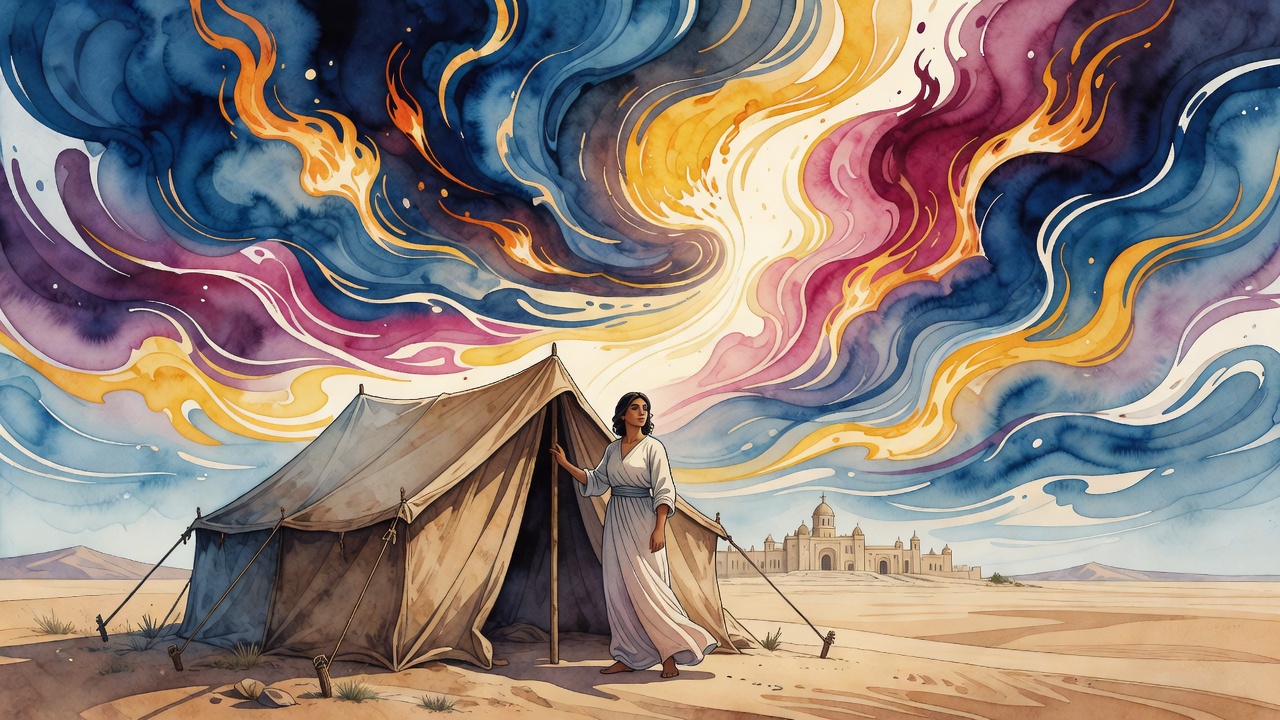
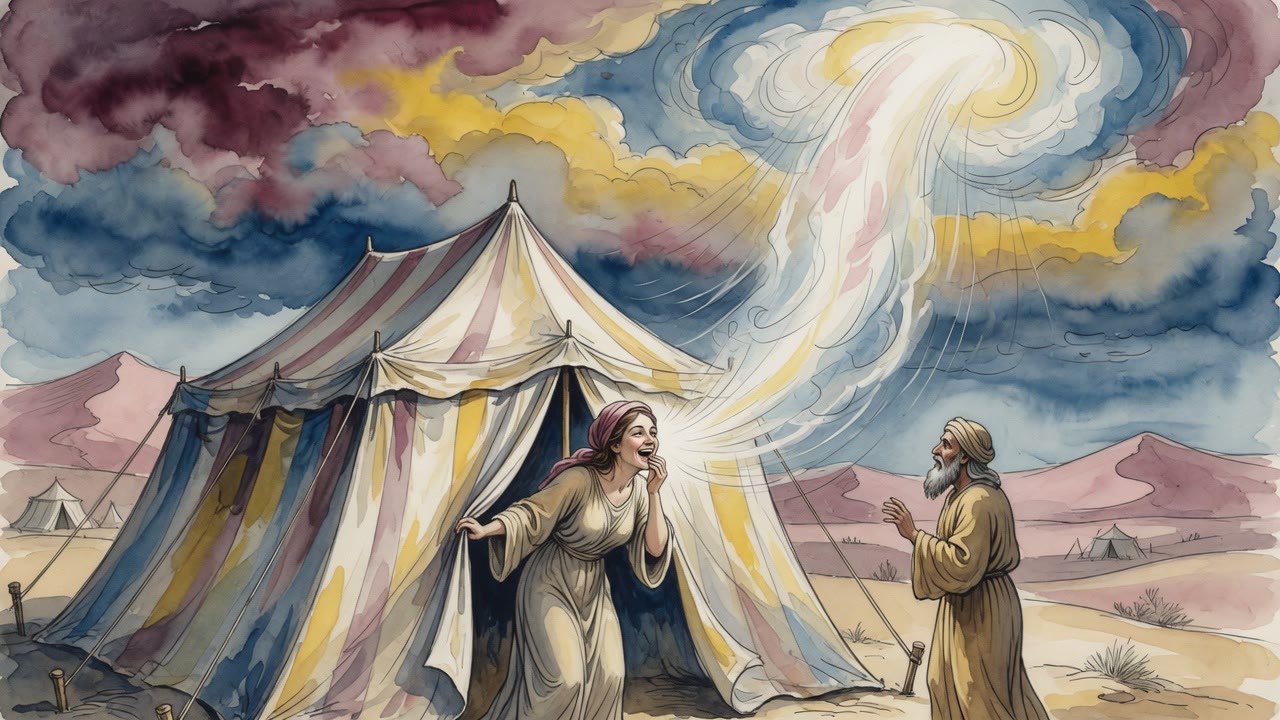
Sarah heard it through the tent wall. Three men had arrived at the oaks of Mamre at midday, and Abraham had run out to meet them, bowing to the ground, urging them to rest and wash their feet while he fetched bread and curds and meat (Genesis 18:1-8). She stayed inside. She listened.
 Click for full size
One of the visitors said that when he returned, Sarah would have a son. Sarah was old. Abraham was old. She knew her own body. So she laughed, the way a person laughs when something is simply impossible, a small private sound inside the tent.
The Laugh She Tried to Unsay
The voice came directly to her. Not through Abraham, who was standing outside. Not through an angel positioned between them. The question arrived without a messenger: why did Sarah laugh? Did she think anything was too difficult for the Lord (Genesis 18:13)?
Sarah was afraid. She said she had not laughed.
"No," the voice said. "But you did laugh."
The correction was plain, and it was aimed at her, in front of no witness but herself. Abraham could not testify to what had moved in her chest. An angel could not be sent to ask about an interior state that only she and God knew had occurred. The lie required directness. The laugh had been private. The denial made it a matter heaven would not leave in the wall.
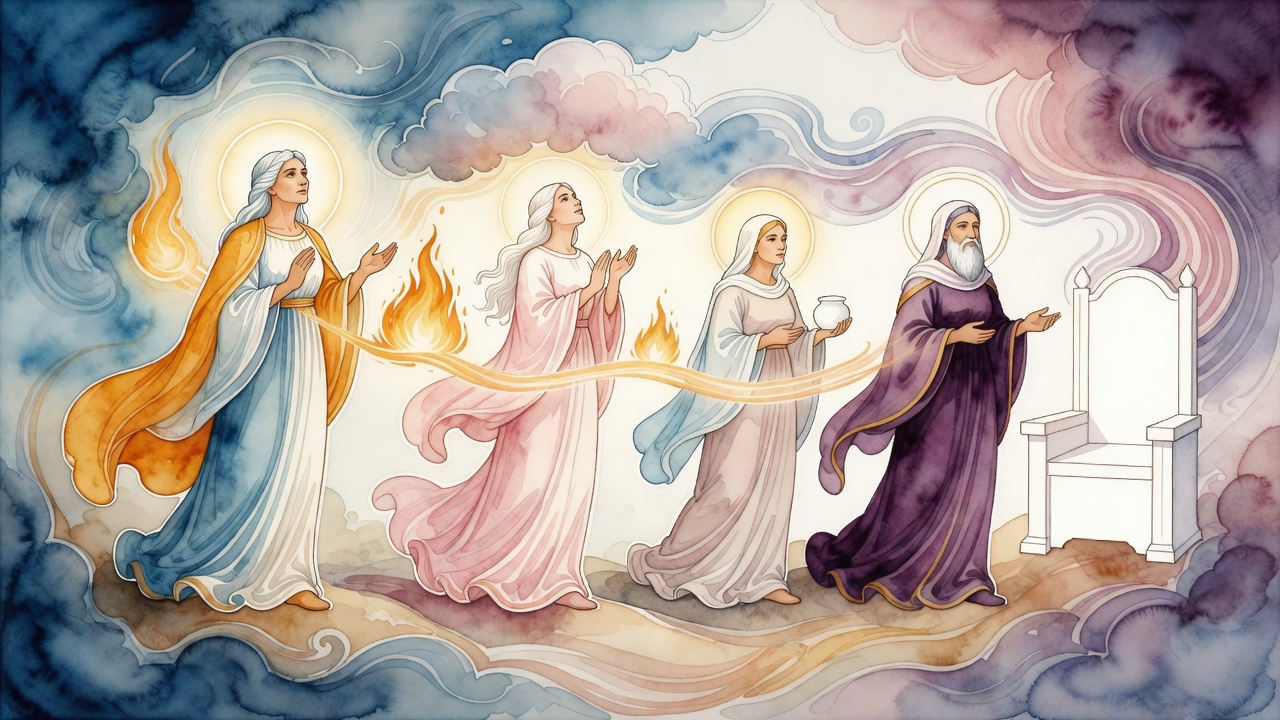
Rabbi Yehuda ben Rabbi Simon, citing Rabbi Elazar and Rabbi Yochanan, later named this the exception. The Holy One never deigned to speak with a woman except for that righteous woman, Sarah, and even then only because it was necessary. Miriam led the crossing of the sea and still did not get this. Deborah judged from under a palm and still did not. Rachel and Leah bore the tribes and still did not. When God had something to say to a woman, the message usually came through an angel, through a man, through some arrangement that kept a degree of distance.
Except here. Sarah had said she had not laughed, and the voice that corrected her could not be delegated.
Hagar Met a Voice at the Spring
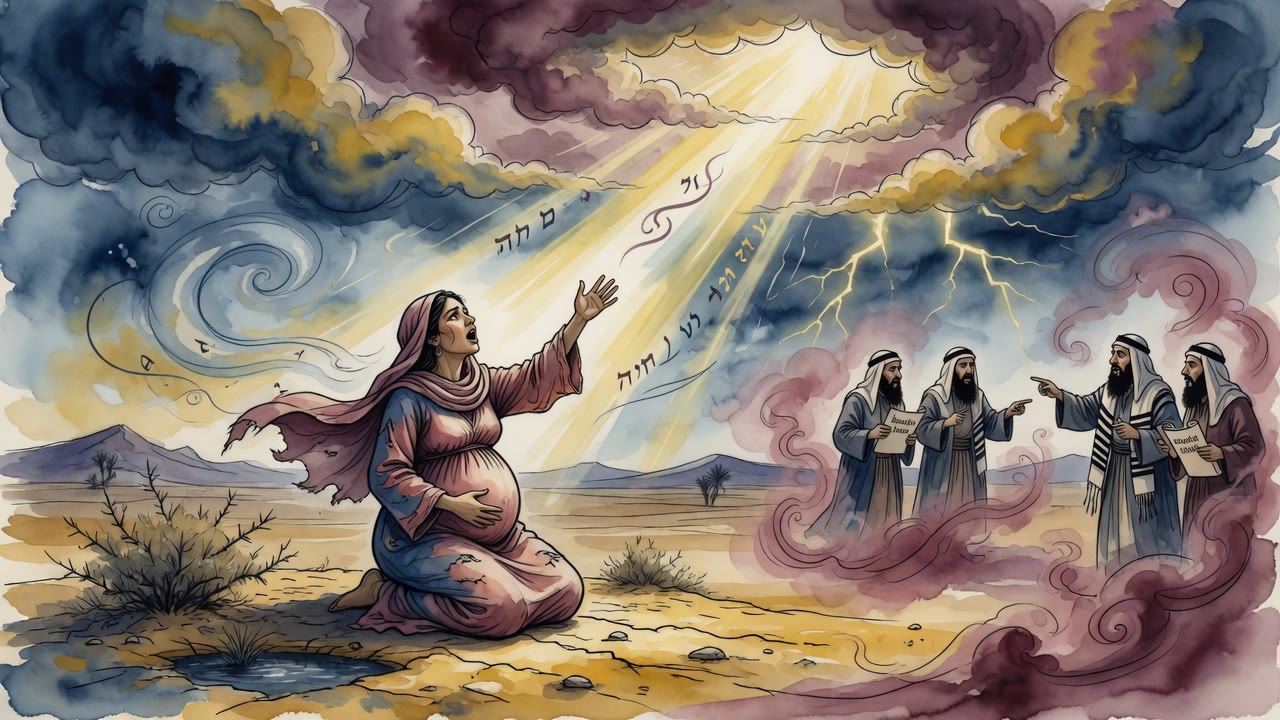
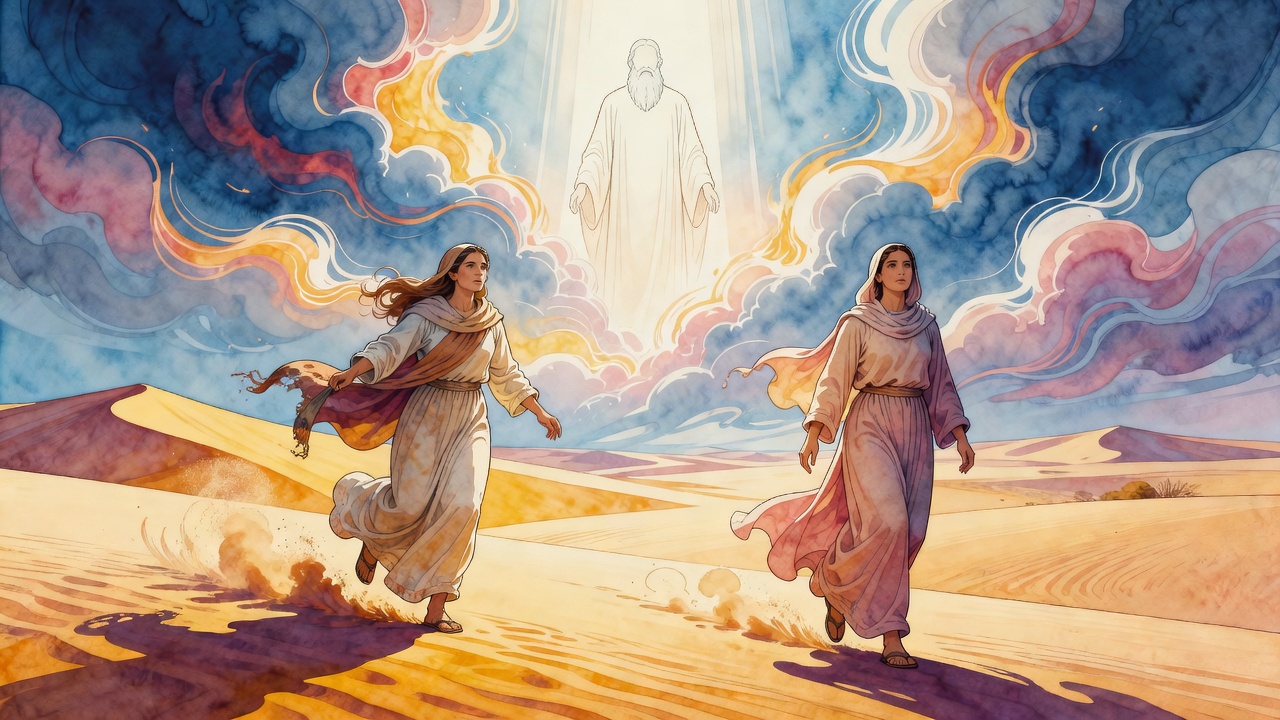
Hagar received no such directness. She was Sarah's Egyptian handmaid, the woman Abraham had taken so the household might have an heir Sarah could not yet give. When Hagar conceived, the house cracked. Sarah treated her harshly. Hagar fled into the wilderness, pregnant and alone, headed down the road toward Shur, toward Halutza (Genesis 16:6-7).
At a spring someone found her. The voice called her by name, Hagar, Sarai's maidservant, and asked where she had come from and where she was going. She answered honestly. She was fleeing from her mistress.
The instruction was hard. Return. Submit. Go back into the painful house. Be humbled beneath her hands. Then the promise attached to that instruction opened like a second sky. Her descendants would multiply beyond any counting. They would not be numbered for multitude (Genesis 16:10).
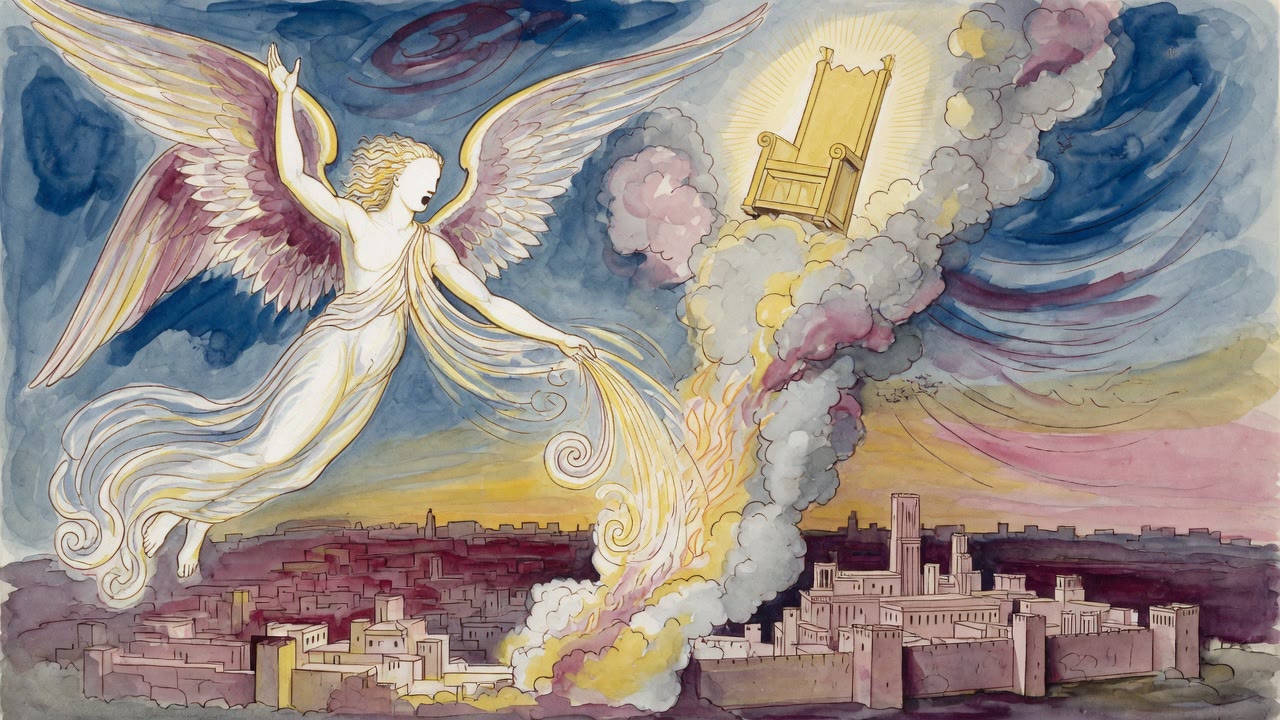
How many angels stood at that water? Rabbi Yosei bar Hanina counted five, one for every "saying." The other sages counted four, one for every time the word "angel" is written. None of those counts is God. Genesis calls the messenger the angel of the Lord throughout the encounter.
She Named the God Who Sees
Hagar named the place. She called the God who had spoken to her El-roi (אֵל רֳאִי), the God Who Sees, and she said she had seen the one who saw her (Genesis 16:13). She spoke as if the sender and the messenger had occupied the same air.
Rabbi Yehoshua, citing Rabbi Nechemiah in the name of Rabbi Idi, held that the whole hour was mediated. She spoke with an angel. Whatever she received came through that channel. Rabbi Eleazar, citing Rabbi Yosei ben Zimra, went further and named the intermediary: Shem, son of Noah, a spiritual leader of that era, a specific chain of transmission. Hagar had gone to consult, and the consultation wore a man's face.
Nobody proposed a similar debate about Sarah. When God asked Sarah why she laughed and told her she had, no angel stands in the text, no Shem, no messenger between them. Sarah's correction came without cushioning.
Hagar, for her part, received something Sarah had not yet received at the moment of that desert encounter: a promise about the child she was already carrying. An uncountable future spoken into the wilderness at a spring. Through a messenger, a woman alone received a word about her child's children's children that no arithmetic could hold. Then she was sent back to suffer under Sarah's hands, the question Philo later left standing on the page without a ruling: why that return, why that humility, attached to that blessing.
The Tent Needed No Messenger
Sarah stood in her tent knowing that the voice that caught her knew exactly what had moved through her in that one private, impossible moment. She had laughed at a promise. The promise arrived anyway. The laugh was neither forgiven nor condemned. It was simply known.
Hagar stood at a spring and named a God who sees, and the seeing still came through someone else. Four angels or five. Shem. A hard road back into a house that had already cracked. Two women. Two kinds of address. One laugh that heaven would not let stay behind a wall, and one flight that heaven would not let finish.
Sarah had tried to unsay a sound. God said the sound back to her. That was the whole of the exception, and it was enough to mark her as the only woman the divine voice ever addressed without a go-between.
← All myths