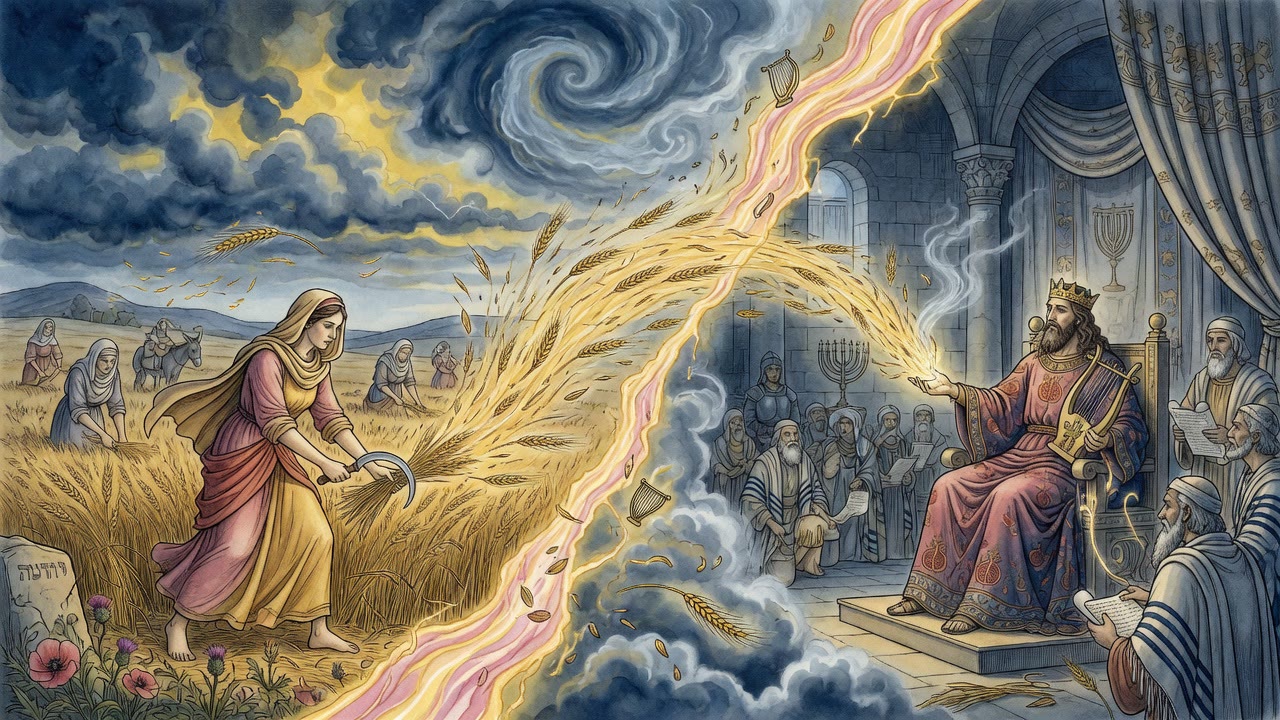
Ruth in the Fields of Boaz and the Prophecy She Received
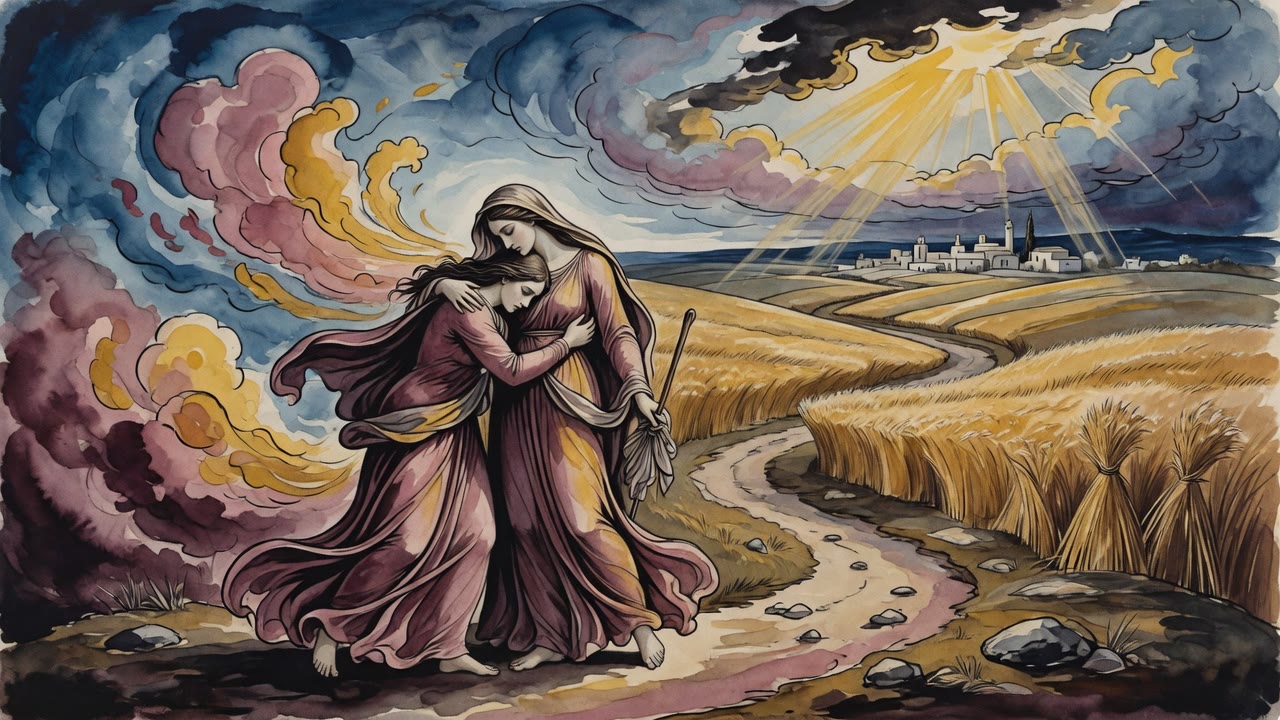
Ruth gleaned only two stalks at a time even when starving. Boaz watched her restrain herself and understood that he was looking at something extraordinary.
Table of Contents
 Click for full size
What Poverty Strips Away
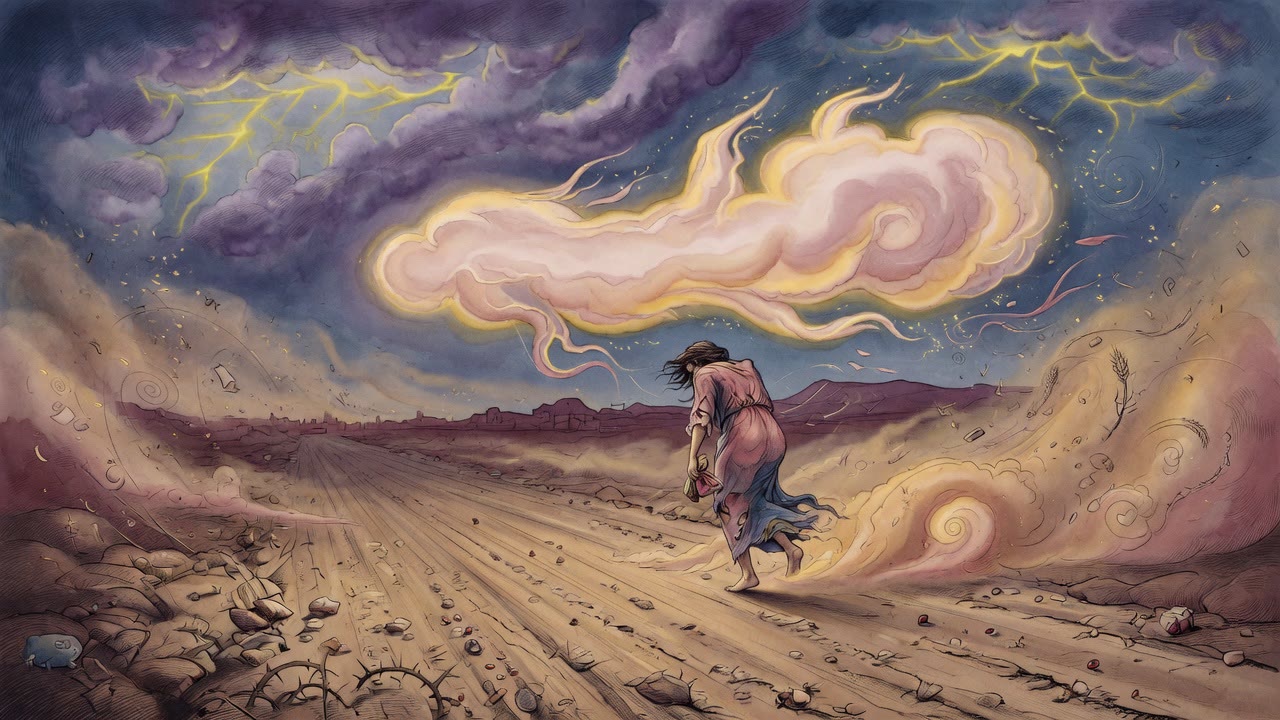
Ruth arrived in Bethlehem with nothing. No family connections, no standing in town, no husband to speak for her. She had traded everything she possessed in Moab for a promise to stay with a woman who had nothing left to offer her. The law of leket, the gleaning ordinance, gave her a right: she could follow the harvesters and pick up what they dropped or left behind. The right was the law's concession to the poor, and she had come to use it.
She went to the fields. She worked in the summer heat, moving behind the harvesters through the cut grain. She was hungry. She was exhausted. The fields belonged to a wealthy man she did not know.
She picked up two stalks at a time.
What Boaz Noticed Before He Asked Her Name
The law set a floor. It defined what the poor were entitled to take, but it said nothing about the maximum. A gleaner who was hungry and careful could take far more than two stalks without violating any rule, by picking up everything in reach, by gleaning the edges twice, by staying close behind the harvesters so that the grain barely hit the ground before she reached it. The law would not have objected. Nobody would have objected.
Ruth took two stalks at a time.
Boaz came out to his field and asked his foreman about her. The foreman told him she had come from Moab with Naomi and had been there since morning without stopping. Boaz went to her and told her to stay in his fields, to drink from the workers' water jars, not to go to anyone else's fields. She asked why he was treating a foreigner this way. He told her that he had heard what she had done for Naomi after Naomi had nothing left to give.
The Blessing She Did Not Expect
Then Boaz said something that the rabbinic tradition read as prophecy wrapped inside a blessing. He prayed that God would repay her work, and he named the specific quality he was praying over: that she had left her father and mother and the land of her birth and come to a people she did not know. The tradition recognized in his words an echo of the exact language used to describe Abraham's call to leave his homeland and go to an unknown country. Boaz was not comparing Ruth to Abraham consciously. He was blessing her in terms that the text understood as prophetic, naming what she had done in the vocabulary of the founding act of the entire people she had joined.
The prophecy inside the blessing pointed forward to what would come from Ruth's line. The tradition understood what Boaz did not yet know at that moment in the field: that he was looking at the grandmother of David.
The Meal and What It Meant
At the midday meal, Boaz invited Ruth to eat with the harvesters. He passed her roasted grain and she ate and had extra left over, which she set aside for Naomi. When she went back to gleaning, Boaz quietly instructed his workers to drop handfuls on purpose, to leave the grain dense in the areas where she was working, and not to rebuke her or move her along. The generosity was private, arranged so that it would look like ordinary abundance rather than a gift. Ruth's dignity as a gleaner was preserved. She would think she had been lucky or skilled. She would not know she was being watched over.
She brought home more than an ephah of barley that evening. Naomi, seeing the amount, asked immediately where she had gleaned and said: blessed is the man who took notice of you.
← All myths