759 related texts · Page 1 of 16
The ancient rabbis, the mekubalim (mystics), saw the world brimming with hidden meaning, a tapestry woven with divine code. Take, for instance, the lulav and etrog, the palm branch...
The Midrash (rabbinic interpretive commentary), that treasure trove of Jewish stories and interpretations, finds echoes of this universal joy in the verses about the holiday of Suk...
Our jumping-off point is a verse from Numbers (Bamidbar) 10:10: "And on the day of your rejoicing and on your appointed times you shall sound the trumpets." Seems straightforward. ...
Kimhit was a woman whose modesty was so complete that, according to the Talmud (Yoma 47a), even the beams of her house never saw her hair uncovered. The sages said this was the rea...
“In the first month, that is, the month Nisan, in the twelfth year of King Aḥashverosh, he had cast a pur, that is, the lot, before Haman for each day and for each month, to the tw...
Shir HaShirim Rabbah, the classical Rabbinic commentary on Song of Songs, offers a fascinating perspective. It suggests that we can "recount your love through wine [miyayin]." But ...
That’s the sense I get reading Bereshit Rabbah 98, a beautiful passage from the ancient midrash (rabbinic interpretive commentary)ic collection, which interprets a verse from (Psal...
That’s the scene we’re stepping into today, a scene that plays out once a year, on Yom Kippur, the Day of Atonement. Our focus? The High Priest, his heart pounding, preparing to en...
Jewish tradition whispers, "Yes." And perhaps no holiday embodies this more beautifully than Sukkot (the Festival of Tabernacles). Sukkot, the Feast of Booths, or Tabernacles. It's...
Leviticus 23 lists every festival on the Jewish calendar. The Targum Jonathan transforms it from a schedule into an instruction manual, adding measurements, procedures, and theolog...
See, (Leviticus 16:23) tells us that Aaron, the High Priest, would enter the Tent of Meeting – the Ohel Mo'ed – and remove the linen vestments he wore when he entered the Sanctum –...
Take Sukkot (the Festival of Tabernacles), for example, the Feast of Tabernacles, a joyous holiday where we dwell in temporary shelters, remembering our ancestors' journey through ...
What is written after this passage (in Lev. 21:10)? “And the priest that is highest among his brothers”22Lev. R. 26:9. Why is he called by the name, “high priest?”23THE PRIEST THAT...
The Torah declares in (Exodus 12:16), "On the first day, a calling of holiness." The Mekhilta asks what it actually means to "call" a day holy — and the answer is surprisingly conc...
It's more than just a fragrant fruit; according to the Tikkun (spiritual repair)ei Zohar, it’s a symbol, a reflection of something truly profound. The sages of the Mishnah (the ear...
(Exodus 23:16) refers to Shavuot (the Festival of Weeks)h as "the festival of the harvest, the first-fruits of your labor." The Mekhilta notes that this description appears within ...
Rabbi Abahu offers a powerful insight into this very question, drawing from the book of Exodus. "Three pilgrimage festivals you shall hold a festival to Me during the year" (Exodus...
It turns out, even the number of curtains held a profound significance. : eleven curtains made of goats' hair. Why eleven? Well, according to tradition, it mirrors the eleven heave...
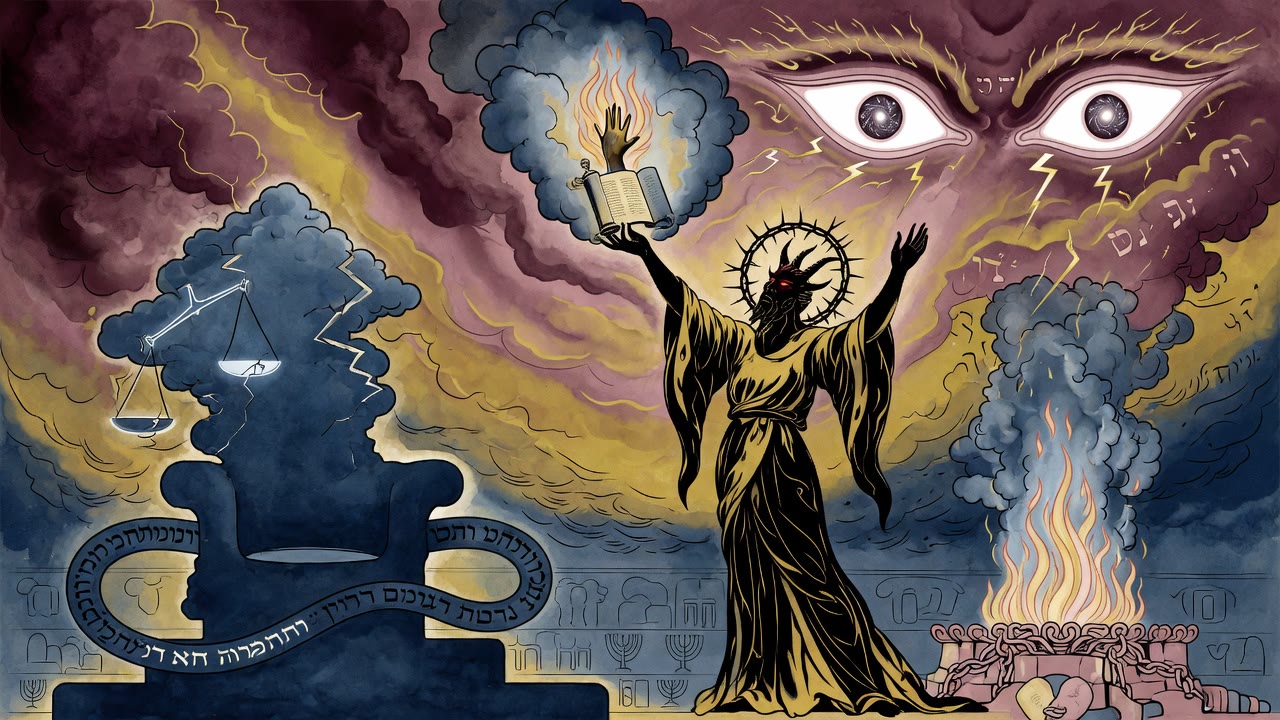
In Tikkun (spiritual repair)ei Zohar 99, we find a fascinating idea: the left side is associated with Rosh Hashanah, the New Year, a time of judgment and introspection. The right s...
It’s a question that rabbis have been debating for centuries, and it comes to life in a fascinating discussion about two very important observances: building a succah and waving th...
It wasn't just about grand ceremonies; even the distribution of offerings had its own set of rules and regulations. to one little-known, but fascinating, detail from Sifrei Devarim...
I'm talking about Yom Kippur, the Day of Atonement. It's more than just a somber day of fasting and prayer, you see. The sages tell us Yom Kippur is so vital that even in the messi...
Yikes. Talk about a misinterpretation. The "trumpets," of course, are the shofar, the ram's horn, whose blasts are meant to awaken our souls, to call us to repentance and introspec...
And, believe it or not, even the simple act of shaking a lulav on Sukkot (the Festival of Tabernacles) plays a part in this grand drama. to a fascinating passage from Tikkun (spiri...
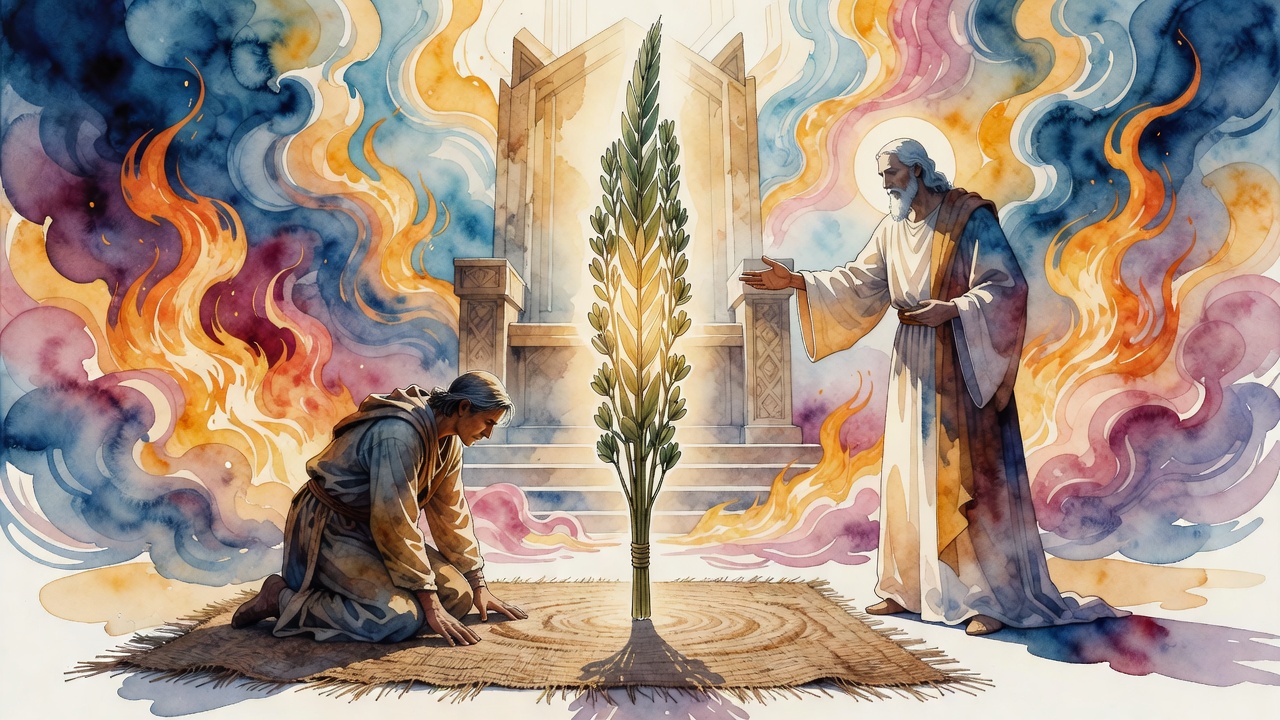
It revolves around the lulav. Now, the lulav isn't just any palm branch. During the Jewish festival of Sukkot (the Festival of Tabernacles), this palm shoot, along with the etrog (...
Sometimes, it's in those very details that we uncover profound insights into Jewish law and tradition. to one such detail from Sifrei Bamidbar, a fascinating work of halakhic (lega...
But who exactly is being told to do this counting? Is it the beth-din, the Jewish court, maybe acting on behalf of the community? That's where the Sifrei Devarim, a collection of e...
Like you're about to figure something out, and then BAM! A little voice pops up to say, "Hold on a second..." Well, that’s kind of what's happening in this passage from Sifrei Deva...
Well, our Sages grappled with that very idea when it came to Sukkot, the Festival of Booths. Sukkot, as you probably know, is that joyous week where we dwell in temporary shelters,...
The shofar on Rosh Hashanah (the Jewish New Year) was not just a call to repentance. According to the Targum's version of (Numbers 29), the trumpets served a cosmic combat function...
Take the verse from the Song of Songs, Shir HaShirim, "How fair are your feet in sandals [bane’alim]," with its slightly unusual plural form, "sandals" [ne’alim]. What could that p...
The verse from (Leviticus 23:24) sets the stage: "Speak to the children of Israel, saying: In the seventh month, on the first of the month, shall be a rest for you, a remembrance b...
The arba minim—the "four species" used during the Jewish festival of Sukkot (the Festival of Tabernacles)—carry a meaning far deeper than ritual. These four species – the etrog, th...
It uses the four species taken on Sukkot, the Festival of Tabernacles, as a metaphor for the Jewish people. It comes from Vayikra Rabbah, a Midrash (rabbinic interpretive commentar...
"And you shall guard this day": What is the intent of this? Is it not already written (16) "all labor shall not be done in them"? This tells me only of labor per se. Whence do I de...
The Mekhilta DeRabbi Yishmael derives the practice of Kiddush, the sanctification of Shabbat (the Sabbath) over wine, from the commandment to "sanctify it." The phrase "to sanctify...
“He stripped His shrine like a garden; He destroyed His place of assembly. The Lord caused festival and Shabbat (the Sabbath) to be forgotten in Zion and He scorned king and priest...
It's not as simple as "everyone," that's for sure. to what the ancient texts tell us about who’s in, who’s out, and why. The verse we’re unpacking is from Sifrei Devarim, a collect...
We read about it, we imagine it, but sometimes it's the small, sensory details that truly bring history to life. One of the most fascinating accounts we have comes from the Letter ...
The opening song of the Sabbath Sacrifice cycle establishes a structure that would influence Jewish mysticism for centuries: seven heavenly sanctuaries, each governed by an angelic...
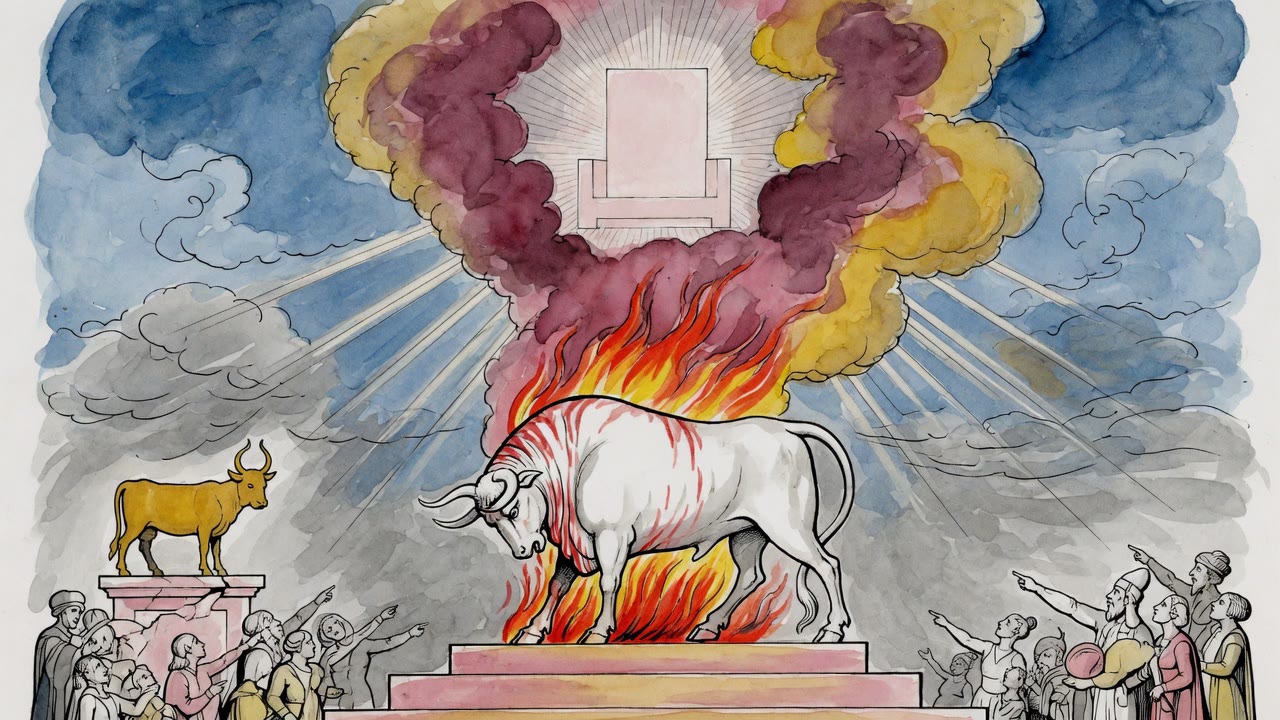
They stood at Sinai, heard the very voice of God thundering the Ten Commandments, including the absolute prohibition against idolatry… and then, a mere forty days later, they're pa...
The story of Samuel is a powerful example. We find him, in Legends of the Jews, already displaying wisdom beyond his years as just a two-year-old. Imagine that for a moment. Two ye...
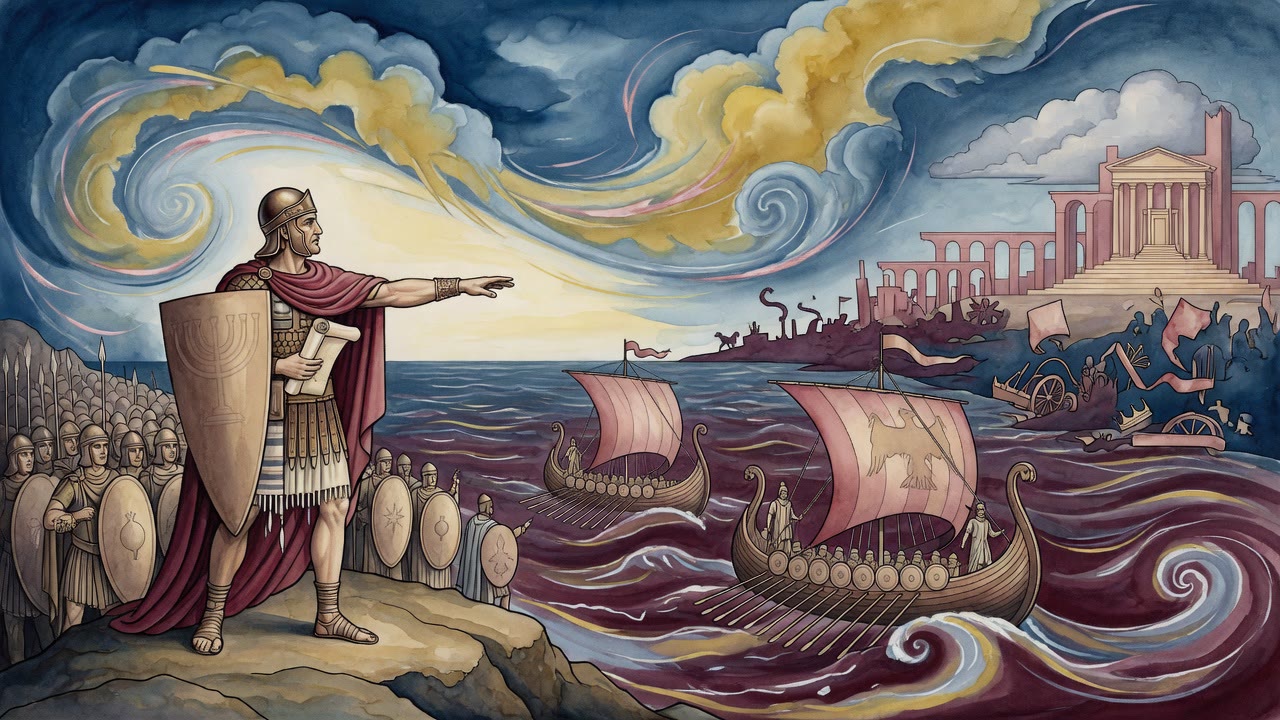
Alexander the Great conquered most of the known world by age thirty, but Josephus tells a story about the one city he did not need to take by force. When Alexander marched on Jerus...
Our tradition has a lot to say about that, especially when it comes to prayer and redemption. to a powerful passage from Midrash Tehillim, a collection of rabbinic teachings on the...
We often think of religious laws as strict commandments, but sometimes, the texts reveal a surprising amount of individual agency. Take, for instance, this passage from Sifrei Bami...
What seems like a simple act is actually steeped in tradition, detail, and a whole lot of meaning. Let's unpack it. The Book of Numbers, Bamidbar in Hebrew, gives us the source for...
Today, we’re diving into the book of Bamidbar (Numbers), specifically chapter 18 in Sifrei Bamidbar, to unpack the intense responsibilities placed on the Kohanim and Levi'im (Levit...
We're going to dive into a fascinating passage from Sifrei Bamidbar, a collection of legal interpretations on the Book of Numbers, and explore the intricacies of terumah and ma'ase...