Naphtali Saw Levi Ride the Sun and a Ship Run Aground
They would not believe he was dying. Naphtali told them Levi rode the sun, and a ship with no sailors ran onto a rock.
Table of Contents
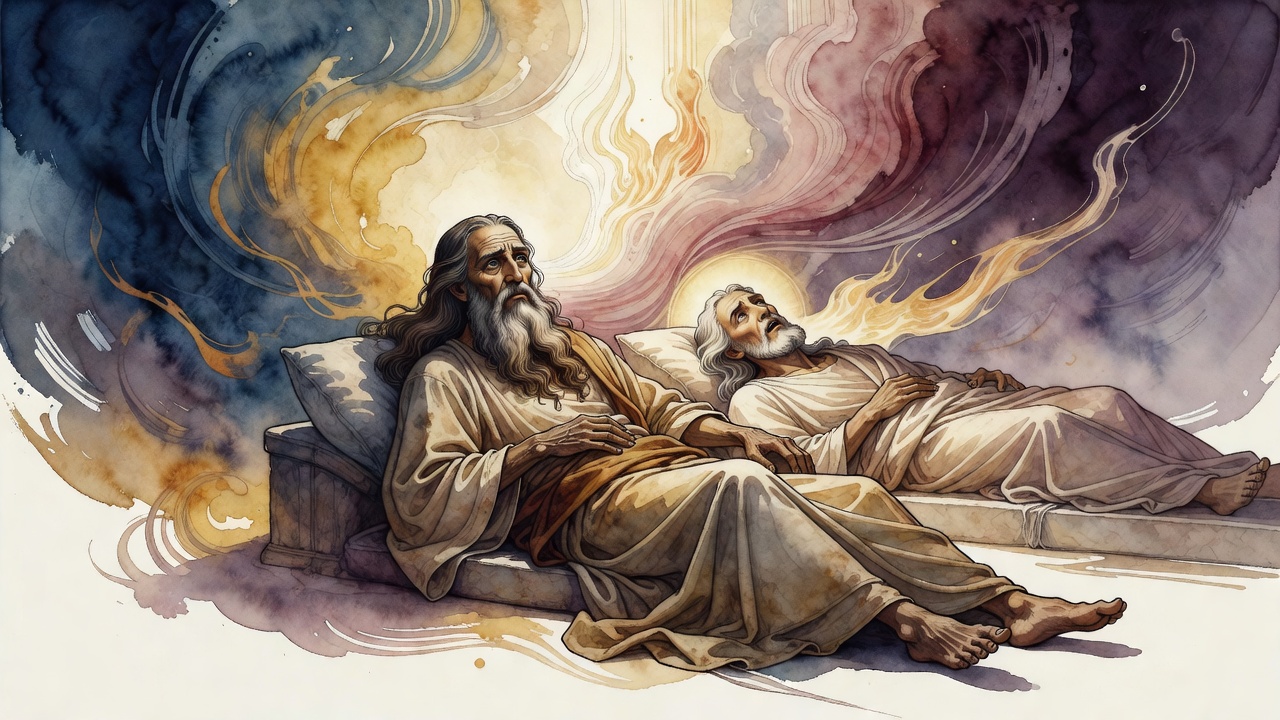
Naphtali was one hundred and thirty-two years old when he called his children to a table. He fed them. He drank with them. He watched their faces by lamplight and knew this was the last evening he would share a meal on the earth.
 Click for full size
When morning came he told them so. They would not believe him. He praised God anyway, thanked heaven that he had known his last night at table for what it was, and then he spoke.
The Last Banquet
He left them no inventory of silver, no parcel of land, no list of holdings. What he left them was a commandment he called the easiest thing in the world.
"Fear God," he said. "Serve Him. Follow Him."
His sons pushed back at once. Why does God need our service? What does the Maker of heaven and earth lack that we could supply? Naphtali answered without a pause. God needs nothing from any creature. Every creature needs Him. He did not make the world from want. He made it so that human beings would know their need of Him and of each other, and so that none of them would do to a neighbor what they would not want done to themselves.
Then the sons asked the question that always comes when a father starts warning. Have you seen us stray, to the right or to the left? He said God was his witness, and he was theirs: they had not strayed. The dread in him was not for the room. It was for the years after the room went empty.
Do Not Join Joseph
"I fear future times," he said. "You may leave the ways of the Lord and walk in the statutes of the nations, and join yourselves to the sons of Joseph instead of the sons of Levi and Judah."
They asked him why he would command such a thing. He told them he knew Joseph's line would turn, and that the turning would drag the rest of Israel after it, off the beautiful land into a land that was not theirs. Joseph had once brought the Egyptian bondage down on them. The old pattern still had teeth.
He had lived, he said, without a sin he could name. Save his wife, he had known no woman. He had not lifted his eyes. He had drunk no wine that might lead him aside. Guile had no place in his heart. Lies did not pass his lips. He had sighed with the heavy-laden and given his bread to the poor. He had loved God with all his might, and mankind also. Do likewise, he told them, and the spirits of Beliar will flee, and wild beasts will have no power, because the Lord of heaven will be with you.
Levi Rode the Sun
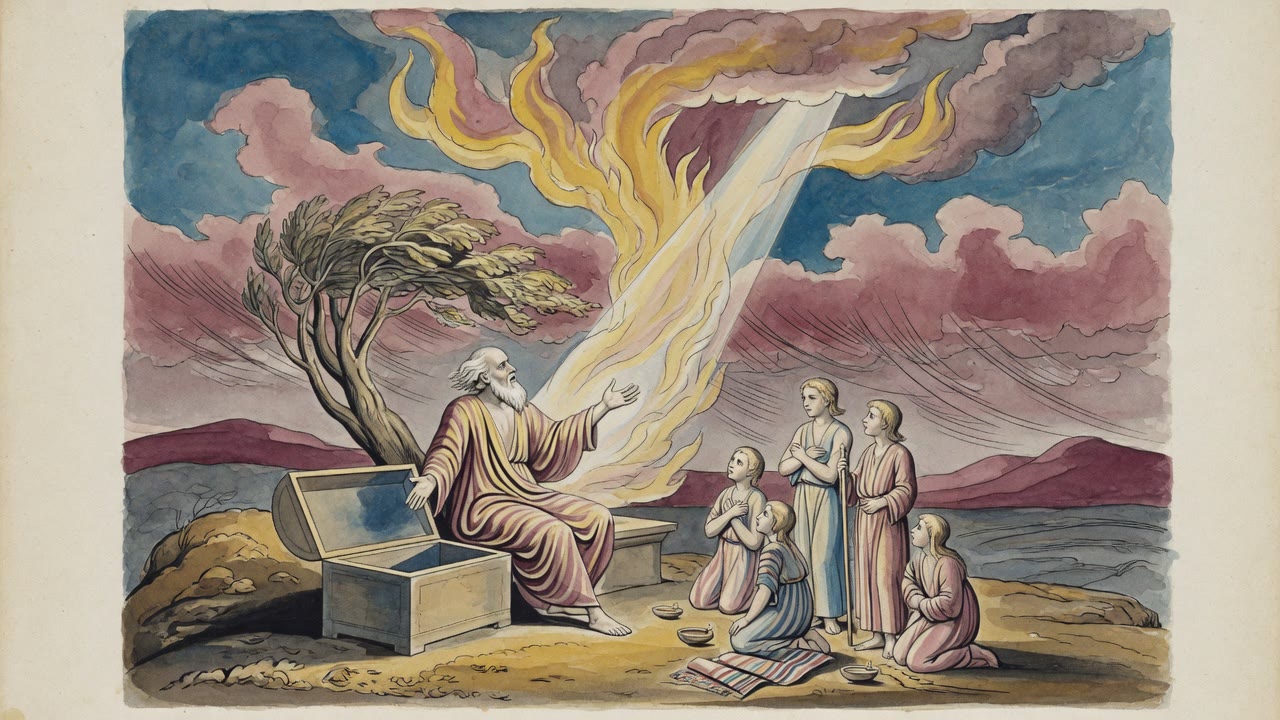
Then he told the visions. He had seen the first while he was still a shepherd of flocks, his brothers pasturing beside him.
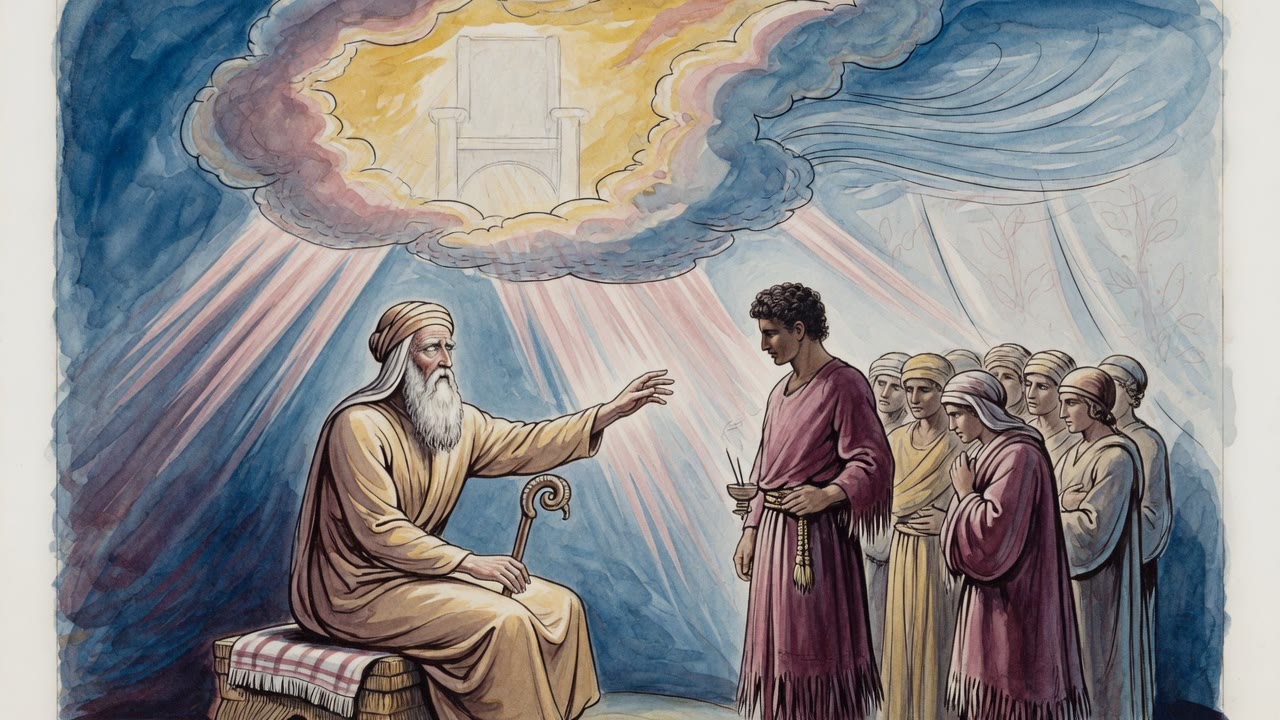
Jacob came and said, "Up, my sons, each one take what he can in my presence." They answered that they saw nothing but the sun, the moon, and the stars. "These shall ye take," their father said.
Levi snatched up an ox-goad, sprang to the sun, sat on him, and rode. Judah jumped to the moon and rode her. The other nine each took a star or a planet. Joseph stayed on the earth. Jacob asked why. Joseph said, "What right have men born of woman to be in the heavens, seeing that in the end they must stay on earth?"
A tall steer appeared, with pinions like a stork's wings and horns long as a reem's. Jacob told Joseph to mount. Joseph rode, galloping and then flying, until he reached Judah. He unfolded a standard and began to beat his brother. Judah had twelve rods in his hand. Joseph had one. Give me yours, Joseph said, and peace will hold. Judah refused. Joseph beat him until ten rods dropped and two remained. Then Joseph called the brothers to leave Judah and follow him. They did, all but Benjamin, who stayed true. Levi came down from the sun, grieved. A storm broke toward the end of the day and scattered them, so that no two stood together.
When Naphtali told that vision to Jacob, the old man said it was only a dream, and a dream could neither help nor harm.
The Ship Ran Aground
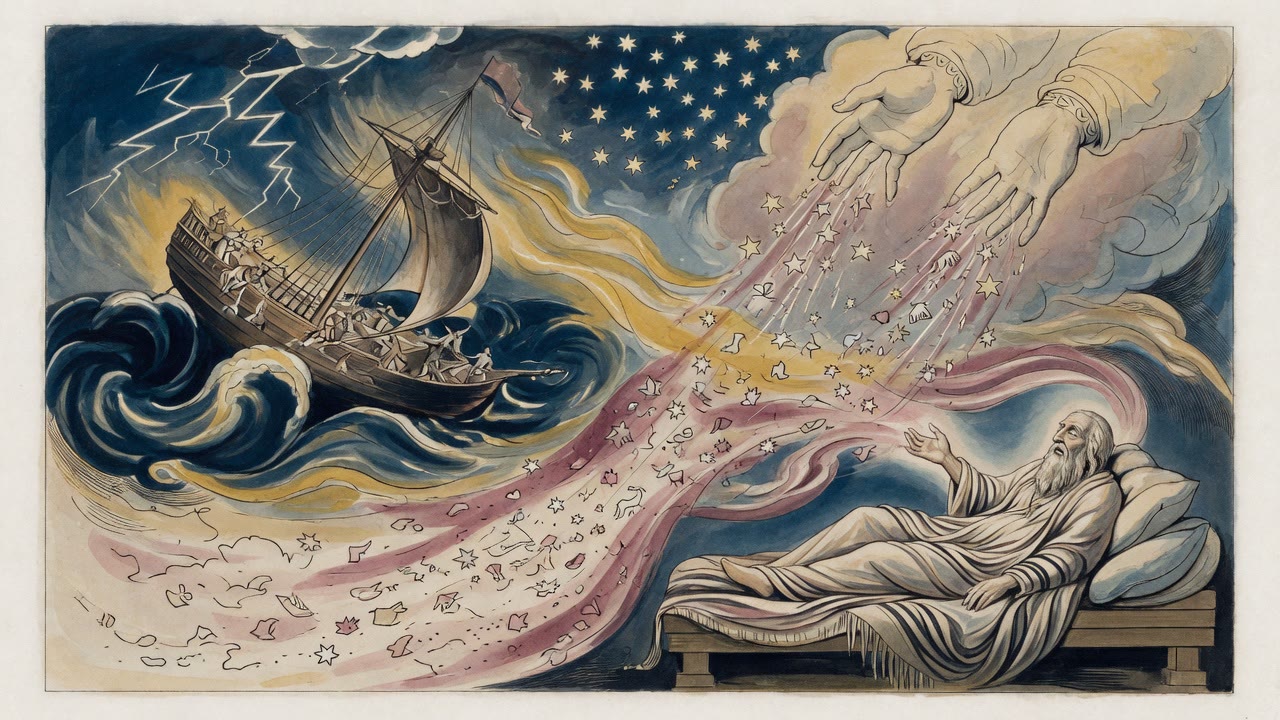
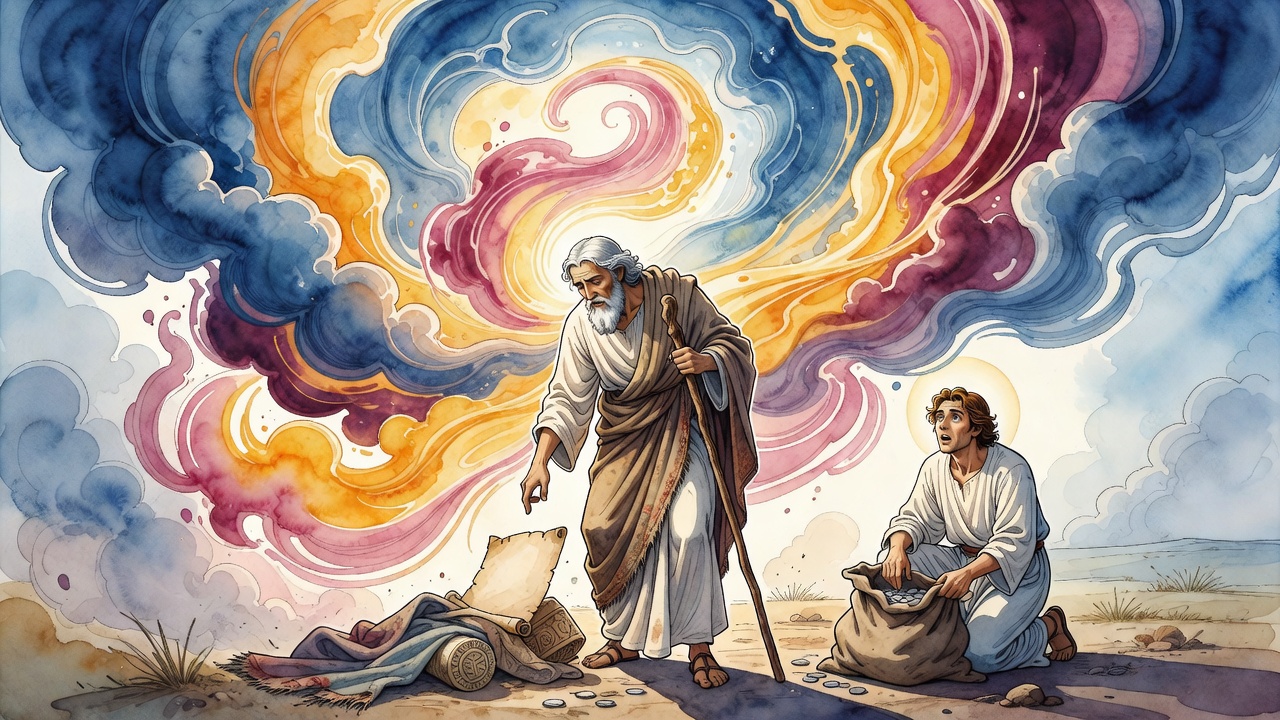
A short while later the second vision came. The twelve stood with their father at the shore of the sea. A ship appeared in the midst of the water, with no sailors and no crew. Jacob asked if they saw what he saw. They did. He took off his clothes and sprang into the sea, and they sprang after him.
Levi and Judah were first to scale the side. Their father cried to them to read the mast. Every ship bears the owner's name there. They read, "This ship and all the treasures therein belong unto the son of Barachel." Jacob thanked God for blessing him on sea as on land. He told them to stretch out their hands. Levi caught the big mast. Judah took the second. The others took oars, except Joseph. Jacob seized the two rudders to guide the ship. He bade Joseph take an oar. Joseph refused. Jacob gave him a rudder instead.
Then Jacob disappeared. Joseph took the second rudder too. For a time Judah and Joseph acted in harmony, and Judah kept Joseph informed of the course. Then a quarrel broke. Joseph would not steer the way his father had commanded. Judah tried to correct him. The vessel wrecked upon a rock. Levi and Judah came down from the masts. The rest escaped to shore.
Jacob appeared and found them scattered. They told him Joseph had run the ship aground out of jealousy of Judah and Levi. Jacob asked for the spot. Only the masts showed above the water. He whistled them together, swam out, and raised the vessel. "My son," he said to Joseph, "never do that again. Never let jealousy of thy brethren master thee. Nearly it happened that all thy brethren perished because of thee."
He Died as He Had Said
When Naphtali told Jacob this second vision, the old man clasped his hands. Tears ran. "For that the vision was doubled unto thee twice, I am dismayed," Jacob said. "I shudder for my son Joseph. I loved him more than all of you, but by reason of his perverseness ye will be carried into captivity and scattered among the nations. Thy first and thy second vision had the same meaning. The vision is one."
So Naphtali commanded his children not to join Joseph's sons, but to join Levi and Judah. His own inheritance, he said, would be of the best of the land, the middle of the earth. They would eat and be satisfied. He warned them not to kick in that plenty, not to forget the God Abraham had chosen.
He had no curse in him on that last morning. He blessed them from a clean place. Then he died, just as he had said he would, with the wrecked ship still in their ears and the sun Levi had ridden still hanging over the table.
← All myths