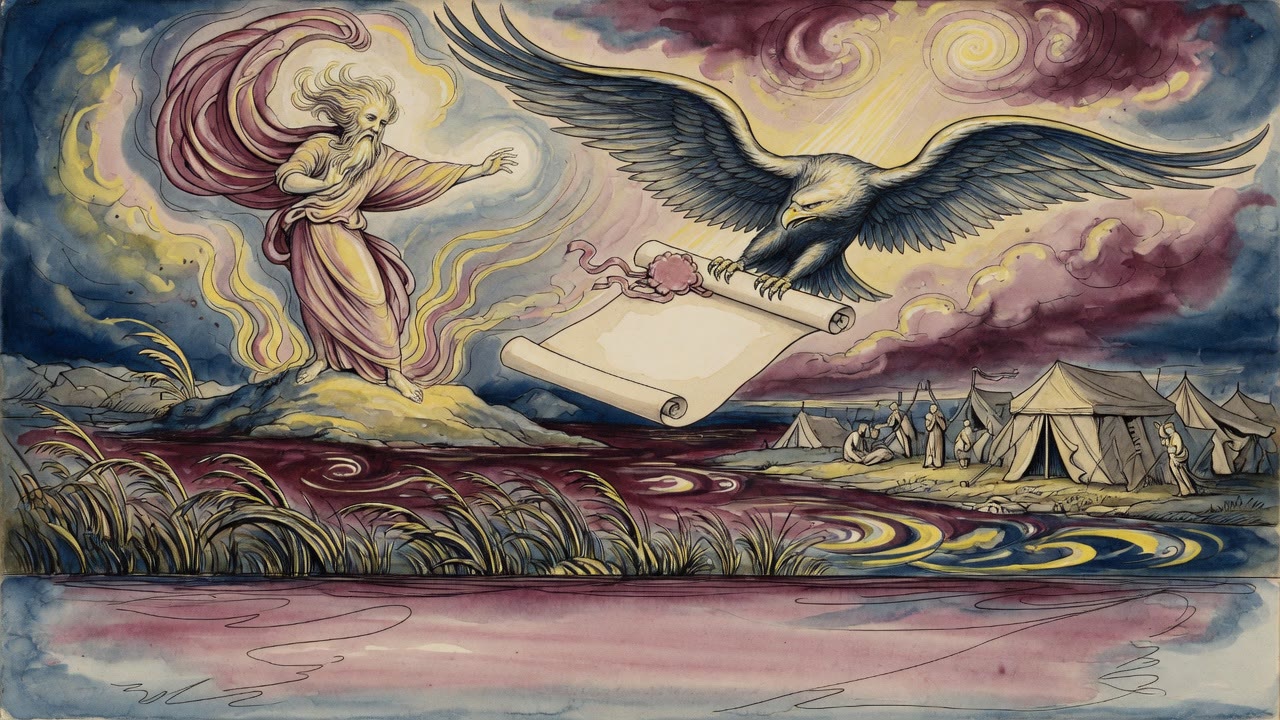
Isaiah Came When Every Other Prophet Had Already Failed
Every prophet went to comfort Zion after the destruction. Every one was turned away. Then the patriarchs tried. Then God came personally. Then Isaiah.
Table of Contents
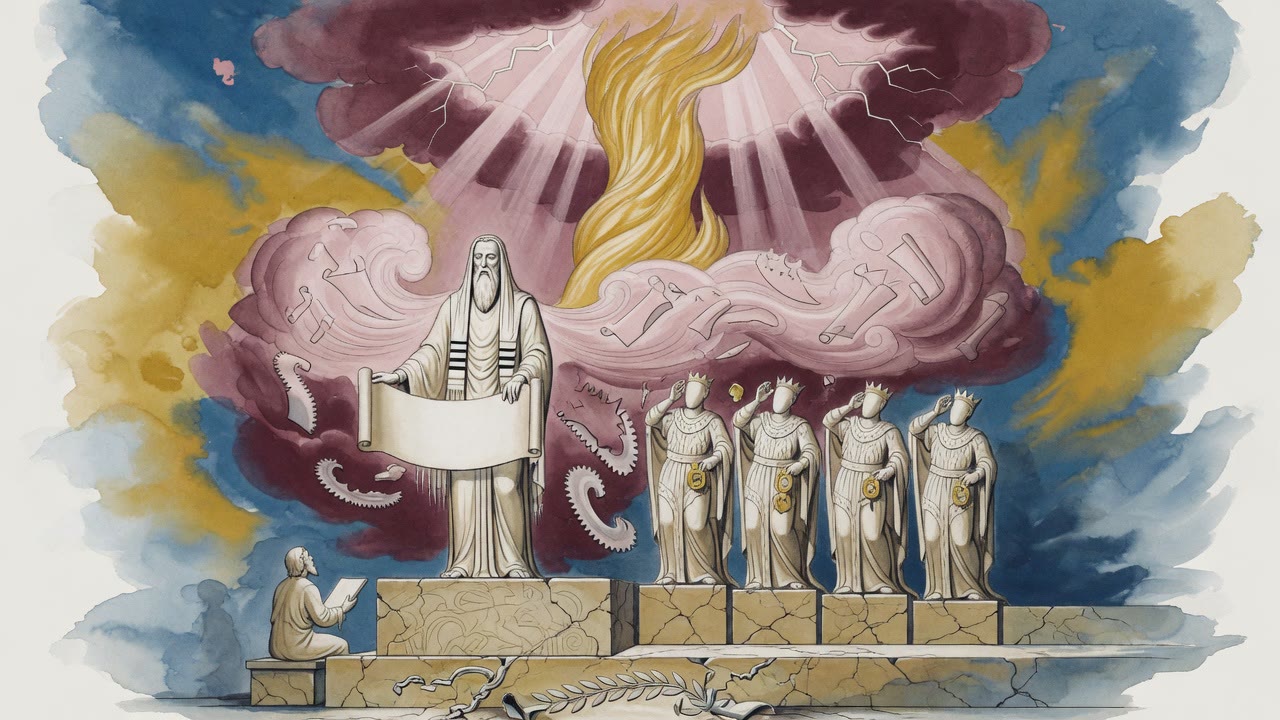
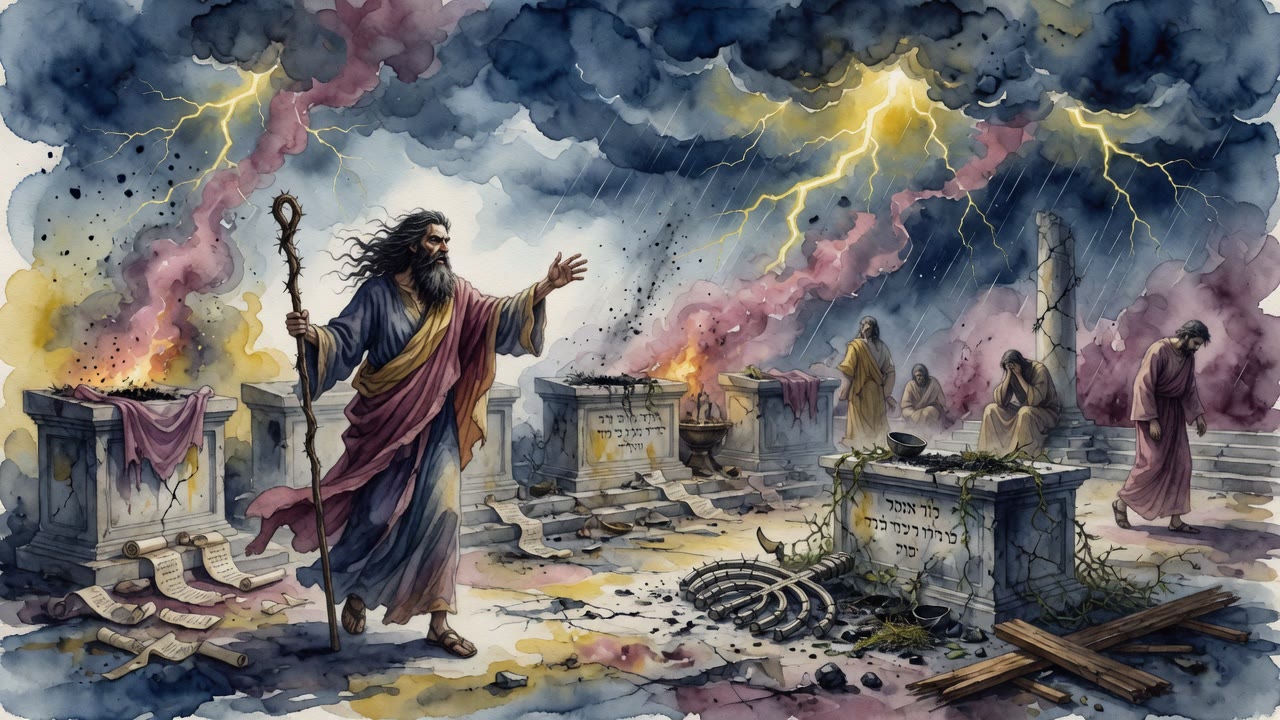
Hosea went first, and he went with one line in his hand.
 Click for full size
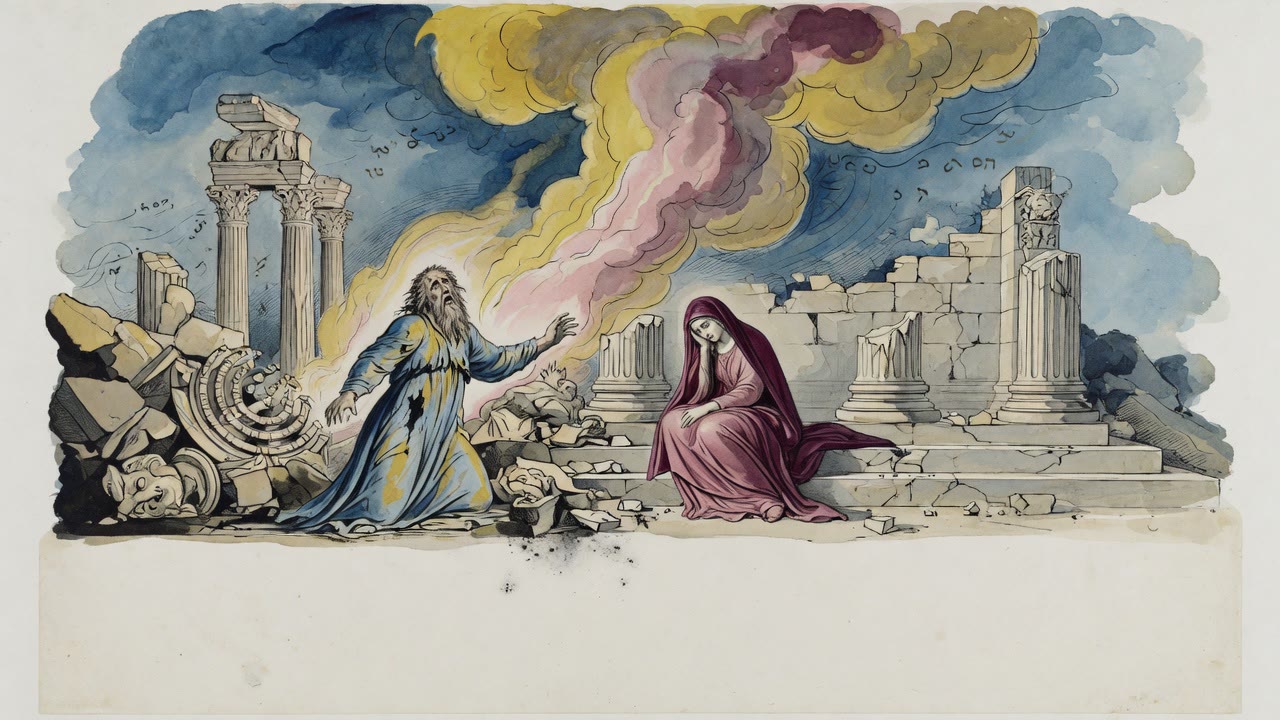
He found Zion sitting in the dark the way a woman sits when the house has burned down around her, and he said what he had been sent to say. "The Holy One sent me to you. I have come to comfort you."
She did not get up. "What have you got?" she said.
He opened his hand and gave her the line. "I will be to Israel like dew" (Hosea 14:6). It was a good line, because dew comes in the driest month without thunder and without anyone asking, and it comes every morning.
She had heard him before, though, and she said so. "Yesterday you told me Ephraim is stricken, their stock is withered, they can produce no fruit. Today you bring me dew. Which of the two am I supposed to believe, the first or the second?"
Hosea had nothing, since both lines were his. He had carried the withering to her himself, in that voice, out of that mouth, and now the same mouth had come back with the opposite. So he went out, and the next one went in.
Ten Prophets and One Question at the Door
Joel brought her mountains dripping with wine (Joel 4:18), but she remembered him waking the drunkards to weep over the wine that had been taken away. Amos came to raise up the fallen booth of David, so she handed him back his own sentence about Maiden Israel, fallen and not to rise. Micah offered a God who forgives iniquity and got the transgression of Jacob read out at him. Then Nahum, then Habakkuk, then Zephaniah, then Haggai, then Zechariah, then Malachi, each walking in with a hand full of restoration and hearing the same question before he had finished speaking.
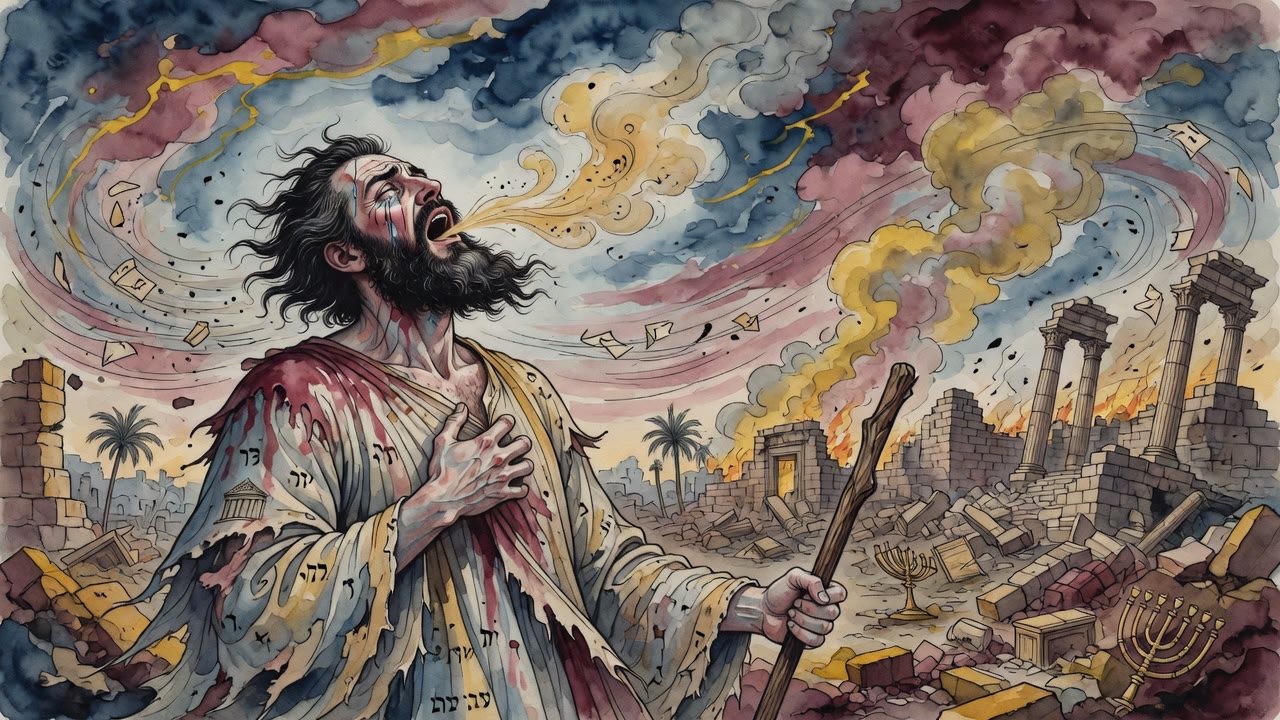
Rabbi Abba bar Kahana put her answer as a jab at their craft. Do your words need polishing? Until this hour my ears have been full of the beatings you gave me with them, and now you come to comfort me. She quoted Job at their backs on the way out. "Why then do you offer me empty consolation? Of your replies only the perfidy remains" (Job 21:34).
Then They Sent the Fathers In
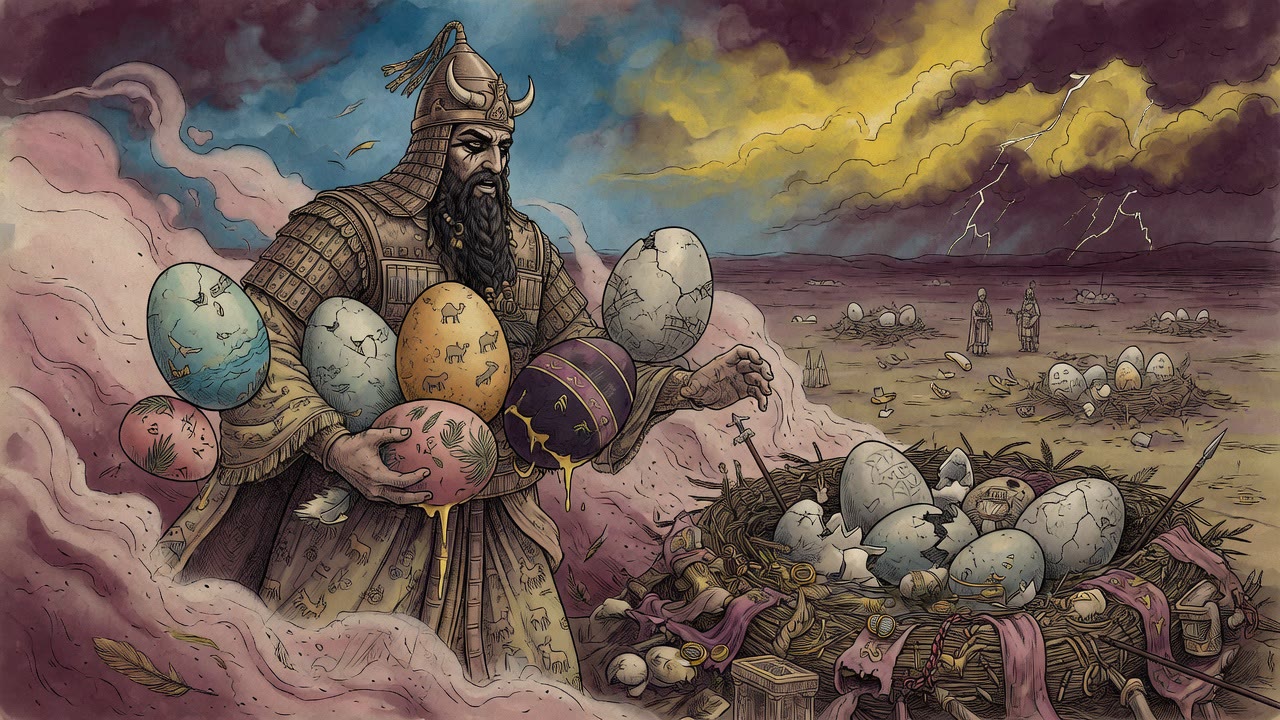
Ten prophets had already failed at that door, so the fathers were sent in after them. Abraham walked in and asked her to take comfort from him, but she would not, because of what he had done to her name. "You made me a mountain," she said. On the mount of God there is vision (Genesis 22:14). He had gone up her slope with a boy and a knife and come back down leaving a word behind that meant seeing and slaughter in the same breath.
Isaac came after him and did worse, since Esau came out of Isaac, and Esau's sons were the ones who turned her into an open field and put fire in it. Jacob tried, and she told him he had unmade her: this is none other than the abode of God (Genesis 28:17), which turns a city into a place a man passes through in the night. Then Moses came, and she did not have to think about him at all. He had written the curses. Wasting famine, ravaging plague (Deuteronomy 32:24). Those words were in his handwriting long before they were in her streets.
So all of them went back together and stood in front of the Holy One with the one sentence they had left. "Master of the Universe, she will not accept our comforting."
The One Who Lit the Fire Admits It
The answer was that nobody else was going to walk. "I and you will go to her," God said, and then gave the reason, and the reason was a list of God's own offenses.
It is written that you shall not put your firstborn ox to work, and Israel is the one God called My firstborn son, and God still put their necks under the yoke of Babylon. It is written that you shall not hate your kinsman in your heart, and God hated her. It is written that whoever starts a fire pays for the damage, and the fire that took her roofs came down from above.
One promise was attached to that last item. The one who had sent fire down on her would stand around her as fire himself, a wall of it, on every side (Zechariah 2:9).
My Daughter, Why All This Anger
Then God came to her and asked it straight. "My daughter, why all this anger?"
She had it ready. "Is it not justified? You scattered me through the nations. You cursed me with evil curses. You whipped me until my face went the color of the rim of a cauldron. And through the whole of it I went on sanctifying Your great name."
God denied none of it, though the accounting ran both ways once it started, since fathers and mothers had been humiliated inside her walls and men there had been eager to shed blood (Ezekiel 22:7, 22:9). She had one demand left before she would be comforted, and it was not a soft one. She wanted the men who had done this to her brought where she could watch.
She got that promise (Isaiah 49:26). Then she asked for one more thing, in a different voice. Give me a brother. Not Cain, who killed his. Not Ishmael, who hated Isaac. Not Esau, who hated Jacob. Not the ten who put Joseph in the pit, but Joseph himself, who had every reason to collect and collected nothing. "Fear not. I will sustain you and your children" (Genesis 50:21). He spoke kindly to the men who had sold him, so the One coming up the road to Jerusalem could manage at least that much.
Isaiah Wrote Over Jeremiah's Line
Everything Jeremiah struck, Isaiah came along behind him and healed. Jeremiah had looked at the city and written that she had nobody to comfort her (Lamentations 1:2), and that sentence stood for a long time with nothing underneath it.
Then Isaiah put his words down on that exact line, and he doubled the word so it could not be taken for one man's opinion. "Comfort, comfort My people" (Isaiah 40:1). Speak to the heart of Jerusalem.
Ben Sira, writing in Jerusalem a few centuries after him, kept one sentence about the man and nothing else: with a great spirit he saw the end, and he comforted the mourners of Zion.
← All myths