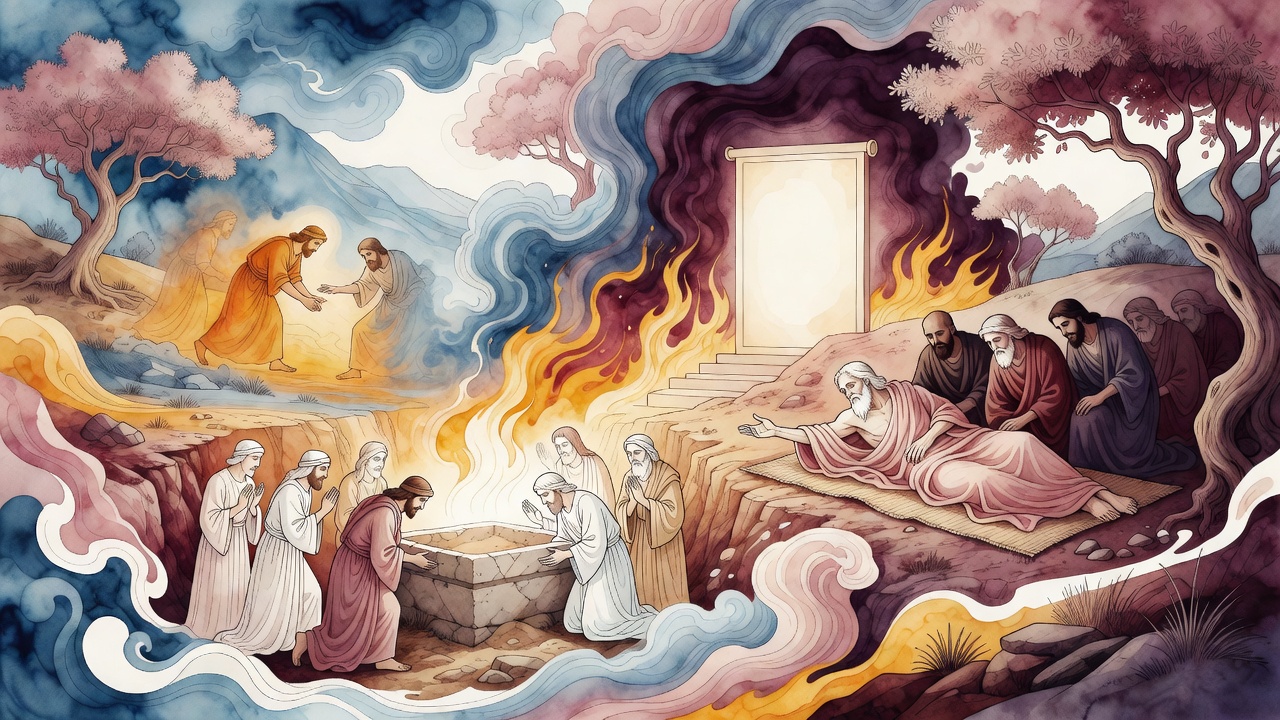
Joseph Prophesied From His Deathbed and Made One Final Demand
Joseph's last prophecy named the oppression ahead and the deliverance after it. His only condition was that his brothers carry his bones when they left Egypt.
Table of Contents
 Click for full size
The Room at the End of His Life
Joseph was a hundred and ten years old. He had been in Egypt for ninety-three of those years, a slave for thirteen before he stood before Pharaoh, a viceroy for eighty years after. He had managed the famine, resettled a population, reunited his family, buried his father. He had lived the complete life that Egyptian tradition counted at a hundred and ten, the number that said a man had used his years correctly.
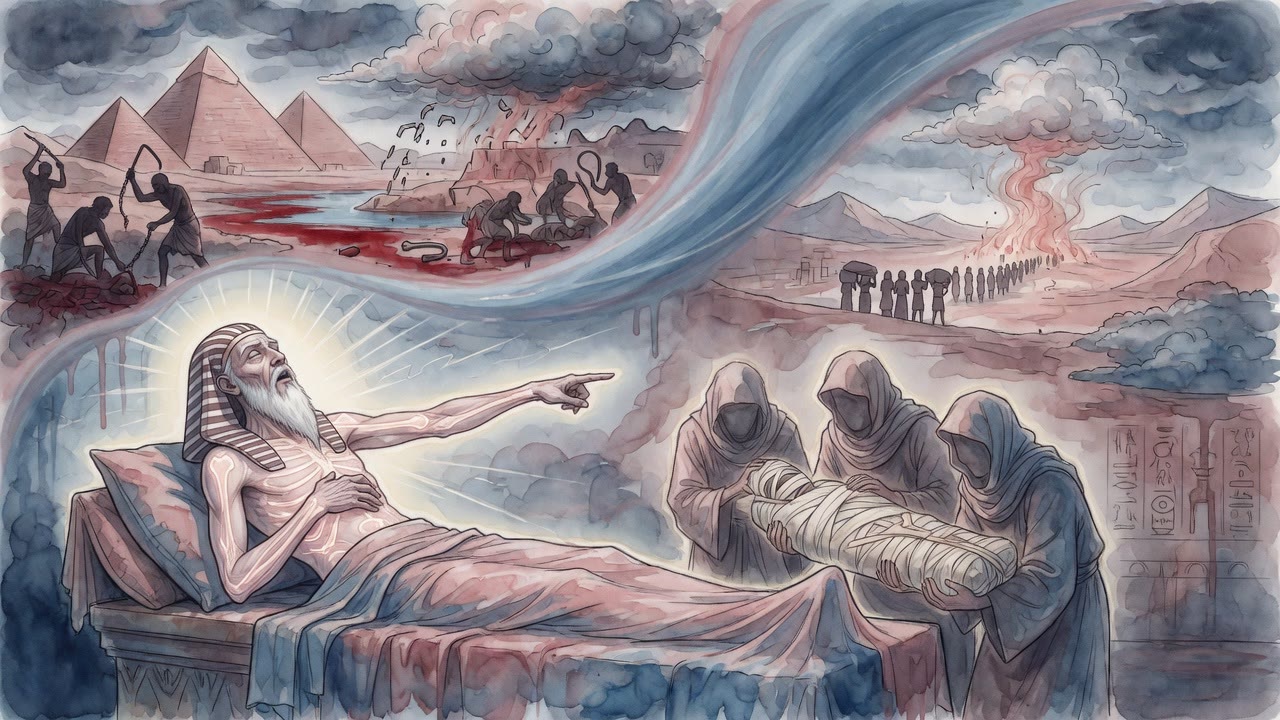
He called his brothers around him. He had something to say before he died, and the Torah records the brief version: "God will surely visit you and bring you up from this land. Carry my bones with you when you go." Then he died and was embalmed and placed in a coffin.
The midrashic tradition holds that he said considerably more than this.
The Prophecy He Delivered
In the days before his death, Joseph gathered his brothers and described what was coming with the precision of a man who had spent his life reading the future correctly. The Egyptians would oppress them after his death. He did not soften this or make it conditional. The oppression was coming. It would be prolonged and real. The tradition he carried from his father and grandfather told him that Abraham's descendants were promised four hundred years in a land not their own, and he had done the arithmetic. What was ahead of his brothers and their children was hard.
God would exact vengeance on their behalf, he said. He did not mean this as consolation. He meant it as a structural fact: the oppression would happen, and then it would be answered, in that order. The sequence was fixed. The question was not whether deliverance would come but how long the wait would be.
The Condition of the Oath
Then he gave them the condition. "When God visits you," he said, "you must take my bones up from here." He was not asking to be buried in Canaan immediately. His father Jacob had asked for immediate burial and received it: the state funeral, the procession, the interment in Machpelah. Joseph was asking for something different. He was asking to wait. He would be embalmed and placed in a coffin and left in Egypt, and when the people finally left, they would carry him with them. His bones would cross the same wilderness the living people crossed, passing through the same desert, over the same Jordan.
The tradition asks why he wanted this. One answer: he wanted to be present for the going-out. He had spent his life in Egypt, had built the infrastructure of the country, had become the most powerful man in it after Pharaoh. But his identity was not Egyptian. His bones would leave when his people left. He would not be buried in a foreign country as a foreign great man. He would be carried back to where he came from.
Moses and the Coffin in the Nile
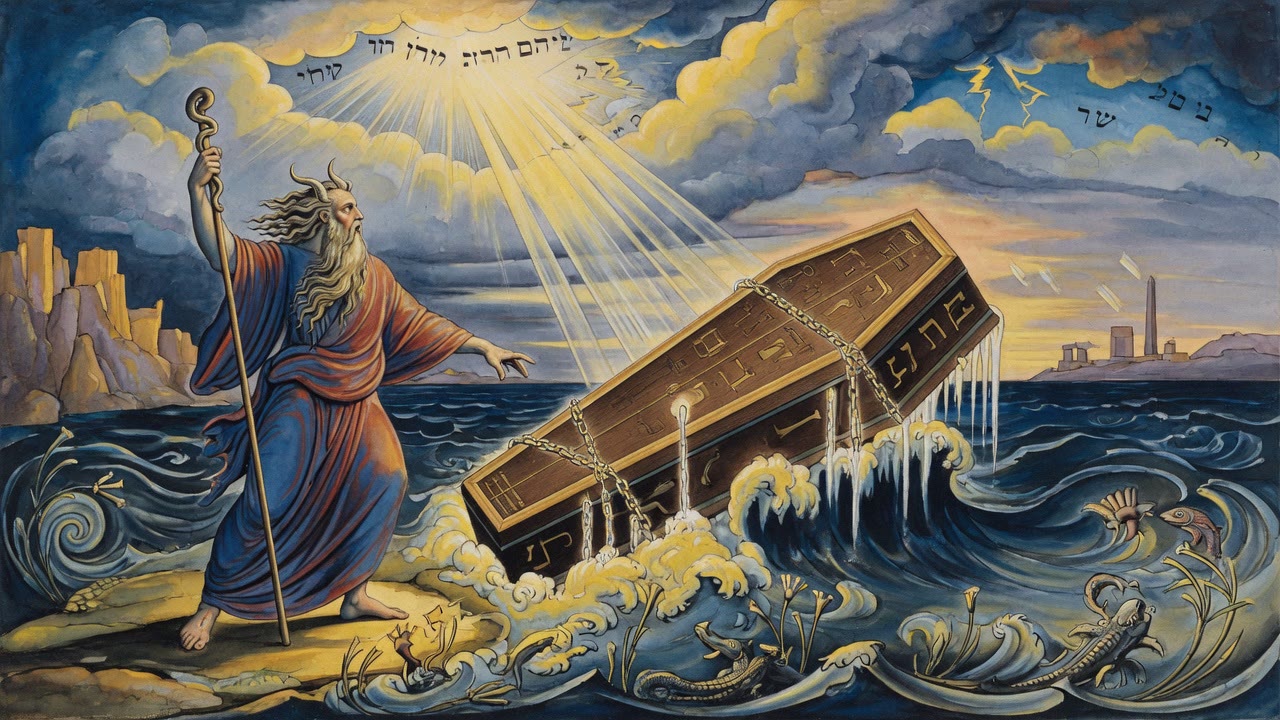
The oath his brothers swore was kept. When the Israelites left Egypt four hundred years later, Moses himself carried Joseph's bones. The tradition records that Moses knew where to find them because Serah the daughter of Asher, who had been present when Joseph originally gave the instruction and who lived to extraordinary old age, remembered. She told Moses: "Joseph's coffin is in the Nile." The Egyptians had placed it in the river, either to honor him or to bind the river's blessing to his bones, or simply because a coffin in the river was not going anywhere. Moses stood at the Nile and called to Joseph: "The time of redemption has arrived. Rise and come with us." The coffin floated to the surface.
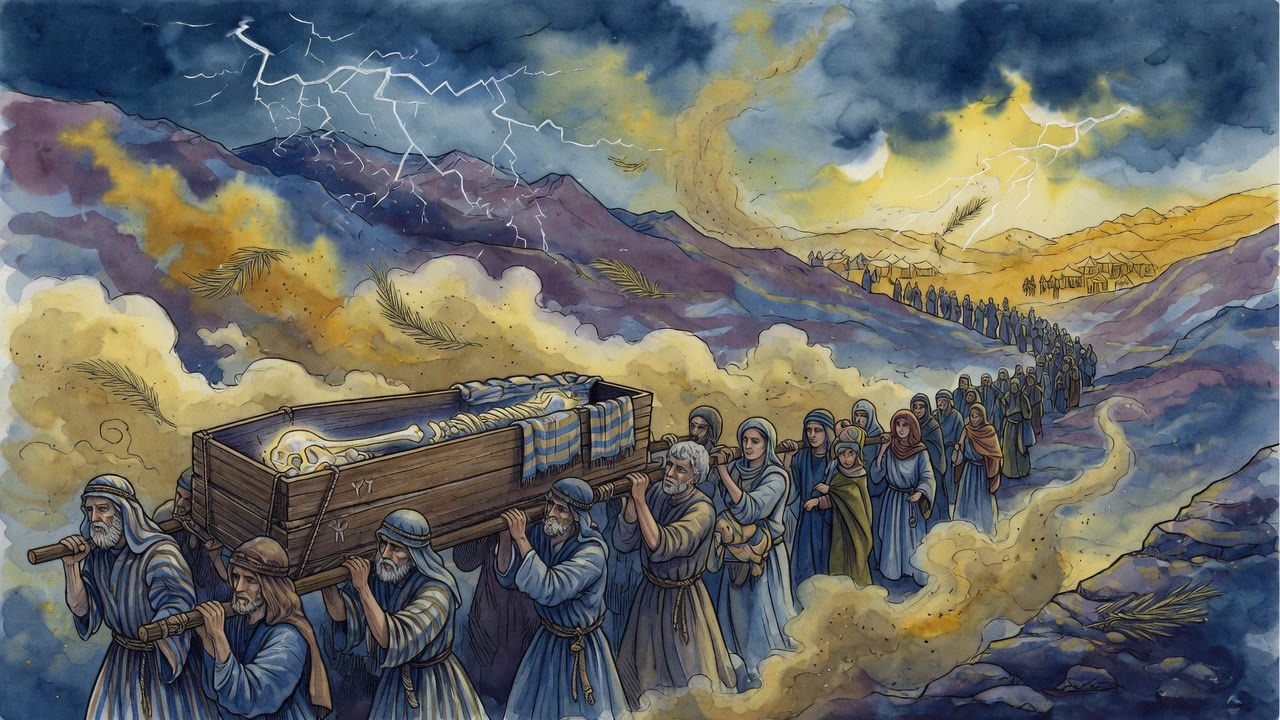
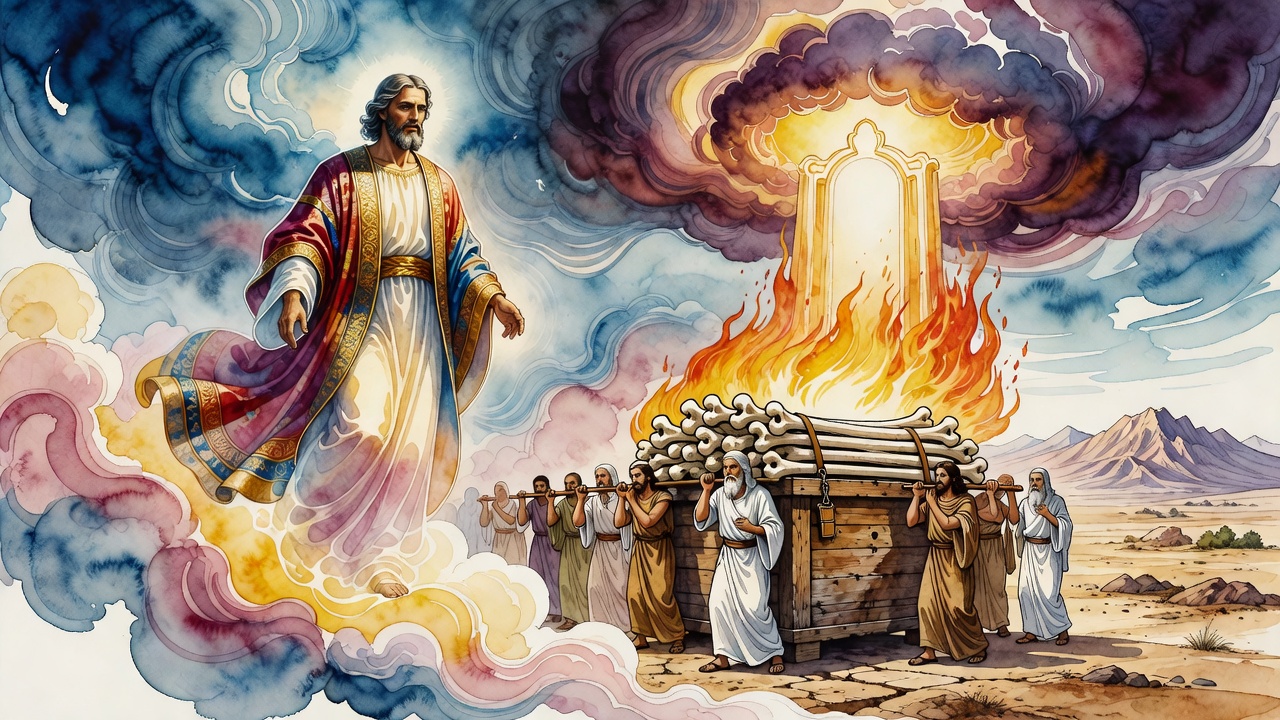
The Israelites traveled through the wilderness with two objects carried above the camp: the ark of the covenant and the coffin of Joseph. The tradition noted the image. One carried the tablets of the law. One carried the man who had kept the law under conditions that tested it to its limit.
← All myths