Jeremiah in the Lime Pit and the Friend Who Came
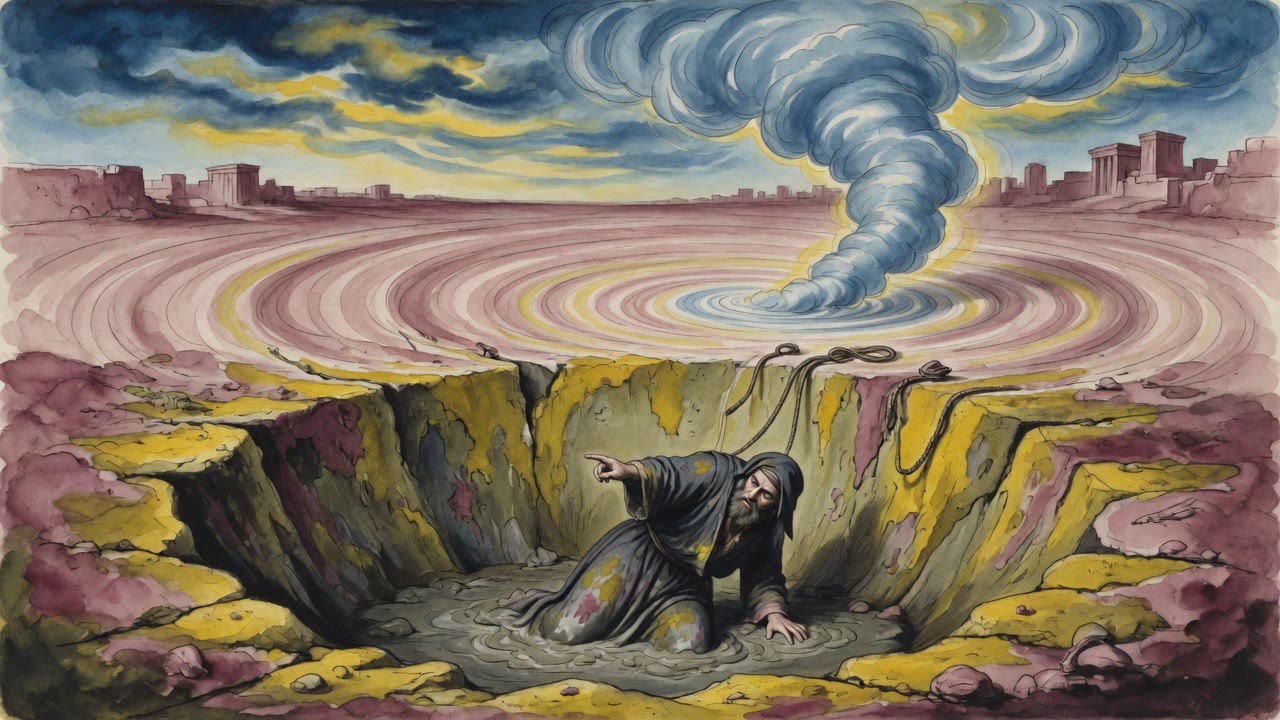
The prophet sank in mud and lime, and a voice called his name. He had been mocked too many times to trust a friendly sound. He did not answer.
Table of Contents
 Click for full size
What the Pit Was
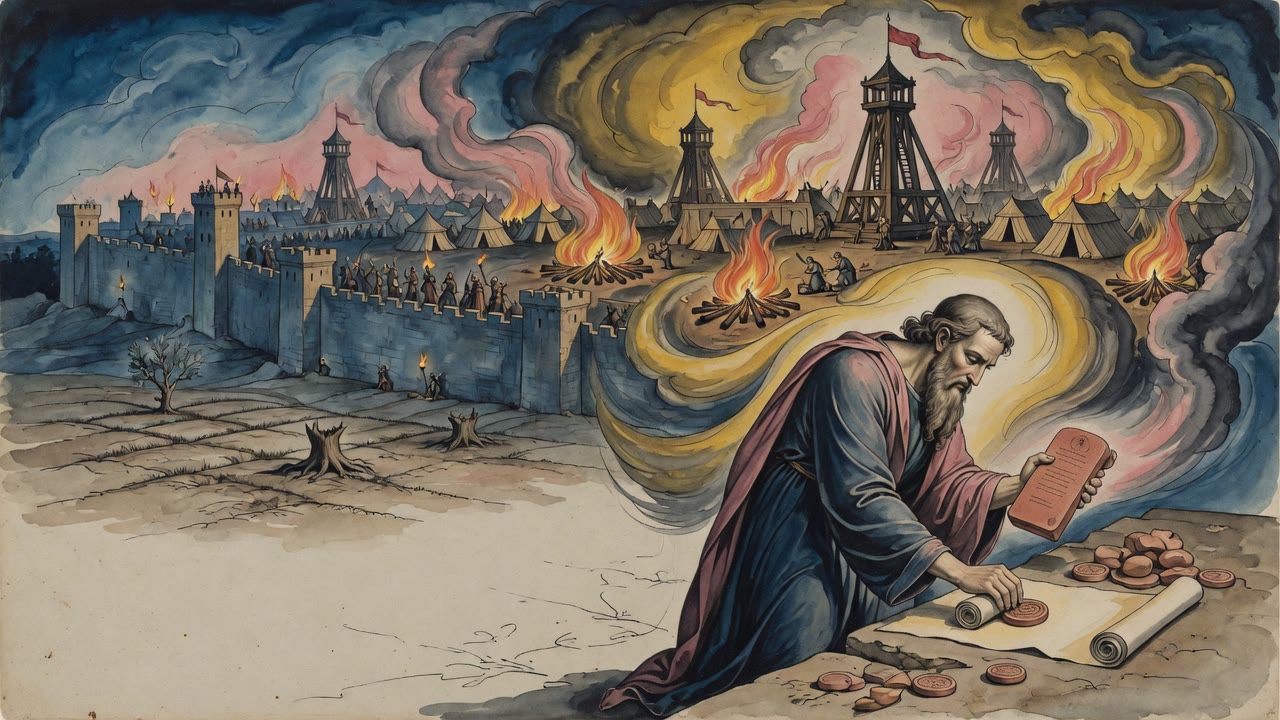
Jeremiah had told the king the truth, and the king had released him, and the nobles had promptly thrown him into a pit.
Not a cell. Not a dungeon with walls and a door. A bor, a lime pit, deep and wet, the kind of place you sink in. He landed in the mud and felt it take his weight. The water was already at his ankles by the time he found his footing, and by the time his eyes adjusted to the dark, it was higher. The mud moved when he tried to stand in it. The walls above him were smooth stone, twenty or thirty feet to the opening, and above the opening were the faces of the men who had thrown him in, watching briefly before they turned and walked away.
He had said that the king of Babylonia would carry Zedekiah off into exile. He had said it clearly, in the royal court, with no hedging. The nobles had called it treason and gone straight to the king, who had said: he is in your hands, do what you will. And what they willed was this.
What Mockery Does to a Person
Before the pit, there had been a regular prison. The jailer there was a man named Jonathan, and he had a particular cruelty: he would come to the cell and say, with a practiced sound of concern, that Jeremiah should rest his head on the mud floor and take a little sleep. It was always said in the tone of someone offering comfort. The mockery was delivered with the same inflections as kindness, so that after enough repetitions, the prophet's name spoken in a sympathetic voice had become something he did not know how to receive.
He had learned to close himself off when his name was spoken that way. It was the only protection available.
So when the voice came from above the pit, saying his name, he did not answer.
The Voice That Kept Calling
The voice belonged to Eved-melech, an Ethiopian official in the king's service, a man who had gone to Zedekiah and argued that the nobles had done evil in throwing the prophet into the pit, that Jeremiah was dying in it and had done nothing to deserve death. The king had listened. He had given Eved-melech permission to take thirty men and pull the prophet out.
Eved-melech arrived at the pit with ropes and rags, old worn cloth to pad the ropes so they would not cut under Jeremiah's arms when they pulled him up. He called down. He called again. He explained who he was. The mud continued to rise around the prophet at the bottom, and Jeremiah stayed silent, because he had been in a pit where voices sounded like rescue before, and he had learned what voices that sounded like rescue actually meant.
It took a long time. How long the tradition does not specify, but long enough that the account preserves the silence as a meaningful detail, not an incidental one. The prophet who had spoken all his life in the service of a God who sometimes seemed to speak only into silence had gone silent himself, because the world had used his name too many times in the wrong register.
The Pull Upward
Eventually something in the persistence of the voice above reached Jeremiah. Not a single dramatic word, not a promise, not a theological argument. Simply the fact that the voice kept coming back after he did not answer. The men who had thrown him in had not come back. Jonathan the jailer had offered comfort and meant harm. Eved-melech kept calling into the silence even when there was no answer, and there is a kind of credibility in that which cannot be faked and cannot be mimicked by malice, because malice loses patience.
Jeremiah put the rags under his arms where Eved-melech told him to and held the ropes and came up out of the mud and the lime and the dark, into the air above the city that was still standing but would not stand much longer.
He was returned to the court of the guard, which was a prison still, but one with air and light and no rising water. He stayed there until the day Jerusalem fell.
← All myths