Nebuchadnezzar Blamed the Magicians Who Advised Him to Burn the Temple
Tell me what I saw, the king said, and then tell me what it means. Otherwise you have all been lying to me and you die this afternoon.
Table of Contents
 Click for full size
He Would Not Tell Them the Dream
Nebuchadnezzar had them all brought in on the same morning, magicians, enchanters, sorcerers, the Chaldean readers of signs, every one of them at once so that no man got in ahead of another and no man had time to prepare.
"I have dreamed a dream," he said, "and my spirit is troubled to know it."
They answered him in Aramaic, the way the court answered kings. O king, live forever. Tell your servants the dream and we will give you the interpretation.
"I know the dream," the king said. "If I tell it to you, you will hand me back a pile of lies and call it the interpretation. You tell me the dream. Then I will know the interpretation you give me is honest."
They tried once more with the same sentence. Let the king tell the dream to his servants and we will declare its meaning.
"I say to you, tell me," he said. "You say to me, tell us. You think you will talk at me until noon and then go home. One decree covers all of you. You have come in here to say false and rotten things in front of me until the situation changes."
The One Man Who Could Have Answered
Then the Chaldeans broke and told him the truth, which was worse than stalling.
There is no man on dry land who can do what the king is asking. No king, however great, has ever put this question to a magician. What the king wants is rare, and rare in that language means prophecy, and there is nobody left who can bring it in front of the king except the gods, and the gods do not live with flesh.
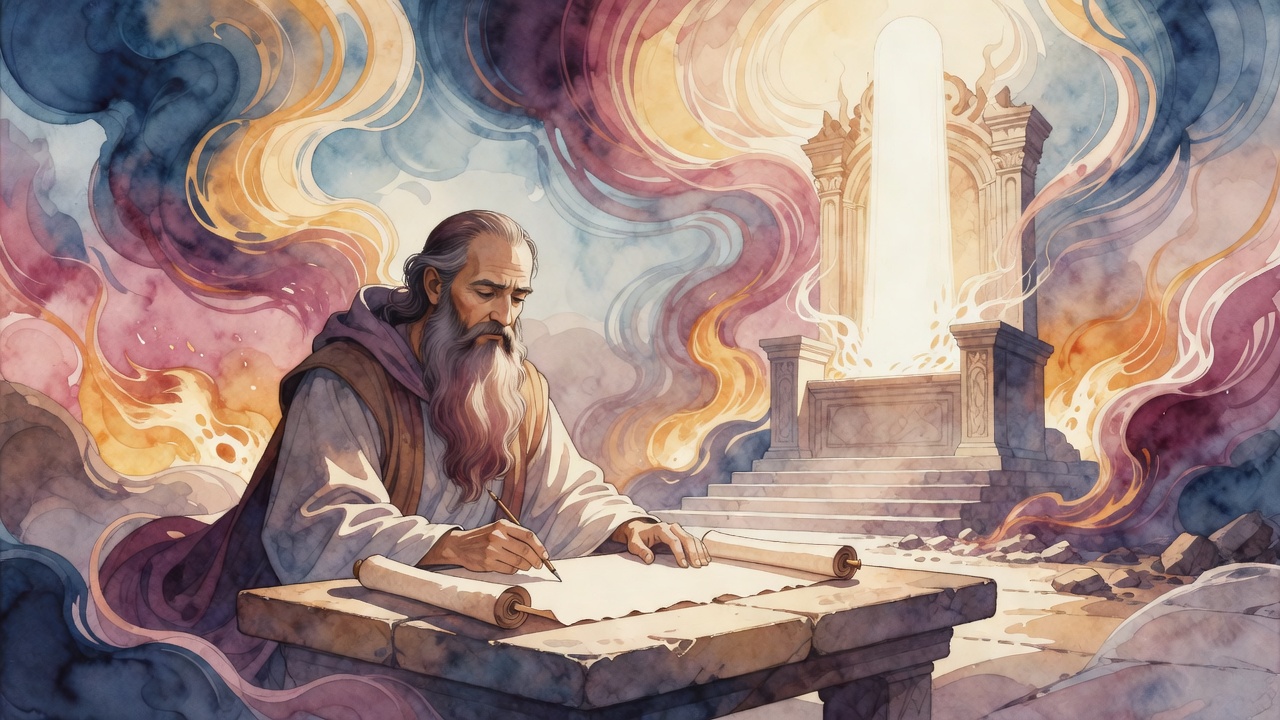
One of them pushed it further and said the thing out loud. "There is no other," the verse of their answer runs, and the word for "no other" is a hair away from the name Aaron. If you had one of Aaron's descendants standing here, they told him, he would put on the Urim and the Thummim and wrap himself in them and tell you your dream by dinner.
The king understood exactly what he had just been told, and it was the worst possible answer, because the men saying it had helped him arrange the fire.
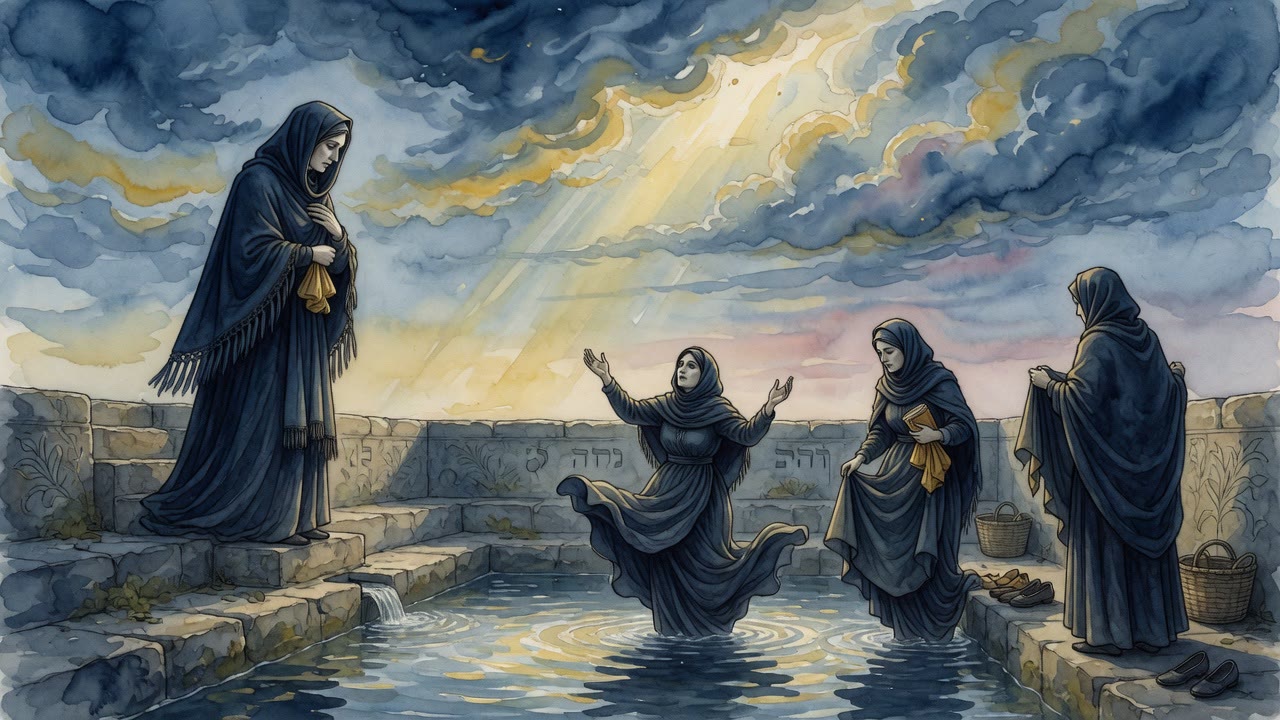
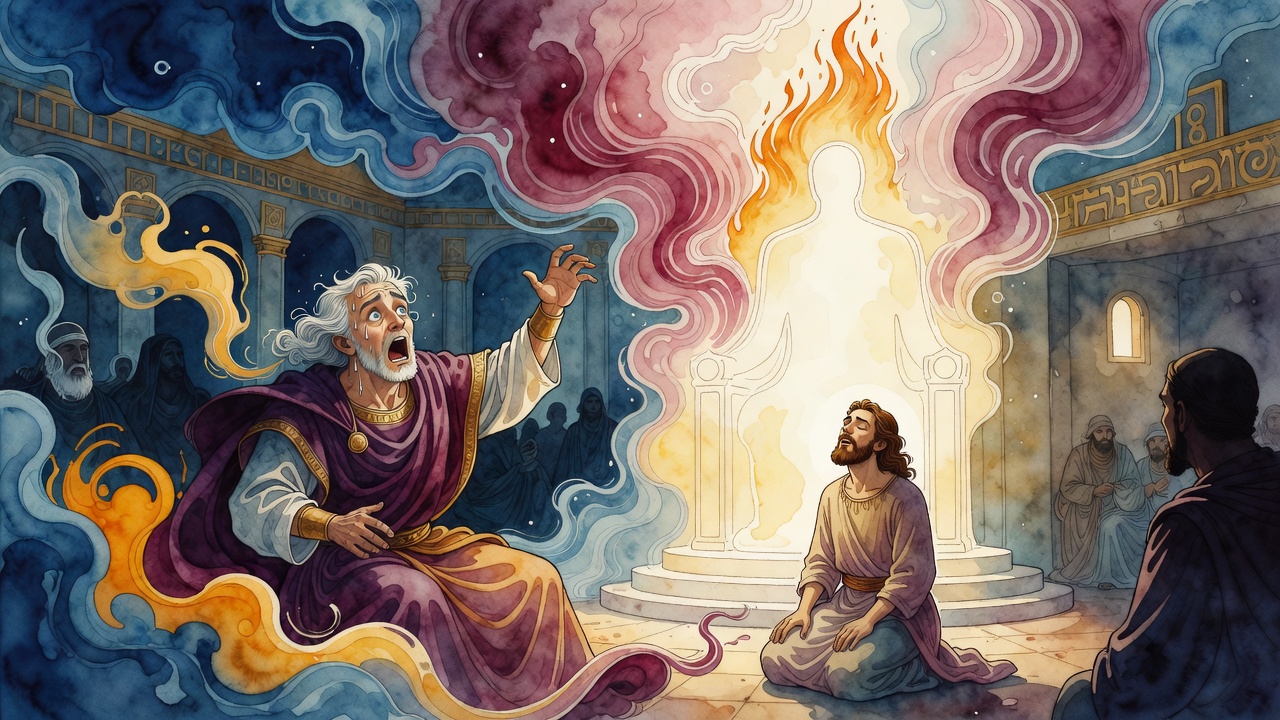
He came up off the throne and blamed them for it in front of the whole court. "It was a beautiful house," he shouted. "It was a beautiful house, and you are the ones who advised me to destroy it."
The order went out that same hour. Every wise man in Babylon was to be killed. The soldiers started working through the lists, and on the list, filed under the training program the king had set up for the promising captives of Jerusalem, were four Judean names.
The Night Daniel Asked For
Daniel went to Arioch, the captain of the guard, and asked him a question nobody else had thought to ask. Why is the decree so urgent?
Arioch told him. Then Daniel went in to the king.
"Are you able to tell me the dream I saw, and its interpretation?"
"Yes."
"When?"
"Not thirty days," Daniel said. "Not twenty days. Wait for me one night."
He went home and told Hananiah, Mishael and Azariah what was happening, and the four of them stayed up asking heaven for mercy, and what they asked for was not only their own lives. Every magician in Babylon was under the same sword, and if Daniel failed they would all go together. He prayed for the men who had counseled the burning of the Temple.
The mystery came to him in a vision in the night. Before he ran to Arioch, before he asked for the audience, before anything, he stopped and blessed the God of heaven.
In the morning he stood in front of the throne and began by refusing the credit. I am not wiser than the Chaldeans, he told the king. This was never in reach of any man, and you condemned good men to death for failing to do what only God can do.
The Statue and the Stone
Then he described what the king had seen.
A figure, enormous, standing in front of him, and the brightness of it was hard to look at. The head was fine gold. The shoulders and the arms were silver. The belly and the thighs were brass. The legs were iron, and the feet were iron mixed with baked clay.
A stone broke off a mountain, and no hand cut it. It struck the figure at the feet and the whole thing came down. Gold, silver, brass, iron and clay ground together finer than meal on a threshing floor, and a wind took the powder and there was nothing left of any of it anywhere. And the stone grew until the earth underneath it was filled up with stone.
Nebuchadnezzar sat and listened to a prisoner describe the inside of his own head.
The gold is you, Daniel told him. After you, a lesser kingdom. After that, one of brass that rules everywhere. Then iron, which breaks everything it touches, and then the feet, iron mixed with clay, part strong and part brittle, which will not hold together any more than iron holds to clay. And in the days of those kings, the God of heaven will set up a kingdom that will never be destroyed.
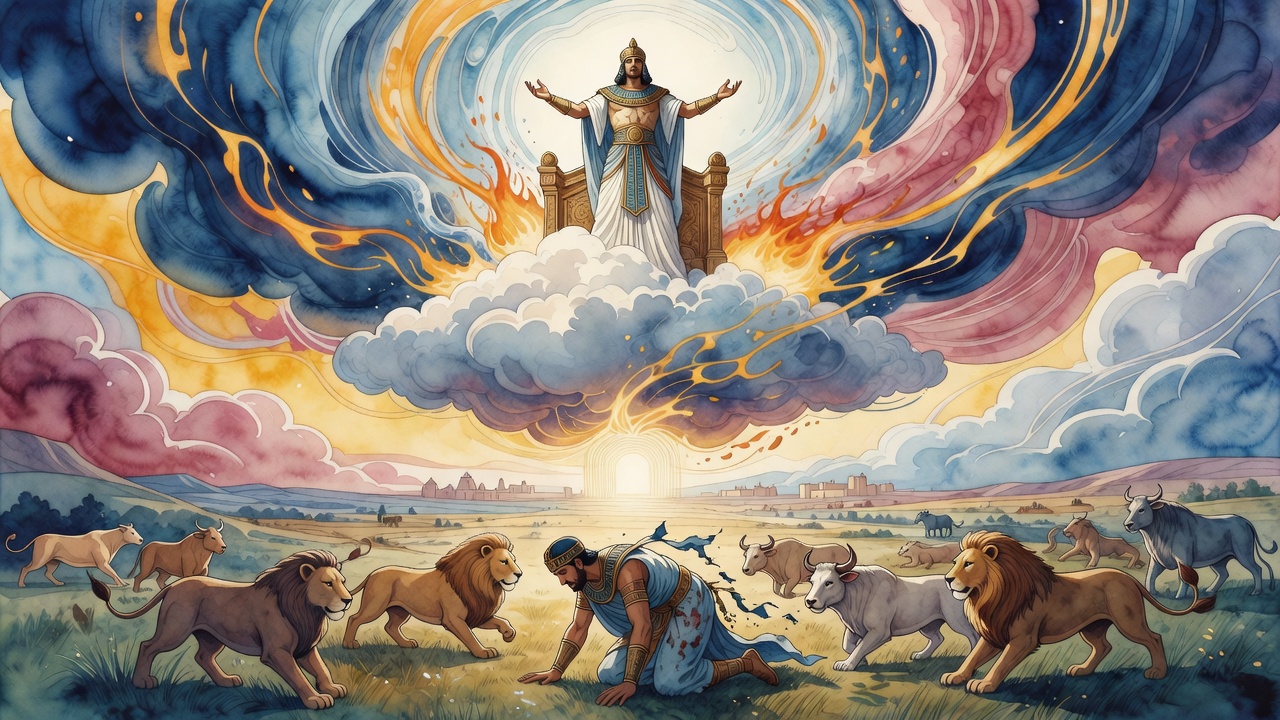
The king got off his throne and put his face on the floor in front of a Judean captive.
Jacob Had Seen It as a Ladder
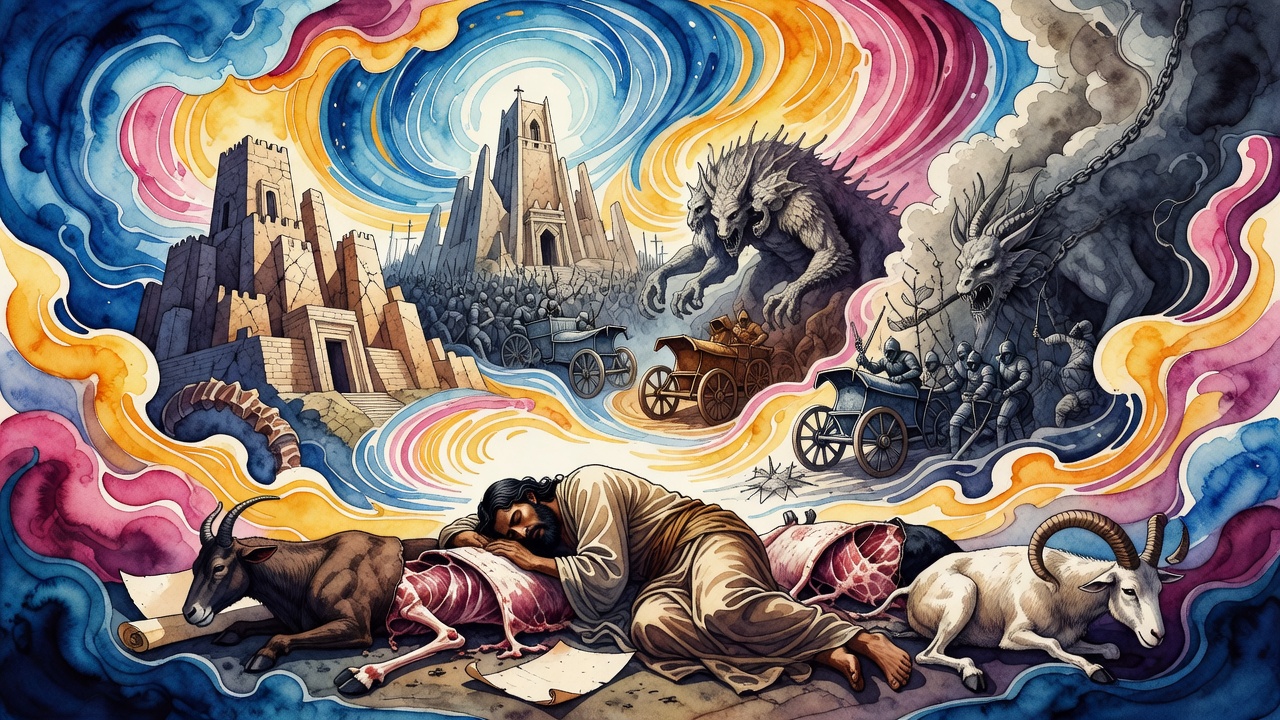
Generations before Babylon existed, a man on the run from his brother had slept in an open field with a stone under his head and been shown the same thing from the other side.
The ladder was set on the earth, and the head of it reached heaven, and the statue was set on the earth, and the statue was great. Angels went up and came down it. Two up, two down, and they were the angels of the four kingdoms, each one climbing his own rungs and each one standing lower on the ladder than the one before him, until the last of them was iron and clay and could not stand.
Above the whole thing, in the place the ladder was going, the Lord was standing over Jacob and speaking to him.
← All myths