God Sent an Angel Into Balaam's Throat to Silence the Boast
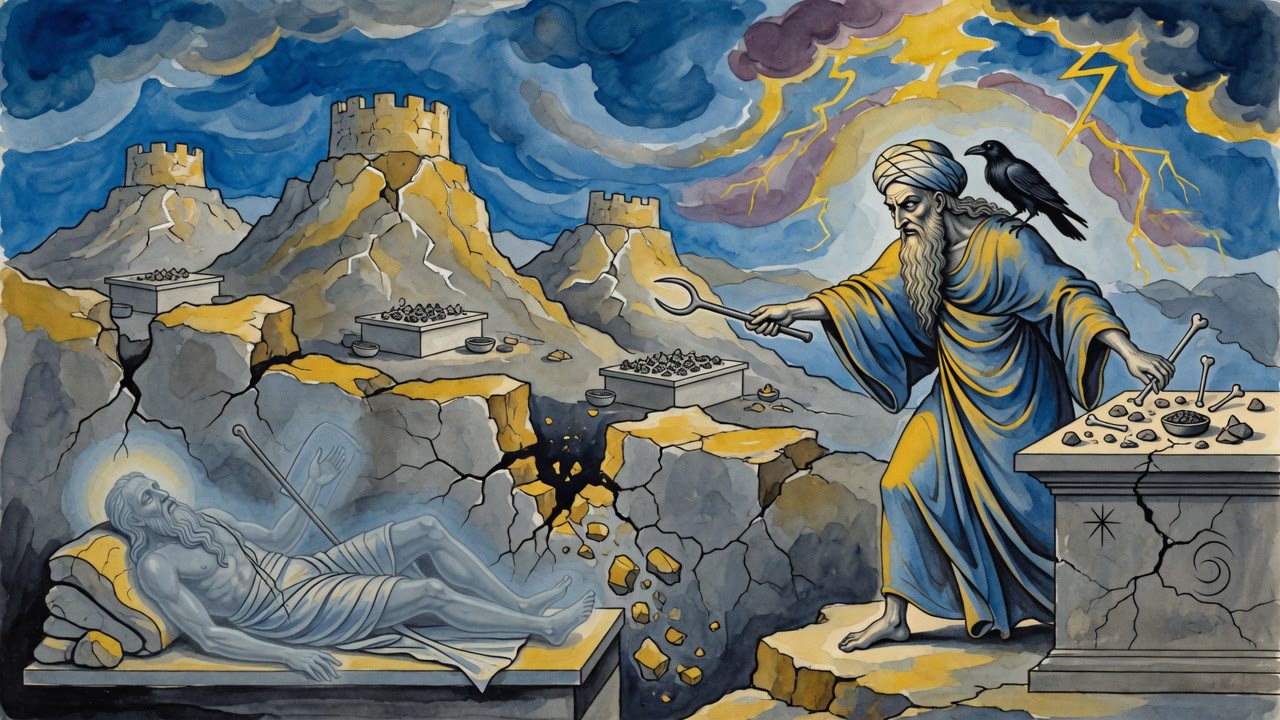
Balaam boasted before the heavenly host about his seven altars. God's response was to send an angel directly into his throat to seal his mouth from inside.
Table of Contents
 Click for full size
Standing Before the Heavenly Host with a List
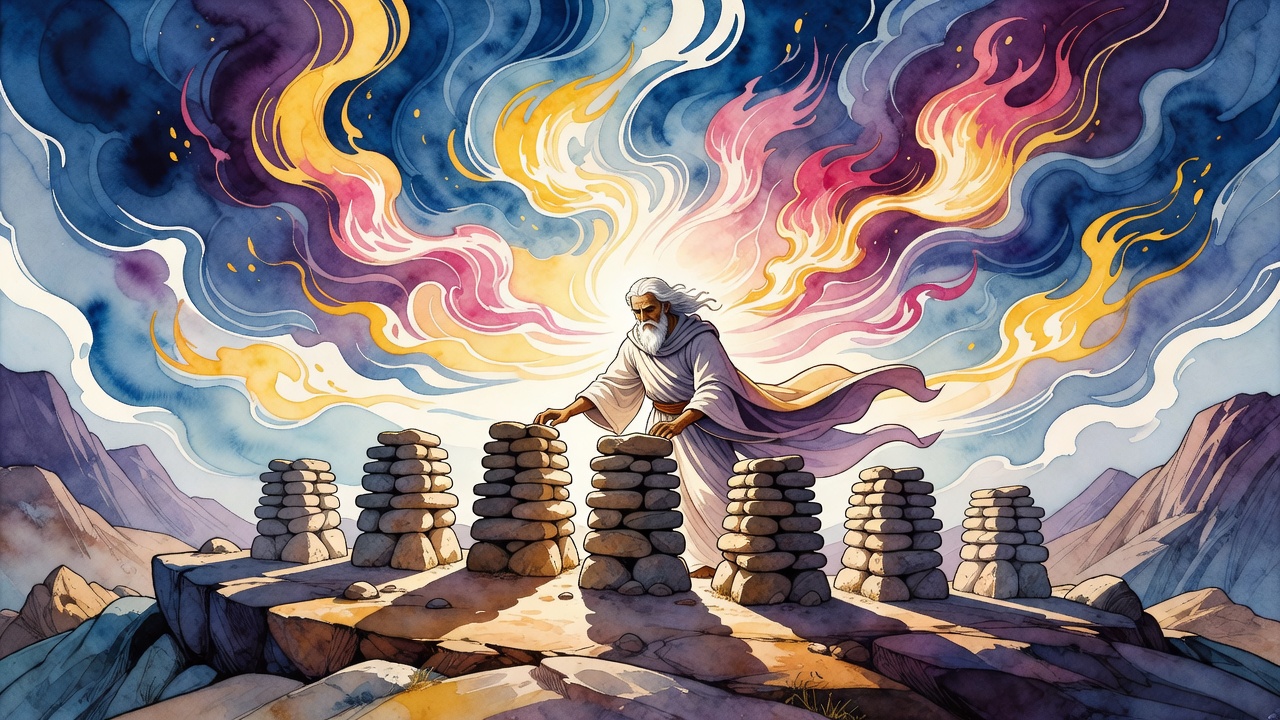
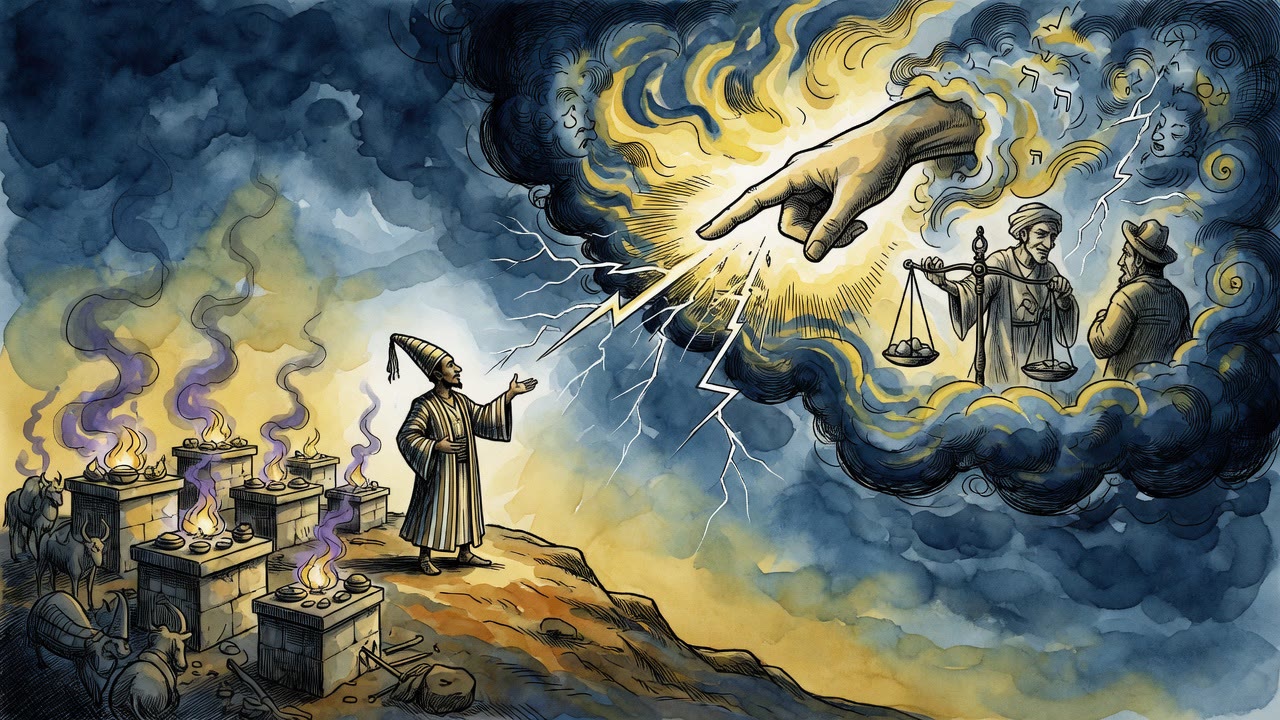
Balaam had built seven altars. He had offered bulls and rams on each one. He had counted his way through every righteous man who had ever built an altar before God, from Adam to Moses, and he had matched them, altar for altar, animal for animal. Now he stood before the assembled heavenly host with his account ready and his grievance prepared: why Israel? He had done everything they had ever done. He had spent what Balak had paid him on the most elaborate ritual array a non-Israelite prophet had ever constructed. He had a case to make.
He started making it.
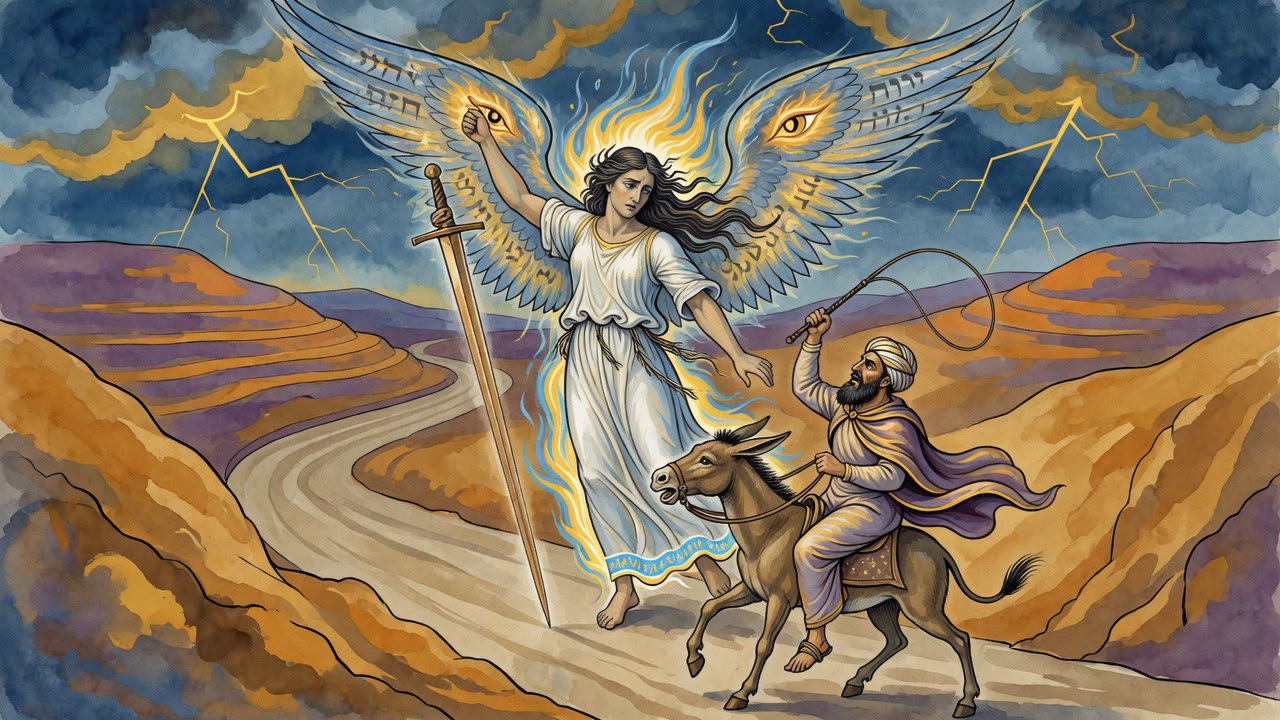
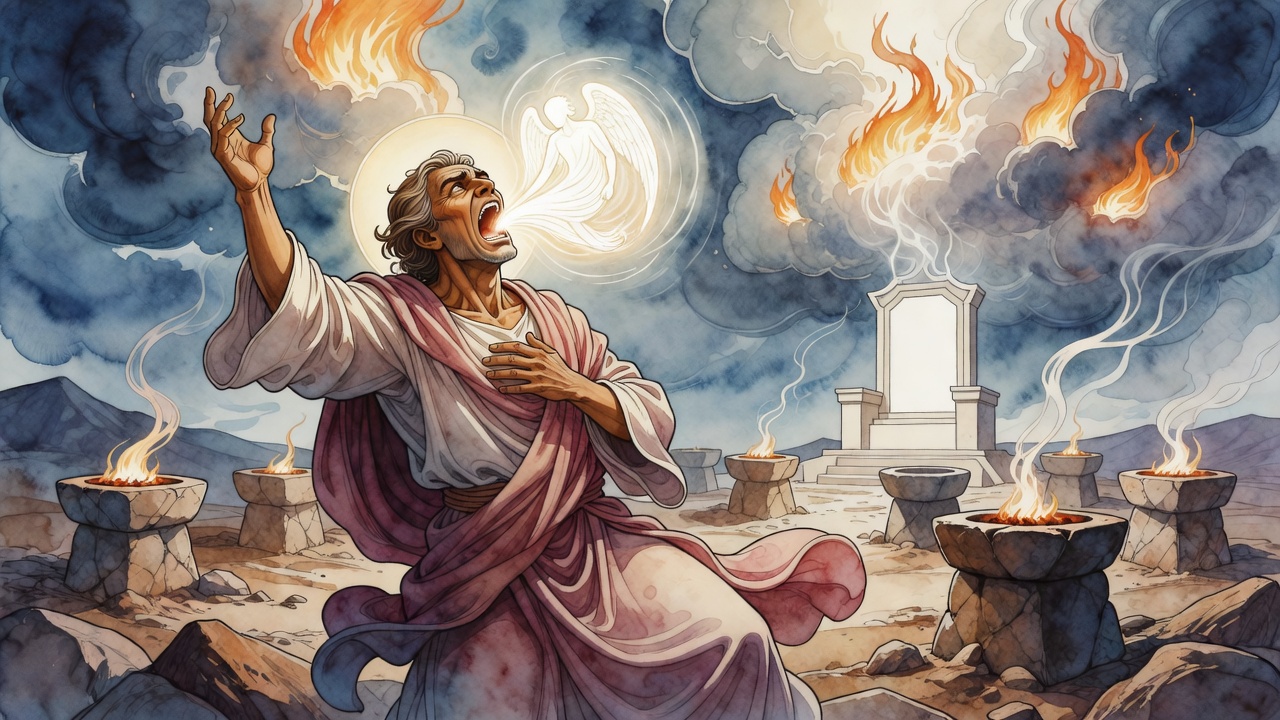
God's response, preserved in the Legends of the Jews. Louis Ginzberg's synthesis published between 1909 and 1938, drawing from Numbers Rabbah compiled in 5th-century Palestine, was to send an angel directly into Balaam's throat to seal it from the inside. The boast was cut off mid-breath. The case Balaam had been building for the heavenly court never reached its conclusion, because the mouth that was going to make it stopped working.
The Herbs and the Stalled Ox
Before the silencing, God had spoken a verse from Proverbs: Better a dinner of herbs where love is than a stalled ox and hatred therewith. The stalled ox was the ox on Balaam's altar. The dinner of herbs was whatever Israel was eating in the camp that afternoon. God had already made the point in the register of comparison, the quantity of Balaam's offering was irrelevant because the spirit of the offering was hatred, and hatred makes a house full of feasting worse than a dry meal eaten in peace.
Then God made the point in the register of authority. If God wanted animal sacrifices, God could have instructed Michael and Gabriel to bring them. The angels of the highest rank could provide offerings of any quality and quantity on command. That was not what sacrifice was for. The Ginzberg tradition is direct: God had vowed to accept sacrificial offerings from Israel alone. This was not a preference. It was the structure of the covenant. You cannot make an offering under a covenant to which you are not a party. Balaam was not a party to the covenant. His altars were structurally void.
What the Angel in the Throat Accomplished
The silencing of Balaam before the heavenly host was not only a rebuke. The tradition, drawing on the broader aggadic understanding of how God communicates through messengers, the same tradition that explains guardian angels as precisely calibrated to the character of the people they accompany, treats the angel sent into Balaam's throat as a purposeful intervention in a specific crisis.
Balaam standing before the heavenly host and boasting was not simply undignified. It was dangerous. A prophet with genuine access to prophetic power, speaking before the assembly of heaven with a prepared argument for why God's covenant with Israel should be revised in Moab's favor, this was not a scenario God was going to allow to develop. The angel sealed the mouth before the argument could be made. The case was never heard. The verdict Balaam wanted was never possible, but he was not permitted to make the attempt in that forum.
The War Balaam Chose Instead
Having failed at prophecy, Balaam did not go home. He advised Balak instead. If sorcery and hired prophecy could not touch Israel from outside, he told the king, the only vulnerability was internal. Seduce them into sin and the divine protection would lift on its own. The plan that followed, the tents at the border, the Moabite women, the wine, the idol of Peor concealed under linen goods, was Balaam's second attempt to accomplish what the angel in his throat had prevented him from accomplishing in the heavenly court.
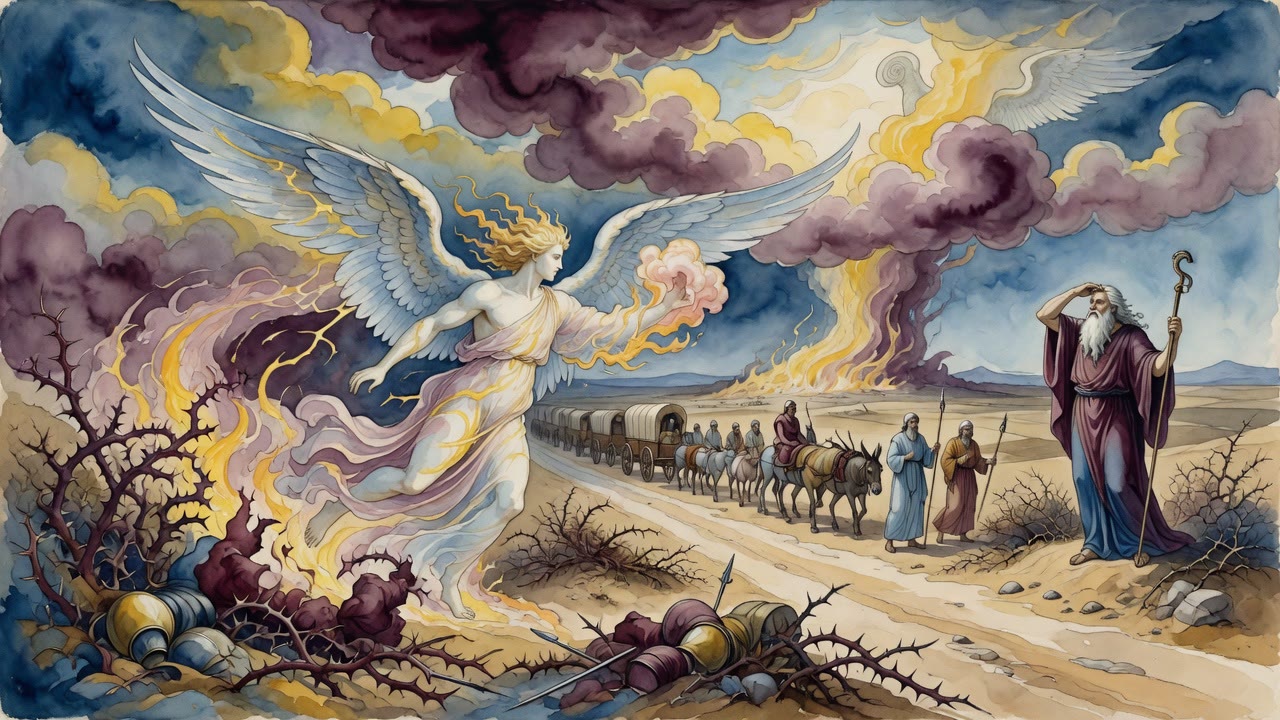
The war against Midian was the consequence. When Phinehas led the Israelite army across the Jordan, Balaam was there advising the Midianite kings, still at his original project of finding a way to destroy what he had been unable to curse. When the battle turned, he tried to fly. Phinehas used the high priestly crown, the gold plate inscribed with the divine name, to bring him down from the air. The throat an angel had sealed in the heavenly court was opened again at Midian only to receive a sword. One thousand soldiers from each of the twelve tribes had crossed the river to fight. None of them died. Balaam did.
← All myths