Balaam Confessed That God Does Not Notice Israel's Sins
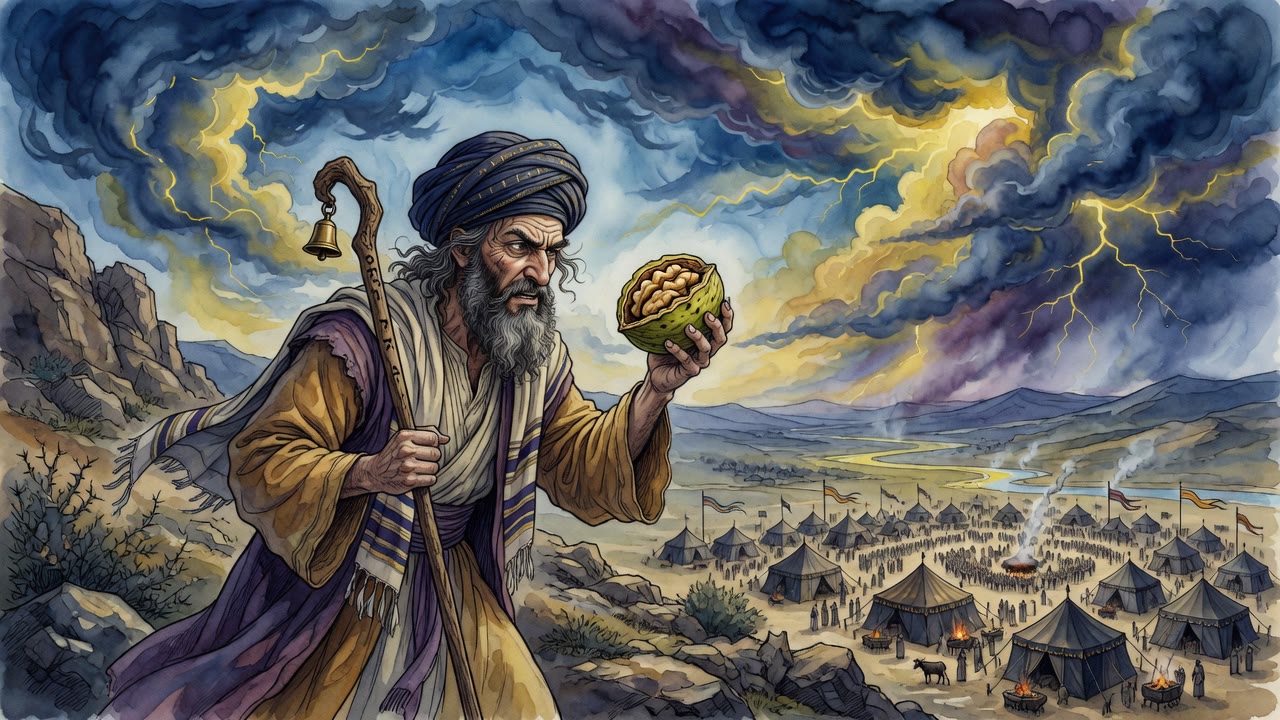
An orchard whose keeper falls asleep can be emptied before dawn. Balak had paid a man to find that hour. Balaam hunted for it from three hilltops.
Table of Contents
 Click for full size
The Third Hilltop
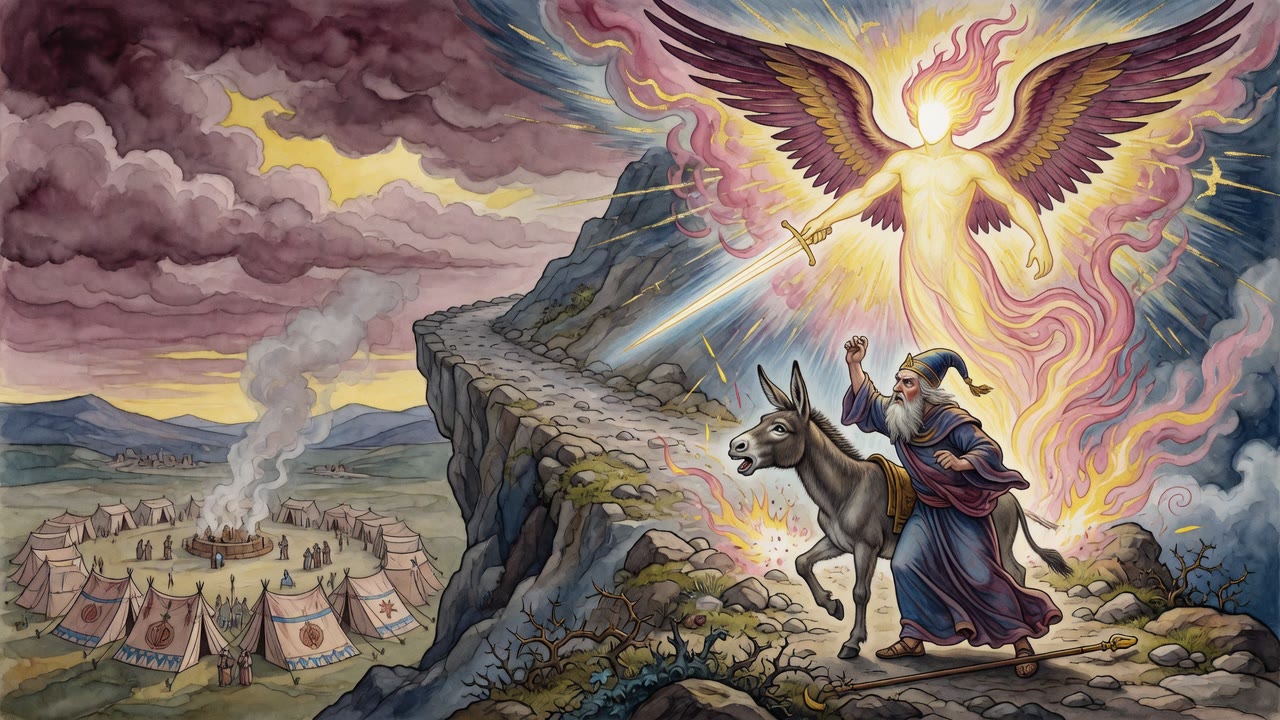
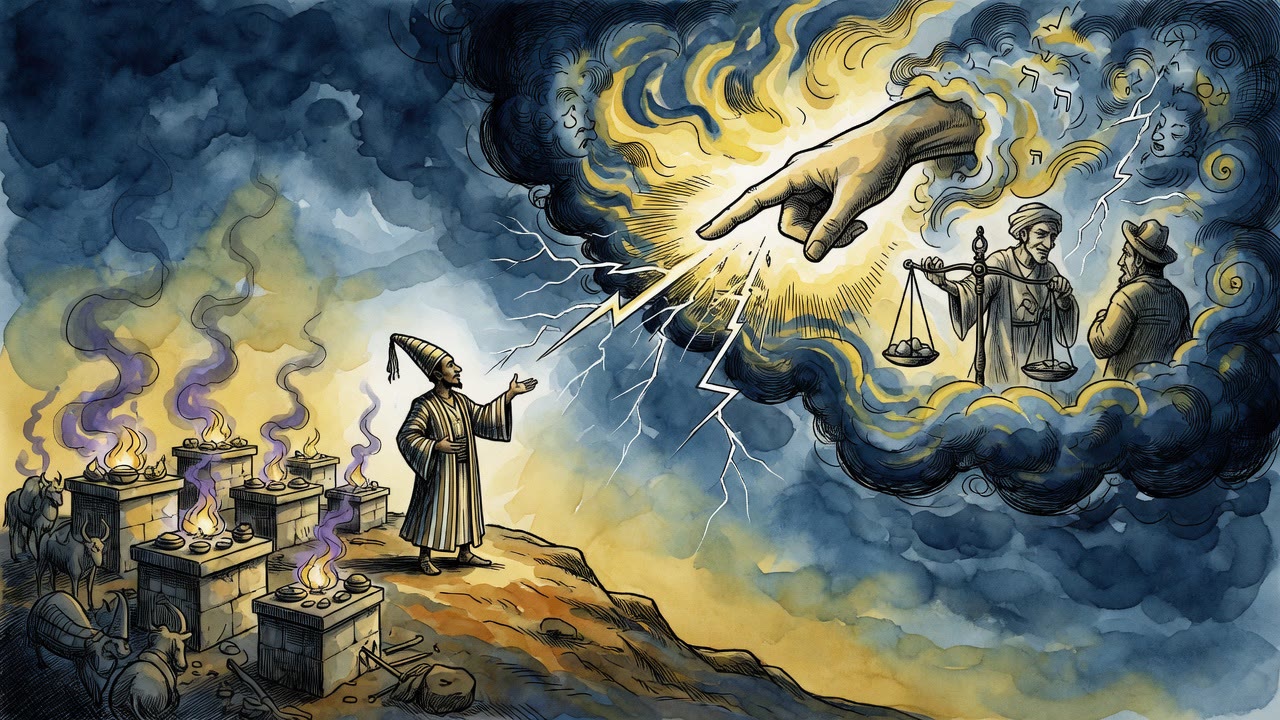
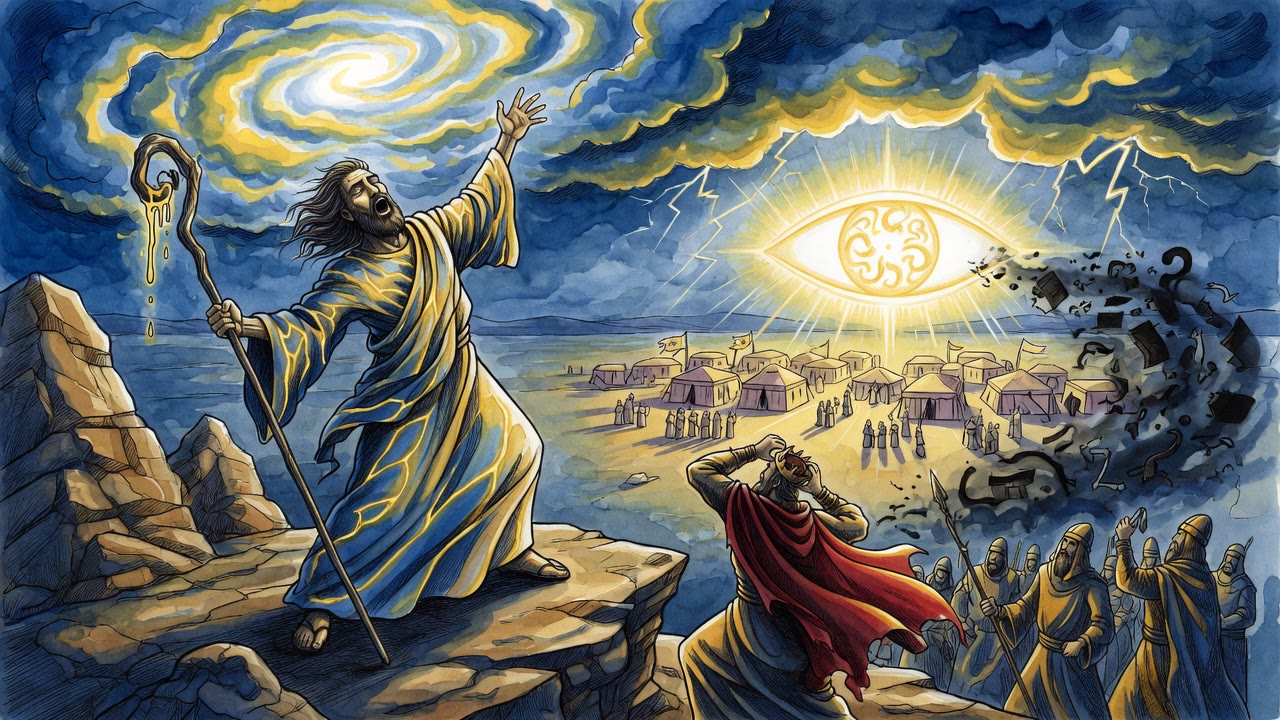
Balaam opened his mouth on the third hilltop and heard himself acquit them.
"No one has beheld falsehood in Jacob. No one has seen perversity in Israel."
Balak was standing right there. The words kept coming, and Balaam, who understood exactly what he was saying even while he could not stop saying it, filled in the rest of it himself. God does not notice the transgressions in their hands. He notices only what they have earned.
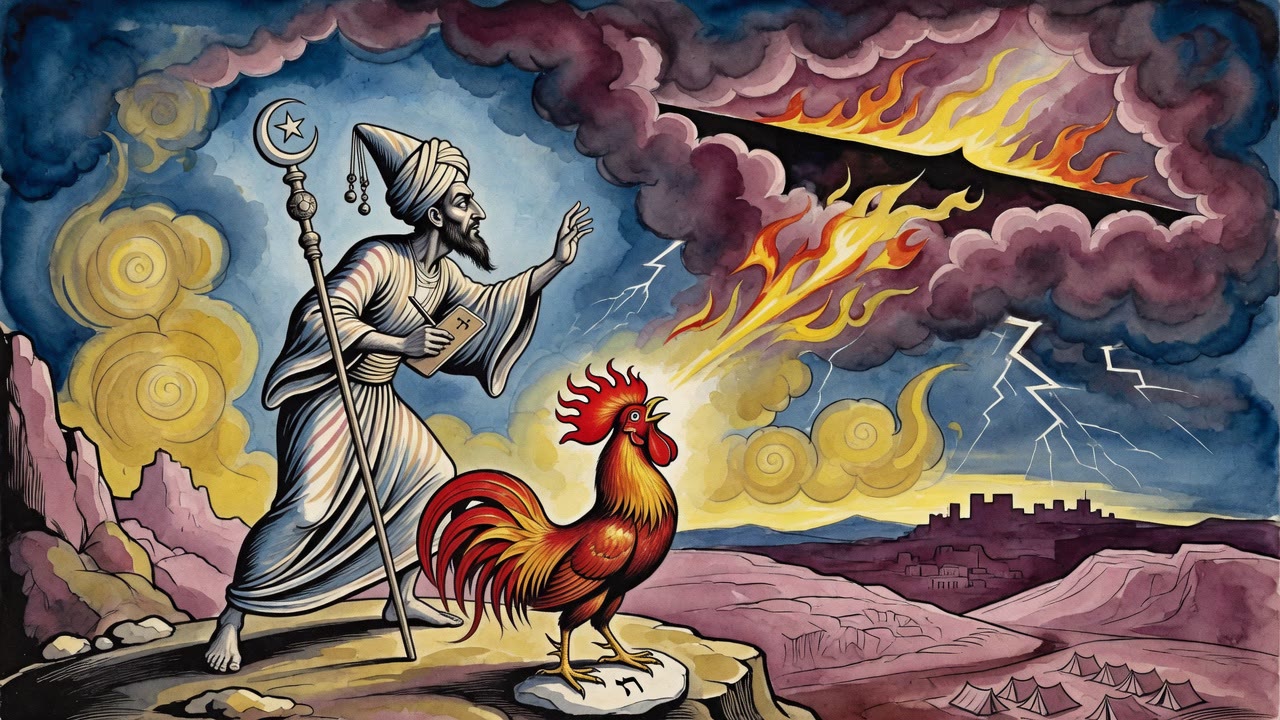
The two words the oracle used for what God was not looking at, perversity and sin, are not abstractions in the older readings. They are two figures. Samael is one of them and the snake out of the garden is the other, and they were both standing in the account, and God was looking past them.
An Orchard Whose Keeper Never Sleeps
Balaam explained the problem to his employer, since his employer had paid for a professional opinion.
An orchard with nobody watching it gets stripped in broad daylight. An orchard with a keeper who dozes gets taken quietly in the hour before dawn. Either way there is a moment, and the whole trade of a man like Balaam is knowing when the moment is.
"The one who keeps Israel neither slumbers nor sleeps. So how am I supposed to harm them?"
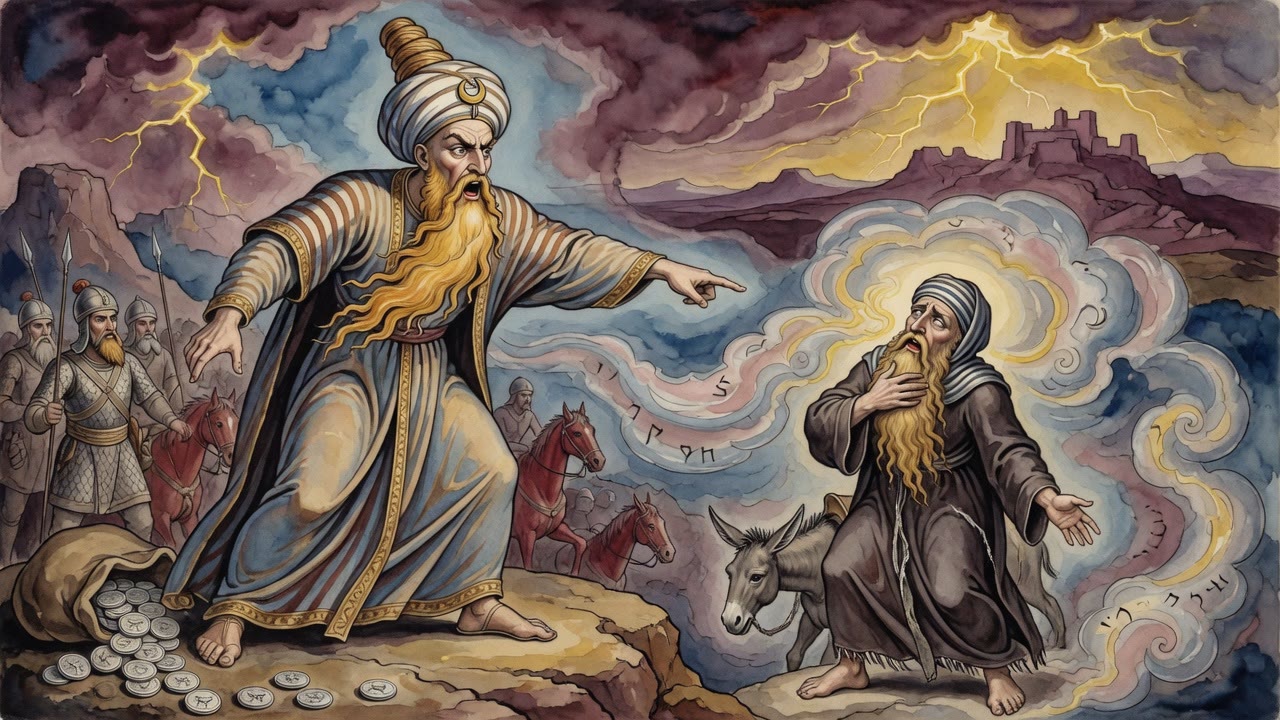
Balak did not accept it. He went looking for a different angle the way a man walks around a locked building trying windows.
"You cannot touch them because of Moses, who protects them. Fine. Look past Moses. Look at Joshua, the one who comes after him. Tell me his deeds are weak."
Balaam looked. "He will be strong like him." And out of his mouth came the sound of a shofar, a shout going up out of a camp, and a wall going over sideways into its own dust.
What Balaam's Eye Actually Saw
Balak had hired him on a false description. A people came up out of Egypt, Balak had said, as though they had walked out on their own. They did not walk out. They were brought out.
And there was the matter of the trade itself. Balaam was standing on a hilltop reading omens to find the weak place. The people below him did not do that. When they went to war a priest put on the breastplate and the urim and thummim were asked, and the answer came from the one who made the enemy. Their diviners were nullified by repentance, which is the one countermeasure no omen can be read against.
Then Balaam saw the camp the way it actually was, and the sight was worse than the failure. Israel was sitting in front of God the way a student sits in front of his master, being told why each portion was written the way it was written. The ministering angels were outside that circle. They cannot come into it. They have to stand at the edge and ask the students afterward, what did He teach you today.
Balaam confessed the rest of it out loud, in front of the man paying him. "I was in error. I believed Israel could be attacked easily. They have taken deep root in the earth and they cannot be uprooted." He knew why, too. God carried many of their sins for the sake of the mark of the covenant they had kept in their flesh, and the sign they had kept on their doorposts, and the food they would not eat, and the customs that made them impossible to file with anybody else.
The Lion That Does Not Sleep
Here is a people that rises up like a lion.
They sleep like anyone. Then they get up, and before their feet are properly under them they say that the Lord is one, and at that the destroying spirits that came in the night to touch them are finished, and on their way out they answer after the man who said it, blessed be the name of His glorious kingdom forever. He hands his spirit over when he lies down and it is handed back in the morning, passed from the night watch to the day watch like a package between guards.
A lion, the oracle went on, does not sleep until it has eaten its prey and drunk the blood of the slain.
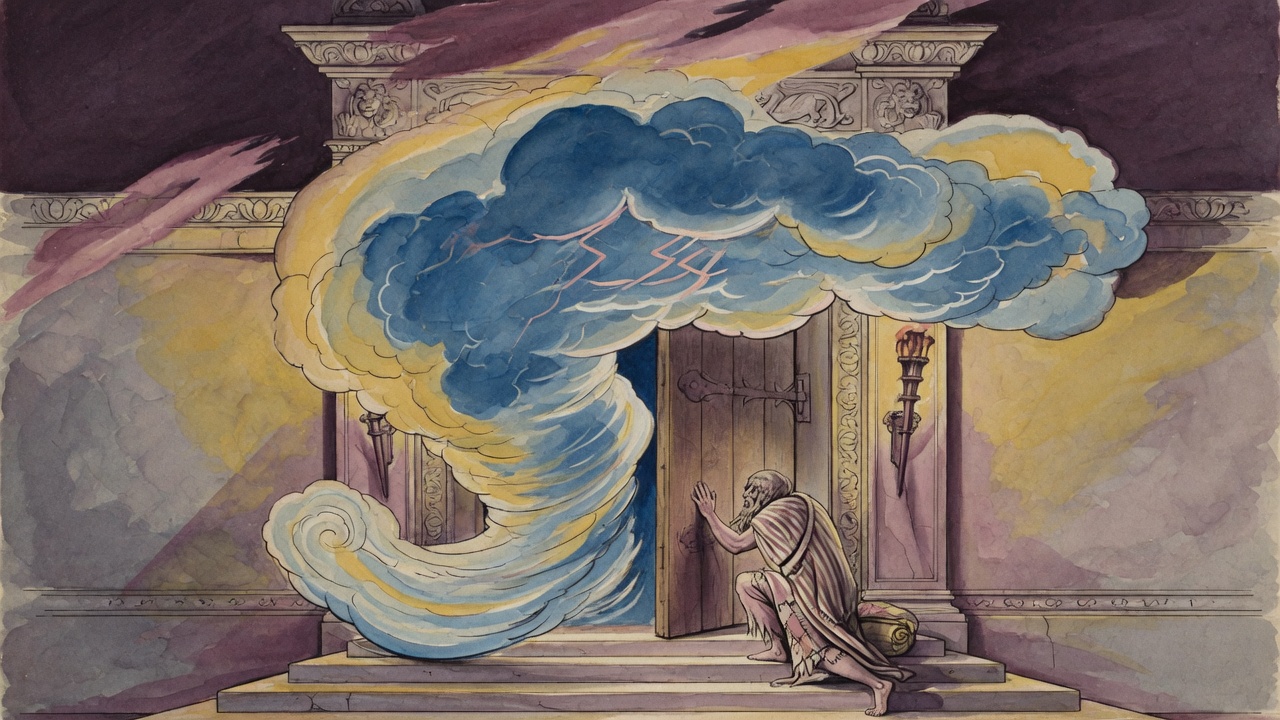
Balaam was still talking when he said it. He had been hunting for the hour when the guard slept, and what came out of his mouth was that this particular lion would not lie down until it had eaten. The prey in that sentence was Balaam. The slain were the five kings of Midian, who were still alive at the time, and so was he.
He Came Back for the Wage
He went home. That should have been the end of him in the story.
Then he heard the number. Twenty-four thousand Israelites dead in the plague at Peor, all of it out of the advice he had sold on his way out of Moab, and he turned around and came back to collect on the work.
He was in the air over the battlefield when they caught him. Moses had warned the men what they were walking into. "Balaam has worked magic for them. He is making the five kings fly, and he flies himself. Hold up the plate with the Name engraved on it, and they will come down."
They held up the gold plate off the high priest's forehead, the one with holy to the Lord cut into it, and five kings and a diviner dropped out of the sky onto the ground they had been flying over. The sword took him among the corpses of the men he had come back to be paid by.
← All myths