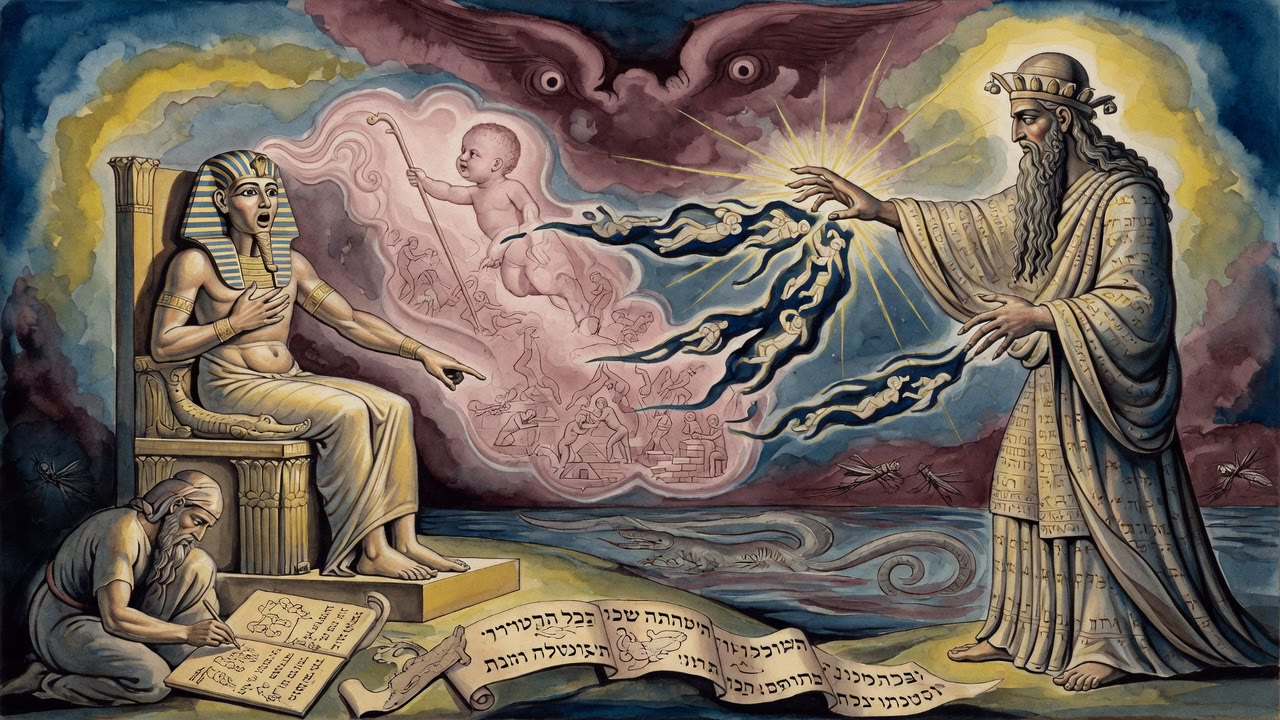
God Came to Balaam at the Door and Never Let Him In
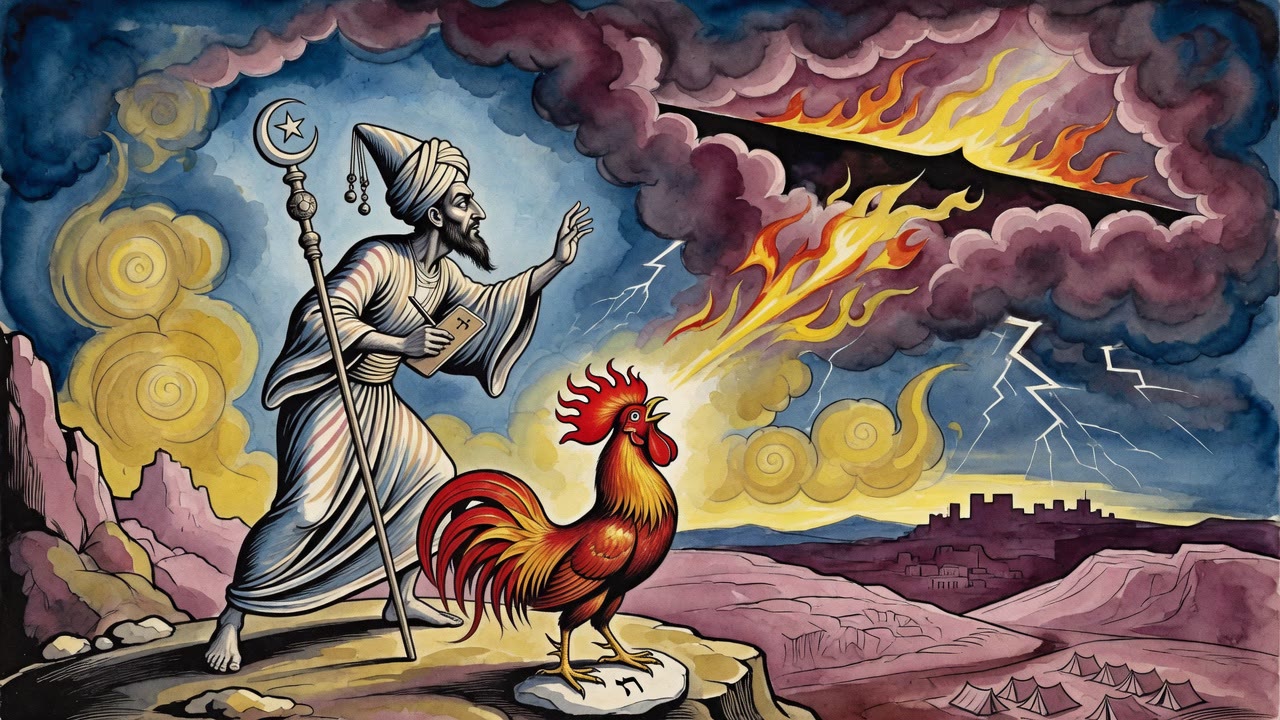
Moses walked into the Tent of Meeting when he needed a word. Balaam stood on the road. God came out to him the way a king sends coins to a beggar at the step.
Table of Contents
 Click for full size
God Found Him on the Road
Balaam sat in his house after dark, and God came to him there. He had not walked toward a tent. He had not washed or waited at a sanctuary door. He was home, with Balak's messengers still in his ears, and heaven arrived like a knock he had not earned.
"You shall not go with them," God said that first night. "You shall not curse the people, for they are blessed."
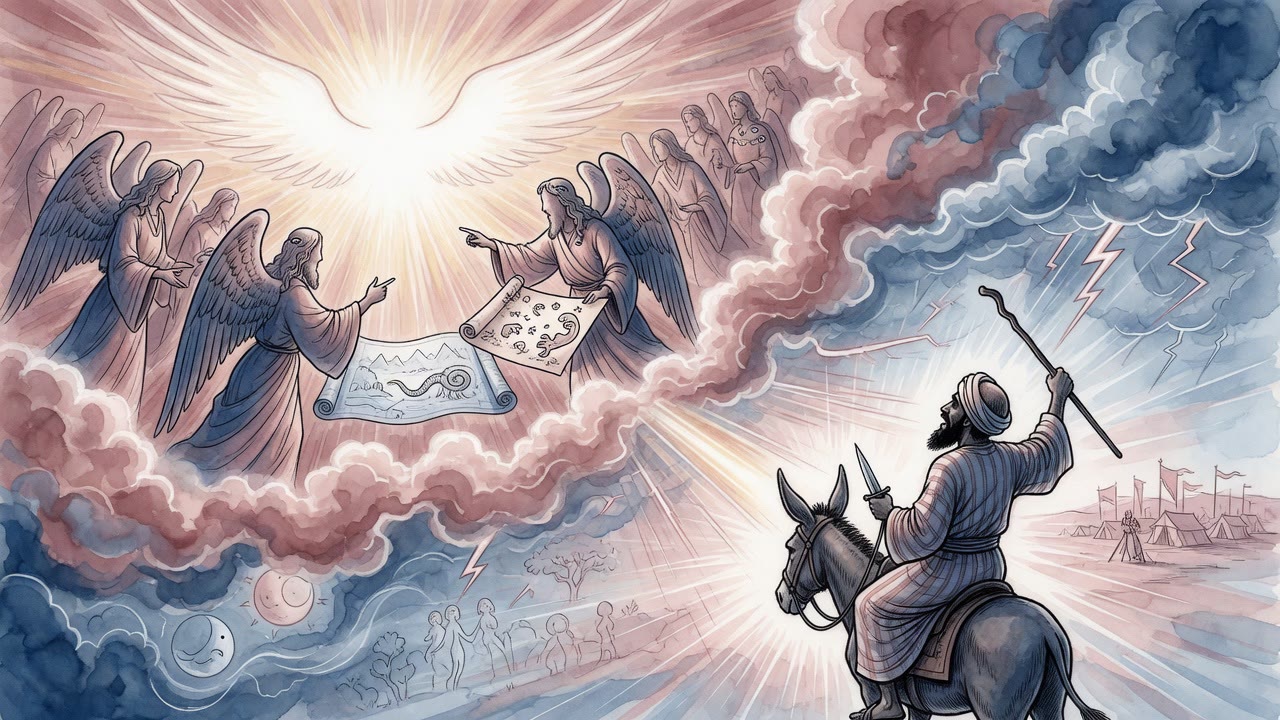
Balaam sent the princes away. Then more princes came, heavier purses, better names. He wanted the silver. He wanted the honor of being the man a king fetched from Aram. He told them to stay the night. God came again. "Rise up and go with them. But only the word which I speak unto you, that shall you do" (Numbers 22:20).
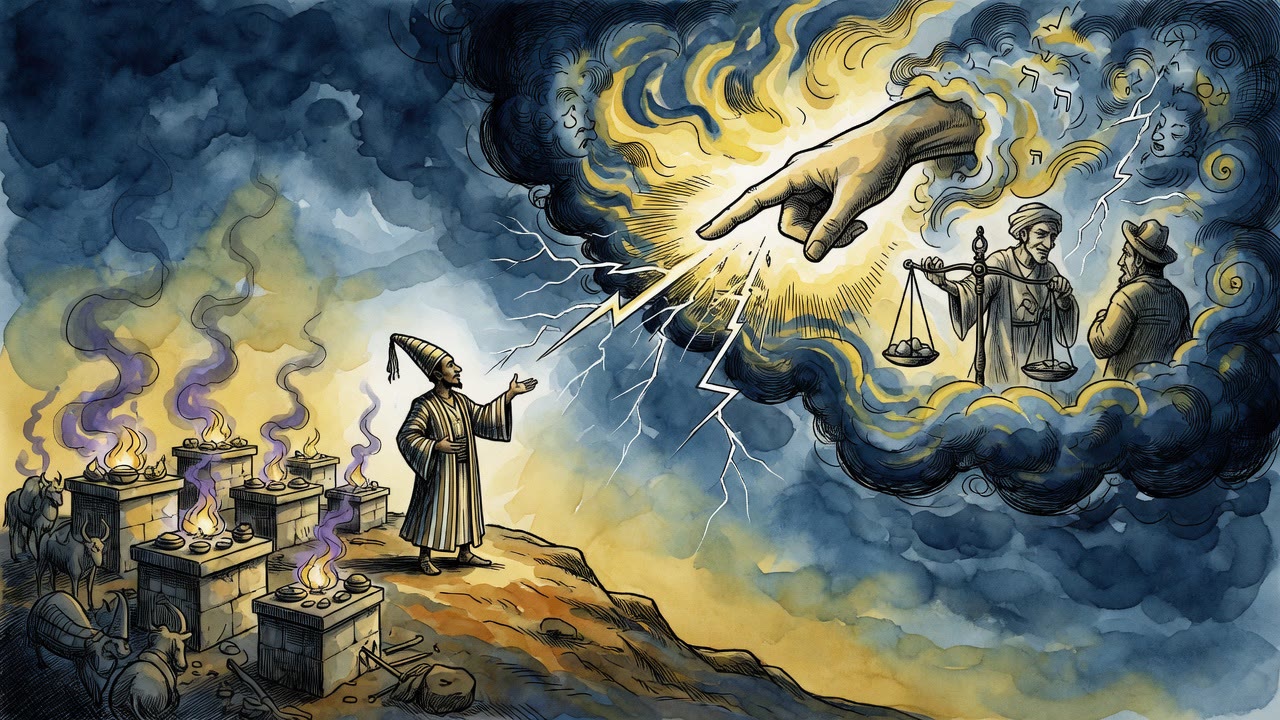
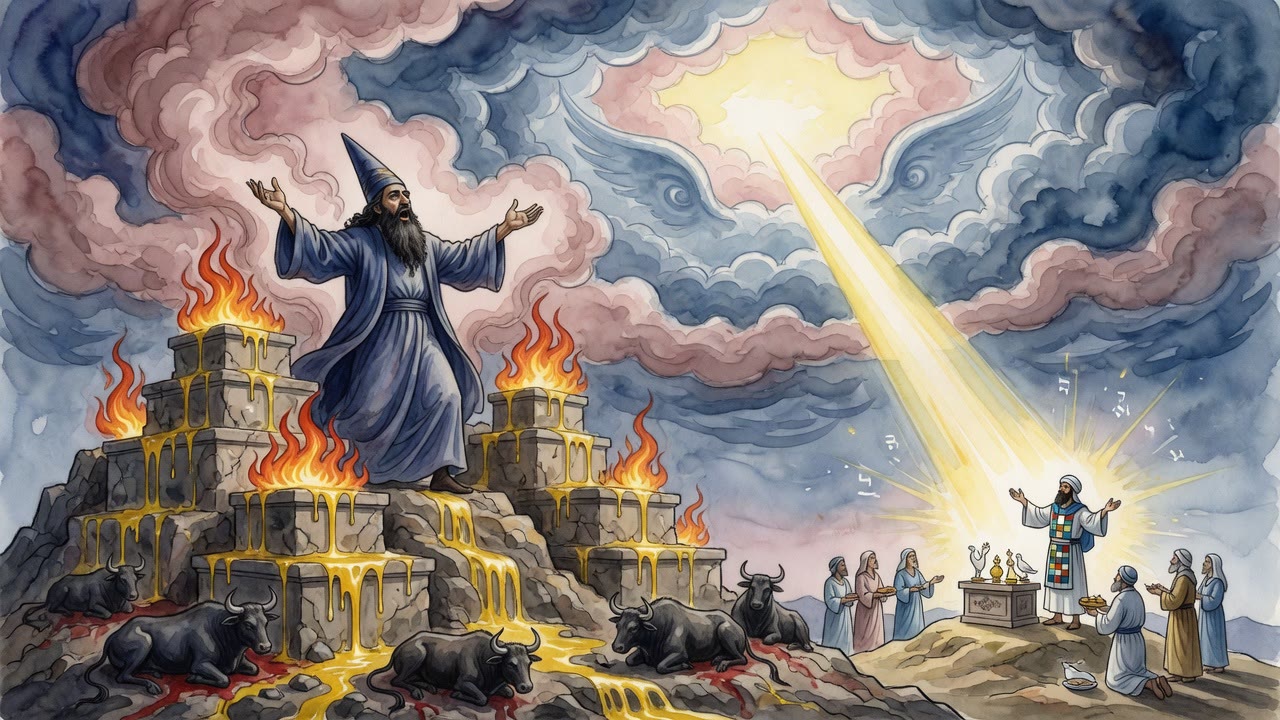
God found him later on the road, and at the altars, and on the high place of Baal. Seven altars. Seven bulls. Smoke in his hair. Balak at his elbow. Each time God came to the place where Balaam was standing. The visit looked like honor. A prophet so great that heaven traveled to him. Balaam lifted his face as if a gate had opened.
It had not. God came the way a man touches something unclean: for Israel's sake, not for Balaam's. The power in Balaam's mouth was real. His sentences hit what they aimed at. The man who carried them was not going to be invited inside.
Alms at the Magnate's Door
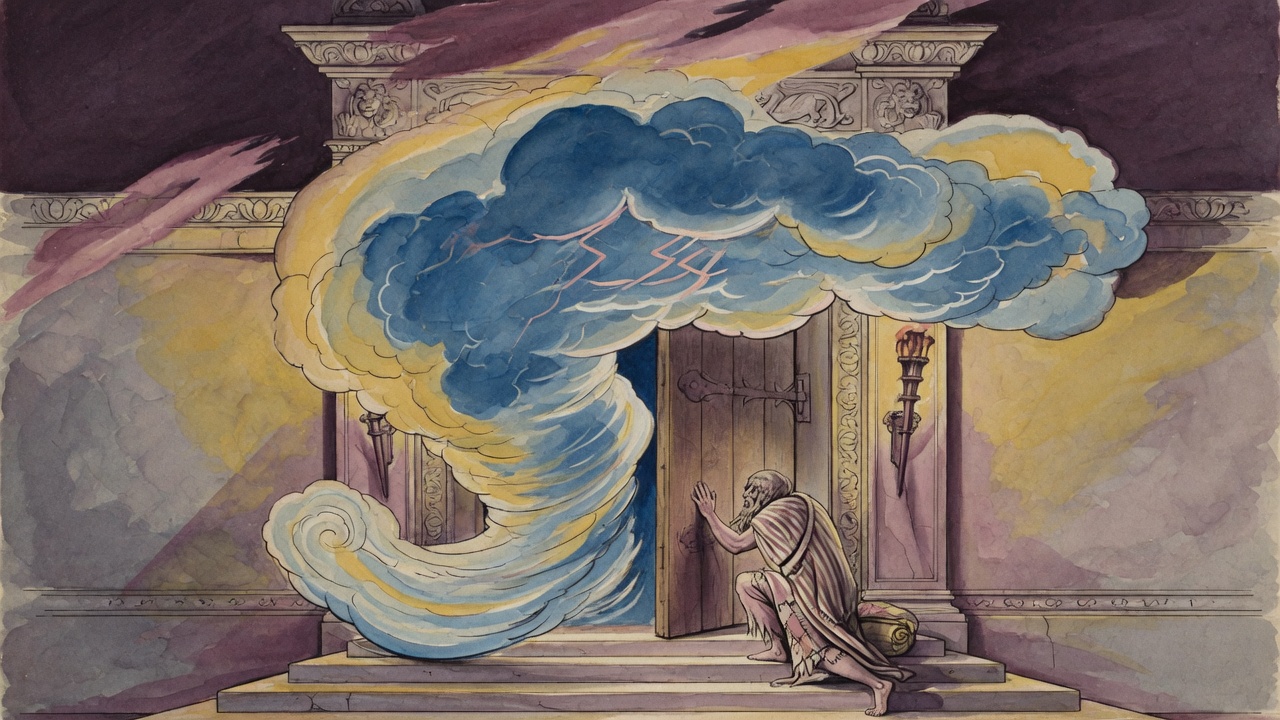
Two men knocked at a magnate's door. One was a friend with a request. The other was a leprous beggar. The magnate said, "Let my friend enter. Send the beggar's alms to the door, that he may not come in and pollute my palace."
That was the protocol, whether Balaam knew it or not. He heard God on the step. A sentence shoved through the gate. Never the inner rooms. Never the speech that leaves a man intact because he has been welcomed.
He still took the alms as tribute. He still saddled his donkey and went where Balak pointed. He still built the seven altars and cut the seven rams. Each time God arrived at the threshold again, overwrote the curse waiting on Balaam's tongue, and left him standing in the smoke with Balak's anger rising beside him.
"What have you done to me?" Balak said. "I took you to curse my enemies, and you have blessed them."
Balaam said, "Must I not take heed to speak that which the Lord puts in my mouth?" (Numbers 23:12). He said it as if the leash were a medal.
Moses Went In
When Moses needed a word, Moses walked. He went to the sanctuary. He approached the Tent of Meeting. God waited. The movement was Moses's, and when Moses arrived the gates opened. He passed the outer courts and the inner halls and stood in the Presence the way a man speaks with someone who knows him.
God called Moses to Him. God did not desire Balaam to come. He went to Balaam instead, grudging, brief, already turning back toward the house.
Moses could enter the innermost chambers of prophetic speech and come out carrying what he had been given. Balaam could not. Bring a beggar into the inner rooms and the rooms are no longer the king's. So the king stayed a king, and the beggar stayed at the step, and the words that left Balaam's mouth were still God's words, sent from a distance.
She Hid From His Eyes
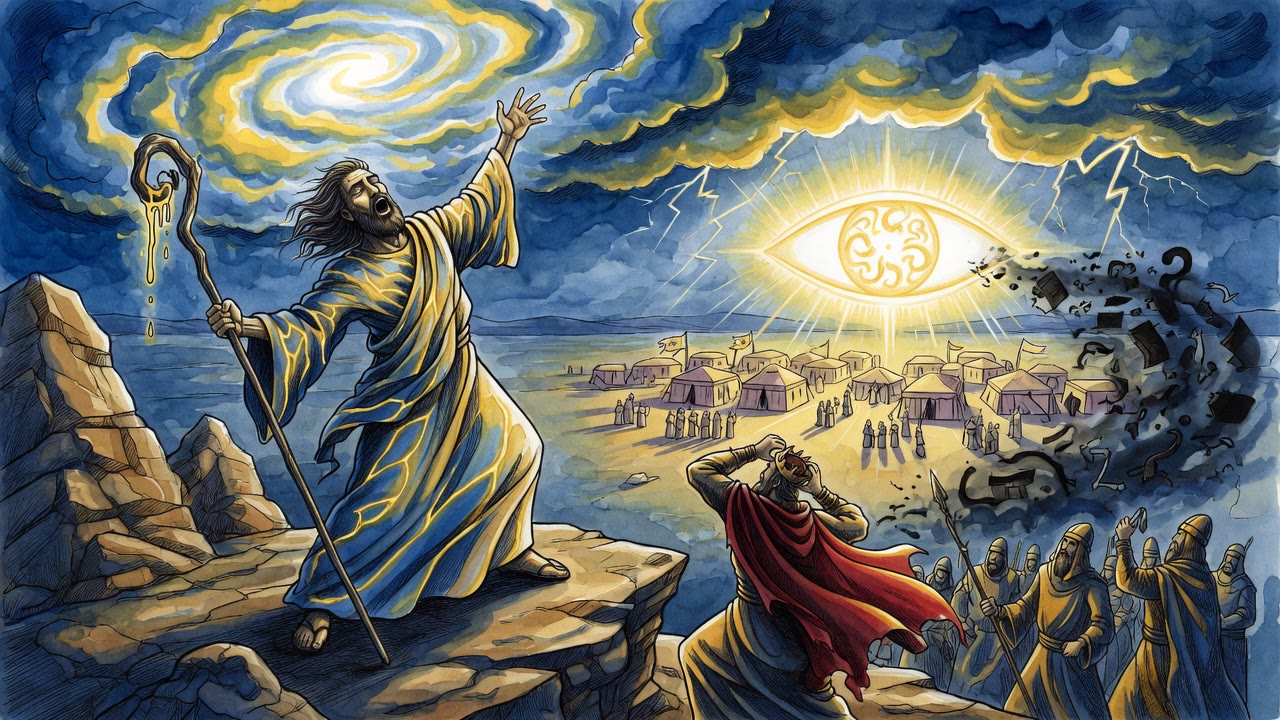
On the heights he looked down at the tents and tried to find a crack. A curse needs a hold. He hunted perversity in Jacob, sin in Israel, some seam where Samael and the snake could get a finger in. He opened his mouth for Balak's sake.
He saw nothing to work with. "He has not beheld iniquity in Jacob, neither has he seen perversity in Israel" (Numbers 23:21). The Shechinah (שכינה), the Presence, when those dark ones press in to look upon Her, conceals Herself from everything. Balaam's eyes were a press. She folded. The camp below went on cooking and nursing and arguing over donkeys, and the prophet hired to ruin them could not get a clean shot.
Blessings came out instead. Balak's face changed. Balaam kept moving from high place to high place, as if a new angle would open the gate. The gate did not open. The alms kept coming in the wrong currency: praise for the people he had come to break.
The Gate Went Quiet
After Moab, after Midian, after the counsel that taught a king to use Israel against itself, the ruach hakodesh (רוח הקודש), the holy spirit of prophecy, left him. Not all at once. It had been thinning since he set out hoping God would cooperate with his hatred. Then it was gone.
What remained was technique. A memory of what power had felt like. A magician standing where a prophet had stood, working the old motions with nothing inside them.
He was still at the gate. The king had stopped sending alms. The inner chambers were not for him and never had been. The distance that had always defined the relationship was now the whole of it.
← All myths